Showing posts with label MS. Show all posts

Tuesday, July 28, 2009

"Is this a commercial? I think this is a commercial."

by Mikey

Five years ago when I started working at Seattle's Metro Cinemas (famously named "one of Landmark's least charming theatres" by the Stranger) I didn't know shit about film. Frankly after reading posts by others on sites like this one, I realize that I still don't know shit about film. But I'm learning. For me there has been no finer crash course for this wild world of cinema than the repertory program I co-host, co-curate and co-ddle, Metro Classics.


The most obvious elements I have gleaned since starting the series are the titles, stars and entire genres that I have fallen in love with, which without Metro Classics I probably wouldn't have sought out. The Red Shoes, Ginger Rogers and Westerns jump immediately to mind. Beyond that I have also been forced to look at film from several alternate angles, separate from being a giddy audience member, which I luckily also manage to remain. How can we create an exciting calendar that manages to balance offbeat, rarely seen features (my beloved Pennies From Heaven) with surefire moneymakers (the equally awesome Forbidden Planet) to keep the show afloat? How can we weave these titles into an interesting theme that brings about new dimensions to the films and manages to put the season into some sort of perspective? How do we keep the idea of presenting repertory films exciting and fresh in a city with no shortage of revival houses (plus the greatest video store in the world)? These challenges, though vexing at times, are what keep me engaged and energetic about this two-bit enterprise when we're six weeks deep and I'm at work on my day off, spouting inane trivia questions to elderly couples who have no idea what the hell I'm talking about.

A lot of my biases and preconceptions about how repertory should be run have also been thrown into question since starting the series. When we first got up and running I was one of the most vocal proponents for running as many titles as possible on 35mm. That just seemed like the biggest no-brainer. But beginning with the difference I noticed between the Searchers print we ran, which had so many splices in it that the iconic final shot was severely truncated, and the digital version we ran for the staff at midnight, I started singing a different tune. My jaw was on the floor with that digital screening. The colors were popping, the soundtrack was slamming, Monument Valley never looked so damn good.


My disillusionment with 35mm has only grown since. On two occasions we have actually had to acquire a digital replacement at the last minute because the prints we were shipped were in too poor condition to run. Unless it's something that gets played all the time or they just happened to strike a new print for an upcoming DVD release, the films are generally beaten-up, scratched and faded. For the most part studios no longer pay any attention to their archive division, if in fact they still have one. In the last year alone we have noticed a significant decrease in even the availability of prints. We always specify when we propose a calendar "35mm when available". It's telling that this go-around we only managed one out of nine when last year we had seven.

Most repertory theatres don't have a choice on what format they can run, but we've been very lucky to have a fancy Sony 4k digital projector at our disposal. I defy anyone to make the case for running 35 after they've seen something on Blu-Ray pumping out of those twin lamps (or any of the other higher end models that have been released over the last several years.)

Trust me, I understand the knee-jerk reaction of wanting to experience something you can't get at home if you're shelling out $10 to see a film that could arrive in your mailbox. That's why we try and make our screenings more of a heightened experience with giveaways, the aforementioned trivia, and the side-splitting antics of Sean and me. We're like Laurel and Hardy. We're fans of film and we just want to share these ideas and artistic achievements with people. Curating for me is like making a mixtape, it's very idiosyncratic but when done correctly can add a new layer to a universal work you already love.

If you're in Seattle anytime between now and forever, stop by the Metro and say hello.

Wednesday, March 04, 2009

Metro Classics Speak. An internet interview.

by Ryland Walker Knight


touch it!
[From tonight's film,
The Maltese Falcon]

As we wrote earlier, the impetus for Metro Classics began during my last stop-over in Seattle some fall seasons ago. It was a fun dream to cultivate. It's been yet more fun to see it materialize from afar since that time. And with each calendar my friends Sean and Mike put together, I routinely forget to make mention of it here on VINYL. Not so this time! I'm very proud of their pet project as I feel I have some kind of ancestral stake in its future and so I thought: Heck, why not ask these guys about it so far and, you know, blog about it? If we can throw some eyes their way, and perhaps some patrons, we would love to wield such a power. Also, this random-fire set of questions was a veiled excuse to correspond beyond the every-so-often note like, say, "I've been fighting through that Bolano book, too! It's great!" So, here's some Q'n'A with the twin brains behind the always-fun Metro Classics series...

dance it!
[From the final film of the calendar,
Pennies From Heaven, to screen April 29th @ 6:50 and 9:15 PM]

What's the first repertory film you saw in a theatre? When and where?

Sean Gilman: When I was a kid (mid 1980s), the independent art theatre in Spokane (there was only one) had a summer series of kids movies. The one I remember seeing was Yellow Submarine, but there were others, too. After that, there was nothing until one of the dollar theatres in Spokane played Casablanca in 1996 or so. In the spring of '98, while visiting Boston I saw Seven Samurai and Mr. Arkadin at the Brattle in Cambridge. That summer, I moved to Seattle and one of the first things I did was see three Kurosawa movies at the Varsity (Rashomon, Throne of Blood and The Hidden Fortress). I filled out my Landmark Theatres job application during the intermission of the Throne/Fortress double feature.

Mike Strenski: It was either The Wizard of Oz or Harvey, both of which I saw at the beautiful Stanford Theater in Palo Alto at a very young age. I remember them coloring the sidewalk out front in yellow chalk for Oz and sitting high up in the balcony. It was the first time I noticed a reel change because I could see the path of the light coming from the booth.

There's talk of the movies turning into a more specialist art with patrons, as with opera or with plays, as the home market continues to develop and improve. How do you see the movie theatre evolving into the next decade? Do you think thoughtful retrospective calendars may play a role in the continued success and interest in a movie theatre experience?

Sean: I don't really see any parallel with opera at all. Cinema is a mass entertainment. It's the cheapest, most convenient thing for people to do between dinner and sex on Friday night. HDTV doesn't change that.

What digital cinema (both projectors and high-quality digital versions of films) offers is the opportunity to show repertory films with very little overhead. Rep cinema died in the 90s as the cost of renting and shipping prints skyrocketed. With digital, you're not shipping anything, and the distributor doesn't have to worry about print damage.

Mike: Repertory totally has a place in the future of cinema, the current programming/cinema model just needs to change. With digital presentation the cost of exhibiting these movies is negligible and more theatres should look to turning one or two of their 20 to 30 screens into permanent rep houses. Show The Searchers for a week-long run in a hundred seat house. It will bring out a diverse (and more importantly) loyal crowd than using that 27th screen for another copy of Paul Blart: Mall Cop.

What films bring the biggest crowds at Metro Classics? Can you even answer that (legally speaking)?

Sean: I wish we knew. Our best weeks were Casablanca, The Wizard of Oz (which you'd expect) and The Red Shoes (which is a little surprising). Aside from the top two outliers, we tend to do best with films that are popular, but not too popular (think Blue Velvet or Purple Rain as opposed to The Manchurian Candidate or Notorious).

Mike: The tried and true "classics", hands down. Casablanca raked in the cash, as did The Red Shoes and Oz. At the onset of programming these calendars, I assumed people would be burnt out on these titles because they're so ubiquitous but their popularity refuses to wane.

Is there a target audience in Seattle you aim for? Who do want to see come out?

Sean: People who like movies. We try to keep the series diverse, with movies that appeal to all different kinds of people. The one thing that holds it together is they're all movies we think movie lovers would like.

Mike: Another assumption I was completely wrong on was the demographic of our audience. I thought we would be catering to the college crowd nearby, with a room full of film majors but our clientele is predominately older couples who live in the surrounding neighborhoods. I think if there is any target audience that Sean and I are aiming for it's ourselves. We're far too out of touch to know what people want to see, which is proven week in and week out at our shows.

How long does each calendar take to assemble? Do you have to narrow your dream list a lot? Or is it more pragmatic?

Sean: We kick around ideas for awhile at random times (we've been thinking about something to do with locations for the last year or so), but once we settle on the idea, we generally get the lineup set in a single evening. We've not yet been able to book every film we initially planned on. Such are the vagaries of print availability and tangled rights issues.

Mike: Sean and I usually toss around theme ideas during the final weeks of the current series until we stumble on something we are both excited about. Then we spend another couple of weeks refining it and creating ever more intricate subsets that strait jacket our film options. I like working in boxes within boxes within boxes which makes the programming ever more difficult. How many Shakespearean adaptations fit into the adventure/sci-fi/musical category? We then sit around biting our nails for a good fortnight while the booking department secures the films or tells us to go back to the drawing board. All in all, I spend my whole life planning this malarkey.

Where did the idea for Adaptations come from?

Sean: I honestly don't remember. We'd done decades, directors, genres, countries and families, source material seemed like a natural next step.

Mike: I don't remember. Sean I think. I know I came up with the Page/Stage/Image line. I'll totally take credit for that. And Pennies from Heaven.

Sean: I'm pretty sure I came up with "Page, Stage, Image". . . . If not, I approved right away.

Mike: Dream on, I came up with that shit. I remember you were in the manager's chair and I was sitting on the other side of the table. You came up with pretty much everything else this go around.

What's your dream double bill? Have you programmed anything approaching that?

Sean: I don't know about a dream double bill, how about The Gang's All Here and Chungking Express? I liked our Nosferatus double feature, with the Murnau and Herzog versions. But really we haven't had a chance to do as many as we'd like.

Mike: My dream double bill would probably be something like City Lights and WALL*E. Good luck on that one. The Nosferatu double feature was pretty slamming. We've only done a couple double bills because we have to find a public domain film that fits the bill to keep costs down.

What's been your favorite program?

Sean: The genres series last Spring was our most successful, and was also a lot of fun (it was three Gershwin musicals (Shall We Dance, An American In Paris, Funny Face) three Westerns with scores by folk rock legends (Pat Garret & Billy The Kid, McCabe & Mrs. Miller, Dead Man) and three movies about musicians with colors in the title (The Red Shoes, The Blues Brothers, Purple Rain).

Mike: Going back to my themes within themes idea, I am most proud of our nine week music series with three films each in the following categories: Gershwin Musicals; Westerns with Scores by Folk Rock Musicians; and Movies about Musicians with Colors in the Title. We got to play Purple Rain!

Your favorite particular night on a program?

Sean: It's always fun when a bunch of people show up to a movie you love and have a great time with it. The Red Shoes was great because I was surprised at just how many people showed up. But other nights, with fewer people, can be just as fun, if the crowd is really enjoying the movie.

Mike: There have been a few. Duck Soup on the 4th of July was fun, The New World the day before Thanksgiving. Did I mention Purple Rain?

I haven't been able to attend any of these evenings of course but my other Seattle friends tell me you two have trivia to go along with the shows. What is a sample question? Do people get the answers correct ever? What do they win?

Sean: I try to make the questions pretty hard to start with, but I've a number of them that get progressively easier as people fail to guess them. I think we only ran out of questions once, we managed to make something up though. The most complicated was something along the lines of: what 5 (pre-Departed) films was Martin Scorsese nominated for the Best Director Oscar, who and for what films did he lose each of those years?

Mike: Oh god, Sean comes up with the most convoluted questions in the world. They're like seven parts and involve naming the gaffer on the third film of the director's that was released only in Poland for one week. . . I am getting accustomed to standing in front of a dead silent auditorium.

Where would you like to see Metro Classics go to next?

Sean: I'd like us to have a regular, year round, 7 days a week program. But that's probably not realistic for the near future.

Mike: It would be awesome if it was a permanent institution playing every night in a small auditorium for three weirdos, one of which is me.

I often think that rep calendars prove that film history (like all history) is not a to b linear—that we organize our thought in wildly tangential ways, often around themes. As anybody who watches a lot of movies is a student of movies, what can you say you learn from watching these movies like this in this order?

Sean: I don't think we have any kind of educational intention in mind, other than "these are great movies and we think you should watch them". You can learn things with the contrasts sometimes, for example, we specifically opposed three Herzog movies to three Malick movies, because they seem so opposite in their view of the natural world. But generally, the themes have been organizational and not pedagogic.

Mike: Perspective is everything. Hearing "Das Rheingold" crop up in Herzog's Nosferatu and then again three weeks later in The New World. New angles, man.

What do you think your job is as the programmers?

Sean: I just like giving people the chance to see movies I love. My job is to program it in such a way that we'll draw enough people to let us keep going.

Mike: To waste the company's money.

winter09 classics calendar
[click to enlarge]

Sunday, March 01, 2009

Seattle Specific: Metro Classics Adapts.

by Michael Strenski and Ryland Walker Knight


winter09 classics calendar
[click to enlarge]

Our friend Sean already announced the line-up at his blog but we thought we might as well put up a notice here as well. The idea for this series began to gestate during Ry's last whirl through Seattle when we three worked together there at Landmark's Metro Cinemas but it was really the adventurousness and curiosity (the tenacity!) of those two guys who stayed that got it going after RWK left. So, here's the lead copy on the flier:

This spring, Metro Classics returns. Each quarter we pick a theme and bring you a variety of movies on that theme. This season: Adaptations, nine weeks of films based on other media — with the added twist that we’re grouping the adaptations not only by their original source material (three weeks each of books, plays and moving pictures) but also by three different genres (three weeks each of adventure, science fiction and musicals.) Does that make sense? We didn’t think so. Think of this flyer as a BINGO card.

And here's a run-down of the films on the schedule. Come on, Seattle! Go see some good stuff! Go have some fun! Prove that silly article correct!

PAGE


marilyn!


STAGE


forbidden


IMAGE


goldblum

Wednesday, December 31, 2008

Two Thousand Weight? #5: Pure Joy

by Mikey

Track One: "Suffering Jukebox" - Silver Jews

Live it's a tie: 650 torchbearers Millbrae Bros bringing Seattle to its knees with the help of a whiskey-soaked devil VS. Earth melting the brains of a hundred-plus yuppies at the Bad Seeds concert.

Track Two: "Strange Overtones" - David Byrne and Brian Eno


After requesting "Baby on Board", Lindy being picked to harmonize and become an honorary member of the Dapper Dans.

Track Three: "Old Fools" - the Magnetic Fields


Seeing WALL*E at Pixar (yeah, that's me). It ain't no Ratatouille but that first half hour is the greatest of the year. Strike that, any year. Fuck the haters (see below). WALL*E is optimistic about the future in spite of the evils of mankind taunting it in the face. After seeing this work of art constructed on robots but conceived and shaped entirely by humans, this jaded little misanthropic atheist saw a glimmer of hope too.


Track Four: "A Few Words in Defense of Our Country" - Randy Newman

Speaking of hope, remember this?


Track Five: "Nude With Boots" - Melvins


The greatest band in the history of music soldiers on.

Track Six: "The Rip" - Portishead

Overhearing Nellie McKay say she's never heard of Cat Power from the booth next to me at California Vegan in L.A.


Track Seven: "Borrowed Your Gun" - Spiritualized

Charlie Kaufman's directorial debut is a movie about life and death and love and lust and art and commerce and children and parents and one's purpose or lack thereof on this planet and it made me laugh and cry and gasp and sigh and I couldn't get it out of my head for days. I woke up after dreaming about it with new revelations having come to light and I still don't know if I know what I know because it was all so fast and fleeting and full of wit and vigor and pith and vinegar. It's the most beautiful film about ugliness I have ever seen.


Track Eight: "I'm A Tide" - Broken Strings

Buried treasures: Pennies from Heaven, Zola, A Tree With Roots, The Blue Angel, Bela Bartok, The War of the World by Niall Fergusson, Rio Bravo.

Track Nine: "More News From Nowhere" - Nick Cave and the Bad Seeds


Goodbye.

Tuesday, January 15, 2008

COEN COUNTRY: From the Second Chair to the Electric Chair. The Barber's American Odyssey. The Man Who Wasn't There.

by Michael Strenski


Behind what shield
"What kind of man are you?"


Many a review regarding their most recent film, the effectively affecting No Country For Old Men, has emphasized the flawlessness with which the Coen Brothers have translated Cormac McCarthy's novel from the page to the screen. Whole sections of dialogue have been lifted verbatim from the acclaimed book. The pacing and chain of events in the film are nearly identical to those in the book. Yet the whole film manages to filter its way through the Coen's eerily singular vision, ending up not just a meticulously respectful recreation, but also a well-worn, completely familiar experience. If No Country is one of the greatest book-to-film adaptations of all time then I argue that 02001's The Man Who Wasn't There (if not my absolute favorite of their films, definitely a member of the mile-high club with Barton Fink and The Big Lebowski) is the inverse. Namely, in the completely original screenplay of a reticent, retiring barber and the severe choices he makes, the Coens have not just written the Great American Pulp Novel; they've cast, produced, and directed it too.

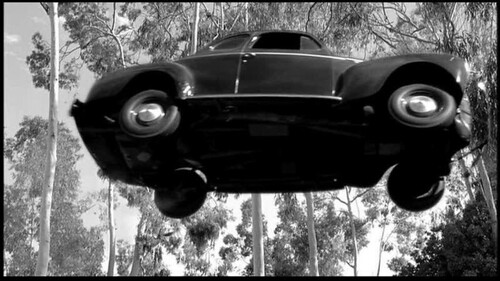
The Man Who Wasn't There feels much more at home as a last minute addition to Ethan Coen's enjoyable pulp pastiche, the short story collection Gates of Eden, than as the follow-up to a ridiculously popular George Clooney vehicle. Sure, film allusions abound in this black-and-white homage to the style of the '40's and '50's. There are classic Sci-Fi flying saucers and the story is set in the same Santa Rosa as Hitchcock's masterful Shadow of a Doubt, but I find these references far less interesting (and memorable) than the way the movie works as a piece of visual writing, a confident work of narrative fiction. The frequent fades to black, five or six throughout the film, act as effective chapter breaks, giving the viewer a peaceful moment of reflection before setting up the next chain of events. These pauses are aided and abetted by some of the Coen's choicest lines, most often delivered as narration by The Barber, Ed Crane (excellently portrayed by Billy Bob Thorton). This voice over sometimes strays from linear focus which is a common literary, rather than cinematic, conceit. At one point Crane apologizes for telling us too much. Hell, we discover at the end of the film that his narration is coming from the story he has been contracted to write for a men's magazine. It has been a written work all along.

mwwt_3
"Me, I don't talk much... I just cut the hair."

Ed Crane is less an Everyman than a Nowhere Man. A cypher, his character owes more to Camus than, say, Cain or Chandler. Yet like the work of the latter, his entire existence, or lack thereof, is laid out before us in the very first scene. As readers, we know of Philip Marlowe's ideals, persona and conviction from the opening pages of every novel he stars in and time and again, these qualities steadfastly refuse to change. The same goes for Ed Crane, although compared to Marlowe, who springs forth fully-formed, Crane has already been and will always remain a specter. We know implicitly in the film's first few minutes that he was born into this. No event altered his outlook or carriage. He has spent his entire life silently watching from the shadows. Observing, rarely judging. He sits quietly by as his brother-in-law tells one long-winded yarn after another. He has known for years of his wife's infidelity though it never really bothers him. Later, he uses this knowledge for nefarious purposes but it is really only a means to an end. He is -- in a word -- unflappable.

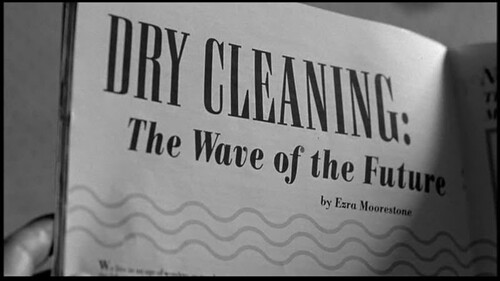
After a life of pure, simple existence, Crane finally decides to take a chance when he meets an entrepreneur looking for backers for a new invention called Dry Cleaning. We never really find out what about the proposal catches Crane's eye and sends his story down the fatalistic Noir path. Is it the money? If so, what does he want it for? This is a man of little ambition. Does he want to get back at his wife's partner in infidelity, her boss at the local department store, whom he eventually extorts? Is he just bored? Regardless, like No Country For Old Men, the money means nothing. It is utterly trivial. What does matter is that this man, this barber, has finally set something in motion that, for better or worse, changes his life and the lives of those around him forever.

I find Ed Crane's burgeoning passion, regardless of implicit reasons to be the movie's main motive. Though he remains outwardly unreachable through the duration of the film, beneath the surface he becomes excited with possibility. His interest in the dry cleaning scheme and later his not-quite platonic adoption of a teenage pianist are the first pangs of genuine enthusiasm this man has ever known. Of course in true Noir (and Coen) fashion everything quickly goes awry, often in devious ways we never saw coming. Crane ends up killing his wife's lover, who in turn killed the dry cleaning entrepreneur and accidentally impregnated Ed's wife, who herself is jailed for the first murder, who subsequently commits suicide. Eventually, after trying to make things somewhat right, but instead only further ruining the lives of those around him, Crane, too, is jailed for a murder. It just so happens to be the wrong killing but no matter. One could argue that, because of his actions, he's responsible for this one, too.

Gesticulate

"The more you look, the less you really know."

Spotlight

In the final scene, The Barber delivers the last paragraph of his manuscript while observing the haircuts of the men who have sentenced him to die. He does this from the electric chair as casually as he did in a waiting room earlier in the film. This final moment shares with it the calm literary coda that punctuates No Country's muted finale. In the latter, Tommy Lee Jones' retired, world-weary Sheriff tells his wife of his dreams. They involve his father and how he is ready to meet him, how he has accepted death. The Barber, too, is ready and willing to go, but his final words delve a little deeper as we watch this man, who was there all along in flesh, finally leave us. He talks of meeting his wife in the afterlife. Despite all of the harrowing, horrible things that have happened to the two of them, and besides the fact that they never really knew one another, he can't wait to meet her. He speaks of the words that don't exist here and how he'll find them when he gets there.

And then the switch is pulled and we too are gone, obliterated by pure white light. The final chapter break in our messy little story that just hasn't been published yet.

Salvation

Friday, September 14, 2007

Commercial Compromises

by Michael Strenski

I sat here this morning watching the new Volvo commercial featuring a reworked version of "The Wheels on the Bus" written and performed by Mr Stephin Merritt, a huge hero of mine. At first blush I was absolutely appalled. How could a man of such genius sink so low? But soon I found myself thinking "you know this isn't half bad. The production sounds good, there is that trademark Merritt ukulele, I have good childhood memories of the song and the revamped lyrics, though about a sports-utility vehicle, are witty and playful. It's also way less offensive than the dog food commercial that used 'I Need A New Heart' in it..." I watched the video twice and then went about my day. But as time wore on, a little voice in my head starting nagging me. Was I really into the song or was I just making excuses because I think almost everything Stephin Merritt touches is gold?


A short ponder later and I realized that the voice in my head was my 16-year-old self fighting back. Ten years ago, if a hero of mine (let's say Odelay-era Beck or Sonic Youth) had done the same I would have been infinitely crushed and would probably never have been able to engage with their work the same way again. I always prided myself on my stubborn, bullheaded, punk rock morals when it came to selling out, and for most intents and purposes I believe I still adhere to those ideas today. I still hold people like Ian MacKaye in the highest regard when it comes to ethics. But then I started to think about all of the commercials many of my favorite artists have been involved in in recent years and all of the ways that I had explained it away in my head.

The band I most clearly associate with commercials is DEVO. One of my biggest influences in terms of intelligence, aesthetics and twisted visions, DEVO has been selling out since the '80's.


But of course I'd say to myself, that was the whole point of DEVO. The band always talked of being a subversive entity while bowing down to corporate coffers (Mark Mothersbaugh famously stated that when he was commissioned to write a jingle for Pepsi, he hid secret messages like "Sugar is bad for you" in them). DEVO always reveled in their selling out, just pointing to it as a sign of further De-evolution. They never pretended to have any sort of moral code. From Honda to laserdiscs to Dell adverts, DEVO always got a free pass in my book.


On the absolute other end of the spectrum was a man who stood for integrity from the outset of his career. But even Bob Dylan ended up using his face and song for product, famously appearing in a Victoria's Secret ad a few years ago.


Now this was different. This wasn't a post-punk art school band slyly winking to us through the gloss of corporate control. This was Dylan. And yet, I found myself excusing this too because I figured that Bob's given us so much by this point and hell, of all the ways to sell out he's in a panties ad! That's awesome! An interview was soon uncovered from the '60's when Bob was still being touted as the spokesman for his generation, where he flat-out said that if he were to use his likeness in a commercial venture it would be an underwear ad. He hadn't changed his tune at all! Okay, I said, no problem Bob.

And yet, I still make snide comments when an artist I don't like sells out. And what of the bands and artists who had no control of their work being used for nefarious purposes? What if John Lennon was alive and had still approved of Nike using "Revolution"? Would I blindly let that one pass? What if Jello Biafra still owned the rights to the Dead Kennedys songs he so justly deserves but still allowed their use in khaki ads? Would I just shrug and think about how he just needs to get paid like everybody else? In a day and age where Martin Scorsese and Larry David pose for credit cards and I actually read the accompanying survey for insight into their creative minds, should I just give in and kill the me of sixteen? Should I declare battle lines and be unforgiving towards my tarnished heroes? Should I continue to turn a blind eye when I deem it acceptable?

The biggest conundrum is when I not only excuse the work but actually enjoy it. A lot. Hell, I loved the Wu-Tang Clan's St. Ides jingle so much that I even downloaded it from Napster back in the day.

The White Stripes are the only big band around nowadays that I give one whit about. They have since day one posed as a model of integrity whilst releasing albums on major labels and appearing at ridiculous video award ceremonies, all of which don't mean a thing as long as the band ROCKS. And they do in spades. And I honestly believe that they are in this for the right reasons. But then Jack White did a Coke commercial. He explained himself very passionately by breaking down the differences between allowing an previously released song to a commercial and being commissioned to write one (the latter of which he did), plus, their absolute corporate evilness aside, Coca-Cola is the best tasting drink ever. I cringed and waited with baited breath. The song fucking rules. I can't help it, I love it. I want to own it.

The sixteen-year-old me is dead.

Thursday, September 13, 2007

Beefheart for the Day

Thursday, June 21, 2007

Shameless Plug

Hey Duff. How's it going?


Yeah, I know.


I feel the same way. I mean summer so far has been, well, such a bummer. There hasn't been much to do. I have already read Middlesex so there goes Oprah's Book Club. Oh well. Did you watch Oprah last week?


Yeah. I needed a box of tissues too. Well, we should get together sometime soon. It's been ages. I mean with you being in the Velvet Underground and me spending all my time dreaming up conversations between myself and celebrities, it's been tough. Hey maybe we can catch a movie sometime...


You're right, Spidey did suck. Maybe we could go see something a little more...I don't know...good?


I don't know Mr. Smarty Pants! Did you ever see:


How about:


Yeah those movies are great! We should get together sometime and watch them. Maybe at your place on your plasma flat screen jumbotron. I'll bring the 8-Ball.


Well I agree, it would be great to see them in the theatre where they were meant to be shown. Hey I know, let's party line G-Money and see if he can do something about this. Hang on. Yo G-Money, what up?


Chillin'.


No shit. Hey me and Duff were talking about hooking up next week and we were wondering if you were down.


Well we were talking about watching some old movies and maybe working on the Patriot Quilt for the 4th of July festivities. Hey, you know what I haven't seen in ages:


And what about:


You think we can come over G and scope these joints?


What?


You're shitting me. Really? In Seattle? They're also playing:


And:


Holy fuck:

All starting Wednesday, June 27th?

Where?

Tuesday, June 19, 2007

When You're In Your Little Room...

Yesterday...


and today...

Icky Thump

Tuesday, February 13, 2007

The Mutability of Time or: 50 Ft. Faces

by Michael Strenski

It was fitting that Lindy and I forgot our watches.

The theories and concepts surrounding time are vast and luminous. Judaeo-Christian belief treats time as a linear arrow, while Buddhists and Hindus dream of a circular wheel where everything comes around again. Like that Rage Against the Machine song. Immanuel Kant believed that the world is merely sensation, that time is created in the minds of individuals and is therefore completely subjective. Tupac Shakur thought time was a son of a bitch.

As the fourth dimension expounded by physicists the world over, time is one of a certain amount of elasticity, in which the closer an object is to the speed of light, the slower time moves. This concept of spacetime is the fundamental structure of the theory of relativity and is responsible for one of the biggest mindfucks known to man. Thank you Einstein. Further extrapolations on the theory of spacetime and other developments within theoretical physics has led many to hypothesize on the potential for time travel.

“Wormholes” are hypothetical tunnels that circumvent the curvature of spacetime by bridging two points into a more direct route. Imagine the path that time follows as a trail running along the base of a mountain. A wormhole would effectively tunnel directly through the mountain, so the distance travelled would be far less and the object in question would arrive at its destination sooner than anything (even light) that travelled along the conventional path. Although at this juncture traversable wormholes are still hypothetical (there being no evidence of their existence), they are valid within the concepts of general relativity.

INLAND EMPIRE is a film that bravely and poetically deals with fidelity, identity, reality, integrity, destiny, catsup, and mustard.

Mustard?!?

Now that’s just silly.