Showing posts with label SFIFF52. Show all posts

Tuesday, May 05, 2009

SFIFF52 #4: Portraits

by Mark Haslam

rear

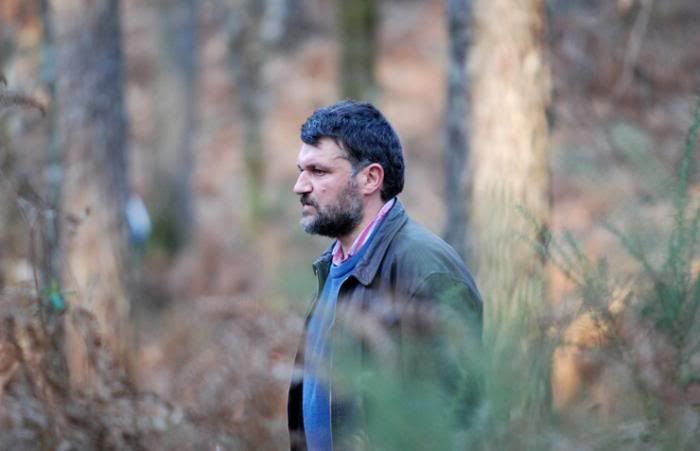
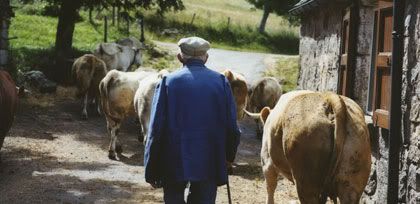
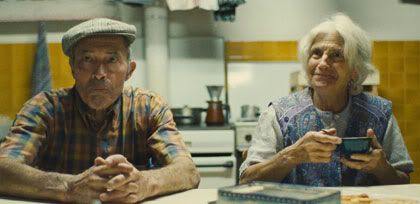
Raymond Depardon's new documentary Modern Life (La vie moderne) isn't as interested in showing or explaining as it in building relationships: a relationship between director and subject, between viewer and viewed, between camera and household. For the film, Depardon returns to the same farmers of the Ardèche that populated his two previous films, and their continuing struggle to maintain a lifestyle that fast is becoming obsolete.

His visits are those of an old friend come back to catch up. With only his wife to hold the camera and a friend to record sound, Depardon is shown candidness and intimacy in conversing with the farmers. An amazing effect of his style is that, in the long silences that sometimes pass in conversations, it becomes uncomfortable for us to make eye-contact with the person on screen. We come to feel as though we're doing more than watching—as though, instead, we're interacting, a part of the dialogue.

The camera presents a lifestyle equal parts distinct and distant from ours, but it's one that doesn't need, doesn't ask for, and doesn't get an explanation. Depardon has very little interest, here, in the process of farming, apart from the impact it makes on these farmer's lives. Nor does he make points about modernity's forgotten people. Rather what he's interested in is people themselves: the things the say and the little things they do.
people

Modern Life is the third in Depardon's series, Profils Paysans. His films don't get much distribution in the States, so a chance to see on a big screen is an opportunity not to be missed. It plays again one last time on Wednesday.


***
money, baby

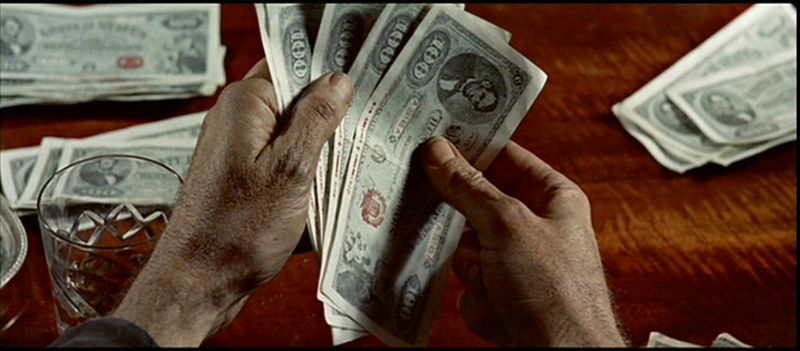
A restoration of Sergio Leone's Once Upon a Time in the West played at the Castro yesterday. As I'd never seen this one on the big screen, and as it demands the big screen, I went. I hope all of you made it out, too. The new print was made possible by The Film Foundation and the Rome Film Festival, with assists from Sergio Leone Productions and Paramount. The Film Foundation and American Express are presenting this and other newly restored films across the country. Keep an eye out for anything they bring near you.

***
light

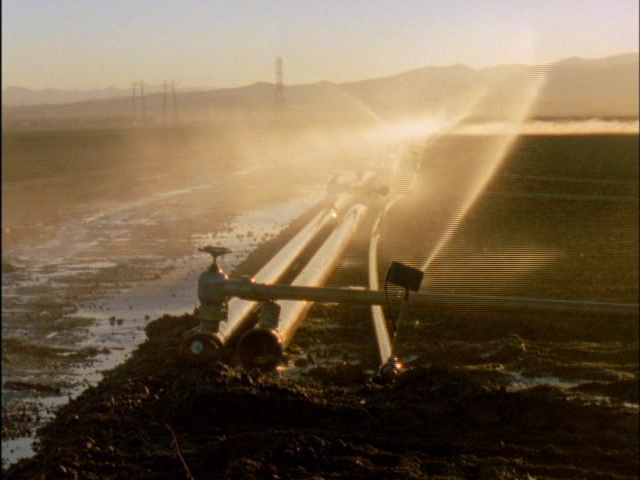
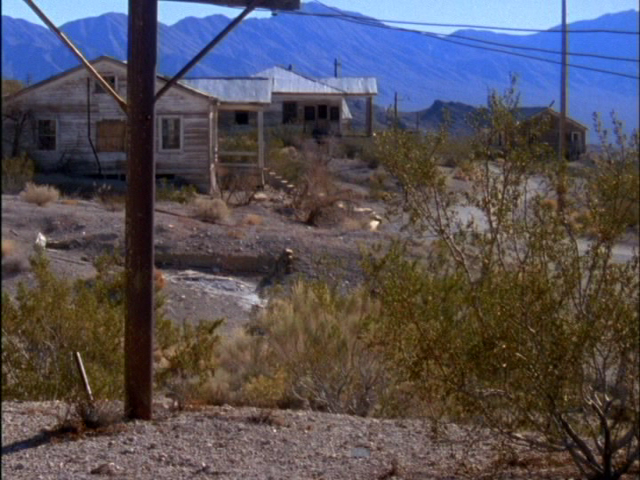
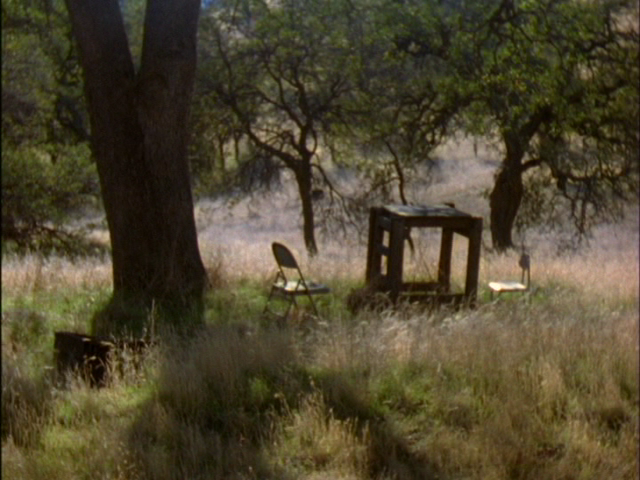
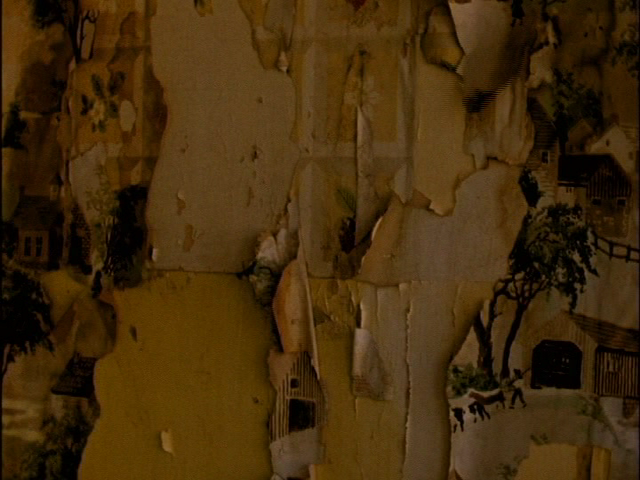
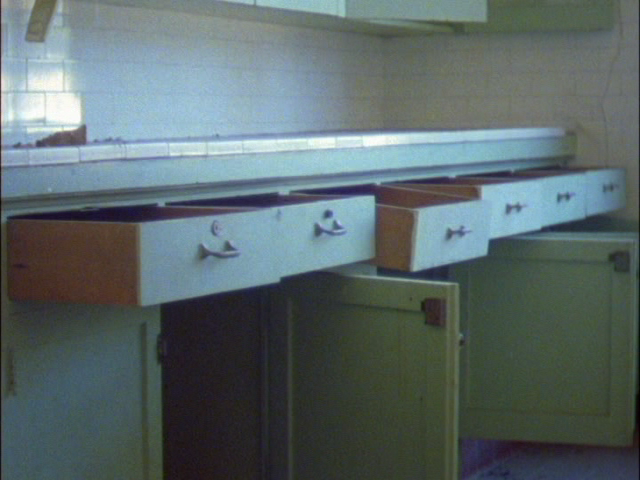
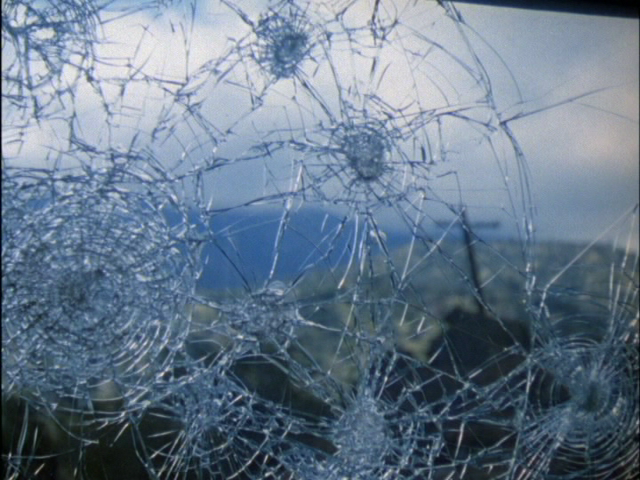
In California Company Town, Lee Ann Schmitt documents the remnants of California's industrial towns—places constructed around business, and abandoned.
empty

The images were captured over a five-year span, and though the film is short, this sense of duration becomes integral to the viewing experience. We linger on objects and the landscapes that house them. Objects are given space and time, which empties them of a single message, of a specific importance.
tree?

We siphon through various meanings to place on the things in images, but they soon fade back into the desertion that has occurred all around them, and resume lifelessness.
cracks

Schmitt weaves these images with archival footage, sound bites, and her own narration—in a tone whose dryness seems to mirror that of these towns—to create a stunning portrait of the ravaged California that is all of our neighbor.
open
bullets

Wednesday, April 29, 2009

SFIFF52 #3: Oblivion + Bullet in the Head

by Mark Haslam

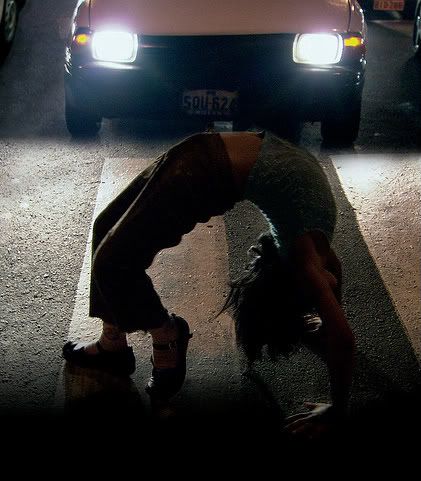
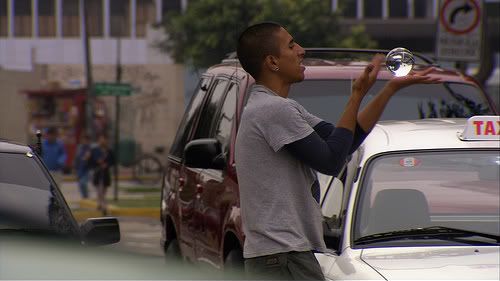
The subject of Heddy Honigmann's new documentary, Oblivion (El olvido), which I saw yesterday afternoon, is broad to say the least: maybe we can call it a history of Peru's modern politics, or an account of the many, many follies of the Peruvian government, or, just, Peru. Honigmann tells the country's story through its people, their memories and their frustrations and their dreams. The camera follows them, integrates itself, for a day or two, into their lives. Among the bartenders and waiters, shop-owners and leather workers, shoe-shiners and panhandlers that populate Oblivion, the most enigmatic to me were the street performers: boys and girls that cartwheel and juggle and handstand through crosswalks, in front of idling cars, hoping to get money from the passengers looking out of their windshields. The dynamic of these moments is amazing. Aren't we like the idling onlookers we movie-goers chastise for penny-pinching? And when they do give money, are they just doing it because of the camera, to look good? But then, aren't the people in the cars the same ones telling this story? So much happens in these crosswalks, as in every other moment of the film: each shot a rich history; each memory, each anectdote a loving cry.

I went to Jaime Rosales's Bullet in the Head for two reasons: one, I'd heard that audiences had been walking out of it in droves, that it was 'difficult'; two, I couldn't get in to see Greenaway's Rembrandt's J'accuse. The 'difficulty' of Bullet is that there is no dialogue: the camera takes an embodied position, so that its position, which is always distanced from our main character, can't hear what anybody is saying. The narrative becomes a document of this man's daily life. Here he is with a friend in a cafe, there using a public telephone, here now at a party, going home with a woman, driving a car, etc. Yet these don't seem like 'difficult' concepts to me: space and voyeurism have been brought to higher levels of consciousness in film many times. Then again, I think (and the film gives you plenty of space to think) that 'voyeurism' might not be the right word—and here enters some 'difficulty'. We don't feel as though we're looking in on a life. The shots are too composed, all too orchestrated, don't feel at all like surveillance. Of course, a film like Rear Window is carefully composed—but there voyeurism lays beneath narrative; isn't, as here, the narrative itself. Moreover, a level of terror enters into each shot because of the title, which announces an event we think we know will happen. But do we want to see it? What agency do we have to not see it apart from leaving the theater all together? We're not voyeurs at all. We're not looking in, we're being shown, being made to watch. It terrorizes its audience, and I wasn't sure how I felt about. It seemed a different kind of terrorizing than that of, say, Michael Haneke, who deals with many of the same issues as Rosales. Where Haneke, for me, is a great success, I'm not sure about Bullet in the Head. I need to give it some space.

Tuesday, April 28, 2009

SFIFF52 #2: Tulpan

by Mark Haslam


hold it high

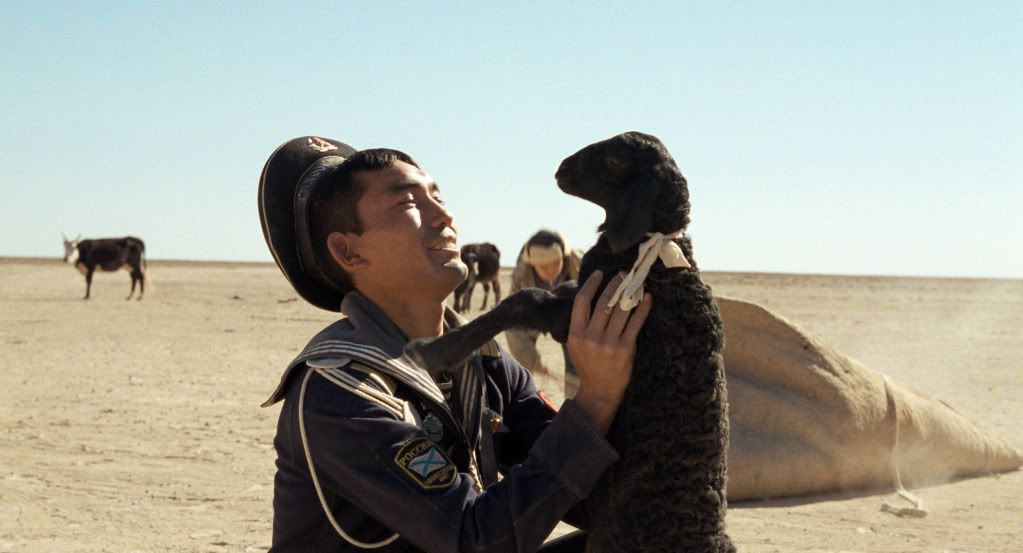
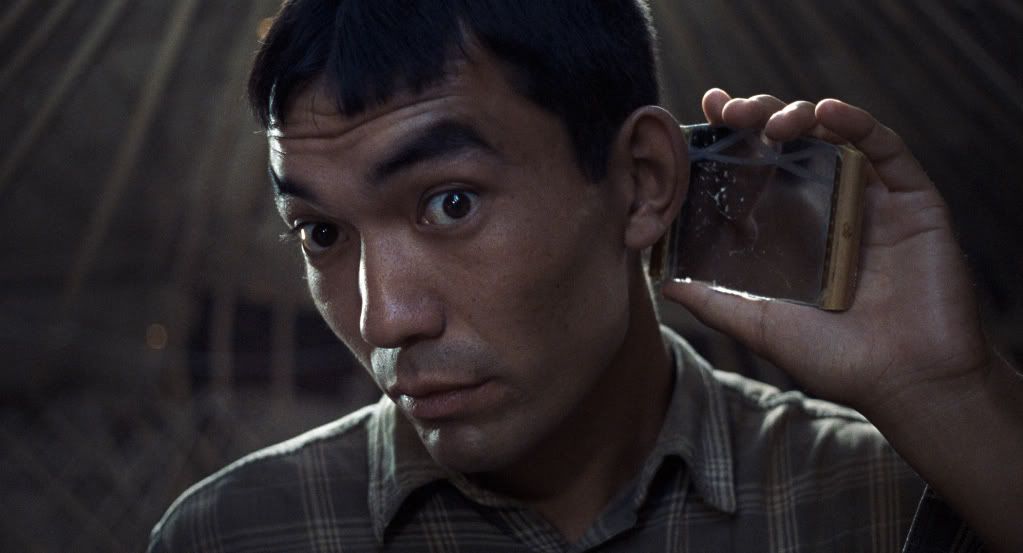
Camel hooves, a cloud of dust, and a modest yurt on Kazakhstan's vast, desolate Hunger Steppe. Inside the yurt, Asa is describing the terrible sea creatures he probably didn't see during a spell in the Russian Army. To one side of him is his goofy, fidgety friend, nodding along to every word, laughing with his gold teeth; to the other side and rather stern is his brother-in-law, a sheep herder in whose home Asa's crashing. He is speaking to the parents of a young girl, Tulpan, that he desperately wants to marry. The listeners either aren't impressed, or don't have much time for emotion. Tulpan, whose eye flashes briefly from behind a curtain (this is about as much as we and Asa will see of her), is also unimpressed. To Asa, the rejection means more than lost love: his dream of a yurt and a herd and a family of his own, a dream drawn on the underside of his collar, depends on his having a wife. This is the only way he'll be given a herd. This is the only way to pursue his aspirations.

Tulpan is the document of Asa's pursuit. It seems fitting to call it a document, because director Sergey Dvortsevoy focuses just as readily on the land and space around as on character and drama. (Dvortsevoy has made several documentaries, all of which I now want to see.) It is, after all, the land that houses Asa's dreams and frustrations. Dirt kicked up clouds the camera, and we see nothing beyond, are forced into the foreground and into the present. Or, gazing off into the distance, we see everything, which, here, is nothing. And yet, through Asa's eyes, the vastness, the emptiness of the steppe becomes exceedingly beautiful. I couldn't help but dream, while watching the film and even a little now, about a perfect life on the Hunger Steppe....

So much of what makes this life appealing is the animals. Not only are they charming as hell, snorting and snarling and rambling about, but they introduce a level of spontaneity that allows Dvortsevoy's style to flourish, enhancing the sense of documentation that powers the film. In my books, the long sequence of a ewe giving birth on its own makes Tulpan worth seeing.

a globe

I saw it last night at the Kabuki. It plays there again on Thursday. Tomorrow, watch out for Heddy Honigmann's Oblivion, which is playing for the last time. I will be there, and I think I might camp out to see Wild Field and Rembrandt's J'accuse later in the day. It's gonna be a long one!

keep it close

[A note: In case you miss it at SFIFF52, Tulpan will begin playing in the Bay Area May 8th as you can see here at the Zeitgeist Films website.]

Monday, April 27, 2009

SFIFF52 #1: The Weekend

by Mark Haslam


readings

I spent a good week staring at the line-up for the San Francisco International Film Festival, trying to decide what to see, what to skip. Making the decision to not see something, however, was near-impossible, especially with some 150 films from across the globe screening. So, as the fest kicked off last Thursday, I chose to not choose, to not plan. Instead, I'll wake up each morning, see what's playing, and, with perhaps some light research, pick a film to see. I'll report back here with my thoughts and my hopes that you in the Bay are enjoying the SFIFF52 as much as I am.

On Friday I caught Jonathan Parker's (Untitled), a satire of the contemporary art and music scenes. The film fails, I think, where most such satires fail: laughs come from a facile immediacy, from pointing at contemporary art as funny, silly, and stupid in and of itself. Parker knows the dedication that most of these artists have (being an avant-musician himself for many years), not to mention the sense of humor many artists have about their works. But the film misses these things. And when it tries to show them, we've been distanced too much to see the characters as anything but parodies—and ultimately too distanced to care.

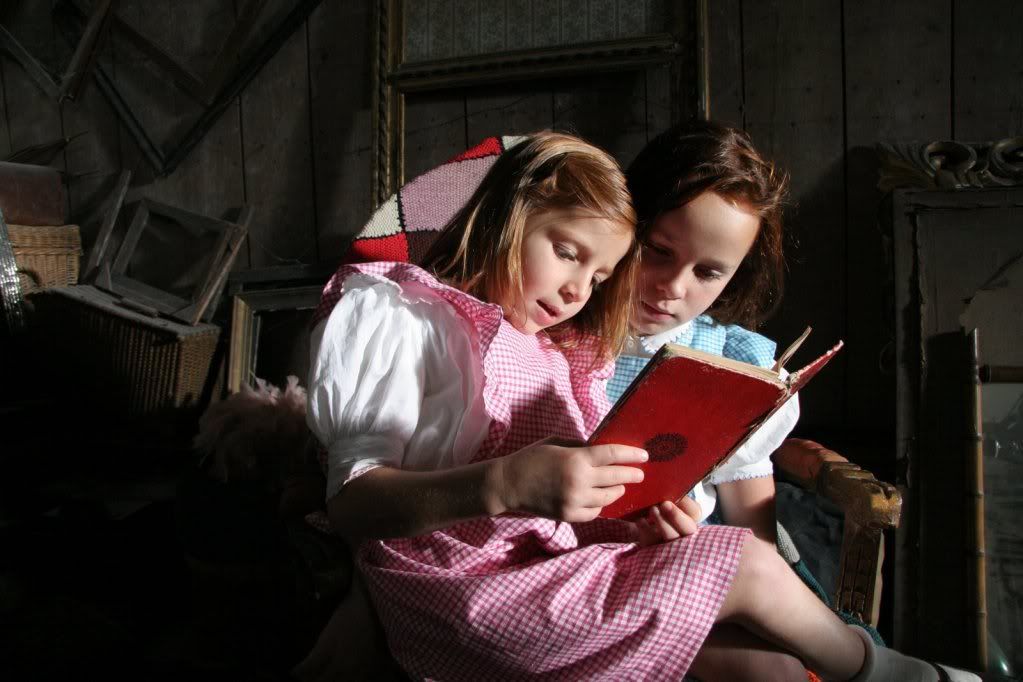
Catherine Breillat's new film, Bluebeard, has two threads: one, a version of, “Charles Perault's 17th-century fairytale about a gloomy nobleman with a penchant for murdering his wives,” in Richard Avila's words; and two, a young child (named Catherine) with a penchant for tormenting her squeemish older sister by reading the gruesome story. A double story of sisters—two from the Perault story, two reading—the film wonderfully, subtely, Breillat-ly marries sexuality, wit, and self-consciousness. I'd like to write more extensively on Bluebeard, and I'd like people to see it. There's one last chance, this Wednesday. If it helps, check out Daniel Kasman's words after the film's World Premier in Berlin.

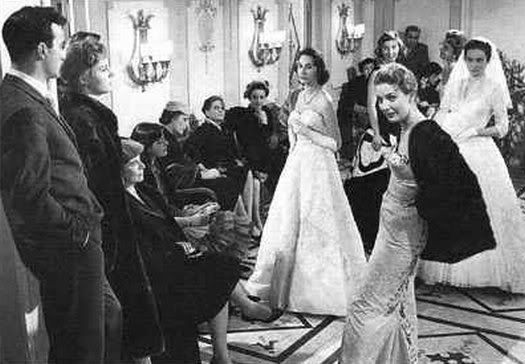
A new print of Antonioni's amazing, rarely screened 1955 film, Le Amiche, is a highlight of the Festival. It plays again on Tuesday at the PFA. It's Antonioni. Go.

ladies!

[A note: Don't forget to check out further, different SFIFF52 coverage from VINYL buddies Brian Darr and Michael Guillen and Darren Hughes as well!]