Showing posts with label Last Lost. Show all posts

Monday, May 24, 2010

Last Lost: "The End"

by Ryland Walker Knight
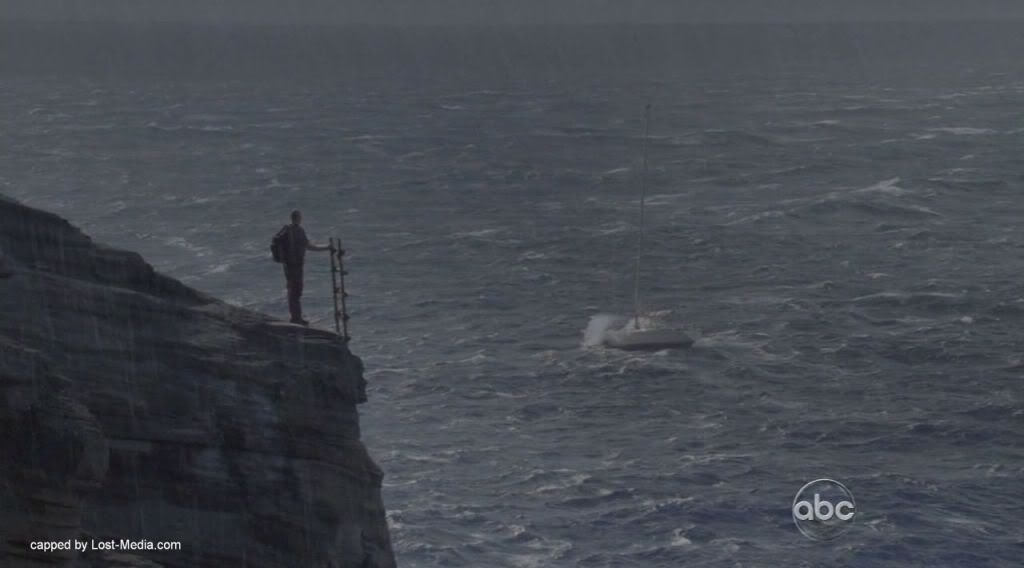


Granted, a six-season series premised on mystery could never deliver a satisfying "solution" to its "riddles." Hell, a lot of Chandler stories make you feel hollow. But the difference there, I suppose, isn't the investment versus reward thing but the kind of nuance and general philosophical arguments made by such endings, and such style. The MacGuffin as a way to get around mystery's meaning and all that. Which is why a lot of the riffing on Lost seemed excusable: in the interest of entertainment and tickling your brain, and dollars in the bank. However, artistically, you can't ask for dumber. Tug-o-war is, as most people will learn at one point, only fun for one group of people in the end.

The only excusable rationale behind the ending of Lost puts that whole "sideways" story—or "primed" as I've called it through this run—inside Jack's skull as a real flash before his eyes, before they close for good. However, everything about that story line aimed to show these characters as the characters they were on the island. This presumes a few stupid things we're supposed to simply believe in because the second-to-last scene was set in a church. For example, given the waves of relief after those flashes, it would appear that these characters are all just waiting to die while Jack hugs his dad; by extension, everything does revolve around Jack in the way he believed. That's not exactly bad writing, but here it's unchecked hubris. In fact, it's celebrated as finding some faith. And, then, all the other people are only there because the only thing that mattered in their lives was the island or what happened on the island. That is, instead of making the final escape matter the most—Kate and Sawyer and Claire can shack up in an unholy trio of bad vibes and worse life choices!—and where the fuck does Richard go from here?!—we're supposed to find Jack's "full circle" endgame poignant. Put otherwise, it's cynical and narrow-minded and not about living life.

I don't care about the implausibilities of everything. In fact, I dig the fantastic the most. The imagination is what drove the show on, and kept its fans hooked; the tease of the possible. We've all written our own branching fan fiction already with our guesses and our gchats and our weekly recaps. Lost's lasting legacy won't be that it united a record amount of viewers but that it knew how to play the television medium perfectly. It maximized sentimentality, action and wallets with a few decent jokes and a ton of bad ones. And I'd be fine with it as a goof if it didn't take itself so seriously. All this talk about "letting go" in the final season is clearly aimed at the audience, that they'll/we'll be okay without these characters, but basically it's the bullshit way out of the same predicament any great show faces. This is what makes The Sopranos so brilliant, still, because I can remember that confusion and then thrill when the screen went black and we thought Cuyler's cable had gone out but in a minute realized we'd just gotten duped into expecting a resolution we'd never feel satisfied with. I don't care if Tony was killed or not, which is why giving these characters tidy death fantasies on Lost is such an affront. Some of the best moments of Lost were the unexpected deaths. That death was never fair, even when it was expected.

Call me morbid, but I'm terrified of dying. But I think about it a lot. I heard Stanley Cavell say once that any philosopher takes up philosophy because his or her life has been shattered in some way and s/he wants to reckon how, not why. If you take a look at Lost as you should any text that matters (it clearly struck a chord with plenty, evaluations of quality aside), you'll see a lot of avenues for thoughtful engagement. But, as the finale proved, all roads converge again (likely in a pile-up). The branches I got so jazzed about at the start of this season were more like tributaries. And we know that water runs down hill, toward the ocean. Unless, of course, you're on a crazy island full of magnets and mystic shit and clackety smoke. There, the water runs to a source, a light source, a source of light—and that light's absolving in the right circumstances. That's what I'll take away: that they made it about light, and opening your eyes. I'm not exactly satisfied, but I'm also done. I'll take my flight from this fancy free dream machine. I'm sure I'll talk about it a bit more here and there but, really, I don't need to think about Lost again. Hell, I'd rather watch a Sopranos, or a Seinfeld, and laugh my butts off. Those were shows that knew how to quit and keep a carrot dangling. The secret, I'm certain, is in the comedy. Picking up pieces or sweeping junk away, you gotta love this life. Or at least laugh at it.

Wednesday, May 12, 2010

Last Lost: "Across the Sea"

by Ryland Walker Knight


So Lost finally gives us something of a Freudian-like take on a few different histories chopped and screwed together (both biblical and classical; go on a wikipedia adventure to trace traces, maybe) and all we get, really, out of this mythology episode is the origin of the smoke monster. Granted, I really like seeing Titus Welliver and Mark Pellegrino, and their scenes are usually good, but it's mostly just dancing around ideas we already have. It's an episode to prove these writers went to college, mostly, and to keep the lid on the magic box just a little longer. That is, though we know now where these two forces (they're not really characters) came from, we aren't given any angle on the real purpose of the world surrounding them, the island.

What we do know now: That the Man in Black wants to go home because his true mom was Roman or Greek or some kind of sea-faring ancient. That Jacob was born first and that these two are in fact fraternal twins. But that this doesn't make the Man in Black any kind of inverted Esau eager to buy Jacob's birthright; in fact, he wants his own, his home. That the Man in Black killed the mom with no name, which made Jacob angry; so angry, in fact, that Jacob cast his brother into "the light" down what looks like a drain, which doused that light and gave rise to the column of clickety smoke. That it was Jacob's duty to protect this light. That, thus, Jacob failed his first day on the job. That the brothers have been playing a game of one-upsmanship since the beginning involving oppositions. That the protector of the island always sees the same cycle in part because the protector always leads the arrivals in the same direction. That people are people are evil, apparently, and prone only to corruption. That, in essence, the mom and son with no names were the original sinners and that original sin was and is a selfishness.

I'm guessing, then, that "What They Died For," will be more about these two dark forces, though it could easily be about anybody on the show that we've watched die, or it could even be more about "the light." But, to be honest, I appreciate them keeping "the light" vague. It introduces some element of faith into the show that is really about an object of faith, or makes faith directed by objects as much as by actions. Rituals matter, certainly, but that's not the aim as much as finding purpose through this devotion. That certainly seems to be Jack's "arc" so far. But faith is tricky, and Lost seems atheist, not agnostic, which leads me to worry "The End" will prove nihilistic after all. But then I remember how practically any event in Lost is milked for its sentiment and I remember my other fears that it will prove to be "humanistic" after all. That there will be a faith "in people" in the end. Of course, I'd like to believe in that. But it's only set up, here, as an end to oppositions. As if there can be a leveling (in any sense) in the end that sets things in their "right place." What I want is creation. They need to make something of this mess, not reduce it. Thankfully, though, we've seen the show's not afraid to be "unhappy" with its "resolutions" so at least we can wait for some kind of killings that matter, though that's the cynicism it seems largely unhappy with itself.

Wednesday, May 05, 2010

Last Lost: "The Candidate"

by Ryland Walker Knight


I guess it was "bold" to kill off Sun and Jin right as they reunited but the main thing that was great was how the scene was shot and lit and how Daniel Dae Kim just gave up on his accent in those close quarters of The End. I guess we're supposed to take Sayid's word for it and believe that Jack's "The Candidate" after all, but that's a little disappointing; I'm glad they used the word in the primed world, too, talking about John. I guess I don't really mind that the prime timeline has a largely different history, but it gets in the way, sometimes, instead of making things easier to swallow. I guess Terry O'Quinn was great when he said goodbye to Matthew Fox with a mask-chuckle. I guess Matthew Fox, for all his shifting in place, was a-okay in this episode. I guess I wish Kate had died on the pier. I guess Sawyer may never get off the damned island. I guess I could write more, don't know if I should, but it's my birthday and, despite the thrill ride that was last night's episode, I don't want to spend any more time on Lost than necessary this morning. I guess that's because I have to go to work.

Monday, April 26, 2010

Viewing Log #42: What's broken's broken but glue's going around [4/19/10 - 4/25/10]

by Ryland Walker Knight


not a knock knock
what's in the background

  • Treme "Right Place, Wrong Time" [S1E3, Ernest Dickerson, 2010] A marked, knowing improvement that casts a shadow on a lot of bad behavior and surprises with some real evil behavior and a genuine apology. Also, a beautiful final shot capping a beautiful final scene. Still don't like the scraggly keyboardist dude.

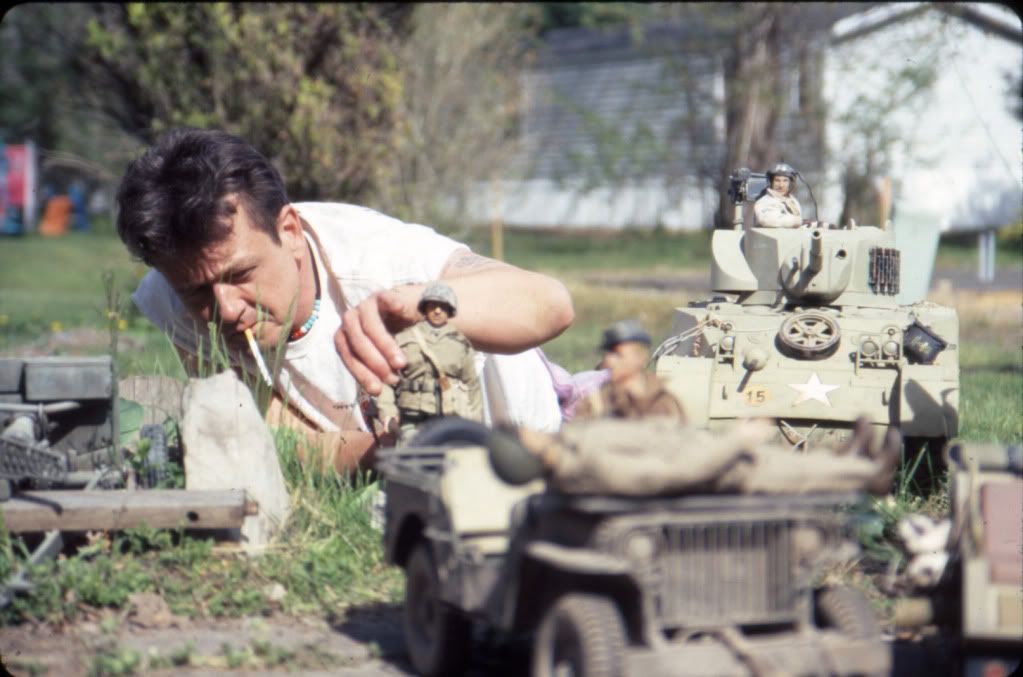
  • Marwencol [Jeff Malmberg, 2010] Watched it in pieces over the week. It plays next week at the festival. I recommend it. I'll try to write something a little longer in a bit. Here's the film's website.
  • Party Down "Steve Guttenberg's Birthday" [S2E5, Bryan Gordon, 2010] Not sure why Starz is showing this one now on demand, but of course I'll watch it. Guttenberg's great, really commits, and Ryan Hansen is perfect as that bleached idiot. And this one had not just a McLovin cameo but also Lizzy Caplan in a hot tub and jokes about people in AA having "real" drinking problems that Ron doesn't have; funniest is that you kind of believe him, that AA's just a put-on for him.
  • Party Down "Jackal Onassis Backstage Party" [S2E1, Bryan Gordon, 2010] Everything I loved about the first season, minus Jane Lynch. Except Megan Mullally is an apt substitute in a different (ok: shorter, stupider) way. Still love Lizzy Caplan's insecurity and her smile (like a lot of boys, I trust), and Adam Scott is pretty underrated for his tight-wad act. I'm sure it'll unravel, though, as tensions and jokes mount.

  • 36 vues du Pic St. Loup [Jacques Rivette, 2009] # Big surprise, I know: on film it's even better. The colors mean a ton, as does the graceful slide of most camera set ups. Even the static ones aren't static—they likely push somewhere, or open another space through simple framing or an edit. My favorite edit is the one along that wall when Birkin's getting ready to leave; she walks across the pipe dividing her and Sergio Castellitto and then past him off camera; he turns, smirks, and follows; there's an edit to five more, different feet of wall adjacent; a new tact of conversation begins, however hesitant, until Sergio disagrees and exits in the opposite direction (the way he came in). My favorite camera move is the one from outside the tent, watching Sergio walk over wires to stay in the frame as he approaches André Marcon in the foreground, then their little dance plays out in medium, then Sergio moves into the tent with the camera to find Birkin alone on a riser surrounded by blue. That's the other joy of this little, dense film: Sergio Castellitto dances through it, enters every scene as an interloper from the background and then stirs things up or plays a bit in a messy way. It reaches its apogee when he takes the stage. I should try to write some more about why I love this thing, but all the regulars are there: acting, physical comedy, some wordplay (in secondary languages), a cohesive mise-en-scene that makes jokes out of every scene's structure, sadness mixed with hilarity, and brevity. Also, just my luck that got to see it with Danny. Then I made this from materials at home.

  • Lost "The Last Recruit" [S6E13, Stephen Semel, 2010] Certainly entertaining, but still table setting. We watched it with a lot of noise, so that might also explain why I only did some images in this post.
  • The Holy Girl [Lucrecia Martel, 2002] # Looking at a certain scene for a certain piece of writing that should have been done ages ago.

  • Treme "Meet De Boys on the Battlefront" [S1E2, Jim McKay, 2010] The first half had me not just let down but actively pissed off at its narrow ideas; but the murder and a few other things in the second half made me think twice about writing it off. Clarke Peters sure is something.

a real world

Tuesday, April 20, 2010

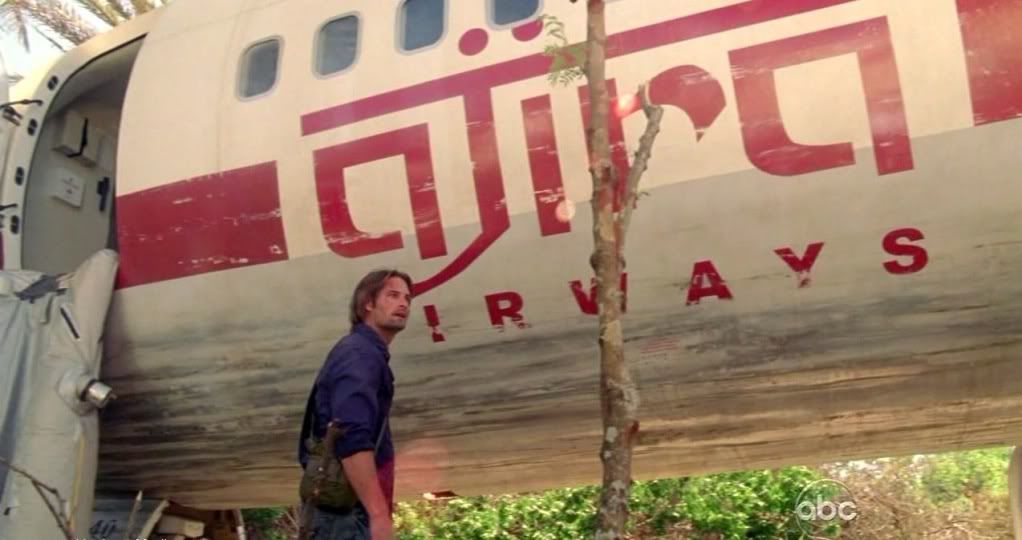
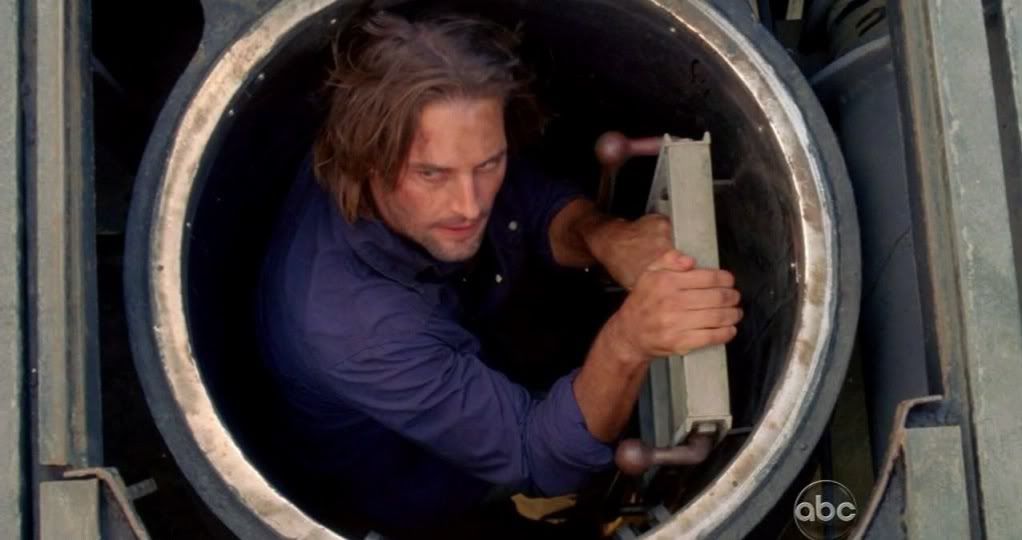
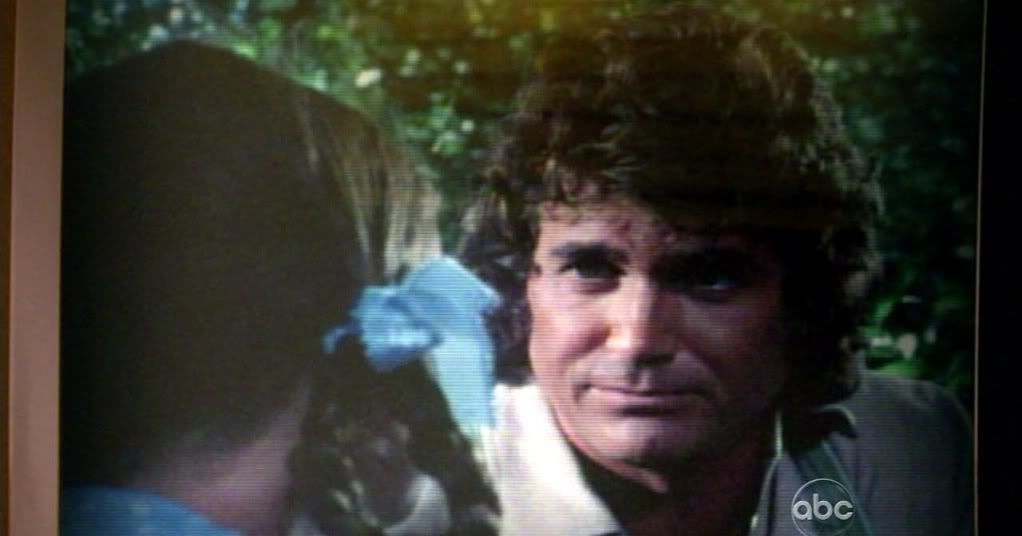
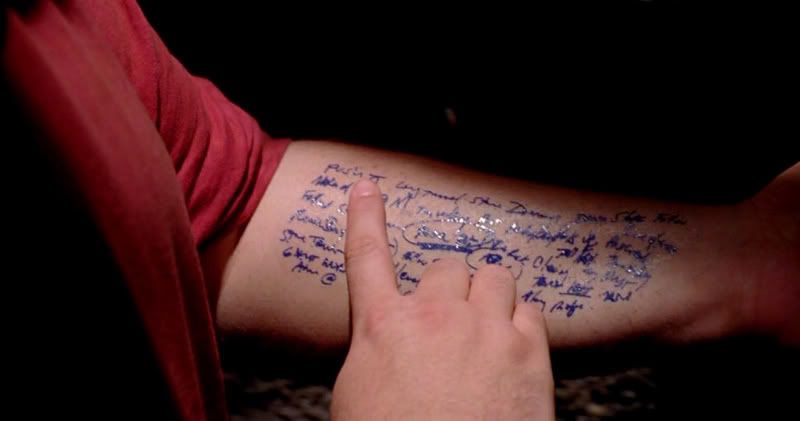
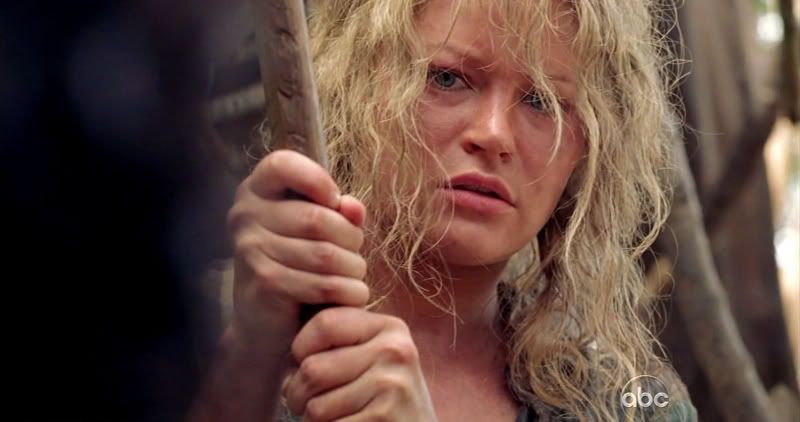
Last Lost: "The Last Recruit"

by Ryland Walker Knight


I.


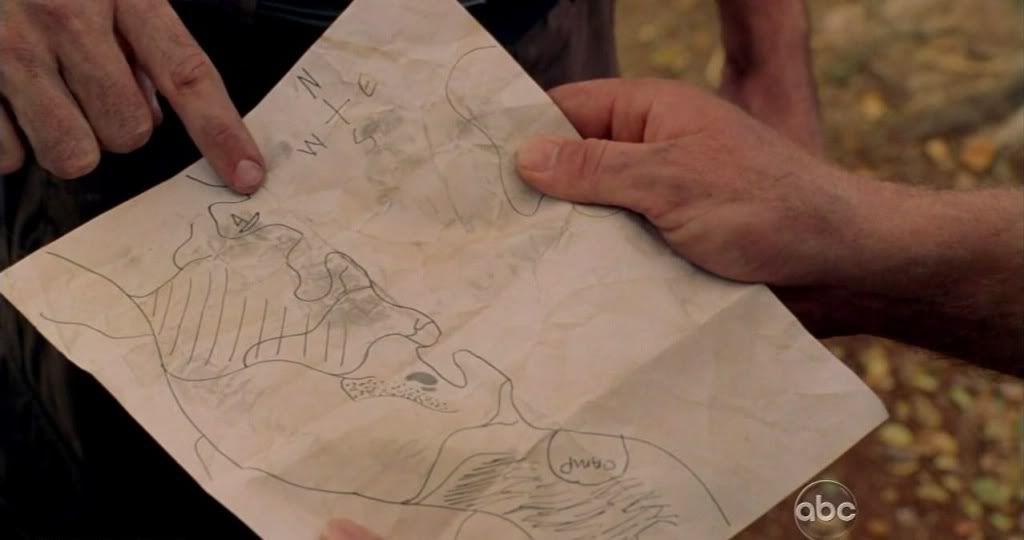
X never marks the spot


II.


Go on, tell her


III.


Hipster hair, sneer


IV.


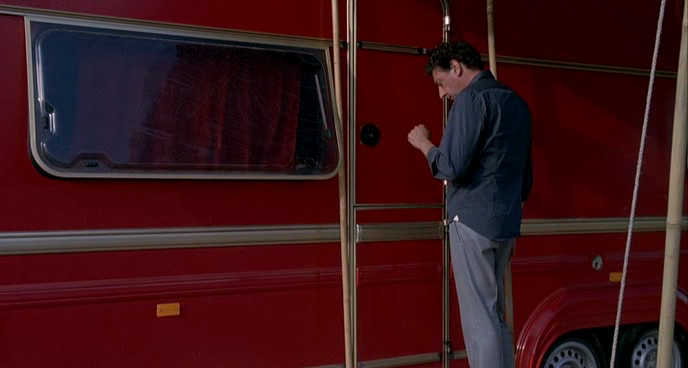
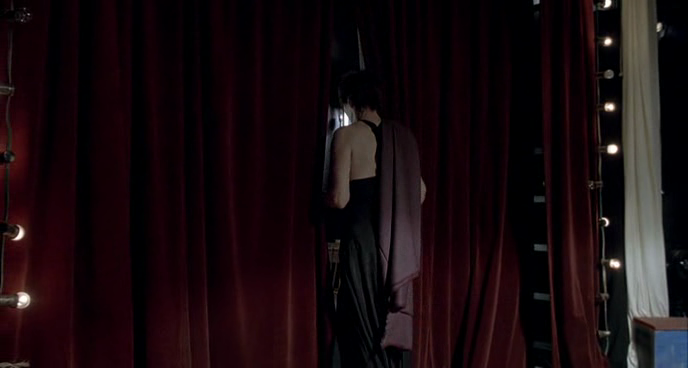
Smokey ringing loud

Wednesday, April 14, 2010

Last Lost: "Everybody Loves Hugo"

by Ryland Walker Knight


—I see people

This episode was worth my time, I'll tell you what. Consistently hilarious, somewhat surprising, an all around good time with three beers in my belly. Things started out great with that goofy (but not quite goofy enough) video celebrating Hurley for his generosity, but things got kicked up a notch when he said he had an event the next night at "The Human Fund," nodding at Constanza's fake charity, and signaling just how "false" these sideline stories may in fact be. Or, perhaps, that this idea of charity, this vision of a more perfect universe, is in fact a lie. No surprise there, I suppose. But funny to think it's a nod to the best sitcom ever that does this for us (for me!) here.

And that was just the beginning. That was before Ilana got blowed up, before Dark Locke threw Desmond down a well, before Desmond RAN OVER LOCKE WITH HIS CAR! Seems like we could go around these interwebs talking in all caps about Lost for the rest of its run. It holds that much promise—to spin wacky events and characters into one another—in my heart. Things just keep getting sillier, and funnier, and that's never a bad thing on a show this convoluted and, by most lights, all too self-serious. So good for them for making fun of themselves so much this episode. (Also, Ben's little reflection on what the island will do to them, the remaining principles, once its done with them, smacks of last week's winks at the audience.)

This episode also had a few great actor moments, too, though. First of all, Harrold Perrineau makes the most of his cameo, as if that wouldn't happen. He sells not only a terrible explanation of how he's not Dark Locke (he's the voices of those who cannot move on?) but also that cheesy apology he wants Hugo to deliver. Next, Henry Ian Cusick has been typically calm and winsome since his return to the island and the show; his line reading of "what's the point in being afraid?" was superb. As was Terry O'Quinn's puzzled reaction before the throwing of the Desmond down the well. I guess we see a little more of why Desmond was brought back after all: if he can scare Dark Locke, there's a good chance he can stop him, too, somehow. However, especially after his own "big moment," which had some pretty terrible spell-it-out dialog, it's hard not to think that Jack will be the one to grab tighter reigns on this beast of an island.

Jack said he's trying to let go, but I can't see that lasting very long. There's the "worry" that Dark Locke will prey on Jack the same way he preyed on Ben (or any in his crew), but I'm guessing Kate's skepticism will likely win out and convince Jack to "do the right thing." Which, once again, makes this a table-setter despite the incidents both fantastic and hilarious. And, with that weird sample of "The Rowers" over the promo for next week, I'm guessing we can expect a few more surprise deaths, or at the least a few more injuries in the sideways story.


—Ouch!

Wednesday, April 07, 2010

Last Lost: "Happily Ever After"

by Ryland Walker Knight


Well, I suppose the last two episodes have raised the stakes some as we wind down the series, but I cannot quite stomach all the overt, to say wall-to-wall, sentimentality that drives a lot of these twists and turns. Or, as my friend Eric put it, Jeremy Davies is the last person you want playing sentimental. Don't get me wrong, I'm all for the Desmond-Penny connection. But, good grief, give me more people in electric chairs, or chambers, or between two coils of light.

There was plenty of fun to be had in the 2004' plot given its fits of stupidity and the literal plunge into a new future it takes midway through. It was great to have it framed as a way of seeing, too, with that damned Eloise Hawking-Widmore-Whatever (why can't we get more Alexandra Krosney?) getting all haughty as usual and telling us, through Desmond, that we're not ready to see why things are the way things are in this primed world because, well, there are more episodes to come. It's kind of great just how much Cuse and Lindelof talk at the audience, but it's equally forever infuriating. Nobody likes a tease unless things really cut loose later. And there's millions of us hoping, some probably praying, that we get a great consummation in the end, a real happy ending.


Which brings me to the episode's title. "Happily Ever After." In true Lost fashion, it's a flip: this supposed idyll of an alternate 2004 will not, in fact, be a simple and tidy and happy all over place. In fact, it may well be a dream or a fantasy or some kind of projection as much as an end. And Desmond's new purpose, to show the other passengers something, screams oracular ambition. It also ties into that other show on ABC, "Flash Forward," which I've never seen but understand enough to form a funny hypothesis about, just as last season spoke to another sister series on the same network, "Life on Mars." Lost, as far as I can tell, is easily about the medium of television and its history, incorporating all kinds of shows (as well as "physics" and "religion") into its mythos, and it only makes sense that Season Five incorporated time traveling to the 1970s in a way to talk to "Mars" (or rhyme with it) as Season Six talks about seeing the future, or the past, and how to maybe change it, in a way to talk to "Flash Forward." Also, there's that word "flash," which everybody uses to describe the alternations between timelines on Lost. In any case, it could be simple happenstance, but it makes it more fun for me to imagine these dudes playing with these kinds of resonances.


Because what's a television spectator but unstuck in time, vacillating between stories based on electronic pulses formed by human technology? Put otherwise, Desmond is the ultimate audience surrogate. No wonder he's so popular. So, yes, I was thrilled to see him follow Sayid, and excited for what he might see and do; and, yes, I was excited by his choice to embrace the visions of his other life. I haven't read enough physics to know just how these dudes are going to rationalize this crossing of the streams, nor do I know if they'll rely on it as they seemingly have in the past, but I do know that these Widmores will play a part, and that more signs point to a satisfying ending for everything.

Look at the titles of the final episodes, for one, and tell me you aren't giddy to know who "The Last Recruit" and "The Candidate" are (I'm guessing Desmond and Hurley, for what it's worth), or, for that matter, "What They Died For." And don't forget the probably-will-explain-it-all "Across the Sea," which is purportedly about Jacob and The Man in Black, nor "The End," which I'm hoping is as much a physical location as a marker-answer to Jacob's line at the beginning of "The Incident" that "it only ends once."

Sunday, April 04, 2010

Viewing Log #40: A green fort in a city forked [3/29/10 - 4/4/10]

by Ryland Walker Knight


Lack
I shot some video, too

  • Lightning [Mikio Naruse, 1952] Pretty great, of course, and the lightning does surprise in a way I didn't expect. Didn't expect it to be as funny as it is, nor as bleak. But I'm told that's par for the course with Naruse. Now I'm definitely compelled to watch those copies of Repast and Flowing I have at home.
  • Hideko, the Bus Conductress [Mikio Naruse, 1941] Loved how aleatory and almost silly the whole thing was, and its brevity, but I was pooped and passed out for maybe half of it.

  • Groundhog Day [Harold Ramis, 1993] # The less said, the better, probably, but this time, aside from the usual hilarity (pretty much every interaction makes me laugh), I'm struck by the idea that, among other things, this is a movie about what it means to be an actor in a movie. You get all the chances you need, really, to perform in exactly the "right way." Does morality work like that, too?

  • Close-Up [Abbas Kiarostami, 1990] The new print that just ended a run at Film Forum, and will likely make its way West, is indeed beautiful. I'm sure the Criterion will look lovely. And what a lovely movie! Only the second Kiarostami I've seen (I know, right?) and it topped the other, Taste of Cherry, with ease (and I own that one). Maybe I'll say more about this one if I see it again back home, or simply at home on that upcoming disc. (I should probably see some Mohsen Makhmalbaf movies at some point, too, since he seems like quite a sweet human being.)

  • Street Angel [Frank Borzage, 1928] Yes, very romantic and histrionic, with a humungous set as backdrop. The conceit of lighting matches to see somebody's face in the fog on a wharf was pretty amazing. The final "redemption" was not. Still, worth seeing with a crowd of old people in the middle of the afternoon.

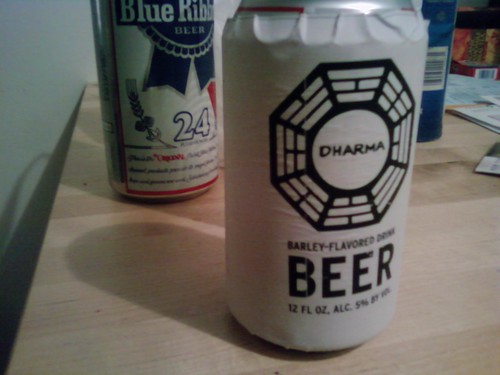
  • Lost "The Package" [S6E10, Paul Edwards, 2010] Saw this with a mighty fine crowd, and a few Dharma Beers in hand. In fact, I ordered a "Sawyer," which is a beer and a shot; I chose whiskey; as Chris said, not a sipping whiskey. But it was fun. And the episode was good, too, I suppose. Very happy to see Desmond back in the mix at last.

Not a gym mat

Tuesday, March 30, 2010

Last Lost: "The Package"

by Ryland Walker Knight


Photobucket
[As I said, I'm not going to write anything this week.]
[But my buddy Ali Arikan will over at The House.]

[Bonus: I didn't write anything, but I did drink a Dharma beer or two.]

Dharma Beer

Tuesday, March 23, 2010

Last Lost: "Ab Aeterno"

by Ryland Walker Knight


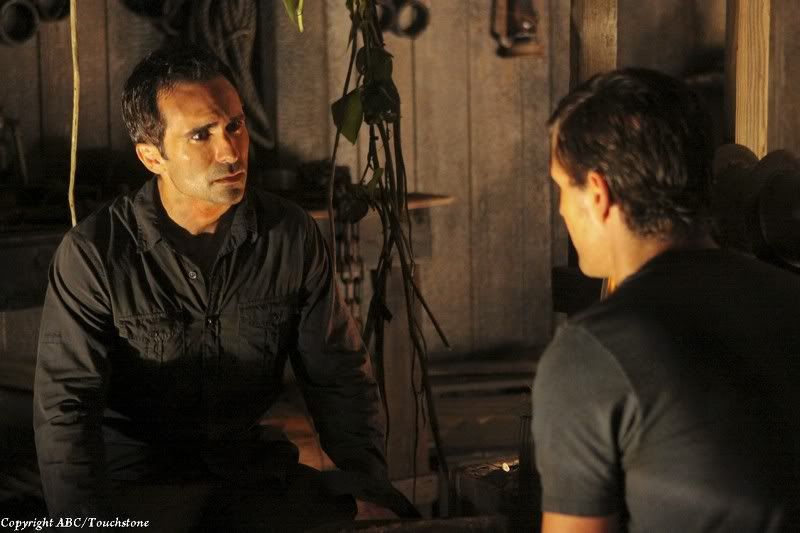
Easily the most "stylish" episode of the season, what with its longish takes and lowish angles, this Richard mythology is also not too great a reveal. How could Richard's "this is hell" thing be true? How could it not be misdirection? How come I kinda bought it at first, for a blip of a second, and then a few segments later almost bought it again? Must be because I've given up hope to a certain degree, and also because I've given up trying to outguess this shit. Must be because I was having fun with the mythology. After all, despite confirming my suspicions about what's really went down in that little love triangle, it was certainly entertaining to see Nestor Carbonell cry and squirm and play pawn.

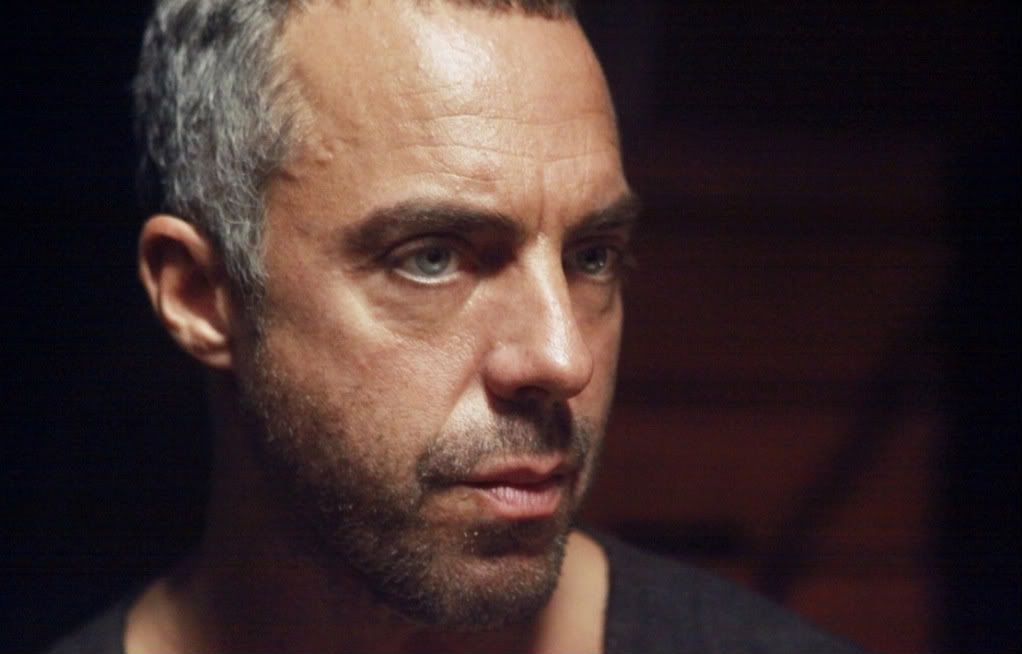
Really, the only thing to talk about with this episode is the dynamic between Jacob and the Man in Black, as played by Titus Welliver. Because, I mean it, what are you going to say about Richard's little crisis? It wasn't exactly a flipped script, or a mirror of the earlier events, but it plainly cancelled itself. That's what's so frustrating about the emerging end game: it's a leveling. Jacob's gloating, as it's called by the Man in Black, is about keeping things even, keeping a balance. They are free to confront one another because of this balance. (And we get scenes like the final one from time to time.) Jacob's death seemed to tilt things, but it isn't exactly so lopsided yet. And I don't think it will be, given the morality of the show, which is oddly might-makes-right in a lot of spots. Unless, of course, evil is defeated. But I just don't know how that can happen at the end of this season. It'll take some serious ingenuity, and a lot of dead bodies.

So, while we're here, lemme turn on the gas and get a little loopy: nobody comes in peace, ever, even the peaceful. In this arena, no ambition is pure. Even Jack's just a selfish dude prone to working out and shouting when he's not crying. Jacob, it would appear, isn't just trying to keep the darkness at bay with a wine-jug stopper for anti-apocalyptic reasons; his hold on his antipode seems personal. But I don't think the show will go and get all Hancock on us in the final act, proving these dudes are Zeus and Hades or some amalgam of Egyptian dieties, as the statue and the hieroglyphs and the cave writing all suggest. If the title means anything, it could point to some continuum or another that these sandbox idiots keep perpetuating.

So, flying in the face of what I said above, I'll try to guess at where these figures come from: maybe we're in for a religious reading of morals after all. Some new agey bullcrap no doubt. Or, maybe they "expose" religion as no different from the fantastic, to say an interpretation of the real and its consequences in a realm of near-limitless possibility. Of course, either of these is not all that plausible since one of the real pleasures of the scenes between Pellegrino and Welliver is that these seem like real humans with real human hearts and hurts that had to spring from somewhere. (Psychological reading alert! Ack!) In any event, if each episode is as goofy as this one—which included a couple of vintage Hurley-sees-dead-people scenes and a galloping horse and a surfside proof of life and a final shot designed to awe that only came crashing down with a hoot—then I think we're in good shape.


[Here's a hardliner, to go with Titus above: if this week's recap didn't satisfy you, don't hold your breath for next week. I'm not gonna do one. Just gonna put up an image, maybe, during a week off, away from my daily life by a good stretch of space and time.]

Wednesday, March 17, 2010

Last Lost: "Recon"

by Ryland Walker Knight


—Don't be fooled; not a dungeon

Sawyer episodes are usually a lot of fun because he usually gets into a lot of mischief. This one proved no different. And, for once, I was totally into the sideways story where Sawyer's Jim, an LAPD detective working with Miles, for the simple fact that it played like a parody of the buddy cop genre. Sure, it was kind of cool to see Charlotte show up undamaged, and the final chase to throw Kate against a fence was lively, but mostly it was hilarious to see these two dudes play these roles. Only problem with it is that is that Ken Leung is a better actor than Josh Holloway and seems in on the joke a bit more. Not to say Holloway's no good, but he mostly scowls through the episode.

I was talking to a friend of mine the other day about acting on this show and we agreed that it's probably one of the easiest jobs around because the writers set you up with a certain trait or tic or single motivation and then all you have to do is make that believable; or, as was said, "do that shit to death." Holloway's been doing the charming thing for so long that his darker moments never seem quite that dark. (However, when he bust out of the temple and cried on the pier with Kate, he was pretty good.) Even in that mischief, he's seductive. He plays all angles to win over whomever happens to be his interlocutor, such as Dark Locke or Charles Widmore (or even Charlotte in 2004'). After all, Dark Locke said, Sawyer's the best liar he ever met.

Part of what makes him a good liar in this episode, on the island at least, is that he's largely telling the truth. Somehow, the truth about actions masks his motivations. Like a lot of the "Losties" of old, Sawyer's reverted to looking out for number one only. In a way, his aims echo Michael's in that they're of a single purpose (to leave) except Sawyer plays the game better. Which is to say that Sawyer is a better actor than Michael (though not necessarily Holloway over Harold Perrineau) because he (Sawyer) doesn't make the interactions about him or his motivations; these encounters are all about placating, or seducing, the mark Sawyer's made. So Sawyer tells Widmore he'll help him kill Dark Locke, and he tells Dark Locke what he told Widmore to help Dark Locke think he's helping Dark Locke kill Widmore. Then Sawyer tells Kate what he's done as a way to set up a clusterfuck he hopes to duck out of, and onto the sub. Makes sense to me.


Apart from the Sawyer stuff, there was a bit more on the Kate versus Claire front, including the risible rag doll moment when Dark Locke tore Claire off Kate and threw her aside. Dark Locke, then, seems to smooth things over by copping to the truth about where Aaron is and why Kate did what she did. Or, he got them both calm enough to tell Kate to kill Claire—because Claire's now a crazy mother, just like the one that gave this evil incarnate his "growing pains" as he says. Kate seems like she could do it, too, but I think we're lead to believe she won't after Claire apologizes with all kinds of tears, and a hug, later.

So if Sawyer's our bird on a wire, what does that make Kate? She's the one, after all, always aching to get free. Or maybe this means they'll really wind up together. In any case, there wasn't any Leonard Cohen on the soundtrack of the episode, or in the promos for next week. But the promo does have me excited to see more of Richard's story, and more of the things he's seen on the island. I'm sure there's other places on the internet full of theories about what he meant in the promo by "all of this isn't what you think it is" but I'm guessing that misdirection, a snippet in regards to something other than the broad topic of the island. I just hope they'll quit this back and forth thing soon where one episode we spend with Dark Locke and the next with the Ilana-led troupe of misfits. Seems like stalling. Also, I hope Sayid makes a few more bad choices. His little bit of screen time this week was the most mysterious, and compelling, and not just because it was opposite Kate. Because it seems like he's really on a slippery slope back towards dead.


[Please excuse the quick gloss of this recap; I'm sick and tired. Doin my best to follow Michael Landon's advice and live but one day at a time.]

Wednesday, March 10, 2010

Last Lost: "Dr. Linus"

by Ryland Walker Knight


This week's episode would be nothing but cheese were it not for Michael Emerson as Ben, or Dr. Linus, and his skills to invest every little gesture with character. I'm sure our history with the character plays a part in his performance (we know how his face has changed, or what happens when we watch it change), but there's a lot going on in Ben in this episode. Emerson gets to flex all kinds of adjectives: plain sad, indignant, obsequious, desperate, dismay, righteous, sorrowful, ashamed, and sheepish. It's just the right amount of showy to get all kinds of attention. And it's deserved. After all, it's a redemption episode that hinges on a confession.

Again, you couldn't believe the promos' hint that Ben would actually meet his demise. Or did they say face his demise? Either way, it didn't shock me that he got his redemption both on the island and off. In fact, it pleased me. Aside from Locke, Ben's the most interesting character on the show by far. A lot of it is due to Emerson, yes, but it's also because he's one of the few whose trajectory has been yanked around in compelling ways. Not all signs pointed to an episode like this one, though, again, it doesn't surprise me. Ben's gone from plain evil to halfway sympathetic to full on audience surrogate at different moments. In this episode, though he tries to lie as is his wont, he's mostly on the right side of things.

What's troubling about all this, and the overall tone of this episode, is just how sweet the show can get. I don't want everything to turn out okay. That's why last week's mayhem was so exhilarating. Lindelof and Cuse seem to really believe in evil as much as in goodness. The stakes, here, really do matter. Which is why Charles Widmore appearing in a submarine off the coast is so cool. (Also, hilarious. The music underneath that periscope's surfacing was great.) Now we'll see if Widmore really is on the side of evil, or if he only saw the evil in Ben that Jacob had hoped would abate, or prove wrong. There are plenty of reasons why Widmore would side with The Man In Black (such as the interest in Locke, among others, as the perfect surrogate) but, as far as I remember, it has yet to be made explicit.


So I'm hoping, given the tone of the promos this week and that this episode was more ground work than actual plot, things get sadder before they get sweeter. It'll be refreshing, almost, to see what this band of Dark Locke followers will do, or be bullied/inspired to do. For that matter, it'll be interesting to see just how Claire versus Kate plays out given that Kate's not a candidate and Claire's clearly off the dark deep end of things. (Does the show have the balls to kill of Kate? Or, if not now, ever?) But back in the camp we were just in, it'll also be interesting to see if they all embrace this new, humble Ben—if he's let into the circle or not. Because he was certainly left out of the requisite slow motion hug and hand shake festival. (Which also gave us the biggest laugh of the season: seeing Hurley and Sun run at one another.) In fact, it was nice to see Jack size up Ben from a distance. Perhaps there will be a few more bad choices between them. And who in the hell knows what's up with Richard at this point. Did Jack make a new believer of him? I kind of hope so, and I hope to see more of his story aboard the Black Rock.


The point is, as with all the set-up episodes (funny that this is reflected in the beach camp setting up camp, starting over again), I'm left with more speculation than concrete evidence. Which is why we keep watching, of course: the beyond brilliant baiting that these dudes have devised.


Here's a few other talking points:
  • Tania Raymonde is beautiful and I'm sad we likely won't see her as Alex again.
  • Ken Leung has been underutilized until this episode, in which he had two great moments. The first being his vision of Jacob's death; the second his confrontation of Ben under Ilana's eye. He's a prime target to get offed but I'm pulling for him to stick it out, to not Faraday his way out of things and stick to Hugo like glue.
  • Cuz Hurley can't die, can he?
  • Sawyer's talking to Kate in the promo, right? Do you think they're gonna wind up together after all? I'd prefer that to her standing by Jack, but I still want her to die most of all. And I sure as shit don't want Sawyer to stay on the island any longer.
  • Touching. I think Jacob physically touched all the Oceanic Six, but maybe he didn't touch Kate? Does this mean they're all immortal like Richard? Didn't Jacob touch Ben right before Ben stabbed him?
  • All this and more, ahead. Adios.

Wednesday, March 03, 2010

Last Lost: "Sundown"

by Ryland Walker Knight


Well, cool. There were some risks taken, some serious crazy, and some killings. Brutal fucking murders, even. A ruthless episode that started slow and crescendoed somewhere beyond Apocalypse Now with this new Kurtz I'm calling Dark Locke not a raving nobody stuck in his temple of doom but heading out into the jungle, ready, smiling at his good fortune to gather a crowd and, it seems, pull the wool a little over a lot of eyes. That is, this week was a big step forward towards real consequence and conclusion. Not only that, we got to see the end of that goofy odd couple, Dogen and Lennon, and we didn't have to really deal with Jack. Bonus: Kate's looking a fool, and useless, a sheep forever and hardly clothed wolf-like.

But Locke's that reversed, and easy, or more: not just a wolf wrapped in a smile but a smoke monster aching to wreak havoc. And, like a good chess player, he parried and fell back and then struck from a new angle to topple the other side. Of course he chose the arrival of darkness as his deadline.

This was the first week since the opener that the sideways, 2004-prime story-line held much interest for me, even if it was later in the episode as things lead to a different (and decidedly smaller) execution. Sayid's new story seems the most like his old one, which sets him apart again, though to be fair we haven't had much of Jin and Sun in 2004 yet—and you just know they'll play a major role in the pathetic appeal of the finale. (A finale, the promos remind us, only 10 episodes away. Time flies indeed. Not that I'm really counting down things.) After all, when Sun appeared by surprise late in the episode, it was easy to get a jolt of "almost!" when she asked Kate if Jin was present at the temple. I'm ready for this reunion to be cornball but I also wouldn't be surprised if, like with Sayid, it to turn on dark histories.


Most of the show was about Sayid trying and failing to prove his worth as "good" in situations set up by "evil" men. His whole storyline hinges on that declaration to his lost love, who is now his brother's wife, that he spends his days trying to wash his hands of his past actions. Of course, when he's asked to forget some wrong doing, he answers, "But I can't," and kills the man who asked. (Funny to see the tables turned on that smarmy Martin Keamy who, in his time before on the show, was just as ruthless.) On the island, Sayid flips his relationship with Dogen around, no longer at his mercy; after allowing Hiroyuki Sanada a monologue about his not-fateful arrival on the island (Jacob beckoned him, too, after a tragedy he caused), Sayid says he elects to stay in the temple, which we clearly see wasn't in Dogen's mind. Further, it suggests all good is gone, as predicted, and Dark Locke has recruited another all-too-willing bruised soul.

Lost has always loved its dichotomies. But what's fun is that the show always fudges those lines. Nothing's so arbitrary as a strict either/or on the show. Somebody's transgressing something, making "sides" look closer (or more mirrored) than they appear. Also, it's clearer all the time just how little agency's afforded in this show. Most people are manipulable; especially our "Losties." In fact, when was there a time when one of these dudes acted completely on his or her own? Has it happened? Or was Dark Locke right in that cave? Has everything been orchestrated until now? Was Charlie supposed to die by making that choice? His hand sure seemed forced if he was to protect the girl and the baby he loved. And look where that got them. The baby's an orphan, practically, though he's living with some relative, and the girl (the mom) is a lunatic hell bent on killing anybody who may or may not have had a hand in disappearing her baby boy.


I'll say this: Emilie de Ravin was much better this episode. She ate the walls around her, but at least she looked like she was having fun hamming it up as Cooky Claire. Maybe acting opposite Terry O'Quinn opened her up a bit. She's only got about one move, or maybe two, but she really went for the one note of nutso this week. The way she looks up at Kate says "calculation" as much as "sheer enmity." And that was followed up by "cookoo" when she beckoned Kate with a promise of safety away from the onrush of the smoke monster's hurtling trail of electric clicks and, well, slaughter.


It's amazing how much of the show has been setting up massacres, building an association only to rob you of it so you leave it, lost. (Yep.) Everybody's blanched now. I dig it.


Wednesday, February 24, 2010

Last Lost: "Lighthouse"

by Ryland Walker Knight


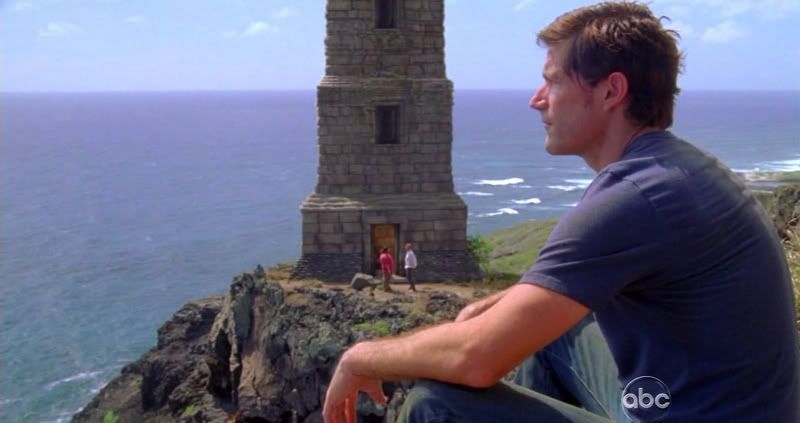
After seeing four by Dorsky (more later, non-Lost fans), helping my bud Brian haul some keyboards, and fixing a supremely late dinner sandwich, I settled into the couch with the DVR for what amounted to a pretty basic episode with very few answers. But I guess I can't expect the show to live up to the promos, cuz that's what promos do: they whet the whistle. In any case, this lighthouse was cool, but hardly a revelation. Just another component in Jacob's all seeing all knowing apparent benevolence. Okay, so Jacob's been watching these "losties"—in particular Jack—for a while now; not too big a surprise given we've seen Jacob alive (and seemingly well) in the days of man'o'wars and unstylish smocks. Nor should it surprise that Jacob wanted the lighthouse inoperable after all. No, the biggest scare was: Is Jack going to fuck up Hurley?

Of course Jack wouldn't hurt Hurley. Lindlelof and Cuse don't want to lose even more good will with their audience. Besides, Hurley's got to stick around to talk to Jacob's ghost or spirit or whatever. What made the scene shake, though, was how uncool Matthew Fox was: he really got wild eyed. He really sold Jack at the end of his rope. But you'd like to think a dude who was willing to admit he came back to the island because he was broken and was wrong about just about everything since that return (and knows it) had already hit rock bottom. But no. The pile-on continues. Jack's almost a Job. (I don't want to admit the links between Shepherd and who in the bible was a shepherd, or simply what a shepherd is, just yet—but, there, I gave the thought a thought.) And don't get me started on the off island junk of this episode, though there were wrinkles in the otherwise cornball "dad issues" plot. —The main wrinkle, of course, being not Jack's memory problems, and that mysterious scar on his torso, but Dogen showing up at the recital hall; but that was too vague to draw any conclusions from at this point.


Another bit of obvious was that Claire's really and truly off her rocker, now friends with Dark Locke, and convinced (poisoned against) the others, or the temple people, as those responsible for Aaron's disappearance from the island. The best thing about that reveal was the line reading of, "Oh, that's not John, that's my friend," while Terry O'Quinn just smiled. Otherwise, those few scenes were just Emilie De Raven doing her usual thing, you know, and coming off as the least believable murderer around. Put otherwise, I was bored by her reversal. More interesting was Jin telling a lie about the truth only to lie some more in order to save his skin. It's easy to forget, now that he's so sweet and altruistic about finding Sun, that Jin spent a lot of his adult life before the island as a henchman, as a killer, as somebody who knows how people are manipulated and manipulable. But those were flashes inside a pretty predictable bit.

Sorry if this bit of blogging seems too blasé, but, well, the episode didn't wow me. Part of this is because I was tired, and I'm tired now as I type this; part of this is because I had all kinds of angles on light and shadow and color and different registers of gravities still piling in my head; and part of this is because the episode lacked any real urgency. What made seasons 4 and 5 so great was their hurtling through plot. Each episode made a claim on a character. There's nothing new here that needed a full episode to unravel. The really daring thing to do would've been to get the lighthouse broken and Dark Locke's appearance into this week well before half-time; after all, all I did seeing these things happen was wait for what would come next. In that, it's great television, designed to addict. And Lost has always gotten the medium: in a lot of ways, ways that I know very little of, the show is about, or at least seems interested, in various television histories as part of its own mythology. I can sense this, and I've never seen an episode of Gilligan's Island, or very much Star Trek (in any iteration), let alone any other adventure shows I'm sure it references, like cartoons. Ed Howard mentioned comics in the comments on the season premiere, and that seems apt, too, of course, though I don't know which comics, exactly, would come into play here (I read Batman and Sin City and then-newly-formed Image comics almost exclusively in middle school). Basically, though, it's about the broader "sci fi" or "adventure" genres (and their sometimes overlap) as media in themselves, how they appropriate and redeploy certain tropes or myths to prove, among other things, that good and evil exist to fight.

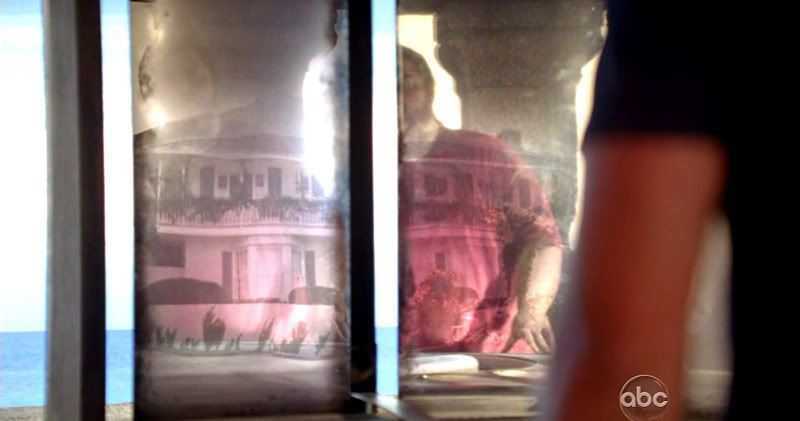
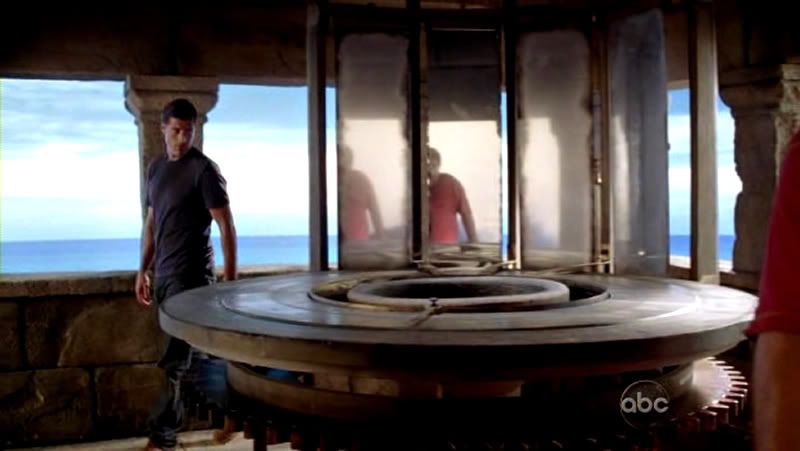
So, yeah, here's hoping that when these bad people we once thought pure raid the temple in next week's "Sundown" we get a few more dead bodies that matter. That's basically what I want to see at this point: who do they have the balls to kill off? And will Sayid's infection swing him into line with Claire and Dark Locke after all? Or can Dogen speak enough Japanese to confuse everybody? And, really, is Jack that important? Is he really going to take over? Are he and Kate truly destined to rule the island, away from the world, while Sawyer finds his way back to it? Maybe, though, we'll just be lucky enough to get a few more great compositions like those around the mirrors. Those shots, and that scene, showed what they get right on Lost sometimes: marrying outsized structure to a few images, and this season seems all about reflections and refractions, so what better way than beaming back into the world? And what other reaction can you expect from a broken dude who breaks everything? He doesn't see straight anyways, much less in a mirror, and we saw that in the first episode of the season on the alternate plane.


Also, I kinda just want to stop talking about Jack every week.