Meet me at the water.
by J.D. Knight


by Ryland Walker Knight
We knew it would happen sooner rather than later but even still this thuds in the chest. The loss of any formative giant will always hurt a sensitive and sentimental goof like me. Since I should be doing other things, and I'm sure plenty of others will write longer pieces full of insight and special significance, I'll just point you to one of the first, Glenn Kenny's concise, generous appreciation/obiturary, where I wrote this in the comments:
No other critic has left me feeling like a mote swirling in his or her refulgence. Indeed, it's rare to find any writer so lively, contradictory, and thoughtful; so readable and engaging; so endlessly giving in just one book of collected essays. He's helped me a ton. I imagine he will continue to help. Words like his don't disappear.
And he was a dope painter, too. I can barely write a post every week, let alone create other crap. I feel my size, and it is small. Miniscule.

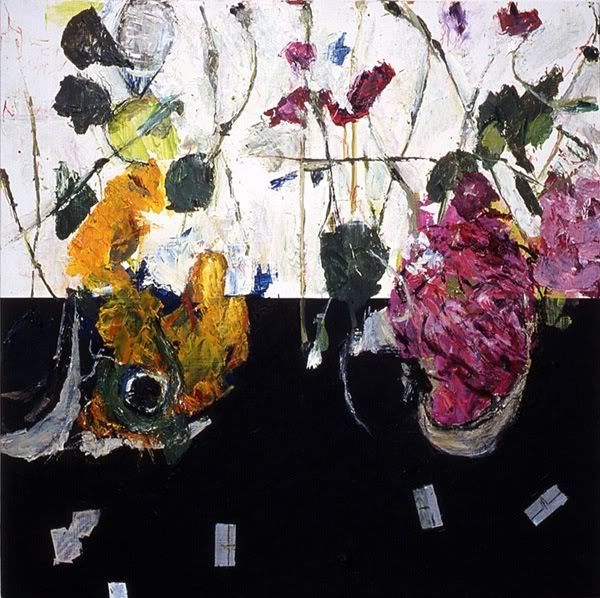
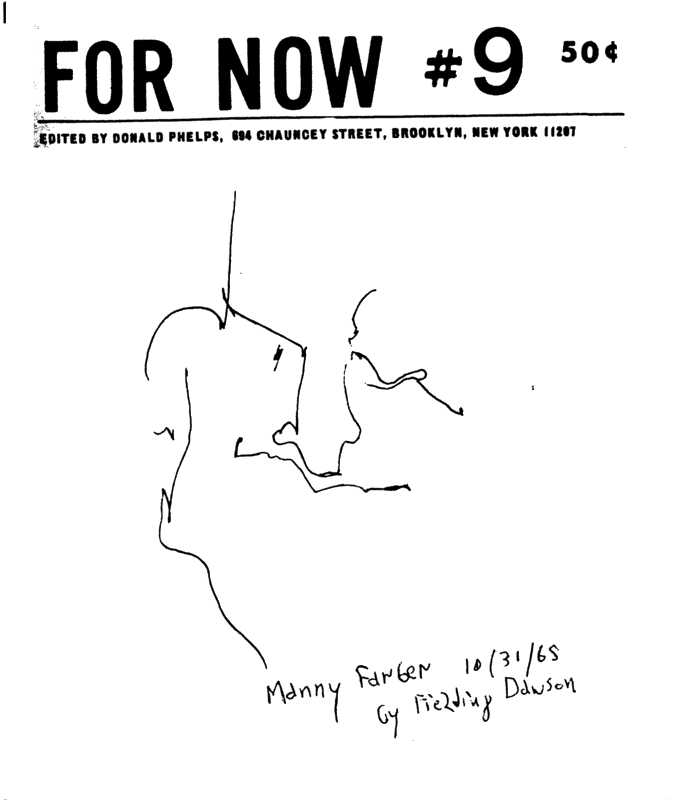
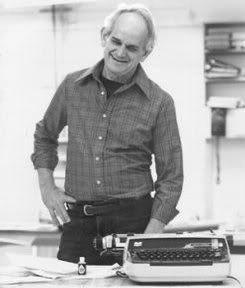 Perhaps with another giant, J. Hoberman, we're lucky to still have writing on a weekly basis. Ditto Jonathan Rosenbaum, a sterling example for how (old) print critics can shift into the digital age. Or with Ray Pride's lovely, passionate notes. David Phelps collects some favorite passages, and Keith does, too, with Matt chiming in past the fold on the comment thread with some typically sensitive and smart words (I should say that it was Keith who insisted I read Negative Space in the first place, and boy was he right; thanks, buddy). Zach quotes "Underground Films" and lists Manny's top choices from 1951 to deal with his hurt. Karina Longworth collects some valuable links, pointing us towards, among other things, a San Diego PBS segment on Manny's paintings and an interview with Robert Walsh, who wrote the preface for a reissue of Negative Space, about Farber and his significance. Introducing Robert Polito on SF360, editor Susan Gerhard notes she heard the news from Telluride co-director Tom Luddy, who offered, "I can only say that Manny was a dear friend and one of my heroes, a great writer and a great painter." Jim Emerson tussles with some of the famous Termite-Elephant argument and so does Phil Nugent, if obliquely. Turning full circle, a commenter at Glenn's blog, Tony Dayoub, points us to Paul Schrader's short Untitled: New Blue, named after a painting Schrader bought from Farber, who helps us look with selected voice over passages accompanying a roving close up camera; there are more than a few dissolves. David Schwartz talks with Schrader about the news for Moving Image Source. Andy Rector says, "Thanks for the chew, Manny," and offers two paintings, while R. Emmet Sweeney promises more to come. Turn back the clock (as Rosenbaum did), and you can re-read Girish (2006), Duncan Shepherd (2006), Leah Ollman (2004), Franklin Bruno (2004), Doug Cummings (2003), Edward Crouse (1999), and Noel King (1999), among others. He will continue to be valued and appreciated well past me and you -- and with good reason -- so the best we can do is clap a few times, pour out some drink and maybe read a book tonight instead of watching a film. Or, if you are going to watch a film, try one you haven't seen from that 1951 list, I'm sure there's plenty there to choose from... And smile. There's a lot all around to get you giddy.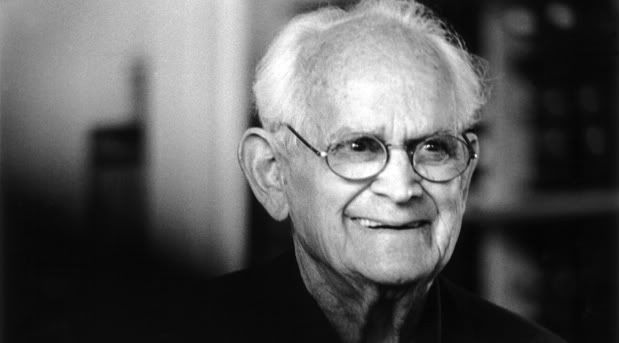
by Ryland Walker Knight

by Ryland Walker Knight


by Steven Boone
by Steven Boone


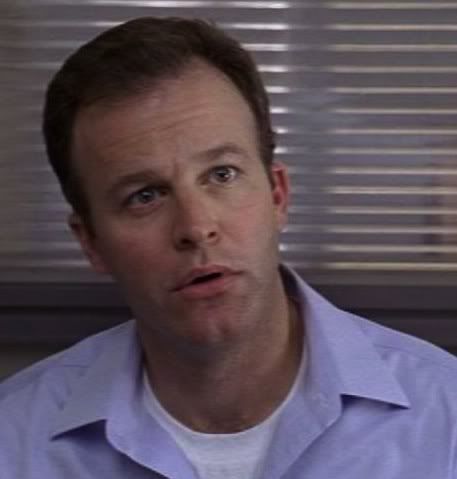 From the season premiere, I knew it would be an uphill battle for the paper, having to compete with last season's power house, Edward Tillman Middle, and a battle it was. As I stated almost religiously over the past ten weeks, there were standout performances, mostly from Clark Johnson's Gus (who directed the finale), but Tom McCarthy's Templeton ended up capturing my attention as well. Templeton's final scene, one of many within the signature concluding montage, had him on stage at Columbia with Klebanow and Whiting receiving a Pulitzer they may just have to give back, going down in the books with Blair and Glass and the others Gus listed off earlier in the episode as notable phonies. There was no question D. Simon had it out for The Sun all season, and seeing his head peeking out from above a cubicle, but tilted down, obviously working, was icing on the cake. He is still working hard to report on a story everyday in Baltimore, he's just found a more potent medium. But there were signs of hope for the paper last night, even though Alma was canned. Fletcher's piece on Bubbles was printed, Sunday edition front page center, and though Bubbs was initially hesitant about publicizing his story, seeing as the only reason Fletcher could proffer for consenting was that "people will read it and maybe think differently," in the end, Bubbles' sister let him come up from the basement and join her family, showing that Fletcher's claim, like his writing, was true. A city as messy and gritty as Baltimore doesn't require reporters to embellish anyway, just people who are willing to look around and take part in their city. This is a point Simon made quite clear when an article on Omar's death was cut from the paper two weeks back. And it is made further visible in seeing Gus stay at The Sun, and knowing Simon himself still lives in Baltimore.
 Jimmy and Lester were hung for their scandal, but neither put in bracelets. Actually, it seems as though they both got pretty good deals. Lester retired with pension, to his wood carvings and his girl. Jimmy looks like he's taking a break from the Jameson, and while he may not see any pension, he won't see prison either (as long as Marlo doesn't, more on that in just a minute). I've never seen him as content as when he looked at Beadie, taking off is coat and gun and said, "yea, home." He put in only thirteen years, and while Carver joked at his wake about a certain organ putting in considerably more time, the essence of the crack rung true. Jimmy expelled both his physical and mental health on this last case. And I commend the show endlessly for the way they handled the final resolution. It seems everybody was concerned with what would actually happen to Jimmy and Lester. Would they walk? Would they do time? They did neither, but that wasn't even the emphasis. The reason that Michael, Snoop, Marlo and Chris were the focus of last week's "Late Editions" was so the finale could be devoted Jimmy's wake, the literal death of the police drama that was the root of this series. In the green-lit local, the camera moved around the BPD's finest, each displaying the traits we know them best for: Jay being the wise-ass wordsmith, Bunk smoking his cigar, Carver just being that stand-up guy he is, Sydnor tucked in the corner attentively watching and Jimmy and Lester in the center of the action, being praised overtly the same way they've been praised subtly throughout the course of their time on the show. It was a long scene, but not too long, just the right length to be affective and not cheesy, and it ended fittingly; with Lester watching, Jimmy opened his wallet and handed a bill to a homeless guy as he walked off down the dark street. I guess he figured he owed him one.
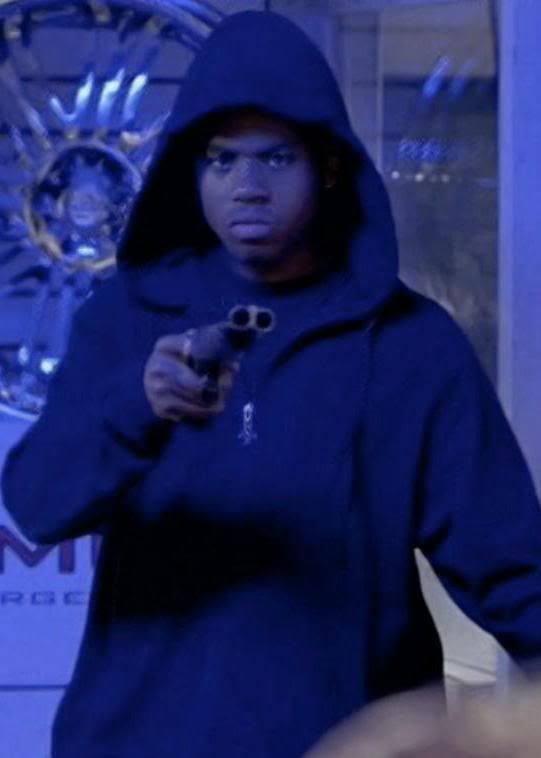 I should first say that I feel sort of stupid for commenting last week on Andrew Johnston's argument of what Michael would come to be, for if I had just been a more attentive reader, I would have noticed that he had already seen "-30-" when he wrote his article for "Late Editions." Sorry dude, I was projecting my wishes for the show, instead of just paying attention. You were right, obviously. Michael has been my personal favorite since early last season when he wouldn't take the money from Monk (on behalf of Marlo) to buy back-to-school clothes. He walked off and Marlo approached him from across the street, in almost a run, something we had never seen him do before, and has not done since. He accused Michael of being a coward, in so many words, for not taking his money because he thought he might know where it comes from. Up to this point, Mike had not made eye-contact with Marlo, but the accusation instantly popped his head up, offering Marlo a look not so unlike the one he gave Snoop before he sent her shattered skull through the driver-side window of her SUV. Marlo's reaction was strange, a sort of smile, followed by a glance back at Chris who was watching the whole exchange. Marlo acknowledged Mike's presence, his intensity, his wit, and he liked it. From that episode, Michael quickly became a killer on the same level as his tutors and moved up the ranks within Stanfield's crew. He showed a couple signs of disapproval with the way Marlo handled his business, but nothing that hinted at him having some sort of serious moral code. I mean, he did attempt to kill Omar! Michael came off as an independent dude, sure, but so did Cheese. Simply inserting a shotgun into his hands, throwing a black hood over his head, teaming him up with some random guy and having him disappear into the darkness was an unnecessary (and sort of lazy) way to remind us that there are gangstas like Omar. I don't think any fan of the series would have been upset had Mike gone and jacked Vinson with the nine he was using before. His character was well articulated and bad-ass enough for us to believe he could just be Michael, not young Omar. That being said, Tristan Wilds, great job son!


 The Man Who Wasn't There feels much more at home as a last minute addition to Ethan Coen's enjoyable pulp pastiche, the short story collection Gates of Eden
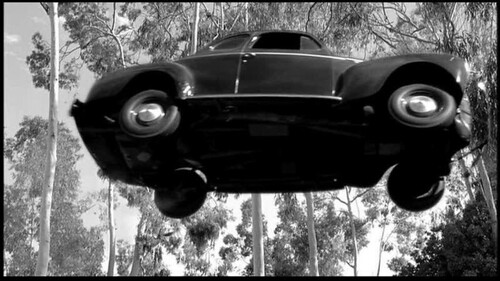
 , than as the follow-up to a ridiculously popular George Clooney vehicle. Sure, film allusions abound in this black-and-white homage to the style of the '40's and '50's. There are classic Sci-Fi flying saucers and the story is set in the same Santa Rosa as Hitchcock's masterful Shadow of a Doubt, but I find these references far less interesting (and memorable) than the way the movie works as a piece of visual writing, a confident work of narrative fiction. The frequent fades to black, five or six throughout the film, act as effective chapter breaks, giving the viewer a peaceful moment of reflection before setting up the next chain of events. These pauses are aided and abetted by some of the Coen's choicest lines, most often delivered as narration by The Barber, Ed Crane (excellently portrayed by Billy Bob Thorton). This voice over sometimes strays from linear focus which is a common literary, rather than cinematic, conceit. At one point Crane apologizes for telling us too much. Hell, we discover at the end of the film that his narration is coming from the story he has been contracted to write for a men's magazine. It has been a written work all along.
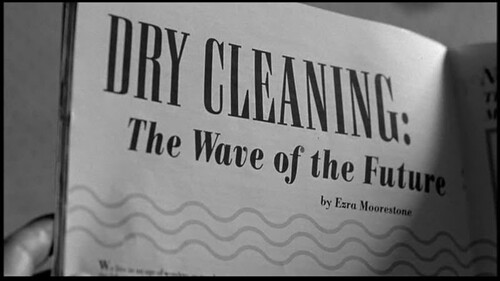 After a life of pure, simple existence, Crane finally decides to take a chance when he meets an entrepreneur looking for backers for a new invention called Dry Cleaning. We never really find out what about the proposal catches Crane's eye and sends his story down the fatalistic Noir path. Is it the money? If so, what does he want it for? This is a man of little ambition. Does he want to get back at his wife's partner in infidelity, her boss at the local department store, whom he eventually extorts? Is he just bored? Regardless, like No Country For Old Men, the money means nothing. It is utterly trivial. What does matter is that this man, this barber, has finally set something in motion that, for better or worse, changes his life and the lives of those around him forever.
 I find Ed Crane's burgeoning passion, regardless of implicit reasons to be the movie's main motive. Though he remains outwardly unreachable through the duration of the film, beneath the surface he becomes excited with possibility. His interest in the dry cleaning scheme and later his not-quite platonic adoption of a teenage pianist are the first pangs of genuine enthusiasm this man has ever known. Of course in true Noir (and Coen) fashion everything quickly goes awry, often in devious ways we never saw coming. Crane ends up killing his wife's lover, who in turn killed the dry cleaning entrepreneur and accidentally impregnated Ed's wife, who herself is jailed for the first murder, who subsequently commits suicide. Eventually, after trying to make things somewhat right, but instead only further ruining the lives of those around him, Crane, too, is jailed for a murder. It just so happens to be the wrong killing but no matter. One could argue that, because of his actions, he's responsible for this one, too.


RWK:The PFA begins its new calendar tonight with a screening of Andrei Rublev. Surprisingly, this will be my first Tarkovsky seen on a big screen; I missed Stalker over the summer. Surprisingly, I forgot I got back from Oklahoma in time for Solaris (after missing Stalker) at the PFA at the end of the summer. I still hope they show more and more.


by Ryland Walker Knight


 was probably the most memorable new music experience I had this year. Except, of course, it's not new music. Or, it is, but only because it's a remix. Too bad Vadim didn't get to attend. He might like the CD more that way. Anyways, it was a ton of fun. You can see how much fun below:


Following Karina's lead, I'm linking to The Playlist and embedding their MP3 player so you can hear some of the great score Johnny Greenwood composed for that terrible gem I hope more people continue to discover and love. Also, Glenn and friends like the flick a lot. [RWK]
UPDATE: That embedded shit was too fucking annoying.


 Posts
All Comments
Posts
All Comments


