Showing posts with label America. Show all posts

Monday, October 03, 2011

Viewing Log #85: When you are the cancer

by Ryland Walker Knght


Don't dent yourself (too late)

[Amidst a few other films I watched and writing projects I kept chipping away at in August, I finished the second season of AMC's Breaking Bad.]

Homeless

Right off the bat: Skyler is the worst. Anna Gunn is brave, but Skyler is as unsympathetic a character as I've ever seen. So much so that I had to stop watching the episodes back to back, as is the common desire with instant/on-demand viewing. However, I quickly fell back into plowing through one episode then another, in part because I'm attracted to how condensed the story is compared to, say, Mad Men, where time's certainly not of the essence unless by dint of the television medium's format (seems there's a lot of "something's gotta happen eventually" in MM). It's not as condensed and rigorous as either Milch HBO show (to date) but then even Deadwood feels like years given all the time that passes in between its season arcs. Breaking Bad, on the other hand, though it plays with time some, is mostly driven by a consequential logic. In other words, I was surprised to see this season start precisely where the last one ended. But it makes sense.

The genius of the show, if I can use that word, is how much attention is paid to every step Walter takes towards villainy. We get to watch a basically good brain go, yes, bad. We see all the rationale behind his choices, sometimes without words. I told a friend it was like Dostoevsky and I meant it. But the delusion of doing wrong in the name of good isn't just a trope of the great Russian depressive; it's really rather common. The idea of "white lies" comes from somewhere not related to white nights. I think it comes from everyday life. One must contend, all the time, with too many compromising choices to remain moral. However, this show, unlike those Milch masterpieces, isn't concerned with the ethical life. No, this is just the wrong way to do things. Remember the title: it's forgoing the righteous path.

And if Mad Men is about television as advertising, Breaking Bad is certainly about television as a drug: a perfectly calibrated bit of magic that keeps you coming back for more, designed to hit you where it hurts and where it feels the best. (Why else watch more than one episode at a time, right? It becomes a compulsion, if not outright addiction.) This show, like The Sopranos, makes you complicit, designs a rooting interest in Walter, and dares you to not get excited with him and for him. Until, of course, he explodes and, as his brow lowers, all that venom bubbles up. The most obvious and scary instance of this is when he beats up that towel dispenser (see evidence above). Unlike The Sopranos, nothing is glamorous here. There's nothing sexy about two men making meth in a desert, or anything related to meth. Hell, the meth cooking passages are my least favorite parts of the show. Krysten Ritter may be sexy, but the show goes out of its way to make her unsexy by the end of her character's sad, pathetic, idiotic life. Her death, after all, is just another instance of Walter's growing selfishness as the root of his growing evil. For Walter's whole trajectory is about taking control of his life. But he's pretty lousy at that, too, since he's only ever looking for shortcuts. And, again, the show shows us that these are all myopic moves from a novice. That's maybe my favorite part: these people are idiots.

Walter is a chemistry genius, I suppose, but he's a child compared to Pollos Gus. (Giancarlo Esposito is so awesome at his two face it's incredible; yet another movie-quality actor brought to television and instantly upping the ante.) I suspect he will change the game going forward quite a bit more than Saul Goodman, though Bob Odenkirk is about as crucial an element as can be. After all, he's the only one expressly keeping the comedy going. He has his moments of clarity and seriousness but he's mainly there to act the fool, to play dumb—though he's not dumb, at least not as dumb as Walter—to show the other dummies how dumb they are. This vision of comedy is quite close to condescension. I get that. But nothing's so simple in this show. It's a black comedy, after all, where everything farcical is tied to horror. The horrific is often papered over by laughter in order to diffuse tension, but sometimes horrible things are just horrible. Like letting a girl choke to death on smack-induced vomiting. Other times, horrible things can be hilarious—because they're so stupid—like Saul's whole wardrobe.

Not sure what to do with the framing device of the season, but the tidy color coding of the teddy and Walter's sweater seems obvious. Walter is adrift, charred by wrong. And all that build up to that collision seems like a ploy, not plotting. I cannot imagine how that's going to actually effect the trajectory of Season Three other than Jesse's already rock bottom self-esteem flatlining a little longer. But maybe we're (I'm) in for another rise. Maybe Jesse will seize sobriety and do some things right. Worst case, which it usually is, he'll be a marginally better criminal because he'll be clean. Best case, it'll complicate how Walter sees him, because Jesse is certainly something in his life that Walter can and has controlled. I doubt Jesse will learn how to interpret his way out of manipulative moves by Walter, but he'll likely get better at staking a claim for himself in kind. Then again, Jesse's kind of the show's test dummy par excellence, a raggedy ann at the mercy of bigger and stronger and meaner people. His best episodes in the season were all about his sensitivity. Hope he doesn't get beat up so much that he loses it. Walt sure is trying to lose his.

You are not okay here at all
—You are not okay here at all

Monday, February 14, 2011

Viewing Log #73: Two of each please [2/7/11 - 2/14/11]

by Ryland Walker Knight


Scissor skills

  • Somewhere [Sofia Coppola, 2010] What a bonehead "third act." What a bonehead idea of significance in general. See, I wanted to like it and that's probably the problem. There's plenty to respect, like a female director's representation of sex, say, but, to be 100% unfair, this is no In The Cut. And there's this pride that gets in the way of Harris Savides phenomenal (that's the word) work and Elle Fanning's affectless though not flat performance (the word "natural" seems wrong, though it may be right) and the expert sound design. Granted, that sounds like it's coming from the really absurd and really sexist angle on Sofia that most critics take. But you don't have to announce your ideas in a Work Of Art to make your points. That was the thrill of the mess of Marie Antoinette: it really aimed for something beyond literalisms (not a word). You'll have to excuse me this seeming dismissal, ladies I love, but: maybe Sofia should make a documentary all about food. She gets parties great, sure, with all the haziness, but she also has a lot of good takes on food, where it's eaten and how it's made. Which is another way to say that my favorite scene was Cleo's preparation of the eggs benedict breakfast, as evidenced above.

  • The Fighter [David O. Russell, 2010] # "Research" & "jokes"

  • L'argent [Marcel L'Herbier, 1928] Wasn't as wowed as I'd hoped. Loved all the shadows but I couldn't suss a logic to all the ostentatious stylistics. And it felt lumpy. Though I don't doubt the producers hacked it up and cut what I would not, this movie would certainly benefit from some fat-trimming. Or at least some silent-movie-cliche-trimming. That is, there's way too many reaction shots. My favorite scene came in the second half, with Brigitte Helm entering Pierre Alcover's Saccard's privacy to needle his fears with a certain masochism that turns into fear past an unmarked threshold; the close-ups here make perfect sense and even add some deviant sexual charge, though also some misogyny, when we're honest with what this man (this director) expects of his subjects.
  • Four Windows [Ry Russo-Young, 2011] Um. "Shorts. Fashion. Pretty. Vacant? You decide!"
  • The curve of forgotten things [Paul Cole, 2011] You don't say. (Also via that pullquote queen; see link above.)
  • High on Crack Street: Lost Lives in Lowell [Mary Ann DeLeo & Rich Farrell & John Alpert, 1995] Could only handle a half hour while sick in bed, but it made me rethink The Fighter to the extent that it's a movie out to serve reality at bottom but David O. Russell's out to serve an audience a good time, too, which complicates things. Watch here, via the cinetrix, who's maybe a little weirded out by all these links (don't know the lady!), but, well, I'm not; I'm just thankful.

  • No Country For Old Men [Coens, 2007] # Okay, maybe this is some kind of masterpiece, over-determined though it may be. Danny wrote about the inheritors of Hitch in a dispatch from Rotterdam and I can't shake that association when watching "later Coens" movies. Every shot is so intentional, loaded with specific significance, that their beauty isn't strictly pictorial (don't you love the shadows throughout this thing?) but, ahem, semiotically, which carries over to the specificity of the language; that is, words carry another weight of meaning, adding a sonorous burden to these brutal procedings. (Always forget there's no score in this one, very Birds-like, and that makes the words crystalize.) Also, top notch action scenes, one after the other, that are more "thrilling" than "fun" because they're meant to be scary and they are quite scary. Plus, this has to be some of the finest work Roderick Jaynes has ever done. That lap dissolve from the coins on the carpet to Ed Tom's truck barreling towards Ellis's hut is one of my favorite transitions in the entire Coens corpus.

One dime

Monday, February 07, 2011

Viewing Log #72: Plinywurst [2/1/11 - 2/6/11]

by Ryland Walker Knight


  • The Super Bowl. My favorite ads were the Transformers 3 ad because a teaser is supposed to blare and dazzle, the new bug teaser animation because the punchline made me look at Cam, and the Motor City paean from Chrysler because, as Barry said, it's about how we make things in America (or how we used to, at that). The game was fun, too, even though I lost money.

  • Scrapertown [Drea Cooper & Zackary Canepari, 2010] Part of California is a place, via Haz. Just great. The exactly perfect tone that's never cute but simply positive and charming.

  • Cry For Bobo [David Cairns, 2001] See it here. Conceptually pretty perfect, and you know I love jokes. Wish there were more goofy little gems, not all those sad sack lunch pails about Big Ideas. Gags are great! And I'm not just saying this to be "blog polite" (is that a term?); I really dug this little thing.

  • True Grit [Henry Hathaway, 1969] # I put the seen-this-before tag just left of these words, but, really, I didn't remember how cheesy and clunky and kinda-sorta bad this movie is. The Coens certainly improved on it, and clearly had more of the book in mind than any ideas of remaking this thing. Kim Darby sure was cute, though.

  • A lot of Larry Sanders on Instant, selected mostly at random. This week's NBC shows: I fear 30 Rock's veering away from its sweet spot again, but it's always nice to see Elizabeth Banks, and Community was all the clever things I don't like about it rolled up into a bottle episode that can't compete with the earlier one this season because this one was so damned sweet; that is, I like acerbity more than lobbed-on poignancy when it comes to my weekly sitcoms. Oh, and, Season Seven of Peep Show is, in the first episode at least, a marvel of hilariousness and exactly what I want. Then again, I also love this video below by Jaime Harley, for a song called "Suicide Dream" by How To Dress Well, so my criteria certainly shift all the time like anybody else.

>
Pure affect

Wednesday, December 08, 2010

Viewing Log #62: Indivisible has a lot of "I"s [11/29/10 - 12/7/10]

by Ryland Walker Knight


Cartoon chuckle

—Though I did watch Broken Embraces again with Martha (ahem), and Prisoner of Azkaban again with Haz, I didn't watch much else last week besides the third season of Mad Men. So that's all I'm going to talk about here.

Call the kids
On my first night in Brooklyn last week, after an unexpected and unwelcome tour of the west side, I went to dinner with some friends. Talk turned to movies and TV, as should be expected with this crowd, and I brought up my recent plunge into Mad Men in part because I watched an episode on the flight and in part because I wanted to talk to one of these four people in particular about my reactions and assessments so far. Unfortunately, we two were the only people familiar with the show and the talk was short. Fortunately, it afforded us a private set of words to gush with: when I said, "What about that dance Pete and Trudy do at Roger's wedding?" we both lit up and shook our heads with delight. And we both agreed, out loud, turning to our friends, that it's one of the rare shows that gets markedly better as it goes along.

This is not a result of simple familiarity. Sure, we know these characters more/better by the time this third season gets started. But there's a tone, a dynamic between expectation and action, that sets this set of thirteen apart. The biggest factor is the show's sense of humor. The ridiculous is an easy target but when you mix horror into that you get a messier laughter. Disbelief is a basic reaction to absurdity and laughter's an easy way to paper over uncomfortable social interactions but I don't think that's the only thing that motivates the jokes and laughs in this show. (And yet, what else can you do but throw up your hands and laugh when somebody beautiful and smarmy gets his foot cut off and his foot blood sprays across a crowd of slack-jawed drunks?) I'm fairly certain there's some poking fun at certain characters going on in some of the jokes—and it's mostly these men the show makes fun of; you see Pete, above, eating cereal and watching cartoons while Trudy's gone—but there's also a dry wit and there's also a righteous "aha!" every now and again, like when Joan smashes that vase on her self-pitying dolt of a gorgeous husband.

Put another way: for all the damage done, this season was fun. Especially the finale. (Save, of course, that late-night scene when drunk Don calls Betty "a whore" and means it.) If this show's really about television as advertising—that is, how television's medium advertises fantasies and sets up expectations of a world you want to join—the same way The Sopranos is about television as therapy—as a perfect arena to get advice on how not to live—then this season finale did the best job selling me my American dream: to build something successful of my own, using talents I'm proud of, in a world beset by vultures.

Headlights?

Yet it's also telling that one success is met with another failure, as happens with Don's home, though that nuclear dissolution could hardly be a surprise to anybody with a brain. The show remains replete with tidy plot points. The surprises aren't the arcs, though Duck's new role in Peggy's life is a wrinkle I didn't expect until "Seven Twenty Three" (3x7) started with all those "awakenings" (again, the bluntness!). This is the most curious aspect of Weiner's world, I'm finding: one step forward is always meted by another step back. It's hard to say who's ever getting ahead—to the point that you think that isn't the point here. Then again, when "happiness" is the point, and when the show's selling us a world where happiness is a fantasy or at least fleeting, getting ahead may only be as simple as dealing with unhappiness better than the next guy or gal. And maybe that's the American they're selling so well at this moment: we deal with things, sometimes better than other times, and we find ways to live. Living, here, isn't just meeting an image of yourself or what's expected of that image (ie, buying something or fucking somebody); living is balancing on your own two feet in the role you've chosen.

A different friend said, "Don wants his children to be children," when I said, "This Grandpa character's a trip." And I think he was correct. Don wants everybody to fall in line, really. It'd read more autocratic and asshole if it weren't tempered by the love he so clearly holds for every single person he has a relationship with, even that senile Grandpa; however, lies rot bonds and/or lies sever ties. Proof positive that love is never enough, and money certainly is not. When Ruby shoots Oswald on live television and Don tells Sally that "nothing" happened, Sally knows it's a lie. It's those lies than doom Don. Because it's admirable in some ways to want your children to be children and nothing else but it's ignorant to ignore (look at the root!) your daughter's burgeoning brain powers. One can hope Don learned this when he groveled for Peggy, in a truly affecting scene thanks to some wet eyes and smart dialog, but I'm not holding my breath. In fact, I'd be surprised if Sally and Bobby and Lil Gene are anywhere near as big a part of Season Four as they were in Three. (Am I wrong? Don't tell me?) At any rate, the kids are hardly as interesting as their mother.

Rag bets

Betty Draper, soon to be Betty Francis I suppose, is probably the most interesting character of all. But I am forever at a loss at how to articulate why since I'm just so damned involved in finding out what she'll do next in her myopia-mirrored-mired life. Makes me think another shoe will drop soon. For all of Don's lies, he's pretty dependable. Betty, on the other hand, seems stuck inside her competing emotions, playing a role she doesn't know the stage directions for, counting all her chickens before they hatch (which last season made literal, which continued this season with her dad's arrival). So I'm quick to hold back judgment. And I'll withhold it yet longer still because Betty's mostly a child and the charitable person would have you believe children can learn things, like how to grow up, as they attempt to rudder their pursuits of happiness.

Walter falters

After all, we are a young country.

Thursday, November 26, 2009

Convergence for your Thanksgivings [i] (11/26/09)

by Ryland Walker Knight


Fox 3

fireflies
—Dance a dazzle, lady light, around our retinae

Friday, October 16, 2009

We Live OK: 22 Selections, 07.09 + 10.09

by Ryland Walker Knight


sunsetting 1
fielding
—Lucky clouds (return)

This eddy ends now, and I'd like to share my final collage of imaginary reportage. These weeks have seen me see plenty. However, I worry I saw more inside than out. But that's why I'm finding a line back to a coast—in fact, back to the gold coast. That is, back home. Time to own up to that: I'm a Californian. So with my smile widening, I look forward to playing basketball in the winter, to eating fresh vegies as often as I can, to the PFA's healthy calendar, to trips up to Truckee's snowbanks, to a quick flight south or north, to The Trappist, to pho, to the Mission, to yelping my way around more dance floors, to breaking that habit of you. Here's to the steps taken, and the leaps yet; to footfalls, maybe, turning into feathered-up flights from our hard-earthed dirt and from our tubes of infotainment. We must remember to move amongst! Thus, there might be a little less frequency here (and elsewhere) as the calendar year winds-grinds to a close. Priorities will be re-arranged and if I'm to live alone by my next birthday I will have to make some kind of living happen quicker outside this site.

So, enjoy this latest and last collection over at VINYL IS IMAGES.


—I see your light touch my eyes.

Sunday, September 13, 2009

Convergence for our open mouths (9/13/09)

by Ryland Walker Knight


there you go

the shot
—Earning an earful (?/!)

Friday, August 28, 2009

We Live OK: 5 Selections, 08.09

by Ryland Walker Knight


(i)
under a tent
—big top


(ii)
sheep
—who's left?


(iii)
stand tall, wrap
fall away
—wrapping route


(iv)
430am
—hours unto hours

Saturday, July 04, 2009

Stand up and crowd. Happy 4th of July!

by Ryland Walker Knight


lick it good
indian giving
IN THE STREET

take that
ON YOUR FACES

fakes
AT NIGHT LIGHTS
through
light time

off the ground
luck?
WE LOOK LUCK

IN THE EYE

Thursday, June 18, 2009

Placeholder: Ladders can lead down; we spiral up.

by Ryland Walker Knight


Man Who Wasn't There Japanese one-sheet

[image via]

Wednesday, March 04, 2009

Gangster violence and some language. Sold.

by Ryland Walker Knight


this man is in jail
[This man is in jail.]

Wherein the fan side of things gets tickled into action. Thank you, Michael Mann. (And the ad people at Universal.) Why? The teaser trailer for his summer tentpole, Public Enemies, is now available for viewing. After last night's waste, I'm happy to be excited about Ho'wood product because I can trust that, unlike that bloated advertisement masquerading as a "movie," this feature will only get better the longer it lingers on screen. Also, it will be gorgeous without a ton of digital paint. It will weigh something, too, I imagine, despite its speed. [fN!]

this lady is sexy
this man is the law
break out
of jail
in style
see the wide country side
wave to the public

Friday, February 13, 2009

Breadlines & Champagne! UPDATED. TWICE.

by Ryland Walker Knight


mimosas?

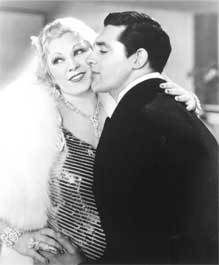
To counter our chill with a laugh (and a hug?), Film Forum has programmed the Breadlines and Champagne series, a month-long celebration of Great Depression cinema. The fun begins this weekend with an opening night screening of Wesley Ruggles' 1933 film, I'm No Angel, which stars Mae West and Cary Grant and costs a mere 35 cents (or a quarter for members). The weekend continues with two Franks: Borzage's Hooverville classic, Man's Castle, and Capra's punchy American Madness. I was lucky enough to catch a screening of the new print of the Borzage and wrote up some quick thoughts for The Auteurs' Notebook, which you will be able to read shortly in that webspace by clicking here. The short of it goes something like this: Borzage smears the frame with light to point beyond it, back at the world, and beyond that, too, to the skies we see and seek, where we are free to dream and project our wishes. (Shhh: at bottom, the film is interested in the freedom the cinema can offer, the uplift possible, and our capacities as agents even in the dark!)

But don't stop there. Scroll down that page and you'll see all kinds of fun double bills, all at a 2-for-1 discount, including one helluva Valentine's Day, programmed by Bruce Goldstein to pair My Man Godfrey (service would save the day, wouldn't it) with Easy Living (perhaps most famous now for its early Sturges screenplay). If that kind of night out (complimented by a meal and drinks, if not flowers, I trust) does not warm the soul, I cannot imagine what will. Of course, two days earlier there's a new print of Young Mister Lincoln screening with The Tall Target, if your soul needs that kind of uplift. Night Nurse plays Feb 17, Hawks' Scarface on the 21st and King Kong helps close the month before five more double bills to start March. I'm going to try to enjoy as many as my meager wallet and my stuffed social calendar will allow. (And if that's not enough for you, there's something called The Human Condition coming back by popular demand April 8th. That one might tell you some things.) [x-posted at the curator corner]

stop. think about it.

UPDATE: My piece on Man's Castle is available over here, and I've left a comment below the "essay" that furthers my thought a bit, or questions what I've written, in an inviting way (I hope).

UPDATE THE SECOND: My first piece published at SpoutBlog can be found through this link. It's called "Valentine's and Breadlines: Love in the Depression" and it concerns a few of the romantic comedies I've seen in the past week at the Film Forum. Please, read it. Please, tell me things. Please, enjoy your Saturday.

Thursday, February 12, 2009

10 Personal Touchstones in American Cinema

by Ryland Walker Knight


[Originally posted at the curator corner, where you can read the full post.]

the end?

Tuesday, January 20, 2009

Pick yourself up.


Our man said so, so, you know, follow through: pick yourself up, dust yourself off, start all over again.

Wednesday, January 07, 2009

Two thousand weight? #6: Quick Wendy and Lucy plug.

by Claire Twisselman


see?

I think I want to call it the American film of the year. I think it's for me the way There Will Be Blood was for me last year. Like: how come more people won't see this thing? It's only 80 minutes long! It won't eat up your day like Che. Check here to see when it comes near you. And then see it, of course. People tell me to kick myself that I didn't see Ballast, but I don't think that one will kick me the way this one kicks me. It's a good thing. Heck, it's a great thing. We need to look at the margins more.

puddle

Friday, January 02, 2009

There is only this. A new New World.

by Ryland Walker Knight


solitary

Oh hai, 2009! Thank you, you! I'm more than pleased to offer my first bit of writing of 2009 over at The House Next Door, which operates as an anniversary marker for the site as well as, as ever, an inauguration for our new year. Having just moved to New York City this week, first to the couch at Keith's lovely Slope apartment, the ever hospitable Mr Uhlich and I sat down December 31st and, after watching the Extended Cut of Terrence Malick's masterpiece, The New World, we recorded a podcast. It took us a couple daze to piece together our accompanying words with some handsome stills and arrange it all for you—and now it's ready. You can take in our efforts by clicking this link here if you did not follow the link above. There's plenty more to say, of course, and we look forward to hearing from you all, but for now I'll reiterate myself yet again and say, "Thanks," to Keith and to Matt and to everybody who takes the time to read (however thoughtfully or not) whatever it is I find time to write. Here's to more of this good thing now and further into our future.

a shroom

[An accompanying image essay can be found, and enjoyed, on VINYL IS IMAGES.]

Wednesday, December 03, 2008

Natural is not in it: White Dog

by Ryland Walker Knight


who the FUCK spilled the ketchup?
[I've been having internet problems of late so this link-through is late, but, well, here we go...]


Sam Fuller's final Hollywood film is so not Hollywood all we can do is say, "Thanks." We have it here, now, in a beautiful new DVD, which I've looked at and then said a few things about over at The Auteurs Notebook. I didn't quite get to everything the movie made me think about, but I think some of the ideas about the phenomenological significance of the close up might be visible to the curious reader. In case that strain of argument is, in fact, buried deep: it's an immediate encounter we viewers cannot ignore, and Fuller never lets us forget this because these close ups often emerge after a zoom (as punctuation, as affective signpost) or a smash cut; the film is unabashedly directing your gaze; but there's nothing maudlin about this man's tears below. All that sentimentality is side-stepped by virtue of Fuller's low angle and looking up kino-eye and Ennio Morricone's meandering ivories and the utter gravity of something so absurd it has to be real; something like, you know, race hate. So if you didn't click that link up there click this one here and when you're done there, or in lieu of that, you might like to look at the images all in a stream-of-argument that says something else with the same materials.

dont go chasin waterfalls