Showing posts with label Alain à la recherche. Show all posts

Sunday, May 16, 2010

Alain à la recherche #9
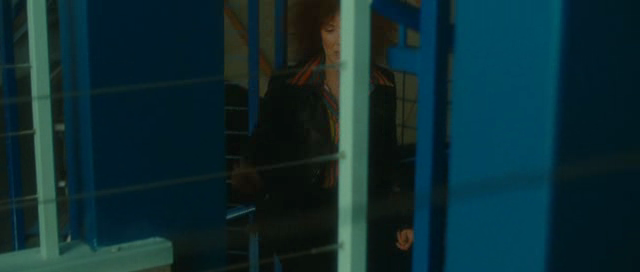
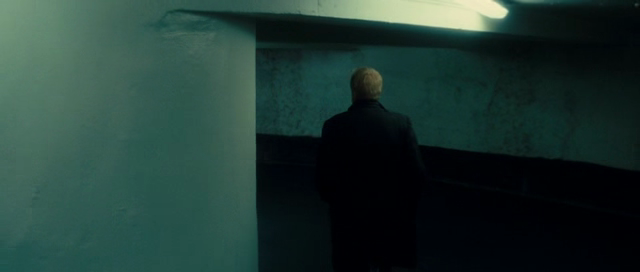
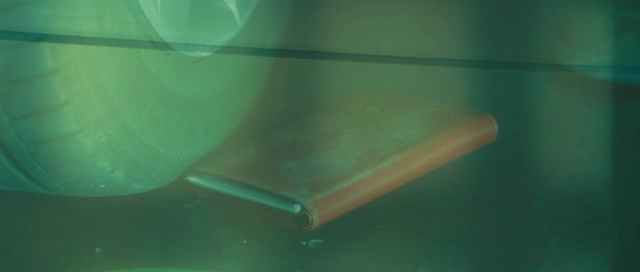
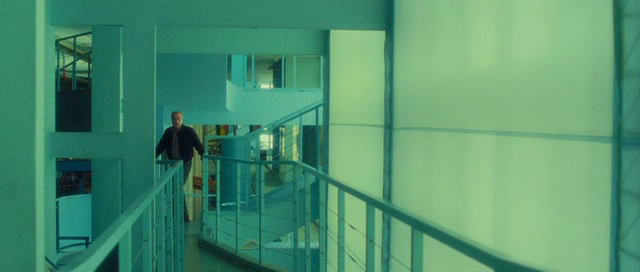
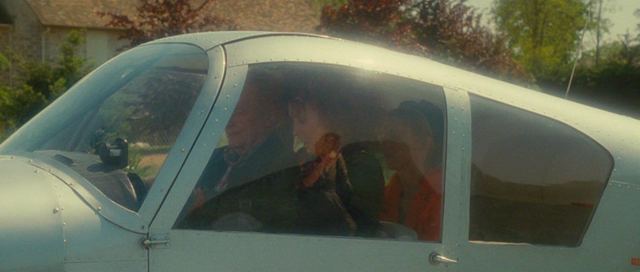
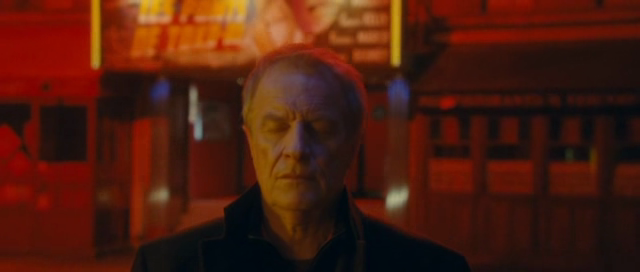
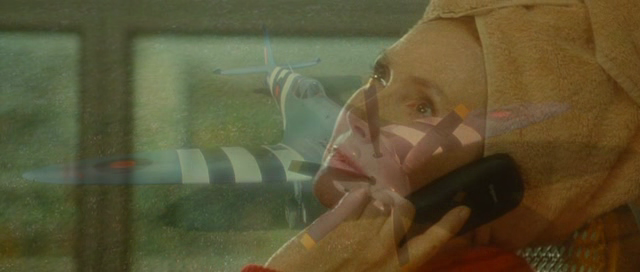
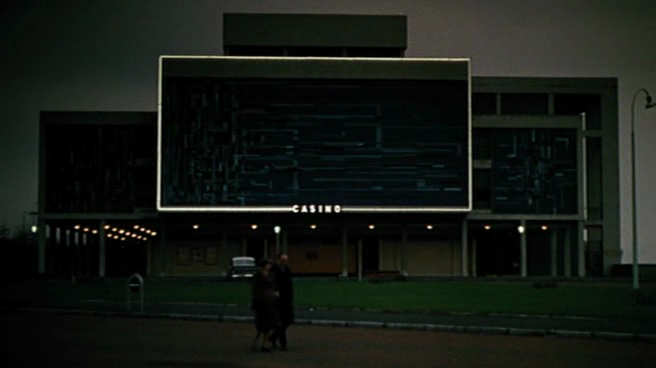
SFIFF53 #6: Folles

by Ryland Walker Knight

i.


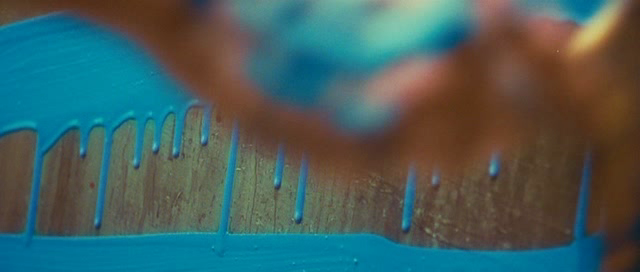
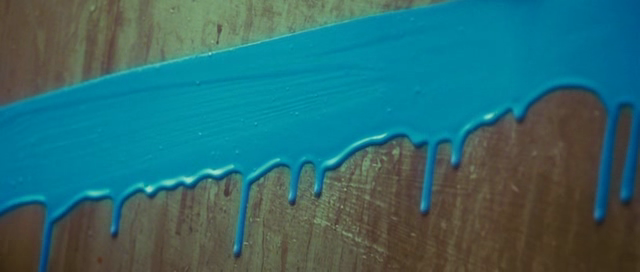
—See cyan slathers so ciel


ii.


iii.


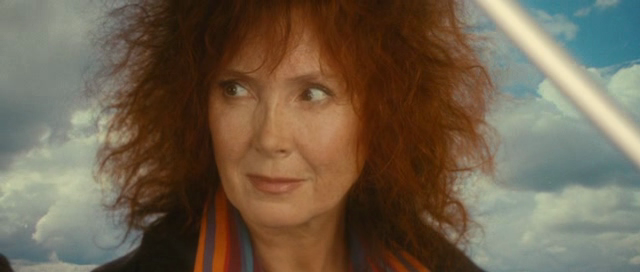
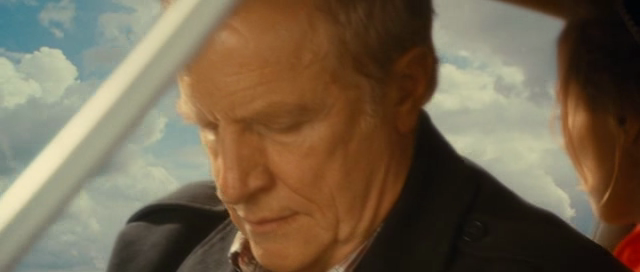
—So stolen, so soaring


iv.


—So wild, yes please


v.


vi.


—Spit sardine cellophane


vii.


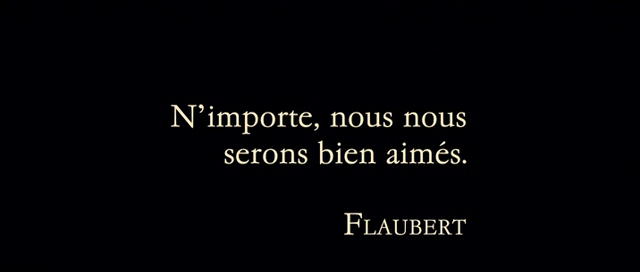
—Not a memory, not a dream, but both, maybe?

Thursday, December 17, 2009

Alain à la recherche #8: La guerre est finie

by Ryland Walker Knight


[The Resnais series playing at the PFA this November and December is part of a broader, traveling retrospective with a concurrent run in Chicago at the Gene Siskel Film Center and a proposed stop at the newly renovated Museum of the Moving Image in early 2010.]


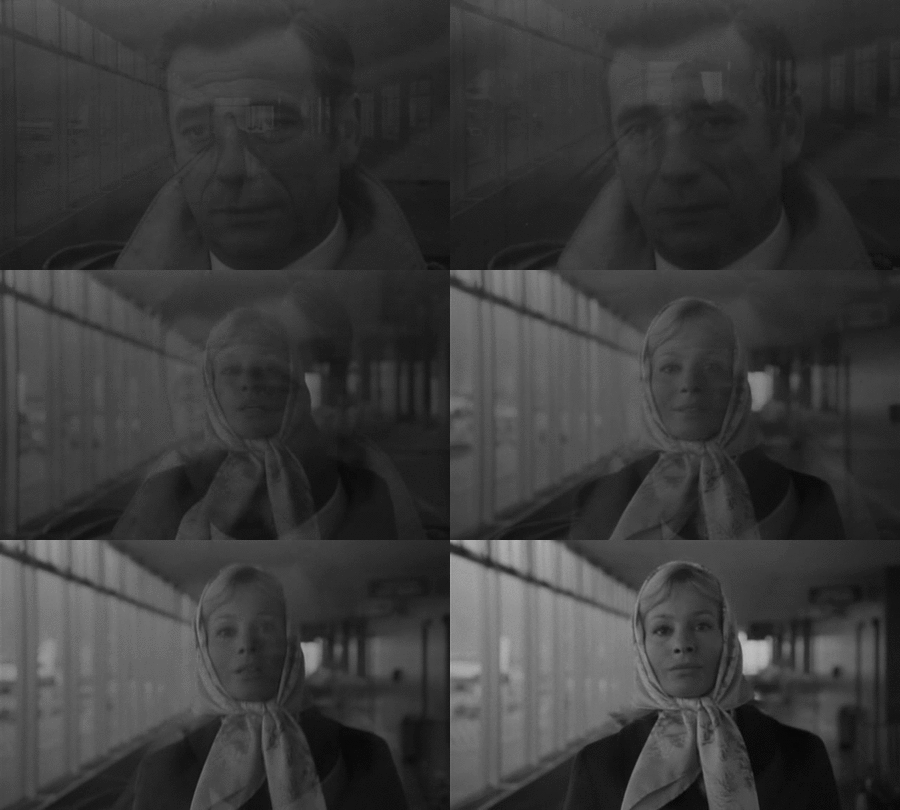
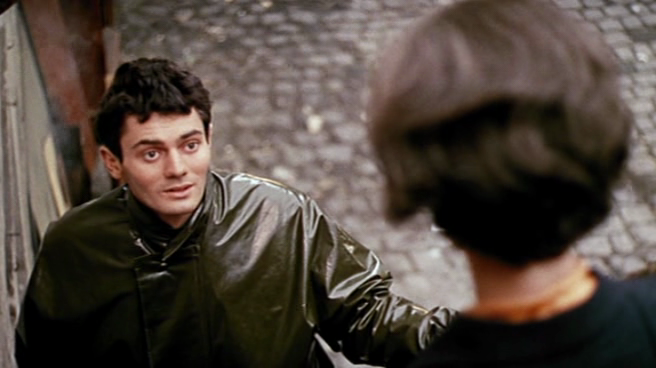
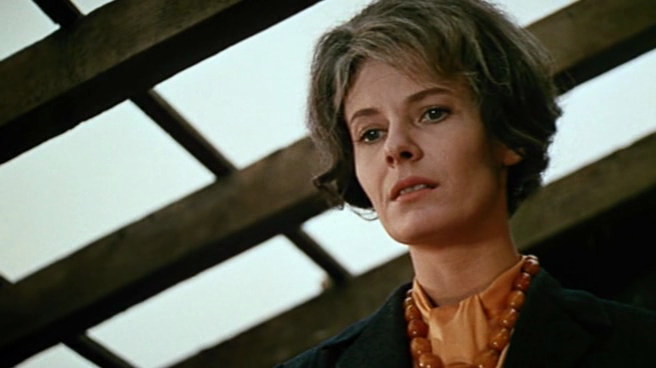
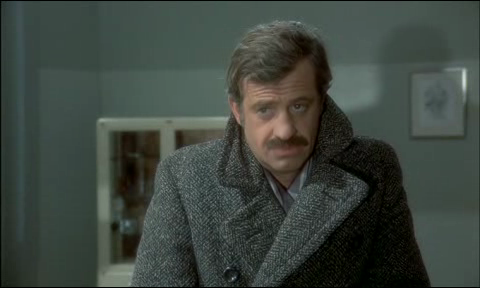
Riddled with overlays of misinformation and suspicions, to say projections and reflections, that act as interpolations, La guerre est finie is close to a second person narrative, calling "you" in almost every scene, putting you into Yves Montand's cluttered head of dead ends. Before all, the title is past tense: this fight is already done. What remains are fantasies, ideals, while reality continues and refuses these so-called revolutionaries. Instead, we see a rootless man (Montand), essentially homeless and process-bound—always moving, shifting—not even tied to a name. He's Carlos to start, then Domingo (Dimanche/Sunday), then Diego and back. And when he's Diego, we gather that's his Christian prenom, he's not: he lies to his wife's friends, his wife tries to lie for him, but he can't keep things straight. In fact, despite his ability to bed the too-yummy-for-words Geneviève Bujold, the film is about his fade. Everything is not in its right place. The game is up. His war has been over, he's a hanger-on, like his fat and/or stubborn comrades—a relic, even, relevant no more. But nobody will listen when he says so, when he says things should stop; he gets stopped, and then not. The halt's not halting: even in the end it's a relay, an ill-conceived gamble that we know won't work because of that dissolve to Ingrid Thulin—so desperate, trying not to run—that just hangs there. You feel the "FIN" before it emerges. After all, you felt it at the start.

hang

Thursday, December 10, 2009

Alain à la recherche #7: SHORTS

by Ryland Walker Knight


—The halls have eyes

[The Resnais series playing at the PFA this November and December is part of a broader, traveling retrospective with a concurrent run in Chicago at the Gene Siskel Film Center and a proposed stop at the newly renovated Museum of the Moving Image in early 2010.]


Though I arrived halfway into Le chant de styrène, it still tickled me into the goofiest posture possible all teeth, every limb under another, as if pushing into the chair hard enough would help release the giddy brio building up in my bones. Put otherwise, Queneau's puns (oh to be actually fluent!) and Alain's balletic geometry pretzel'd me up into a great mood. Then Toute la mémoire du monde grumbled onscreen out of focus and an odd English voice started escorting me around the Bibliothèque Nationale in Paris, trying its damnedest to not "do a Borges," to just present a topographical index, we can suppose. However, Alain's image-making inflects this portrait—everything's a tracking shot—with both pride and unnerved anxiety, a weird fear of the calculation of this repository. Each structure our Alain encounters seems to strike him as a possible tomb, and every system a trap, however useful it may be, for any system can ossify. Next: Guernica's a dirge. Solemn though fiery and sometimes mannered, its idea of barbarism will be further fleshed with "real" documentary work in the opening salvo (anti-salve) of Hiroshima, mon amour (still some of the hardest images for me to watch; the sexy sand-shower just prior must play a role, of course, in that reaction). Then the treasure of the night, the very rare (and neglected) Statues Also Die, whose title sounds so much more elegant in French, Les statues meurent aussi, with that "aussi" dangling, like a tsk. Talk about angry: as Rosenbaum already lined out, the final reel of this bad boy is one of the most direct anti-imperialist/anti-racist screeds in cinema—and in 1953! It's a text by Chris Marker, which is another level of cool (and smarts), which is another reason to root with it, which is (of course) really easy. It's also a fine object lesson outside of the polemic, though the political is unavoidable (I must remind myself), as we see just how loaded every thing is in these so-called aboriginal cultures; how histories are most often mythologies; how tradition cannot be ignored; how, ultimately, revolution is a dream and hardly a reality; that is, how little we fight these worlds we're locked into every day. Another way at this idea is right up front in Night and Fog: that, yes, weeds grow but scars and train tracks remain reminders, and nothing's been razed. I quickly realized I was too tired to let that movie work me over (as it always does), and I tipped out in the dark to a misty rain outside.

Wednesday, December 09, 2009

Alain à la recherche #6: Mélo

by Ryland Walker Knight


[The Resnais series playing at the PFA this November and December is part of a broader, traveling retrospective with a concurrent run in Chicago at the Gene Siskel Film Center and a proposed stop at the newly renovated Museum of the Moving Image in early 2010.]


Now the shots, like true heartbreak, feel as though they will last forever. The film never drags, so to speak, but it sure is a drag: if it weren't so sad, it would be hilarious, a true and pitch-perfect parody of The Mélodrama, all its cogs of coincidence front-loaded and all its machinations timed, factory-like, to precise ends. People unravel, not their stories. And yet, people can never tell their own stories: words weigh too much. (Look at this blog!) So Alain makes the word weigh a ton, and his endless master shots foreground how these lummox-light fools talk around each other and never with one another. The most direct form of communication is a somersault, a joke. Not even music can tell a story like a body can, though a sonata may prove a haven or a gauze. And time can fly, as ever, in the fade from one scene to another: whole lives can be rearranged, and are, by, simply, the movie calling curtains on one of its idiots. Lit and timed like Gertrud—with spotlights highlighting the artifice but duration making the people deliberate material—this chic, art deco world—all of it tiles and squares and boxes, all of its lines of style—is one big columbarium. Every stage feels a coffin, the whole thing bound by rigors of time one block of misdirection and perjured, masking tape'd crate at a time.

Mélo 2

Friday, December 04, 2009

Alain à la recherche #5: Mon oncle d'Amérique

by Ryland Walker Knight


[The Resnais series playing at the PFA this November and December is part of a broader, traveling retrospective with a concurrent run in Chicago at the Gene Siskel Film Center and a proposed stop at the newly renovated Museum of the Moving Image in early 2010.]

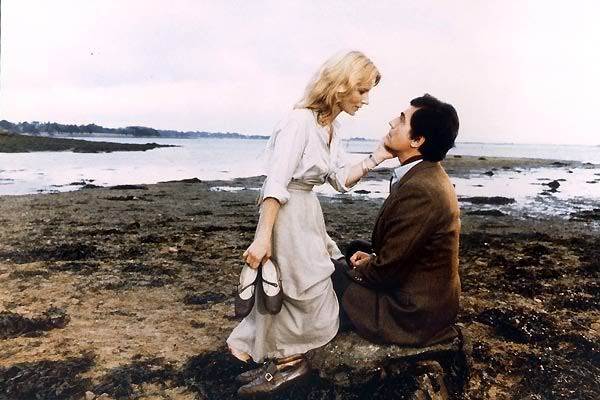
Parts of this film get me so giddy, marveling not just at the beautiful photography but also at the beautiful Nicole Garcia (above, on knee) and the silly-smart braiding, that I just don't believe it. Other parts are terrifically moving (i.e., sad). Most parts are didactic; as if its narrative strategy were a form of pedagogy engineered around constant recapitulation; as if Alain's saying, almost like he does throughout Marienbad, that if we say something specific enough times in enough voices then it's bound to burrow in there and register.

Everybody's got a story, and everybody's got dreams. Everybody's got a fantasy, an uncle from America. Except, of course, these people are decidedly French. In fact, we get a full from-birth history for each of our three leads—Garcia, Gerard Depardieu, Roger Pierre—each told a few times over. The film begins more a mosaic than Je t'aime, je t'aime rather literally as our eyes follow a spotlight searching a collage of stills we will know in motion later in the film. Then it's choral, too, our ears parsing these three—no, four—voices recounting their births and their birthplaces and their trajectories all at once all on top of one another—except for some omniscient voice telling us that a being's only purpose is being and/or something else tautological. Shortly, we're given faces to go with the voices, and names, and portraits of their childhood narrated by them. Then the net is cast over this trio: Resnais introduces Henri Laborit (a real-life physician, writer and philosopher) with the same kind of narration, but with "current" footage of Laborit walking around some lab, smiling and scowling. Laborit is a kind of guide, a sage, for the film. Not that the film exactly proves Laborit's theories—a version of evolutionary psychology intent on Explaining It All—but these asides help provide, say, an anatomy for the film to hang stories off of, like limbs.

The film is split, or splintered, or it splits a few times, or it's segmented, though it also finds conjunctions and convergences. In one (dim) light, it's simply didactic and over determined. Resnais never reduces, though, and the repetitions are never played the same—not from the same angle, often it's not even the same exact action but another performance altogether. Even more than the memory game of Marienbad, Mon oncle aims at redetermining events: how new information colors an old event, or a current one, and can influence understanding of putatively unrelated events. Put otherwise, the film is quite clearly about intentionality, and how we think about things, and where we come from when we come to things-people-places. No doubt, there's plenty of Ricoeur's traces in this project, even if it's based in Laborit's mouse traps. It's Resnais' cinematic gusto that frees the film from its unilateral "expertise" echoes and lets time move both—nigh, all—ways at once. Though Alain maps the mice onto the men and one woman we follow, it's not proof; it's a joke. It's a gas that it's a possibility, even a plausibility, in this world. —Jokes can scold!

Though agency seems crushed, to an extent, in this little network of forces, we never feel like life's not open. Rather, life's prone to fantasies, which can, plausibly and paradoxically, be a form of paralysis, an inhibition that blinds us to how we move ourselves (and must) and give each present purpose its purpose. Or, that becomes possible only if (we hope "when") we find a way to gather ourselves, to hold our histories at hand as some ciceroni, and not simply as stained glass. We remember: we tell ourselves stories in order to live.

Wednesday, November 25, 2009

Alain à la recherche #4: Je t'aime, je t'aime

by Ryland Walker Knight


[The Resnais series playing at the PFA this November and December is part of a broader, traveling retrospective with a concurrent run in Chicago at the Gene Siskel Film Center and a proposed stop at the newly renovated Museum of the Moving Image in early 2010.]


Perhaps Alain was trying to one-up that left-bank homunculus, Sartre, with this one, a time travel loop where the only exit is that prior end game choice that landed our monad-man with the guinea pig gig in the first place. It's a frisbee film, a breeze built on repetition, one gesture lazing into another laser. It's a gimmick, for sure, all this jumbling, but the conceit is rather perfect; and the opening fifteen minutes, before Claude Rich's Claude Ridder (Claude Raubois in the war) falls asleep in that pod, caper a quick route through jokes of hurt to get us into the "science" part of this "science fiction." Rich-Ridder tried suicide and failed, so a cloaked commune of scientists pick him for their first human sent through their pod of time, a blob of wiring and indeterminate shape. The plan is for our man in the middle to return one year into his past for exactly one minute. The plan fails, like the suicide, but it succeeds as well as suicide, trapping Rich-Ridder in a mosaic of moments. Some moments repeat. His woman, Catrine (the doomed beauty Olga Georges-Picot you see above), never looks happy. The pair play then dig at each other; he's mostly a jerk. We get more information as varied threads reappear and expose more history. The film shifts from frisbee to football, a calfskin of guilt, though it's never quite oppressive—just sad. Its hopping turns to treading, folds the simultaneous around a rubber-band ball of ignobility. And there's Rich-Ridder, placid, both vessel and detective. And that's us, peering on, piecing together a jigsaw we can't get a handle on: all we see are seams.
Friday, November 20, 2009

Alain à la recherche #3: Night and Fog and Muriel

by Ryland Walker Knight


[The Resnais series playing at the PFA this November and December is part of a broader, traveling retrospective with a concurrent run in Chicago at the Gene Siskel Film Center and a proposed stop at the newly renovated Museum of the Moving Image in early 2010.]


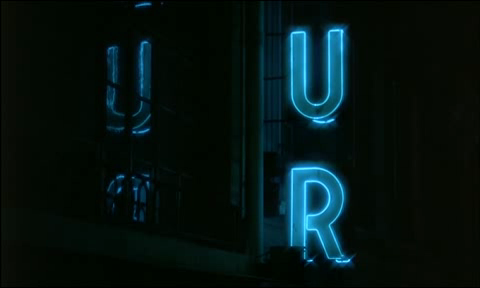
The third night showcased a pair of ghost films, Night and Fog and Muriel, that dovetails one phantasmagoria of "history" with another knot of pain to paint a picture of memory as only ever a haunting. It's the dread affect. It's how you don't need to see some scars to feel them line your visage, or your soul. The most alarming thing besides all the hurt bottled in these films is that the duo rush by, clipped in to let time slip away. The earlier documentary acknowledges this pretty basically in that it's a short, a little poem of collocation. One form of representation is pitted against another. One imagines seeing two films at once, and how some current artist, like say Jennifer Reeves, might project both media simultaneously; however, Resnais could have done that, too, but he did not; one would be wise to understand the power of a more "linear" contiguity to better shock, assault and mortify an audience. As the title attests—in spite of its before-and-after death camp images—it's not an ashtray film and it's not a smoke trail film; rather, it's that cloud film, hanging; it's a fog fugue. Of course it hurts.
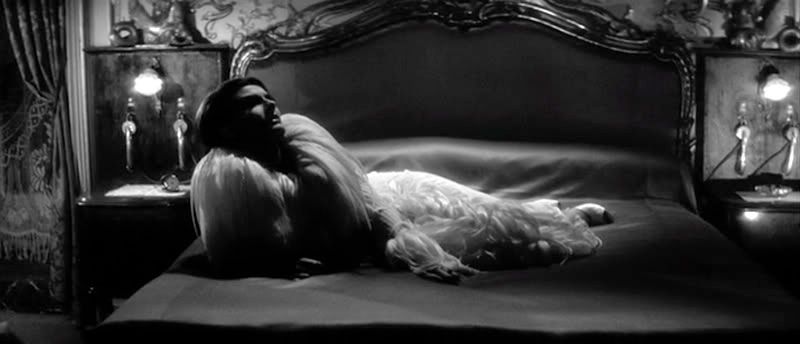

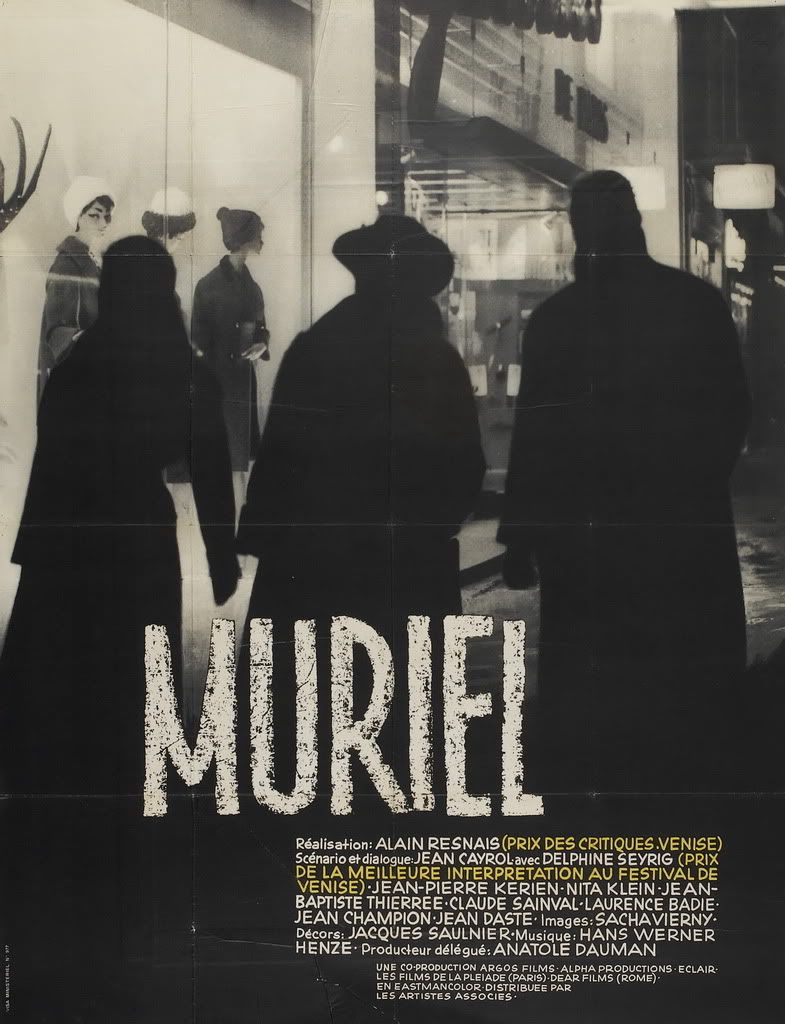
Muriel extrapolates this reckoning project, but instead of a fog of competing threads, it's all tied up, everything a gnarl, as only a Hitchcock fan could dream. Again, it's a crisp film—blink and you'll lose your bearings—but, like a lot of nightmares, the pacing's off. It lumps on, then flies to a cliffside, then a few months fall away and plans are dropped; life's a gambol as much as a gamble. Nothing really happens but a series of "you hurt me once" rounds of sparring. It's a film of remove set in the port town (a liminal space if ever there was one) of Boulogne, outside Paris, away from Algiers, eons from The War that changed everything. Resnais seems given to dialectics in this early phase (though Marienbad's clearly a prism), and here we have not just past and present but young and old, memories and events. Nonetheless, it's hard to call anything an event in a film this oblique, this hidden, this burled, this tangled. Like all of the best cinema, at bottom Muriel is just images, folding, a string of signals that resist that symbolic. Nothing is so reducible in a Resnais film, it would appear. In fact, what I'm already loving is that he's at the other end, exploding things. He claims lineage with the Surrealists and it makes sense: Muriel may be a cube, not just a knot, built of mirrors; however, unlike Marienbad, those mirrors are corporeal, physiognomies rather than reflections, with pores and creases. —We're back, somehow, at the human.


Sunday, November 15, 2009

Alain à la recherche #2: Stavinsky...

by Ryland Walker Knight


[The Resnais series playing at the PFA this November and December is part of a broader, traveling retrospective with a concurrent run in Chicago at the Gene Siskel Film Center and a proposed stop at the newly renovated Museum of the Moving Image in early 2010.]


Some might call Stavinsky... a lavish lark. I called it a "goof" walking out. But its easy charisma, rubbed off Belmondo's debonair superstardom, does not devalue its interest in history (histories, stories) or, again, memory. Though there is no recovery here. The past doesn't loom for Sacha-Alex-Serge; he won't allow it. However, for that matter, he can't out run it. The ellipses matter at the end of the title: they indicate a path, or something unsaid. They can also signal a sigh, as most people floating around Belmondo do just that and shake their heads, calling him out as crazy—sick, Lonsdale's doctor insists—a supreme narcissist megalomaniac. Redundant, yes, but some people are—some people, as it happens, are a sickness no matter their charitable spirit or the love they inspire. This one, this man of a million names, this fake 'stache man with nothing but a grin, this sick sadness can't seem to figure it straight. Belmondo plays him like he believes him. Belmondo knows he's lying, or showing off for ill, but, like he tells that German actress, he's out to deliver happiness (not pleasure) to those around him as equally as he aims to tickle himself with each fancy before it leaves him, caught in an eddy while he floats on. —But what of that silent Trotsky hovering on the sidelines? What's his role? Red herring? Not quite. He's more like an idea, a sign of other quashed dreams. Trotsky inspires his circle but otherwise wrecks little havoc in centers that ripple out, causing a political ruckus, and, it seems, an atmosphere rife for toppling; this France careens, no doubt, towards The War a mess. Its history, as embodied by Boyer's Baron, cannot read the present for signs of the future, nor react with much beyond disbelief. Perhaps that's the price of class honor rolls and their imagined debts: such faith yields ruins, or graves. The Baron, after all, quotes Giraudoux's spectre at the close to signal his own end, to nod at an era he knew and defined now drowned by time.

Saturday, November 07, 2009

Alain à la recherche #1: Marienbad

by Ryland Walker Knight


[The Resnais series playing at the PFA this November and December is part of a broader, traveling retrospective with a concurrent run in Chicago at the Gene Siskel Film Center and a proposed stop at the newly renovated Museum of the Moving Image in early 2010.]


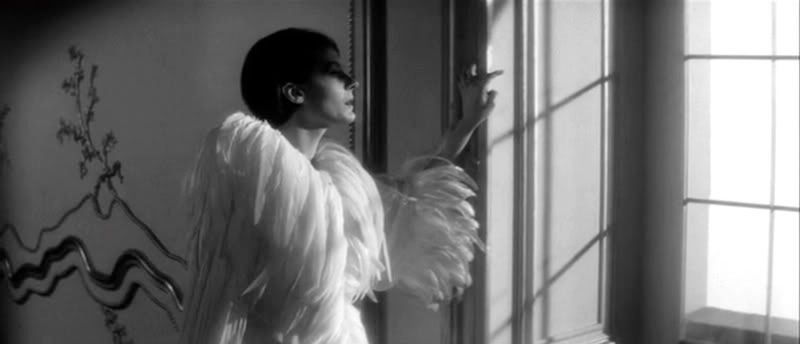
This was the third time I've seen Marienbad. As with the first, and the second, it feels like the first time I've seen Marienbad. I don't know if that will persist as I keep seeing Marienbad, as I have, year after year, or one screening one year followed by a pair of years of gap, then a pair of screenings spaced by a year. Last year, I saw Marienbad at The Castro. Before that, a few years before that, I saw Marienbad on a shitty DVD. Needless to say, a year ago was optimal, and new. This time, a year later, unlike last year, the print was a little more travelled, and weathered, but every image still crackles and every edit whips. In any year, it seems, Resnais is a crisp filmmaker. This year, too, the jokes kept hitting harder and harder. Marienbad is easily and stupidly misinterpreted as a dead bore, as nothing but pretension, when, in fact, every repetition is a redetermination of the same joke. The film is one big repetition, or one repetition after another—a Deleuze wet dream, maybe—which means it's one big joke, or one great joke over and over. And every joke is about repetition, and how that can cheapen the serious, and how cheap that can look and feel—and how it piles on—despite being dressed up in the classiest clothes and setting and ornamentation and gloomy mirrors and feathered collars imaginable. Imagination, it seems, is what our Man lacks; or, what he's got in spades; but if he's got it in spades, he's got a poor, somber capacity for it, for fun; that is, it's in spades. He sees a maze as a maze. We might say Resnais sees the maze as the stage, or an arena of invention. You don't map your way out—you look around, you turn corners. But Marienbad, for everything above (inside?), like its jokes and its mirrors, all its doubles and triples and quadruples, all of that remains, in any time, at any rate and in any event, some hopelessly walled-in picture of present tense stasis. —Now, though, I wonder: how come I find that this hilarious this year?