skip to main |
skip to sidebar
by Ryland Walker Knight

- PRINCE AT THE ORACLE I lost my voice, I danced myself some kind of clean, I felt three kinds of emotions for three different people beside me, I felt other emotions for people not beside me, I laughed, I was happy to be alive. A unique night indeed.
- The Leopard [Luchino Visconti, 1963] So, as some may know, I left at intermission. I'd fallen asleep about eight different times and all I knew when the house lights came up was that Burt liked to fuck and Alain lost an eyeball. Figured I was missing something. So I left. I stepped outside and that bright San Francisco sun, the kind you only see when it's 48 degrees outside, met me like a meal and I walked over to a bar with a good window full of that light and I read more Pnin and I laughed out loud and I drank a beer and I felt happy with my choices.
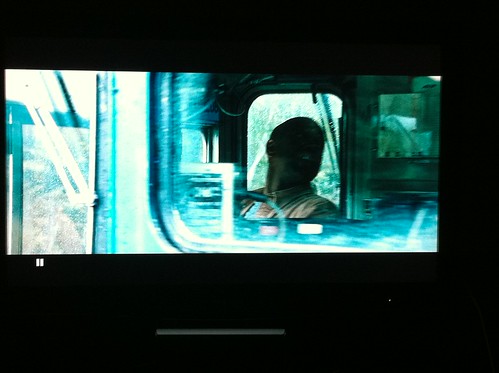
- Unstoppable [Tony Scott, 2010] # Still as pure as the day I saw it, only this time I was more attuned to certain sociological lenses brought to bear by some of my friends (or just one friend in particular), which I don't exactly vibe with since I think it's a victory that it's about the working class. Sad that's a victory, and weird that an abusive husband (he didn't hit her but he was sure wrong) is our main point of identification, but, still: this movie looks and moves and feels better to watch than just about any action movie of late.
- Slings and Arrows First Season, episodes 1-3 [Peter Wellington, 2003] Written and acted better than it's shot/edited, but such is the pratfall of a lot of TV; point is that it's conceptually rather perfect, sometimes poignant and I want to see the backstory unfold. It's on Instant.
- Pneuma [Nathaniel Dorsky, 1983, 29 mins @ 18fps] Kinda like a drone album without the sound! Certainly, it was gorgeous. But I'm not so certain it needed its length. There was something biological about the energy within the frame in this one, with all those motes dancing and colliding and after-image-ing on my retinae, which is maybe what Dorsky meant when he said he was trying to be as humane to and with the film as possible. (Without humans, without figures.)
- Metal Cravings [Elise Hurwitz, 1990–1997, 5 mins] Brian made an interesting point: though this paint-with-emulsion chemistry game was obviously the product of elements brewed, it felt biological.
- Light Shaft [Vincent Grenier, 1975, 8 mins] Something of an obvious parallel to how cinema works in a theatre but I do love windows (they're eyes!) and I love the shifts of light caught here from rather simple tools and execution. As with all the films of the evening, this one lives by its breath, its rhythms; that is, when it allows you a breath. Which is an odd thing to say about something so fixed on an image of vision. Which makes me think blinks are the eyes breathing.
- Soundtrack [Barry Spinello, 1969, 10 mins] Really funny. Inventive use of paint to make images into sound in a material way. (That's the whole point, btw, since Spinello painted the same images within the frame as on the soundtrack to do some hilarious synesthesiac rhythms.)
- XFilm [John Schofill, 1968, 14 mins] Dug the dreamlike associative patterns and the doubling/tripling/quadrupling of some images, but the logic wasn't exactly dreamlike nor was it structured all that tight. In fact, the factory of dreams idea was a little on-the-nose. That said, I also liked how somber the film felt. For such a figurative film, it's surprising the affect was the organizing force, not the repetition of certain forms.
- Stroboscopic Images [Dion Vigné, 1964, 6 mins] Again, nice to see some old versions of things that are now somewhat commonplace but the music, I thought, dated it a bit too easily. Or maybe that was the Belson.
- Allures [Jordan Belson, 1961, 9 mins] Kitschy, almost, at this late date. But still great fun to look at if only because my fatigue and inability to breath all that well made me feel like I was on painkillers.
- Obmaru [Patricia Marx, 1953, 4 mins] Honestly? Can't tell you what this one was like.
- Blue Valentine [Derek Cianfrance, 2010] Michelle Williams' Cindy is as woefully underwritten as Ryan Gosling is attractive and she winds up a walled-off villain given this imbalance. Seems unfair. Especially with that sideways inclusion of her total sexual partners tally, which is nothing if not unnecessary as it's just another knock against her and her judgment skills since, given the setting this is relayed within, it is way too easily a magic marker writing the word "slut" on the screen. Instead of "woman" or, you know, "human." Still worth seeing, though, if only for Gosling's absurd charm and some of the rather beautiful images.

by Ryland Walker Knight
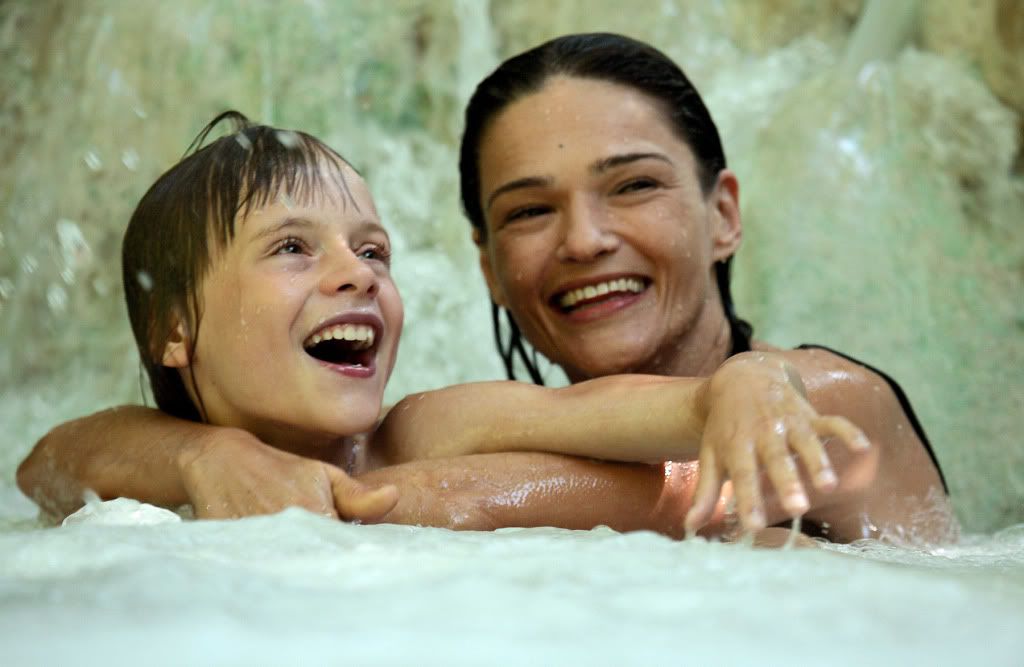
—Hey ladies!- Cyrus [Duplass Brothers, 2010] I laughed my butts off and thought all the zooms actually served a purpose in the general uncomfortable zone of these dudes' idea of comedy: one premised on miscommunication and lies and making people squirm. Jonah Hill does deadpan better than most, and maybe better than "wacky" (though his "wacky" in Superbad is pretty great); Marisa Tomei is a babe, still, and this wows me along with every other drooly idiot boy in the audience; guess that's the point, too, since John C Reilly's all wide eyes and goofy "Love! Me!" freak outs most of the way. I'd say see it in theatres if only because that'll probably mean you'll see it with a crowd and being drunk in a crowd of similarly inebriated, jazzed young people definitely added to my pleasure.
- I Am Love [Luca Guadagnino, 2009] In one light (the wrong one, duh), this is the silliest movie ever. But in the right light, it's one of the most beautiful: everything baroque expression, an all-caps film brimming with canted angles and swoons and tilts and a score to die for all around Tilda's face. As much a film of affect as INLAND EMPIRE, but to practically opposite ends, with damn near opposite means. That is, both filmmakers score their images to sound how they look but Lynch makes mud cakes with a grin while Guadagnino crafts gourmet plates for twenty with tears. Put otherwise, all the images drip and some rack focus fast and everything's lit to look delicious. I can't wait to see it again. Wish I could see it with a Vitti (or a Tilda, hell) wrapped around me, fingers locked. I'll likely write a real essay when it comes out in wide release.
- Senso [Luchino Visconti, 1954] I made a joke on twitter about how I was bored, then I qualified that with a (still-reductive) explanation that I did like the opening—I'm a sucker for stages, and audiences—and the abruptness of the ending, but otherwise I didn't need it or its tableaux of "hurt" or all that "hysteria." And, call me crazy, but I go crazy watching those mouths move out of synch with the soundtrack. Further: the colors are nice, no doubt, but the restoration, which seemed muddied in spots, paled in comparison with the Ray from the day before, which was crisp like new. Could be a print traffic thing, but it seemed more like a print striking thing.
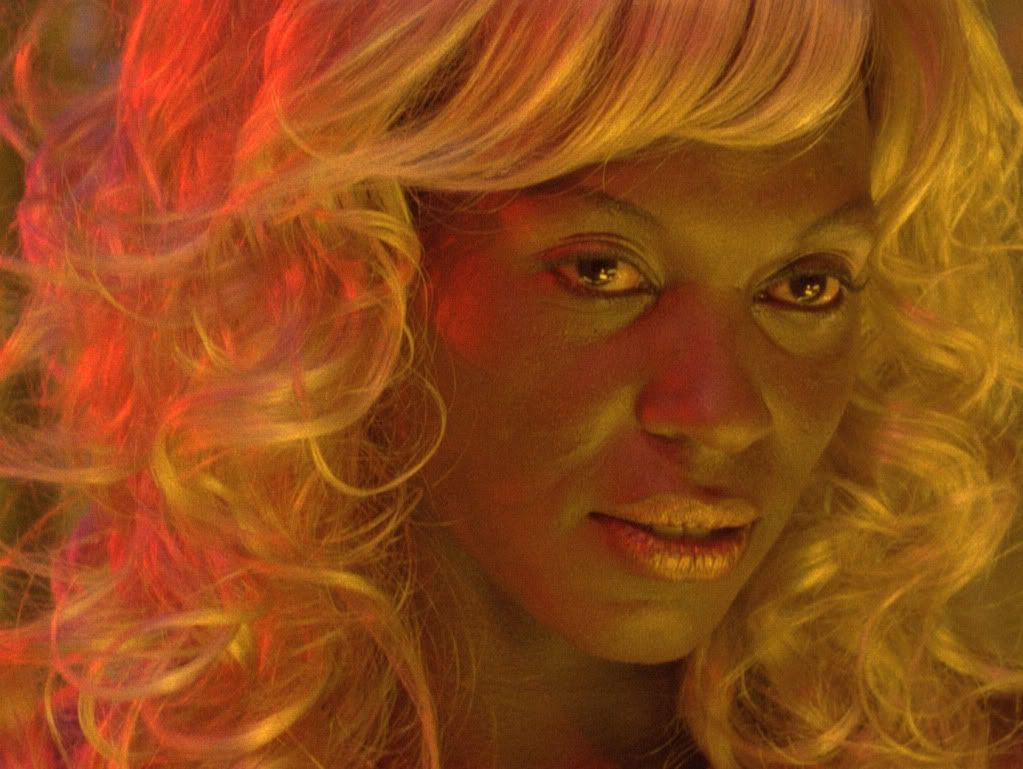
- To Die Like a Man [João Pedro Rodrigues, 2009] A real film. Maybe not as great as I want it to be, and surely hard to handle in a lot of spots, but boy does it have style. At the Q+A, Rodrigues said he wanted to structure it as a musical comedy but that it was also inspired by Raoul Walsh's Objective, Burma!, which you can sense looking at this scene, but, to be fair, Rodrigues doesn't film any clouds the way Walsh does. What he does film, though, he films especially well. And we all know I'm a sucker for films about performance, and acting, and acting in the world in whatever determination that takes.
- The Music Room [Satyajit Ray, 1958] Caveat: got no sleep because of an airport run, so I dozed a few times. The restoration was beautiful. The film's craft was, too. But I tell you what: I'm kind of done with hubris. Doesn't feel tragic.
- Wild Grass [Alain Resnais, 2009] # At home, looking for images. Image-essay likely coming.
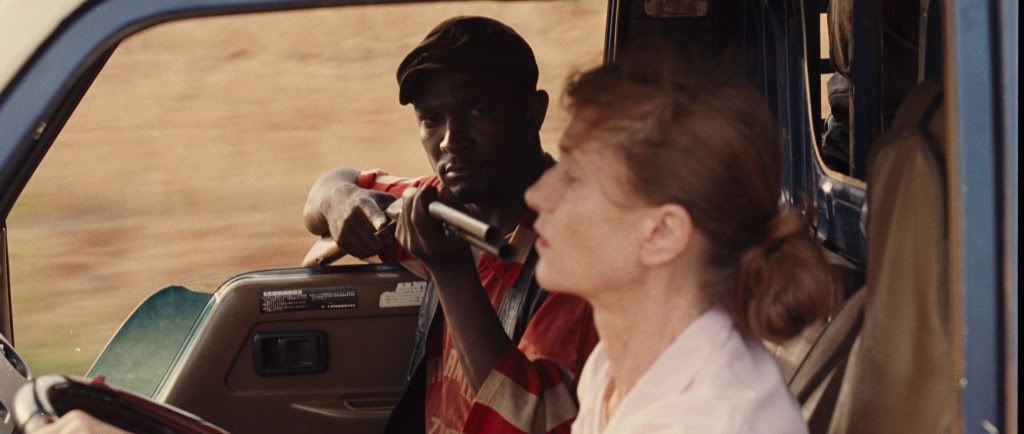
- White Material [Claire Denis, 2009] Didn't want to believe my buddies who'd seen it previously but, well, yes: this is not her finest two hours. Still ratcheted tight, and a few edits are jarring in the best ways, and murder by machete in any iteration is always terrifying, brutal, gross. Wish there were more ideas, and a better screenplay, but as it is there's just one and a kind of tired narrative structure. The filmmaking structure, however, proves its worth in its angles at end points and the camera's near hush. Every image seems stolen, as if they lucked out every time they turned the camera on and pointed it at things or didn't. The problem, though, with everything pointed inwards, is that it kind of cancels itself, proves its own null. I don't need Claire Denis to tell me about this kind of cesspool.
- Wild Grass [Alain Resnais, 2009] Had me from the get-go all the way up and down and around its folles follies to that finale that loops and dips and scans and pushes and soars and zooms and just feels great all inside my body and my brain. Danny was right: maybe the most generous. Dense, as ever, and "typically French," as many numbskulls said walking out, but I see those things as positives. Mileage varies, sure, but when you're flying you cover so much ground!
- Cold Weather [Aaron Katz, 2010] So much fun. Somehow didn't expect it to be plain entertaining, but it was, and I really had a fun time with it. Since Aaron's a friendly acquaintance, I know I'm a little biased, but I don't think that fraternal thing is necessarily a part of what I dug. More so I loved that it wanted to be, and rightly is, a comedy at heart. Cris Lankenau and Trieste Kelly Dunn really play off one another well, seem to have fun in every scene (even the deadpan, annoyed ones), and I bet a lot of siblings will enjoy seeing this together. Also, Brendan was pretty funny in his cameo. I hope everybody involved gets a spring board off this project.
- Father of My Children [Mia Hansen-Løve, 2009] What a lovely little film. Shows a family resemblance to plenty of her country's best, including Pialat (elisions, candor) and Doillon (children and their brains), though her interest in ladies and the importance of being a lady dealing with the weight of men, even as ghosts, is distinctive and maybe even singular. I'll see it again and I'll see her first and I'll write more.
—Drive, die


 Posts


