[BANG BANG is our week-long look back at 20!!, or "Twenty-bang-bang," or 2011, with contributions from all over aiming to cover all sorts of enthusiasms from film to music to words and beyond.]
My, How Impermanent by Ryland Walker Knight
Earlier this week my Indiewire ballot appeared. I still stand by it, I suppose, but even just a week after publication I itch to change things. In fact, the whole enterprise gives me hives to a certain degree. The whole idea of absolutes in general, in any context. If you take a look at that list, you'll see a collection of films, I'd wager, premised on contingency, or some form of mystery or mess or exuberance. Even the more "straight" narratives (Cronenberg's & Jacobs' portrait-films) exhibit an interest in how things do not fit, or ever fix into reliable—much less accepted, normal—forms. Perhaps the best term I can reduce this idea to is a favorite on this blog: navigation. Life's not a maze, but there are hurdles every day, including waking up, not to mention the unexpected tidal wave every so often. We're so used to the narratives we're given or that we give ourselves that eluding the unwanted can wreck a day, a month, a year. (Lucky me: my year saw hiccups and headaches but nothing got wrecked. Truth is, I had a fantastic year. And I'm grateful.) Naturally, I'm attracted to films about finding ways through life.
———
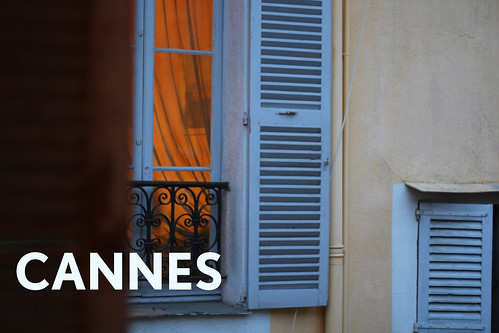
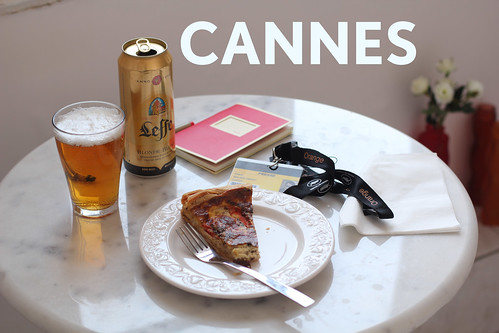
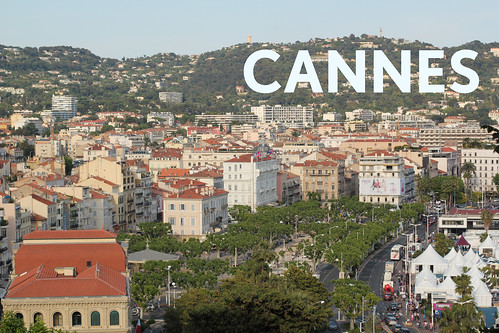
Finding a way to make movie-going more a part of my movie-watching has been difficult this year, the past couple years. Granted, I got to attend Cannes. But the pleasures of that were certainly "extracurricular" as much as within the salles and theaters. The dinners, the new friends, the jokes over whiskey and rosé with Danny and Adrian after long days. But I still cherish movie-going.
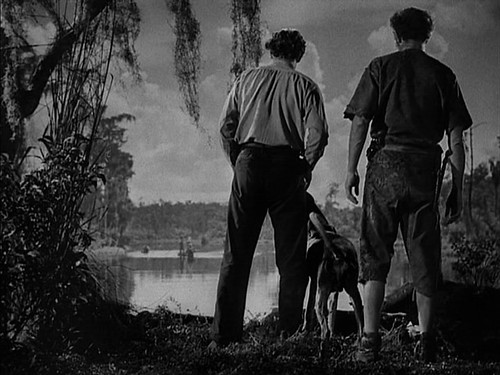
Early last week, in fact, I had the supreme pleasure to take in one of the best double bills in recent memory at the Roxie Theatre (with Brian, yes): the early show was Borzage's Moonrise followed by Renoir's first H'wood venture, the insanely under-seen and apparently under-recognized Swamp Water. Two films about the south made by not-southerners that understand the south and southerners in ways you rarely see anymore. (Of course, I'm not a southerner; I'm a Californian. My Okie roots are roots and my relationship to GA/SC is tertiary at best.) But aside from any obtuse anthropological/ethnological reading I can offer, the films exist and excel simply as films. Borzage's at his Murnau best and Renoir is at his dollies-everywhere (and "people as people") best. And they spoke to one another in delicious ways the way a double bill is supposed to work. Steve Seid usually knows what he's doing but this was a special program. The swamp has different narrative functions in the films, but in both the swamp is a hunting ground, a space of violence, something untamable that few can master or at least negotiate (or inhabit!). Again, this speaks to how I see the world at large. Life takes skills we never anticipate requiring, but nonetheless accrue. True to this optimism I harbor—inside an unavoidable but I hope healthy cynicism w/r/t life's obstacles, including people (above all people?)—both protagonists of these films find ways to join the world by their stories' ends.
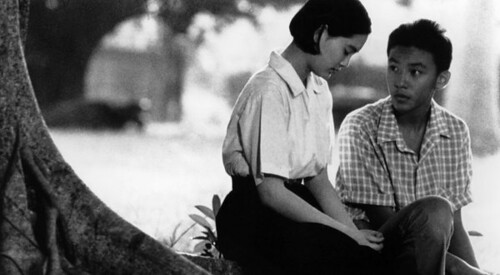
Then again, not every path is a success. The film I felt worst about leaving off my "official" top ten was Edward Yang's A Brighter Summer Day. That movie's all about the disconnect we're forced to confront as we grow through adolescence. It's about a lot more, too, including light, but there's a violence in adolescence that it understands (something Haz and I talk about as he is a teacher). This is true of all the Yang pictures I've seen, but this one is obviously special. Its length affords its narrative the space for us to observe characters rationalize their way through choices good and bad alike (though mostly bad) all the way. This is what critics mean when they call a film novelistic: time affording space for character. Granted, that's a limited view of what "the novel" is or can be, but this film in particular, as with many likewise classified films, is after a Dickensian kind of scope forever grounded in place and details. This, too, is how best to think of something like Breaking Bad, which Jen talked about yesterday.
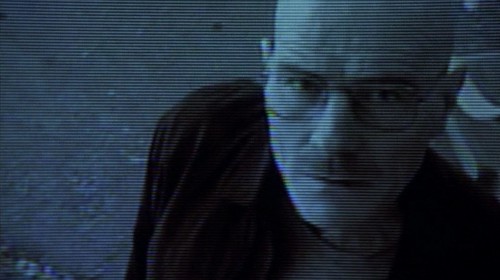
Television, after all, is serialized much how the early money-making novels were; both are strategized as much as constructed with plot doled out in delimited chunks. But, as Jen noted, one of the pleasures of BB is just how digressive it is, how much air time is given to behavior and go-nowhere episodes of bickering. And it's not like this show's hopeful. It's got a pretty grim take on human desire and nature and intelligence. As I've said before, these characters are idiots. Walter White seems to have figured out a few things watching Gus operate, like the cost of survival in such a dangerous game as the drug racket, but he's still a bald, selfish, myopic stranger to himself and his oh-so-beloved family by the end of this last season. And the person he's closest to has every reason in the world to want to slit his throat.
———
I've been using my tumblr more than this home base throughout the year. Part of it is simply ease of use. Another is desire. The last is time. I like the scrapbook/notebook feel of the microblog. It feels like a repository of reminders. And it usually takes very little effort. Writing here is more work. (Writing anything is work!) Not sure what the new year will bring, but I'm not quite ready to quit my baby. But I quit making zines to make this blog and I may wind up quitting this blog to wind up making more films. Even if they're just little goofs about the sounds of seagulls or odd poems about light and memory. The future has more answers than me.
———
One thing I know for sure: though I've made some great friends via emails (cf. this week), there's a lot I'm proud of from this past year outside the walls and tubes of the internet. Thank you to everybody who helped make those realities real. You know who you are. ________________________________
Ryland Walker Knight is a writer and filmmaker living in San Francisco. He has three names, which you can read above, at left, and all over this blog.
[Amidst a few other films I watched and writing projects I kept chipping away at in August, I finished the second season of AMC's Breaking Bad.]
Right off the bat: Skyler is the worst. Anna Gunn is brave, but Skyler is as unsympathetic a character as I've ever seen. So much so that I had to stop watching the episodes back to back, as is the common desire with instant/on-demand viewing. However, I quickly fell back into plowing through one episode then another, in part because I'm attracted to how condensed the story is compared to, say, Mad Men, where time's certainly not of the essence unless by dint of the television medium's format (seems there's a lot of "something's gotta happen eventually" in MM). It's not as condensed and rigorous as either Milch HBO show (to date) but then even Deadwood feels like years given all the time that passes in between its season arcs. Breaking Bad, on the other hand, though it plays with time some, is mostly driven by a consequential logic. In other words, I was surprised to see this season start precisely where the last one ended. But it makes sense.
The genius of the show, if I can use that word, is how much attention is paid to every step Walter takes towards villainy. We get to watch a basically good brain go, yes, bad. We see all the rationale behind his choices, sometimes without words. I told a friend it was like Dostoevsky and I meant it. But the delusion of doing wrong in the name of good isn't just a trope of the great Russian depressive; it's really rather common. The idea of "white lies" comes from somewhere not related to white nights. I think it comes from everyday life. One must contend, all the time, with too many compromising choices to remain moral. However, this show, unlike those Milch masterpieces, isn't concerned with the ethical life. No, this is just the wrong way to do things. Remember the title: it's forgoing the righteous path.
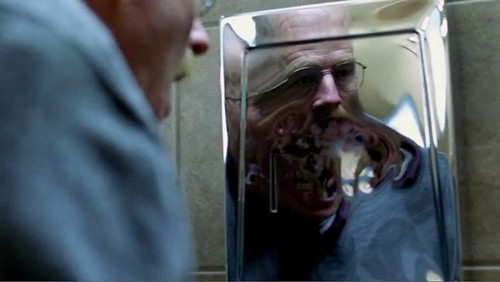
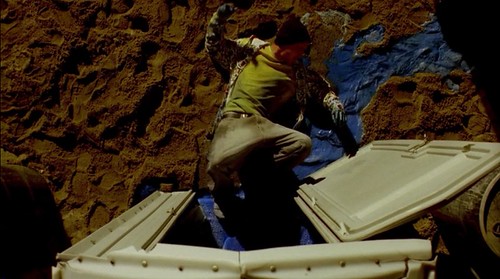
And if Mad Men is about television as advertising, Breaking Bad is certainly about television as a drug: a perfectly calibrated bit of magic that keeps you coming back for more, designed to hit you where it hurts and where it feels the best. (Why else watch more than one episode at a time, right? It becomes a compulsion, if not outright addiction.) This show, like The Sopranos, makes you complicit, designs a rooting interest in Walter, and dares you to not get excited with him and for him. Until, of course, he explodes and, as his brow lowers, all that venom bubbles up. The most obvious and scary instance of this is when he beats up that towel dispenser (see evidence above). Unlike The Sopranos, nothing is glamorous here. There's nothing sexy about two men making meth in a desert, or anything related to meth. Hell, the meth cooking passages are my least favorite parts of the show. Krysten Ritter may be sexy, but the show goes out of its way to make her unsexy by the end of her character's sad, pathetic, idiotic life. Her death, after all, is just another instance of Walter's growing selfishness as the root of his growing evil. For Walter's whole trajectory is about taking control of his life. But he's pretty lousy at that, too, since he's only ever looking for shortcuts. And, again, the show shows us that these are all myopic moves from a novice. That's maybe my favorite part: these people are idiots.
Walter is a chemistry genius, I suppose, but he's a child compared to Pollos Gus. (Giancarlo Esposito is so awesome at his two face it's incredible; yet another movie-quality actor brought to television and instantly upping the ante.) I suspect he will change the game going forward quite a bit more than Saul Goodman, though Bob Odenkirk is about as crucial an element as can be. After all, he's the only one expressly keeping the comedy going. He has his moments of clarity and seriousness but he's mainly there to act the fool, to play dumb—though he's not dumb, at least not as dumb as Walter—to show the other dummies how dumb they are. This vision of comedy is quite close to condescension. I get that. But nothing's so simple in this show. It's a black comedy, after all, where everything farcical is tied to horror. The horrific is often papered over by laughter in order to diffuse tension, but sometimes horrible things are just horrible. Like letting a girl choke to death on smack-induced vomiting. Other times, horrible things can be hilarious—because they're so stupid—like Saul's whole wardrobe.
Not sure what to do with the framing device of the season, but the tidy color coding of the teddy and Walter's sweater seems obvious. Walter is adrift, charred by wrong. And all that build up to that collision seems like a ploy, not plotting. I cannot imagine how that's going to actually effect the trajectory of Season Three other than Jesse's already rock bottom self-esteem flatlining a little longer. But maybe we're (I'm) in for another rise. Maybe Jesse will seize sobriety and do some things right. Worst case, which it usually is, he'll be a marginally better criminal because he'll be clean. Best case, it'll complicate how Walter sees him, because Jesse is certainly something in his life that Walter can and has controlled. I doubt Jesse will learn how to interpret his way out of manipulative moves by Walter, but he'll likely get better at staking a claim for himself in kind. Then again, Jesse's kind of the show's test dummy par excellence, a raggedy ann at the mercy of bigger and stronger and meaner people. His best episodes in the season were all about his sensitivity. Hope he doesn't get beat up so much that he loses it. Walt sure is trying to lose his.
Breaking Bad Season 1, [Vince Gilligan, 2008] So far, I'm a fan of the farcical elements that sharpen the edges of the drama and elevate the show past one of the stupidest (or most roll-your-eyes) pitches you can imagine. Oh, a failed chemist now teaches high school and has cancer and, get this, to pay for his chemo he starts selling the purest crystal meth ever thanks to his skills in and knowledge of chemistry? Yeah, that sounds like a party—when does it air? That train of thought is why I never watched. But my friend told me it was funny, actually, and since the first three seasons are all on Netflix Instant at present I thought I'd give it a shot. Turns out she was right and I was wrong! It's not dumb, it's funny. But it's dark, a black comedy. However, I can imagine things only get heavier as Walter White turns into more of a heavy. For now, I'm enjoying all the play on that line we draw between right and wrong, legal and not, good and evil. Plus, it's about money in the late oughts and that's bonus points right there.
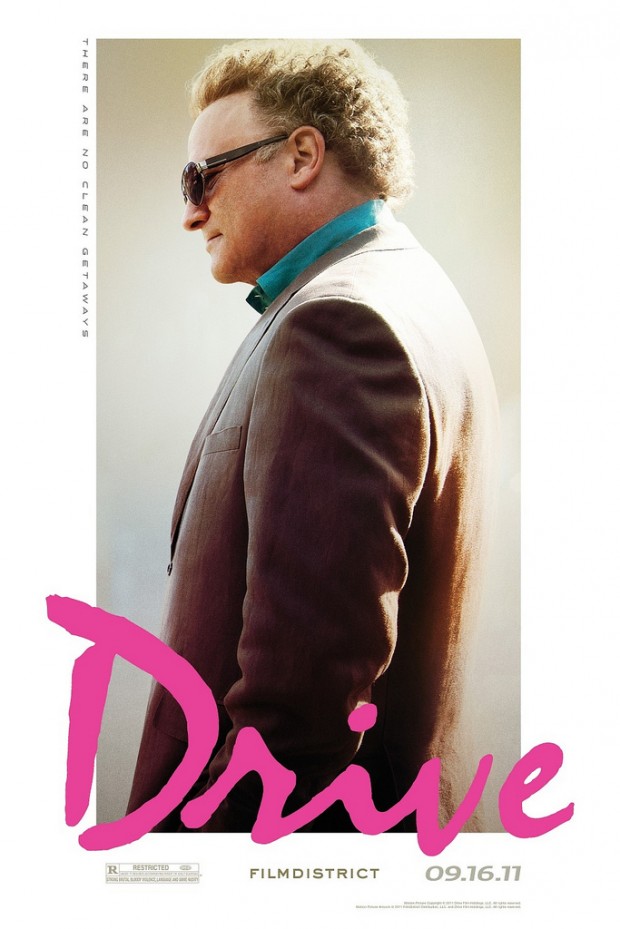
Drive [N.W.Refn, 2011] # I gave it a second chance and I'm still unimpressed. It simply doesn't add up. For a while, after I read the Sallis book a couple times, I thought it might be interesting to write an article all about adaptation using this as an intriguing example (as part of the pitch, too, I'll be honest). But the adaptation's strengths are lost in the haze of what Refn's after, which I think can be simplified to one of the weirdest ways to say, "I love you," to his wife (1). Even disregarding that mostly useless extrapolation of projection-as-interpretation, the object itself is rather basic, though pretty, and altogether empty—a film of integers arrayed, not added up, instead of the matrix of significance it seems to pose as in all those extra beats and drawn out googly eyes scenes. That is, there are a lot of "symbols" that don't add up to any kind of meaning. The most interesting motif—the satin scorpio jacket—is ruined, near the close, with that line of dialog that acts like a "looky here!" instead of letting the images and editing reinforce that the jacket is his armor, what keeps him alive, if not a second skin. He's not wearing it at all times, but when he's not wearing it, he's holding it across an arm. Or he's draping it on the kid, which is both an everyday gesture (keep the kid warm) and a gesture of protection (shielding the boy) (2). After all (spoiler), our "real hero" is stabbed in the gut while he's wearing this "trademark" and he doesn't die; that gratuitous act of violence just bloodies him, and the festishistic camera glides up his stoic face to reify this guy as alone, like so many "heroes" before. What Danny calls soulless, I call boring. I might even call it rote. But I must cop to the fact that I spent a lot of time anticipating the movie, and gabbing with my friends about it afterwards, but more in SF than Cannes because I felt I had to explain myself a lot more. Point is, there's obviously things there (Refn knows how to compose shots, if not film action) if it spawned this many words, this many hours of thinking and talking. Thing is, I still want more to warrant it all.
The Driver [Walter Hill, 1978] # Hoberman called it schematic in his review of the Refn picture. I think it's great. My favorite scene might be the one where he trashes their orange Benz to prove his skills behind the wheel. And Isabelle Adjani is super hot. Total score. I've got "deeper thoughts" but this is all you get here.
Curb Your Enthusiasm "Larry vs Michael J. Fox" [Alec Berg, 2011"Thank God he didn't hand you his dick, you know what I mean? He coulda been shaking and shook that dick up, hand you the dick and the dick shot sperm in your face." Finally, a few truly great Leon moments and lines. And what an amazing guest spot: so awesome MJF can make fun of himself like that. And what about that "Paris" set? Priceless.
Curb Your Enthusiasm "Mister Softee" [Larry Charles, 2011] A weaker link, but, granted, this one had some good Leon moments, too, to spice up the rather "predictable" convergence of threads.
Contagion [Steven Soderbergh, 2011] American movie of the year? Maybe. Truly digital, truly D-G capitalism-as-schizophrenia, truly mosaic. A cheap shot of a human villain in Law, but it's the filmmaking (moviemaking? it's digital, after all...) that elevates the often obvious script. That and the actors. But more later. UPDATE:Here's more.
The Runaways [Floria Sigismondi, 2011] It starts well, with all that messy sex stuff and Michael Shannon doing something flamboyant instead of all nervous everywhere, but it sure hits a wall when they get famous and it tries to slow down to get serious as if those two things were dependent on one another. Was really ready for this to join Whip It as this fall's grrl movie I have a place for in my heart but this one just isn't that one.
—The real star of the picture
(1) Refn basically said as much to Durga during their interview.
My summer travels are long gone, crowding the rearview like a bus. I'm back in San Francisco, working, writing, slowly piecing together some more moving images. Not as much fun as galavanting around Europe. But not awful. Truth is, I have a good life. In fact, I missed it quite a bit while I was gone. I did not miss writing the viewing log, but I know of at least one friend (and a certain mom) who did miss reading them/me. So I think I'll start it up again. That said, I've been reading more than watching movies. But I still watch movies. In fact, there's a number I should watch sooner than later. But there's also a ton I won't fret pushing down the line. Especially during a stretch like this when the US Open's going (starting and stopping and starting as it has) and there's all kinds of drama right there along those baselines (not to mention the weather report). But I'll stop boring you with this intro that's only yet another stalling tactic. The important thing is that I cannot recall all I watched since Cannes so I'm starting over since the beginning of this month. So, working backwards as ever, let's count from ten down to zero.
The Mechanic [Simon West, 2011] West is a pretty lousy action director, forever chopping up things in useless/pointless ways that are obnoxious in their advertising gleam more than any spatial misrepresentation. He gets space fine, as some killings make perfect sense in living room geometry, but he's bad with bodies. Too often we see a body as one limb or another and only for a second. It's not surprising that the big stunt (the fall off the building) is the only time you see Jason Statham and Ben Foster's whole bodies moving through a space; it's annoying that the shots are so fisheyed and seesawing between their perspectives, but props for shooting the fall as their POVs; it's a good stunt, sure, but it's so clearly staged that any verve you get from seeing these dudes do their own stunt is lost in a fit of sped-up frame rates shot on super fast film stock. And yet, these guys are, as the saying goes, "compulsively watchable." I like seeing Statham clench his jaw and shoot guns. I'm looking forward to another Expendables installment. And I like Ben Foster's ability to project hurt in his angry way through roles. I'll always watch him play a psycho.
How Do You Know [James L. Brooks, 2010] # Flipped over during the rain delay in the Fed-Tsonga match. The scene with the newborn and the proposal is unbeatable. Lenny Venito is the man.
Bridesmaids [Paul Feig, 2011] # Went to the Castro, which was packed with single ladies and gay boys in pairs and quartets all over the auditorium, and had a blast. It definitely tapers, but it is so fun with an audience. More on Wiig and McCarthy soon.
War of the Worlds [Steve, 2005] # This is how you make action scenes. The first 70 minutes of this movie are maybe flawless. Or, those contain some truly/typical visionary stuff from good old Steve. Why does nobody talk about how great his master shots are? Because even simple one-take shots/scenes are awesome, like after the lightning when Tom goes through the living room, flipping the light switch and trying the cell phone and tapping his stopped-dead watch, all handheld without shakes and without a cut. Every camera movement is justified in a Spielberg set piece. It's crazy how rigorous and off-handed he can be. Too bad so much of this one stinks.
Louie "Niece" [Louis CK, 2011] # Hard to follow the Afghanistan episode, so it kind of makes sense to go all serious in this one. Yet another stranger teaching Louie-Louis how he's gotta go with the world, and be in it, instead of only approaching it from outside. But this one was a deep cut since it revolves around a young girl getting abandoned. Still, loving this season. Duh.
Monkey Business [Howard Hawks, 1952] # Rivette said it better but this movie's interest in where we place intelligence is basically a punchline to the entire search for the bone that is the movie we saw just before...
Bringing Up Baby [Howard Hawks, 1938] # ...which is just about as good as it gets in terms of zany, fast-as-a-nail-gun screwball ping ponging of plot and characters. Plus all that Cavell stuff. I've said it before. Look it up.
Curb Your Enthusiasm "Car Periscope" [David Mandel, 2011] Not quite as laugh out loud funny for me as the prior week's "Bi Sexual" but still pretty great. This season definitely seems more bound up in the clever concepts Larry's dreamt up rather than an arc as the last two seasons showed. Basically I want as much Leon as I can get and I'm barely getting any.
The Awful Truth [Leo McCarey, 1937] # The best. Without a doubt. Okay maybe a little doubt. In any case, there are few movies as fun and smart at the same time. Never hurts to see it with an appreciative crowd and two great friends, either.
1. We don't even know if what ends in daylight terminates in us as useless grief, or if we are just an illusion among shadows, and reality just this vast silence without wild ducks that fall over the lakes where straight and stiff reeds swoon. We know nothing. Gone is the memory of the stories we heard as children, now so much seaweed; still to come is the tenderness of future skies, a breeze in which imprecision slowly opens into stars. The votive lamp flickers uncertainly in the abandoned temple, the ponds of deserted villas stagnate in the sun, the name once carved into the tree now means nothing, and the privileges of the unknown have been blown over the roads like torn-up paper, stopping only when some object blocked their way. Others will lean out the same window as the rest; those who have forgotten the evil shadow will keep sleeping, longing for the sun they never had; and I, venturing without acting, will end without regret amid soggy reeds, covered with mud from the nearby river and from my sluggish weariness, under vast autumn evenings in some impossible distance. And through it all, behind my daydream, I'll feel my soul like a whistle of stark anxiety, a pure and shrill howl, useless in the world's darkness. — Fernando Pessoa 2. C. Bergvall says space is doubt— What emerges then? Something cast in aluminum from a one-half scale model of a freight shed Intrication The slight smudge of snow in the shadow of each haycock in the still-green field The hotel of Europe. Its shutters. Fields and woods oscillate as in Poussin While the vote is against renewed empire, or at least capital temporarily Each wants to tell about it but not necessarily in language — Lisa Robertson 3. Walked through Covent Garden; there were five of their mimes knocking about. I don't understand why people take pictures of mimes. Everyone looks like a mime in a picture. — Karl Pilkington 4. Where were you when I laid the foundations of the earth? Tell me, if you have understanding. Who determined its measurements? Surely you know! Or who stretched the line upon it? To where were the foundations fastened? Or who laid its cornerstone, when the morning stars sang together, and all the sons of God shouted for joy? — Job, 38:4-7º 5. English has a hard time speaking the deed, articulating the event. We can speak actively — I love you — or passively: I am loved. But it's difficult to speak in a way that is neither active nor passive, that is both active and passive: loving. Which is to say, it's difficult to speak with the world because either we're doing things to it or things are being done to us. — Daniel Coffeen 6. There’s no need to invoke the Beyond when talking about Dreyer. Neither God, nor master. Just soul, that’s all. A gospel of images, that’s all. That the images happen to be sharp, ultra-sharp, is a plus – a ‘bonus’, as people say these days. The essential thing in Dreyer (as in Fassbinder, the master of cinema after cinema, which obviously needs a master) is what he tells, not how he tells it. What he sings, if you like. Oh, you don't like, you want your short-order review of Ordet. And what does Ordet even mean? It means ‘the word’. And that means there is speech, and that this speech matters. Is that too complicated for you? Tough luck. — Louis Skorecki 7. The logic of artistic construction and esthetic appreciation is peculiarly significant because they exemplify in accentuated and purified form the control of selection of detail and of mode of relation, or integration, by a qualitative whole. The underlying quality demands certain distinctions, and the degree in which the demand is met confers upon the work of art that necessary or inevitable character which is its mark. Formal necessities, such as can be made explicit, depend upon the material necessity imposed by the pervasive and underlying quality. Artistic thought is not however unique in this respect but only shows an intensification of a characteristic of all thought. In a looser way, it is a characteristic of all nontechnical, non-"scientific" thought. Scientific thought is, in its turn, a specialized form of art, with its own qualitative control. The more formal and mathematical science becomes, the more it is controlled by sensitiveness to a special kind of qualitative considerations. Failure to realize the qualitative and artistic nature of formal scientific construction is due to two causes. One is conventional, the habit of associating art and esthetic appreciation with a few popularly recognized forms. The other cause is the fact that a student is so concerned with the mastery of symbolic or prepositional forms that he fails to recognize and to repeat the creative operations involved in their construction. Or, when they are mastered, he is more concerned with their further application than with realization of their intrinsic intellectual meaning. — John Dewey 8. My difficulty is only an — enormous — difficulty of expression. — Wittgenstein 9. Somebody go fetch me a preacher So I can buy the rights... I wanna love you! — The Mighty Hannibal 10. I’ve been dancing so long, I don't know. Maybe. I don't know, I’m not against the idea. Again, it’s like these guys in the play entering middle age. You say, well, what stopped me from this, and was it the other person, or was it in me? And I don’t have the full answer for that. I was never really settled in being an actor, what I wanted to really do in my mind was think, Okay, let me settle that first because then I’ll do this. Because if you get married and have kids you should shovel shit for them, you really should. When I was 25 or 35, "shoveling shit" in my parlance would mean doing really crappy movies, intentionally making crappy movies I didn't want to do. I mean, I had some that came out crappy, but it was never the ideal. — Jason Patric 11. We're going to turn this team around 360 degrees. — Jason Kidd 12. Sometimes it’s unfair, because of how strong I am. — LeBron James 13. The palm at the end of the mind, Beyond the last thought, rises In the bronze distance.
A gold-feathered bird Sings in the palm, without human meaning, Without human feeling, a foreign song.
You know then that it is not the reason That makes us happy or unhappy. The bird sings. Its feathers shine.
The palm stands on the edge of space. The wind moves slowly in the branches. The bird’s fire-fangled feathers dangle down. — Wallace Stevens 14. The bowl that emerged was one of those gifts whose first impact produces in the recipient's mind a colored image, a blazoned blur, reflecting with such emblematic force the sweet nature of the donor that the tangible attributes of the thing are dissolved, as it were, in this pure inner blaze, but suddenly and forever leap into brilliant being when praised by an outsider to whom the true glory of the object is unknown. — Vladimir Nabokov 15. Forgiving is never as easy as we would like. Apparently quite a lot of people cried. — Karen Green
Got a few more dispatches hitting the Cargo site late, post-fest due to my computer being tied up with FCP work and my aversion to writing on "foreign" keyboards all last week. Granted, I wrote a lot by hand, but not all of that's for the internet's eyes to see. So keep checking that link.
There's a high school behind my friend's apartment in Milan and the constant babble is almost better than music. Except when the glee club (they have those here?) starts trying to harmonize "Don't Stop Believing" for a good half an hour. That's when I retreated to headphones. But watching basketball happen, even when it's bad and these kids can't shoot, was better than half the movies I saw at the festival. Too bad I forgot to grab my camera. Too bad I just watched. But also not: living and making don't have to be one and the same at every juncture and I'm glad I hold that memory, like the waves off the beach at Cannes those first two days, or like certain dinners out in the streets, in a corner of my brain you will never open even if your eyes are wide. I'm reminded of windows at all events; it's probably why I shoot them so much.
UPDATE WAY LATER: Found the Indonesian TV clip I was in over here. I play the yokel quite well.
Here's a post I will continue to update as we post these videos on vimeo and in The Notebook. Our first, with Gerardo Naranjo, had its fair share of problems, like a battery dying and the implementation of Danny's Flip in lieu of the T2i, and our second, with BONG Joon-ho, presented new audio issues. Luckily, most of our audience will see the video first on MUBI so this little bit of text won't set up expectations of post-synch hiccups.
In any case, more are in the pipe. We hope you like them because it's a lot of fun for us; maybe even more fun than writing.
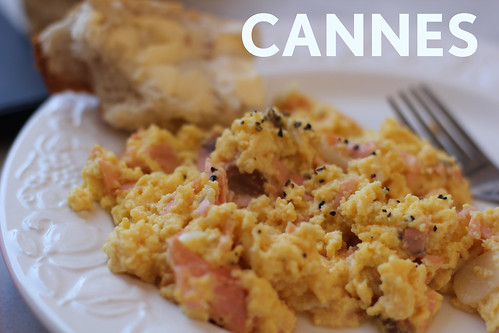
After Tree of Life I made some eggs (above) and wrote my mom a letter about the movie, which I am very happy to have seen but that made me miss a lot of people at home and elsewhere. Here's the link to Cargo again. UPDATE: If you want to see me still dazed (though also re-caffeinated) and bemused in the bustling lobby of the Palais after the film, watch this video at The Guardian.
So far, so sweaty. Or, thank heavens we have a clothesline outside our kitchen window. Without providing any real content, let me remind you that you should check in with this dedicated blog at Cargo's website for my more or less long-form coverage the festival. My first missive, about the new Woody Allen movie, which I liked, is up. Early Thursday morning, I saw We Need To Talk About Kevin, Lynne Ramsay's newest, the one we've been waiting for since 2002 or 2003, and it's got chops like her other work, but I'll save my more potent/cogent thoughts for another Cargo blog. If you follow me on twitter you can get more immediate, though maybe cryptic, takes as I find wifi post-screenings. And, oh yeah, Danny and I will have some moving images at The Notebook in due time. Never fear: there will be updates.
[Note: I thought I posted something yesterday but it seems to have disappeared; the text above has been changed. Bonus, maybe: here I am, drinking some good whiskey.]
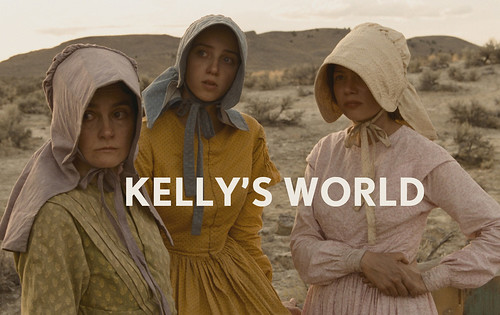
Last week I had the pleasure of meeting Toronto's own Adam Nayman as he was in San Francisco on FIPRESCI jury duty for the festival. One of the fruitful conversations we shared was about Kelly Reichardt and her new movie, Meek's Cutoff, which, at first, made me madder than a snake. (What're spoilers?) The finest point to point at in my reaction to the film is its ending, which is exactly the kind of storytelling move that I've grown to detest: that seemingly open-ended "grace note" that feels if not over-determined then a cop-out. I complained to another friend that, if you're going to write a story about life and death consequences (risking starvation) on the road to the frontier, then you ought to make some real choices about trajectory, about what those consequences mean; and that it appeared Reichardt "copped out" on any such choices by opting for a "mystic allegory" that makes the film's alarmingly literal lefty slant unavoidable and, well, without argument beyond what I already know about how confused and confusing humans can be. That is, the political element is as rootless as the characters, awash in reaction not conviction. After all, the majority of the film made me angry because the way Meek is characterized—the ignorant blow hard wearing a red shirt quick to beat The Other he refuses to grant any value, let alone agency—leaves little room for interpretation outside allegory when met at first glance (1). But I must admit that not only was I rapt through the plodding but also that I marvel at Reichardt's gift for film grammar and staging. And, yes, that, while grimacing my way through the post-screening talks, trying and failing to bite my angry tongue, I tried to add to every exchange that I did not trust my basic reaction because it felt reductive and far too broad (funny how those dovetail!) for a film this specific.
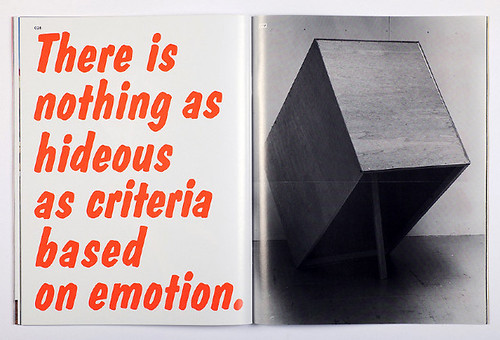
When Adam and I started talking about the film a few days later nobody had presented any kind of argument to get me out of my funk with the film. I still explained the anger in terms of expecting the ending: "In that reverse shot through the trees, looking at the Indian, before the penultimate one of Williams, I was thinking, Please don't do it, and then you get Williams' face—did you realize her lips are perfect no matter what?—and she's all 'confused' or whatever before the final reverse, this time with less leaves, and I kept thinking, Don't fucking do it, and then it starts down, starts to fade, and I'm a riot inside, just totally, You fucking did it, didn't you? And I wanted to bolt from the theatre." Adam's reply was as simple as it was brilliant, one of those, ouch, I-should-breathe-better moments where your jaw doesn't drop but your mouth does open. He asked, "Does it matter that it's Williams' point of view, looking through those trees, to you?" My head went click and thud, my eyes widened and I said, "Huh, well, okay. Yes, of course that matters. How did I not think of that?" It's not like that question precipitated a complete reversal but it did open a new way to appreciate the film, or, at the very least, a way to let my useless anger abate. Because I'm still not sold on it, nor Reichardt, though I do like being forced to think about a movie, about a filmmaker, about my criteria, about myself. Thinking about thinking and thinking about how you are thinking are rather indulgent modes, I suppose, but that's all I understand criticism to be at bottom. Or, that's the kind of philosophical criticism I'm attracted to: the kind that brings intentionality into play while guiding a reader through one's experience of an object. I realize that ideal is not always possible, or desirable.
Part of what makes it improbable is that sense of duty a critic feels inside a festival's screening schedule not only to see as many films as possible but also to have something to say about all those free tickets she's received (2). "Duty" may be the wrong word, however, when what's really motivating me (I can only speak for me) is that I simply like going to the movies. But, in turn, I guard that enthusiasm by not going to the movies. (In fact, after Meek's, I only saw five films of the fifteen I'd planned (via iCal) to see. There were a lot of reasons, but the truth of the matter is that I wanted to watch basketball more than I wanted to watch movies. Luckily, this is something Adam is amenable to since he is, among other things, a big basketball fan as well. We will return to this.) Which gives me pause on the eve of my first visit to the Cannes Film Festival. I'm in Nice writing this and though my fatigued body wants to stay inside and lay down or get into some stretching, my brain wants to push that body outdoors as often as possible to feel a different sun and speak a different language walking around a city I do not know. Granted, I'll have a running mate in Danny at the festival and I don't doubt some odd kind of competition will push me to see more and write more than normal. Yet, no matter how flat out cool it is to the fan in me that I get to participate in this festival this year, the sun will always tempt me. Which is another motivating factor to pump out this post to wrap up my SFIFF54.
Thus, to regain the thread: I enjoyed Adam's question of perspective because it brought back a rather basic question I'd forgotten in the haze my eyes had created, reacting to the simple story onscreen in Meek's. Because that is the great thing at work in the film: bringing this woman's eyes to the fore. Her gaze may not be clear, or always level, but she's the moral rock of the picture and by the close she has, in fact, been brought from the back of the wagon ditching heirlooms to the center of the frame with a voice and a face for all to reckon. This reading, too, is reductive of course. But I'd much rather value the film for its picture of a woman emerging than disparage a film for its (by my lights) lazy storytelling. Reichardt may not be interested in story the same way I am, I must allow, since she has a certain a-g background that speaks to interests in space and time (both paramount abstractions here), but the fact is she chose to make a narrative feature that is only ever subtle in its patient formal craft, not its ideas, and that still bugs me. Then again, all three of Reichardt's Oregon pictures are on the cynic's side of the table and part of my problem may simply be my desire for a more generous world, my desire to see some new way towards charity. Put otherwise, I know I rate magnanimous movies higher for their obvious alignment with my own values. This may be selfish.
This is also why I love something like Claire Denis' 35 Rhums, which is nothing if not charitable. So imagine my thrill to meet Stuart Staples of Tindersticks prior to their event at the festival, adding a live score to a sort-of clip-reel of films they have worked on with Mme Denis. Our chat was brief but I can assure that Mr Staples is a gentle and patient man. He talked about a duty, too, he feels to the object at hand, to do right by it by the end of the process. On their first score with Mme Denis, for Nenette et Boni, he said the band had the idea that they would follow in Miles Davis' footsteps by trying to play live to the images, to be real jazz musicians, before they realized it would take time to find apt melodies and write real songs where needed. Now, he says, they get ideas earlier thanks to the script and dailies but it really takes seeing a rough assembly to have the kind of emotional reaction necessary to inspire his/their/that responsibility to the object that can produce such wonders as the delicate, lilting rhymes of the opening image-and-score tandem of 35 Rhums, where the train and its tracks shuffle a bit in time with the accordion. Or the title track from the soundtrack to Trouble Every Day, which was a highlight of the live performance (3) along with the song "Tiny Tears" from that first partnership on Nenette et Boni. Lucky for us, somebody talented shot that part of the show, its finale, and put it on youtube:
It was a low-key event. But it was certainly more about the concert than it was about the visuals (or the interplay between stage and screen) from my vantage. Which is fine, of course, since I feel privileged to live in one of the two U.S. tour stops for the show. And the music is really great, no matter how much I wanted to re-order things or at least open with more of a bang than that (admittedly lovely) shot of Alice Houri floating in the pool near the front of N&B. So I'll quit that tact by saying, Thanks.
Some other things I was grateful to catch on a big screen before departure include: Ben Russell's Trypps #7, which really did start its shorts program with a bang (or a bong, or a gong), as it took me forever to figure out we were looking in a mirror at that lady's face stay placid in the quivering frame; T.Marie's Slave Ship was projected smaller than the rest of the series but it still impressed the hell out of me because it flips the "watching paint dry" quip into something productive, forcing us to see an image not take shape but explore its own variance; The Mill and The Cross by Lech Majewski is somewhat confounding, especially from the 2nd row, but its palate is wide and deep and its ideas, though rooted in the narrative structure of the painting, feel yet more modern in how arrayed (not inter-related) they are, but then maybe Breugel was just ahead of his time (in any case I was too tired to offer a more cogent take); Michelangelo Frammartino’s Le Quattro Volte is by turns cute and brilliant, with far more whimsy than any note could prepare me for, which isn't a bad thing since we should welcome some levity inside a largely wordless observation on cycles of life (it's not Disney, ok, though its like-minded brevity is a blessing) that still exist outside cities; Breillat's The Sleeping Beauty is nowhere near Disney and so full of stuff that I can't say what I think other than I like how she sees a dream life in a similar way to Lynch on a thematic level if nowhere close on a stylistic or formal level; and, finally, that big bad momma of some smoke and a shitload of mirrors, RWF's World on a Wire.
Believe me, I'm sorry to have missed plenty, but at the least I saw this large-scale goof of a thesis on modernity that's so funny and smart it's hard to believe people get daunted by its size. It's the kind of movie all cinephiles will enjoy, if not adore, and the kind they can never sell to non-movie-people they love. The running time is unavoidable in any description one might try to entice with due, in part, to the fact that the film just keeps getting better as it goes along, accruing incidents of insanity designed for maximum punchline effect. The gambit is easy enough, though, and largely ripped off: there's a government-funded project to build a computer world that mimics our own with a series of programmers, each holding the (invisible marionette) strings on fabricated subjects, going mad when they realize the very apocryphal truth of their own reality. Sounds familiar, huh? Well part of the joy in the thing is precisely its lower case, 16mm filmmaking that relies on performance and structure and sound design with very minimal set decoration to get at a sense of a future just past our present (even if the costumes are unmistakably 1973)—as well as a world enveloping itself. I'm astounded this is only the second Fassbinder film I've seen. But that just gives me another autodidact project, among so many, for after Cannes.
The trick is to step out of such impulses, though, when you're in a foreign country (4) (5) and look how I've failed today, spilling so many words. Whatever, I say; I say, my body saw the sun this morning—for a stroll to the market and beyond, for a lunch in the park and for a snack on the patio at my hotel with the owner. So out I go again, hoping for a cheap pizza and some good wine on a sidewalk where I can watch people in clean clothes try their best to act like they don't have a million eyes on them at all times, or actually convince themselves their lover's the only one looking at them—and only them!—in the world.
—Happy Mothers Day, moms
(1) He's an easy Bush stand-in, if I must use that name, and Michelle Williams' character has a line of dialog that only helps cement this link: "I don't know if he's ignorant or just plain evil."
(2) Not to mention the fact that you want to ply press people with clips to quiet at least one chorus of voices ringing in one corner of one ear.
(3) However, the selection of the man-eating scene was, as S.S. promised, shocking. Even when you see that scene in the context of the greater film it's brutal, gross and nigh gratuitous. Here, it rankled more than most and, again, I looked away for the duration, though that didn't spare me the sounds of the horny young dude screaming and choking and bleeding to death.
(4) I'll be in Europe for a while post-Cannes.
(5) That's the trick anywhere, I think, which is part of the point of World on a Wire: you should want to want your own body, you should want to live in it, you should want to move it and slap windows with delight at movement and light.
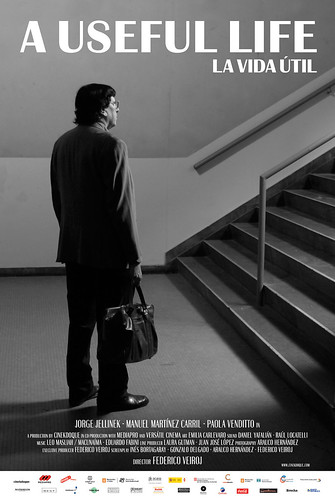
Federico Veiroj's A Useful Life is a black and white short feature (only 67 minutes) that doesn't need your eyes to be excellent but your eyes could only help its cause since its main point is a flip on the title of Dave Kehr's new book: movies matter. Not only that, our reparatory houses matter no matter what somebody with a microphone* tells you. Matter of fact, this movie's got rather simple aims but it's also got enough love for the movies that any cinephile will likely fall in love with it. The style echoes Bresson's presentational purity (this desk, this bag, this staircase) and the film is full of so many references that they're too many to name here** but the two that matter most are pretty tough to miss.
First, as hinted by a title card up front (the entire credits precede the film), there's a speech culled from Mark Twain about lying and the value of lying in a world of lies delivered by our main man from the cinematheque, Jorge (played by Uruguayan film critic Jorge Jellinek), in a law classroom when he nods, "Yes," to the query, "Are you the substitute teacher?" He finishes his speech (I wish I could quote it or find the passage online) as the real substitute teacher enters the classroom and leaves without confrontation. No one stops him. No one should. Besides, he's not the only one having fun in the scene: the student who asked him to take a role he was not meant for understands his practical joke and she laughs from her front row seat.
The second quote involves our man, alone, on a white staircase, trying out some Fred Astaire moves—up and down and around the steps—making himself smile for a good few minutes in an unbroken shot. It's truly a joyful moment, his movements filling the frame with an energy of something like discovery and everything like pleasure; that is, he's having a ball playing with this world. But it's not cloying because our man is more clumsy than graceful, moving in spurts, his hands still as slack at his sides as when he trudges Montevideo's streets or the hallways of his dying/dead home of cinema. It's not learning how to walk—he does that fine—, it's learning how to make use of what he learned in the dark, which is as good a classroom for life as any other arena. After all, the pick up line that works for Jorge isn't, "Care for a coffee?" Rather, with a bunch of teeth flashing: "Want to see a movie?"
* or an impressive New York apartment, or a lot of cash to withhold, or an institution's denial of said funds to hide behind
** in part because I could not tell you what other movies were mined for a lot of the sweeping score on the soundtrack
Despite the worst projection/presentation I have ever experienced at the Kabuki*, Hahaha proved once again all you need to make a fabulous movie is a sense of humor and a couple of good actors. This flick has more than just a couple, though, with at least seven fully realized characters criss-crossing, eluding each other even, over a rainy week in the port town of Tongyeong. I don't need to really tell you who these characters are, though, nor what really happens, since the charm of the picture is just how conceptual it is without being clever or, as is often the case in Hong, overtly structural. Granted, there is a device: the present tense of the story is rendered in black and white still photographs, heard as narration, as two friends meet for drinks to talk about their recent visits to Tongyeong, ignorant of the peripheral role each played in the other's vacation. However, it becomes more of a tool for rhythm than anything else as these two stories cohere around the perpetually liminal space of the port with one friend finding a way to leave untethered to anything or anybody and the other finding his way towards the commitment he's been avoiding. True to its blood as a comedy, it ends in a marriage of sorts—let's call it a pledge—and a laugh.
Though the majority of the film is spent observing the problems boys encounter when they wear the bodies of men, the women somehow matter more even though we're never granted a look from inside their eyes. One lady keeps saying, "You see me," without realizing this boy-man does not know her, truly; rather, he knows how to compliment her—not to mention stalk her, to the point of breaking into her apartment while she's gone. Almost an axiom: men in a Hong picture, even when they are True, are always creeps. That is, they all drink too much and they all seem mainly interested in sex, not love, to say nothing of work. Which is odd since Hong's the ultimate professional. He debuted two pictures in 2010 for Heaven's sake. And this one is just superb. It's casual, like a good dinner: one story leads into another and after a couple hours you're full or you're wasted and it's time for one last joke before you hit the road satisfied you understand your friend, and maybe life, a little better.
A movie at opposite ends—not once does it picture a better world—Christoph Hochhäusler's The City Below is practically apocalyptic from the get-go. As lucid an interpretation of a certain Mille plateaux perspective on our recent global crash climate, the film isn't strictly a political engine though its main structure as far as I can see is to de-center everything, to expose how this fiberobtic planet of moving monies is as thin as a glass wall is a look-don't-touch denial. To that end, I'm slightly sympathetic to the people who find the film "cold," but, that's a starting point not an argument. And, in fact, its distance is simply part of its Resnais-like openness. Its Biblical coda is (I'd like to think D&G would approve) crazy multivalent with significance moving in a million directions thanks to its oblique construction. A "complete" read is impossible for me at this point in part because I was so seduced by the aesthetics.
Looking forward to exploring more of Hochhäusler's work with the help of my Cargo editor, Ekkehard Knörer, who interviewed the filmmaker and his writing partner here (in German, but you can hit "translate" in Chrome and get the gist), who agrees I could probably make an argument about the apocalyptic gloom of this easy-to-allegorize but still-rich tower of depravity. (Bonus: any movie that makes Gang Gang Dance** a part of its characterization of the lead earns lots of points.) And I've said nothing about how excellent the acting is, nor the economy of the script, or any other thing I might want to praise, because I don't really need to, I'd hope; after all, compliments are nice but often boring. The most thrilling moments of this film are the ones where characters literally or metaphorically wake up because it's great to watch a face recognize a shift in the world they live in.
Which reminds me, it's okay to love somebody and tell a story about it. And Mysteries of Lisbon is nothing but stories. In fact, Ruiz makes a joke about the length and breadth of his film right at the start of the second part, presumably experienced after an intermission as we relished, by having one character tell another that he has a long story to tell and it will be mystifying as to why he's telling the story but that if his audience of one is patient and keeps listening everything will be told in the proper order for maximum cathartic effect. This is the film, of course, talking to us in the seats***. Because the film takes its time. And it repeats itself. We hear one story after another, with stories within stories, making audiences of every character at almost every encounter; or every character has a chance to play narrator. Which reminds me, the voice is a powerful tool.
This polyphony is a way to bend your ear, the same way that the way Ruiz circles scenes bends the space, and because we learn so many histories, motivations get bent into new senses or understandings of the world. The entire film is trying to bend you to its formal will, put you in a place, force you into roles you hear inside your own head, make you lose yourself as much as our first/primary narrator winds up losing himself through the course of his maze of a life. With most of the movie taking place indoors, a series of interlocking chambers, this makes rigorous sense thanks to Ruiz's roving eye so nimble to traverse a wall or glance past a hidden stairwell with a face gone sour listening to evil perpetrated beyond this private box of echoes. Again, audiences; again, multiplied; again, again. It's so interior that locales beyond walls remain concepts, fantasies, stages. And we remember the dioramas that double the scenes here and there where everything's a cut-out, a make believe, and you begin to wonder just how much of any of these stories are—here's a dumb word—real. Real is necessary, though, since it's the root of surreal and that's just what this labyrinth winds up: a magic mirror dolly into the light of a new life yet to be dreamt.
* The center of the frame was out of focus for long stretches and at two separate points in the last third of the film, the SFIFF digital slideshow of sponsor ads popped up in purple and pink to cover the screen.
** I feel like GGD is what I always wanted from Deerhoof and never got.
*** SFIFF, like any film festival, has a number of grey hairs who think they're retaining some grasp on high culture by coming to "obscure" foreign movies only to talk their way through whatever it is they've forked over however many dollars they had to in order to spend, as was the case here, four hours in the dark. My complaint is an old one: let the movie tell you how to watch it. And shut up. Asking, "Does this mean he's his son?" right before the reveal is announced (we all felt it, lady) is one hell of a way to not be subsumed by the images in front of your eyes. Which is a long, stupid rant shoved into a footnote so I could include a likely-useless bit of blogging tid bit saying that, thanks to a mom and a daughter under the impression that movie time is gab time, I switched seats at intermission from a perfectly good seat with a decent neck-bending ratio to the front row, which, though it is recessed thanks to a rather deep stage in K1, forced a slouch I did not want to make my body perform. I know, boo-fricking-hoo. At least my ticket was free and the movie itself didn't suffer because of my pet peeves.
One of the funny things about the San Francisco International Film Festival, which starts tonight, is that a good portion of its offerings are festival circuit "holdovers" that started their trek to SF last year at the Cannes Festival. Well, funny only because this year I'll be playing catch-up here and then leapfrogging a lot of tour stops by hitting Cannes in May. Granted, this year's Croisette selections are not quite as appetizing as a lot of us had hoped; however, it's still the premiere fest and it still costs an arm and a leg to be a part of it. But more on that adventure later. Here, I'm concerned with laying out what my last few weeks in town look like from a cinephile standpoint.
There's certainly plenty to see at SFIFF54 (pronounced "s'fiffty-four" by some), and I do plan on attending daily, but I also don't want to get burnt out on a bunch of movies all at once. So, as often as I can, I'm going to just see one film a day. And then I'll throw up a quick take here that night or the next morning. Given that two of my most anticipated titles are 272-minute and 212-minute affairs, this one-a-day dictum should be easy enough on those two Saturdays: this weekend I'll settle in for Raul Ruiz's Mysteries of Lisbon for the entire afternoon, starting right at noon, and the following week I plan to head over to the PFA for the 35mm screening of Fassbinder's World on a Wire. Yet there are a number of shorter films as well, such as Federico Veiroj's A Useful Life, which is only about an hour long and easy to pair with an evening of avant-garde shorts in a program called The Deep End, with newer work from people I respect and enjoy like, say, Ben Russell and Vincent Grenier to name two of the nine featured filmmakers.
I only caught two press screenings prior to the festival and I don't think I'll be looking at any screeners but I do have a copy of Athina Rachel Tsangari's Attenberg that I've been meaning to watch ever since I saw/felt Dogtooth. The two films I have seen, I should say, are Patricio Guzman's Nostalgia for the Light and Werner Herzog's The Cave of Forgotten Dreams. Both of these films will open in the Bay in the summer months so, logistics wise, there is no real rushing need for you to see them at the festival. However, both are very good pictures. The Guzman is a tad less poetic than I'd've hoped (in fact it's kind of hokey near the close) but the Herzog, though I could quibble with it, is just great. You might know by now that it's his first and last film in 3-D, but his use of the medium makes so much more sense than so many productions force fed at kids these days. Ostensibly a documentary, as they often are, the 3-D is less about realism than it is about phenomena and creating new realities for your eyes; that is, the experience you have seeing these rare paintings matters because you're given a sense of their physical depth and of their curves for light to play against. You see new movement of old visions. It's thrilling, moving even, and it should only be seen as big as possible.
The main highlight of the run, for me, is likely the evening with the Tindersticks at the Castro (more here), which will feature clips of Claire Denis movies accompanied by live performances of the scores of the films in the clip reel. Truth be told, it sounds like quite the nerd event (it could be a major let down), but I'm more than game to see those images and hear those sounds in that theatre. If all goes according to plan, I'll have something extra on this event.
In any case, I do hope to offer more than glib summaries. But I've got these last two weeks of dayjob work that I must focus on before the fun of the festivals takes over my life, fostering a whole new set of anxieties (am I writing enough? is it worthy of eyes? where's the coffee? why can't I stay awake? is there food in my beard? do I stink? how bad can my posture get?) to wade through. So, until then—let's say, Saturday—end that week with a bang! Any way you want to! Any way you can!
— I thought it'd be more fun to go down the street this way.
—The only audience for philosophy is the one performing it.
One of those ugly films that looks beautiful, Dogtooth a trouble maker. That is, it's difficult. Abusive and about abuse, controlling and about control, and all kinds of weird in the sexual arena save the hilarious swap of meanings where, at this compound's dinner table, "pussy" means "lightbulb" and, in the bedroom, a lady calls her vagina a keyboard. (My not wanting to use "pussy" twice is another odd linguistic/cultural impulse worth looking into another time.) The film starts with a lesson in words, in fact, with a tape recording made by the mother defining new meanings for words anybody "with language" should already know; so from the start we've got a film about education awry. But this picture of children finding meanings for themselves within a totalizing system they cannot control isn't just an unlearning, nor some new light shone, but a more basic urge—I want to say compulsion—in the human to sublimate one's every day. It just takes more drastic actions, with greater consequences, when one's every day is defined in terms that are outright wrong, plainly false. The exciting thing is Dogtooth doesn't try to redefine the terms for you; the troubling thing is it doesn't exactly open the world.
Such is the risk of the metaphysical, I suppose: languages make the everyday in concrete actions every day. The best way I can describe what I'm failing to say here, because I want these posts to be as quick and dirty as possible, is, and this is a huge idea to toss off in a goofy little blog post, that you learn a language by speaking it, not reading it or writing it. That old game of praxis versus theory. Which is another long-winded way of saying, inside all the gorgeous and irregular compositions in the film, there's a course-load of philosophy to elucidate for those inclined. Not being a grad student, I don't plan to go into it here. But I would gladly read certain people's papers (that ignore the qualitative aspect of criticism) on this film and its ideas. What really got my brain going, to be honest, was that the movies (both home and Hollywood) are manifestly a big part of the education herein. But we don't see the Hollywood ones (though there are grainy clips of the home videos), we see static on the TV and we see a performance, a "third-party" representation/reproduction/redescription as part of our understanding of the worlds colliding inside one tough lady's body and soul.
I'm not telling you to make the world better, because I don't think that progress is necessarily part of the package. I'm just telling you to live in it. Not just to endure it, not just to suffer it, not just to pass through it, but to live in it. To look at it. To try to get the picture. To live recklessly. To take chances. To make your own work and take pride in it. To seize the moment. And if you ask me why you should bother to do that, I could tell you that the grave's a fine and private place, but none I think do there embrace. Nor do they sing there, or write, or argue, or see the tidal bore on the Amazon, or touch their children. And that's what there is to do and get it while you can and good luck at it. — Joan Didion









 Posts
Posts


