Showing posts with label Michael Haneke. Show all posts

Sunday, January 10, 2010

Viewing Log #28: Shape the way you play [1/4/10 - 1/10/10]

by Ryland Walker Knight


—Won't help to hold inside

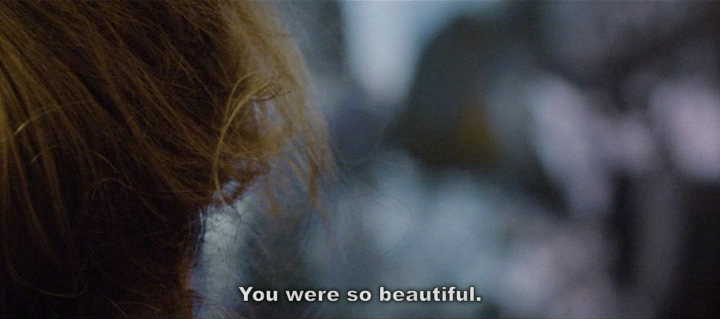
  • The Headless Woman [Lucrecia Martel, 2008] # I don't know why people said this was inscrutable. It seems perfectly open to me. Every edit matters and, though nothing's explicit, you have all the tools/information you need to reassemble this brain, this so-called mystery. There is no mystery, in fact, there's only the frame—windows, doorways, sometimes doors are windows, even a car is a frame filled in—and our Vero is forever pushed to its side. Sometimes she gets to throng up an image, but even then her eyes are often off to one side, or looking past this box of light she's in and making brim. I'd love to teach this film in a hermeneutics seminar. We'd read Ricouer and Bazin and Borges and Gadamer. I could keep watching this movie for the next month, but I won't; I'll probably just watch it once more then wait for it to screen in a cinematheque. I watched it with headphones, which certain felt apt and enveloping, but I can only imagine it packs more punch in the dark, sitting alone. (If I'd seen this in time for our double bills, I might have entertained the idea of writing about this flick and Gertrud, or Day of Wrath. It would have been the opposite of the pairing I did come up with—a true vision of light, of lightness even (however colored by hurt)—but sometimes you need the weight to better frame what bubbles up.)

  • Up in the Air [Jason Reitman, 2009] Sure, that was fine; there were things to like. But, come on, how many condescending pats on the back do we need? I'm not advocating for some muddy road, per se, but Clooney's charisma can only do so much to make a shiny object, like this riveted thing all aligned, feel spontaneous. What's more, Vera Farmiga is gorgeous and talented and I wish to hell she would get a role that didn't flip her, however strong, into such an easy mark.
  • The Sopranos, "Join The Club" (S6,E2) [David Nutter, 2006] # The best acting the show's got. Easily one of the best episodes ever, too. Would love to talk about this show and its silly brand of surrealism with Alain Resnais.
  • The Sopranos, "Members Only" (S6,E1) [Tim Van Patten, 2006] # So good. Starts with Burroughs, ends with one of the biggest shocks in the series. I was surprised, again, at the ferocity of Junior's dementia. More inspired is the subtlety of that final segment's true structuring device: the pasta. We cut from Gene's suicide by hanging to Tony pouring spaghetti (I think) into boiling water, singing, and the episode ends with Tony gurgling in close-up as dinner continues to bubble under the image, signaling not only that this could, truly, be the end for Tony but that we've reached a definite point of no return; no matter what happens (we know now that Tony lives, duh) things will never be the same. Which, of course, goes against the whole ethos of the series finale (the whole series, really) which is all about how patterns so easily calcify while life marches on. I guess we're just talking a narrative turning point more than anything. And, again, the thing that separates this series from, say, The Wire is that its narrative is as brisk as it is brutal; i.e., its sidewinding always pushes something—some dread, some death, some delusions—forward.
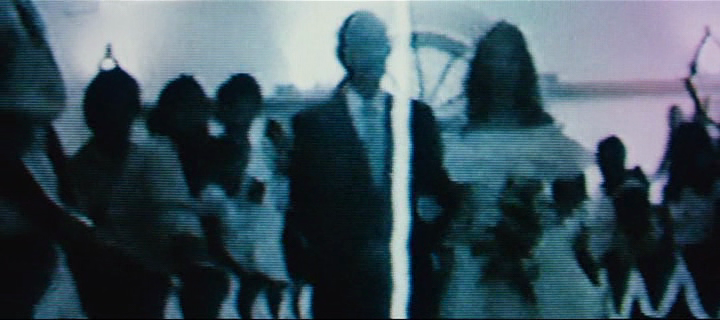
  • Tyson [James Toback, 2008] Mellow Mike is an amazing human being. Hell, Iron Mike was, too. The movie may be "so-so" but its story, his story, should be heard/seen. And in monologue form, what else can you ask for? Indeed, there's some cinematic play, here, too, with all this shifting and polyphony, but the real value of the film/video is its enduring status as a love letter.

  • The Headless Woman [Lucretia Martel, 2008] So, yeah. This one. Best of the decade? Up there for sure. More soon, I trust. Until then, here's some of my favorite people/writers on this marvel (1) Martha (2) Danny (3) David (4) Koresksy [at No.2] (5) Glenn (6) Fernando (7) Sicinski (8) Nathan (9) Danny talking to Ms Martel. —Quick poll: where you at on the other two this lady's made?

  • Death Becomes Her [Robert Zemeckis, 1992] Waiting for the plumber, I reacquainted myself with a few chunks (here and there) from this barf bag of grotesqueries. Maybe Phelps and Kehr are onto something: maybe Zemeckis really is some kind of special image'n'myth maker. I remember really digging the flick when my dad and I saw it in theatres, but, now, wow, it's like brand new (though still the same?). It's almost a toilet, though a shiny one, complete with shit and piss and pissy face-making. And in HD!

  • In The Mood For Love [WKW, 2000] # Cuz of everybody's lists, and to wash that exacting movie out of my brain a bit before bed. I mean, wouldn't you rather dream about Maggie Cheung in form-fitting dresses more than eye-gouging and barn burning?
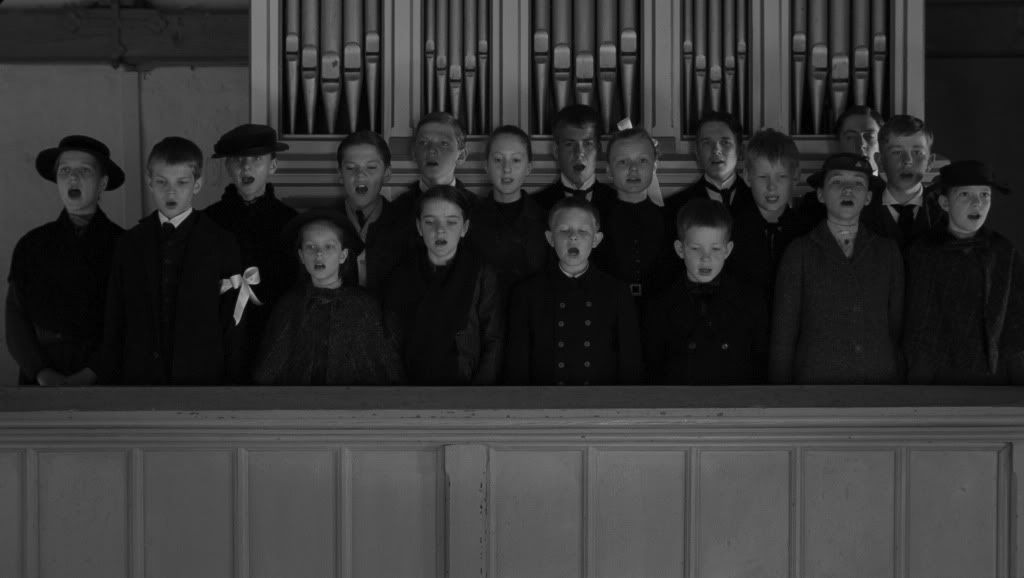
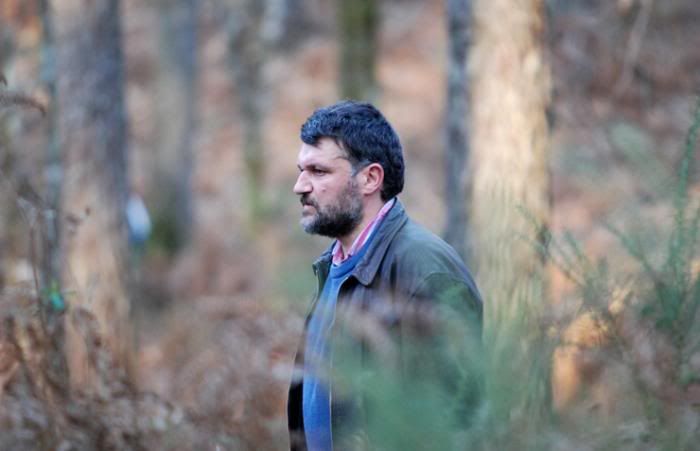
  • The White Ribbon [Michael Haneke, 2009] # I don't want to say I saw through it the second time around but I think I saw through it the second time around. I've tried again and again to be charitable to this dude's movies since a couple people I love kinda love these flicks, but, at this point, fuck it. More soon, when it opens here in the Bay, but if you want to read a pan I nod with then you should read this bit of bile from Mr. Waggish.

Tyson 4

Weisse 1

Sunday, November 22, 2009

Viewing Log #21: Bleed heat by night [11/16/09 - 11/22/09]

by Ryland Walker Knight


—Bring yourself, roll

  • Curb Your Enthusiasm, 7th Season [Larry David, 2009] Hard to beat "The Table Read," no doubt, among so many episodes this season, but, once again, LD proves how smart he is about people's petty shit and everybody's desire for a fairytale—despite knowing all too well that most things in life, as it turns out, aren't just jokes but lies. Or, a house of cards and red herrings. I feel like a human again.
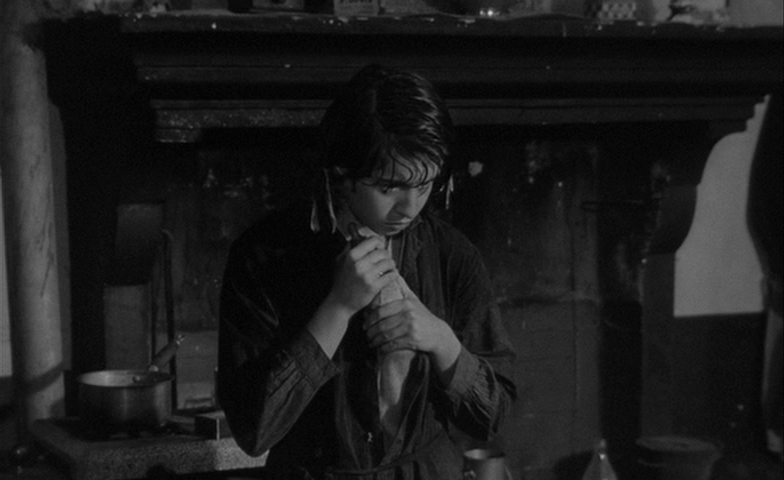
  • The White Ribbon [Michael Haneke, 2009] Almost exactly what I expected, but it's the first Haneke film I've wanted to see a second time. The film's ambiguities, in ways I've not felt from this hectoring hooey hocker's work before, feel ambiguous. Since I'm still sussing the political-historical mumbo jumbo, my perhaps-predictable excitement is primarily perceptible: Haneke's digital shift is an aesthetic tool, strictly technological, to register the world in luminescent darkness even more stunning than Public Enemies's wood-bound fire-fight. This light doesn't dazzle, though dazzle it does; rather, in these corridors and on these farms, light and its lack seep and spread, hint even, or slab the world into a plastic fresco at noon. A field of wheat waving is gorgeous, of course, but so is the older brother in the corner, his nightgown a ghostgown and his head missing in the shadows. We're left with voices, and contours. I could watch this movie outside, eating cheese next summer, and be okay.

  • Je t'aime, je t'aime [Alain Resnais, 1968] The stutter of time, and proof of proofs that you don't need "special effects" to make great, hard Sci-Fi. However, it's also "Sci-Fi" in that it's a film of referentiality, and of an index, of how top-down maps don't work (and least of all with the brain). A heart-soul, however invisible, lives in dimensions. More in a separate post soon.
  • Mouchette [Robert Bresson, 1967] # Anybody who calls Bresson boring is, like, the worst. This movie, though hard, is, like, the best. Here the cinema (or maybe just the camera?) poaches life, or can; here the cinema captures spirits, or uses them; here the cinema clacks at the world. It's stubborn, like its subject, and everything's a row. DVD can't help it, as Bresson's cinema desires celluloidal textures felt by the flicker first, but the extras are pretty great on this Criterion disc. (Godard's trailer, for instance, is a treasure.) And I know in my bones that all I got when I saw the film at Film Forum ages ago was that, shucks, the world is rotten. Now I want to read some Baudelaire, and never slap any body.

  • The Magnificent Ambersons [Orson Welles, 1942] Big admission: this was the first time. What a doozy and dizzy quilt of a movie. Even though you can see some seams, it's still wholly fascinating, and surprisingly touching. Matter of fact, it's super sad. —Boy did I hate that guy who wouldn't quit guffawing at the so-perceived anachronisms. Just because its about history doesn't make it a relic itself. I could, and maybe should, watch this movie a ton. Definitely one of the great "house movies" in movies.

  • Muriel [Alain Resnais, 1963] # Still knotty, still devastating, always too fast. A blink of a movie containing so much in its elisions. Here's the jump cut, for Heaven's sake. More, still, back here.


—Marked by lightness, a shining shroud

Wednesday, April 29, 2009

SFIFF52 #3: Oblivion + Bullet in the Head

by Mark Haslam

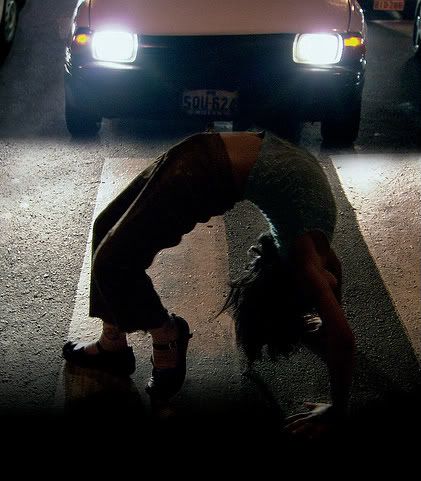
The subject of Heddy Honigmann's new documentary, Oblivion (El olvido), which I saw yesterday afternoon, is broad to say the least: maybe we can call it a history of Peru's modern politics, or an account of the many, many follies of the Peruvian government, or, just, Peru. Honigmann tells the country's story through its people, their memories and their frustrations and their dreams. The camera follows them, integrates itself, for a day or two, into their lives. Among the bartenders and waiters, shop-owners and leather workers, shoe-shiners and panhandlers that populate Oblivion, the most enigmatic to me were the street performers: boys and girls that cartwheel and juggle and handstand through crosswalks, in front of idling cars, hoping to get money from the passengers looking out of their windshields. The dynamic of these moments is amazing. Aren't we like the idling onlookers we movie-goers chastise for penny-pinching? And when they do give money, are they just doing it because of the camera, to look good? But then, aren't the people in the cars the same ones telling this story? So much happens in these crosswalks, as in every other moment of the film: each shot a rich history; each memory, each anectdote a loving cry.

I went to Jaime Rosales's Bullet in the Head for two reasons: one, I'd heard that audiences had been walking out of it in droves, that it was 'difficult'; two, I couldn't get in to see Greenaway's Rembrandt's J'accuse. The 'difficulty' of Bullet is that there is no dialogue: the camera takes an embodied position, so that its position, which is always distanced from our main character, can't hear what anybody is saying. The narrative becomes a document of this man's daily life. Here he is with a friend in a cafe, there using a public telephone, here now at a party, going home with a woman, driving a car, etc. Yet these don't seem like 'difficult' concepts to me: space and voyeurism have been brought to higher levels of consciousness in film many times. Then again, I think (and the film gives you plenty of space to think) that 'voyeurism' might not be the right word—and here enters some 'difficulty'. We don't feel as though we're looking in on a life. The shots are too composed, all too orchestrated, don't feel at all like surveillance. Of course, a film like Rear Window is carefully composed—but there voyeurism lays beneath narrative; isn't, as here, the narrative itself. Moreover, a level of terror enters into each shot because of the title, which announces an event we think we know will happen. But do we want to see it? What agency do we have to not see it apart from leaving the theater all together? We're not voyeurs at all. We're not looking in, we're being shown, being made to watch. It terrorizes its audience, and I wasn't sure how I felt about. It seemed a different kind of terrorizing than that of, say, Michael Haneke, who deals with many of the same issues as Rosales. Where Haneke, for me, is a great success, I'm not sure about Bullet in the Head. I need to give it some space.