Showing posts with label Andrei Tarkovsky. Show all posts

Monday, July 27, 2009

Kill your clock.

by Ryland Walker Knight


nope!
—We deal in reversals here; we battle for the light.

You've probably heard of Sergio Leone and the Infield Fly Rule by now. Likewise, you've probably seen the "quiz" Dennis put together this summer. Some people asked me whether I was going to answer these questions. I thought I wasn't going to, as these quizzes always take far too long, even though they can be fun, for a nut like me. But this evening, prompted further, I went ahead and killed time (procrastinated) with this bit of silly. Hope you dig it.

Dave...

1) Second-favorite Stanley Kubrick film. Barry Lyndon behind 2001, though that can reverse depending on what I've seen last.

2) Most significant/important/interesting trend in movies over the past decade, for good or evil. You can probably guess that I'll say the digital trending: for the image, for history, for preservation (perhaps this is misguided), for expression, for democracy, for hifalutin theory, for grainy purple skylines.

3) Bronco Billy (Clint Eastwood) or Buffalo Bill Cody (Paul Newman)? Newman.

4) Best Film of 1949. Hmn, lots of goodies, including Ozu and Reed and Ophuls and Ford. I'm tempted to say Late Spring but, well, my heart and soul belong to Tati: Jour de fête.

5) Joseph Tura (Jack Benny) or Oscar Jaffe (John Barrymore)? Guess I'll say Barrymore.

6) Has the hand-held shaky-cam directorial style become a visual cliché? Far too often, duh.

7) What was the first foreign-language film you ever saw? Maybe Yojimbo.

8) Charlie Chan (Warner Oland) or Mr. Moto (Peter Lorre)? Lorre all the way.

9) Favorite World War II drama (1950-1970). My favorite movie ever would qualify if you stretched that parenthetical to include 1998, but in that window, I'd wager Resnais's Hiroshima lament is pretty tough to beat.

hide your eyes
no peeking

10) Favorite animal movie star. If it isn't Balthazar or Babe or Baby, then it's got to be Mr. Smith.

11) Who or whatever is to blame, name an irresponsible moment in cinema. The film critic's ego. Or, most film criticism at that. (Although, the flip of that is that we all take this niche world too seriously, too.) The movies? Hell, they're a damned irresponsible lot the whole of them, which is why I love'm. It's nice to indulge this life.

12) Best Film of 1969. Andrei Rublev of course.

13) Name the last movie you saw theatrically, and also on DVD or Blu-ray. Theatrically, Harry Potter 6; DVD, A Matter of Life and Death; "otherwise", Duelle.

14) Second-favorite Robert Altman film. Probably The Long Goodbye behind that Western with Julie Christie.

15) What is your favorite independent outlet for reading about movies, either online or in print? I'm biased, like anybody, with too many friends online to choose from, so I'll draw straws and, arbitrarily, pick Andy Rector.

16) Who wins? Angela Mao or Meiko Kaji? (Thanks, Peter!) ...

17) Mona Lisa Vito (Marisa Tomei) or Olive Neal (Jennifer Tilly)? Tomei

18) Favorite movie that features a carnival setting or sequence. I almost want to ape Sean and say Sunrise—though the Hitchcock and the Minelli sure are spectacular—but what if I just said Speed Racer? Could that work?

19) Best use of high-definition video on the big screen to date. Tough to call, but my prejudices would point to Miami Vice of course.

I've got this landlord

20) Favorite movie that is equal parts genre film and a deconstruction or consideration of that same genre. Wait: isn't that every movie? Aren't the best ones just not even about that but, instead, synthesize the self-reflexive nature of the medium into their stories? Aren't you forced to ask that of every film? To get as Cavell as possible, I'll vote for The Awful Truth.

21) Best Film of 1979. Stalker over Alien though Manhattan still holds a special, sentimental spot.

22) Most realistic and/or sincere depiction of small-town life in the movies. I can't speak to any veracity, but I sure do love The Miracle of Morgan's Creek.

23) Best horror movie creature (non-giant division). Alien, duh.

24) Second-favorite Francis Ford Coppola film. The Conversation behind The Godfather.

25) Name a one-off movie that could have produced a franchise you would have wanted to see. I'm feeling the Master and Commander love, but what if Dennis Hopper had played Ripley for a decade?

26) Favorite sequence from a Brian De Palma film. The end of The Fury, easy.

27) Favorite moment in three-strip Technicolor. Pfffff. Um, Powell and Pressbuger.

28) Favorite Alan Smithee film. (Thanks, Peter!) ...

29) Crash Davis (Kevin Costner) or Morris Buttermaker (Walter Matthau)? Crash.

30) Best post-Crimes and Misdemeanors Woody Allen film. Sweet and Lowdown.

blue skies

31) Best Film of 1999. Beau Travail over Sicilia! by a finale.

32) Favorite movie tag line. "Family isn't a word, it's a sentence." [The Royal Tenenbaums]

33) Favorite B-movie western. Can't say I know many, to be honest, but if 40 Guns counts, count me in.

34) Overall, the author best served by movie adaptations of her or his work. There are several ways to answer this question. Arthur Symons solely for Desplechin's Esther Kahn, which may be the best movie of the 2000s (or close to).

35) Susan Vance (Katharine Hepburn) or Irene Bullock (Carole Lombard)? Oofda. Susan Vance.

36) Favorite musical cameo in a non-musical movie. When "Nighshift" comes on in 35 Rhums.

37) Bruno (the character, if you haven’t seen the movie, or the film, if you have): subversive satire or purveyor of stereotyping? Abstain

38) Five film folks, living or deceased, you would love to meet. (Thanks, Rick!) (1) Terrence Malick // (2) Cary Grant // (3) Irene Dunne // (4) Mathieu Amalric // (5) Preston Sturges

who's the wicker man now?
—This lady, too, I guess.
Sunday, July 12, 2009

Viewing Log #2: Beyond The Pail [7/5/09 to 7/12/09]

by Ryland Walker Knight


the pail
—It's been too hot to go outside.

  • The Big Sleep [Howard Hawks, 1946] # A classy picture, a funny picture. The shamus protagonist makes perfect sense for Hawks. Something to chew on: Bacall's a dime, no doubt, but Vickers (the lil sister) has sass for days, and that kills me.
  • Gentlemen Prefer Blondes [Howard Hawks, 1953] # Finished on my computer, and thoroughly enjoyed. As deep as Marilyn's eyebrows are active—and lively, too. Again, about the forms of intelligence we are keen to, which, here, is made clear by way of talking about "keen on"...
  • Beyond A Reasonable Doubt [Fritz Lang, 1956] Pitiless and spare, drained of sentiment but full of life, despite Lang's will to the conceptual (as Rivette argues), this one can be read in the flames of the car wreck: we're pawns, owned by the world and at its mercy; we're elements among many bustling and bursting. Weird way to start a day.
  • Gentlemen Prefer Blondes [Howard Hawks, 1953] Just twenty minutes, then the disc messed up. Gave up, wrote other things.
  • Monkey Business [Howard Hawks, 1952] The old married couple version (inversion?) of Bringing Up Baby, and maybe even smarter. Proof Ginger Rogers still had it, and that Grant can do almost anything when it comes to physical humor. Also, Hawks is, like, the best.
  • L'intrus [Claire Denis, 2005] # For Cuy; watch freeNIKES! soon.
  • La Frontiere de l'aube [Philippe Garrel, 2007] Not quite as frightening as the Robson, but just as down. I never want to fall (away from the world) like that. But, of course, Lubtchansky makes nightmares look like dreams. So serious.
  • The Seventh Victim [Mark Robson, 1943] Death looms, provides an out. Bizarre that this got made, and just plain bizarre. Don't know how much I "agree" with it, but I sure did enjoy its wacky frights of darkness.
  • US Go Home [Claire Denis, 1994] # (a few minutes here and there) Youth is a dance. Or it should be.
  • Nenette et Boni [Claire Denis, 1996] Finally, yes. (My apologies, MK.) As I noted, this picture "makes me miss smells. Stinks, even. Also, my sister." Love the way Greg dances in the pizza van.
  • My Favorite Wife [Garson Kanin, 1940] # Irene Dunne sure is something, as is Grant, as ever, and I sure did laugh a lot, but it's pretty damned goofy. Way goofier and slapdash than The Awful Truth. Watched this on youtube, FYI.
  • Stalker [Andrei Tarkovsky, 1979] # Another greatest movie ever made. Vicarious applies to me, sure, but it applies to these three dudes, too, don't you think?

the can

Monday, July 06, 2009

Follow the heft and feel quiet hang.

by Ryland Walker Knight


first stop

Tomorrow marks the start of this cycle's Tarkovsky retro at the Walter Reade. Unlike plenty of other earlier passions, his work teaches me more with each viewing, so for that reason alone (among many) I'm sorry to miss the series. But, as I trust there is always another program around some bend I cannot see yet, I'm mostly happy for my friends who will be able to fall into some of the zones of light that doyen made shine. While I've seen the first three masterpieces—Andrei Rublev, Solaris, and (my favorite) Mirror—projected, the latter trio (trilogy?) remain in my brain via bad DVDs I bought ages ago; I yearn to feel them bigger and louder. However, despite the fact that I would fight to see them all, I cannot say that I recommend too many all at once, back to back to back. Luckily, there's only seven features to contend with, which makes the mountain more of a hill. Still, it's not blueberry hill, though it's not hamburger either. No, think debris.

first stop
first pile

If I had to choose one to see during this little run, I'd pick Stalker because it's probably the best of the lot, and because it's probably the worst of the DVDs I own. I can only imagine the lulls of that grass and the echos of that sandbox work more magic at their largest. Then again, it can only be stunning, like a pin-me-down kind, to endure the passion of light near the close of Nostalgia from the fourth row of the Reade. Ditto the flames of the final offering. Go feel'm for me.

faith
offering

Friday, October 24, 2008

Reminder: Mirror tonight at PFA.

by Ryland Walker Knight


looking at fire in rain

Tonight at 6:30 to be precise. Why does this get special mention among all the cinema I've been enjoying recently? Well, because. Just because. Because it's great; it's where the water's at; it's beautiful; it's a favorite. And I can link to some stuff I've written before on this masterpiece.

Do yourself a favor if you live near by and see one of the great things tonight.

Wednesday, April 09, 2008

More eternity. More Mirror talk.

by Ryland Walker Knight


looking at yourself

[Note: I recently mailed in my application to take part in this year's Student Symposium at the Telluride Film Festival. Part of the application involved writing a brief essay on the following topic: "If you were being sent into the distant future, and you could take just one film with you, what would you take, and why? Please give this question serious consideration in terms of your passion for film as an art." This may be a little redundant given the essay I wrote for Reverse Shot (click here), but there's some other stuff happening, I think, that's worth sharing — at least in part because that stuff echoes recently completed passages of my thesis. Please, tell me what you think.]

looking at fire in rain

If we understand film as an art then it should follow that we find the most value in those films that stand up to repeated viewings, as do great paintings and photographs, as we witness recurring performances of great plays, as we read great books again and more. It comes to me, hypothetically of course, to pick a single film to take into the distant future, to bear our history and film’s history (our history with film) forward. This is a fraught decision. What do we value most in film? I say “we” because the film and its contingent particulars must accompany me forward: I bring an object loaded with intention and worth all its own, signaling many others than myself alone. I should choose a film that marks me of an era of humanity (as of thought as of action as of time) more than I should choose a film that marks simply a preference. For this I turn to a film that has, viewing after viewing, withstood time and scrutiny, yielding new riches (of insight, of beauty, of provocation) from its mysteries with each encounter. It is a film I enjoy without fully understanding — I intuit its argument — as I will never fully understand myself. And I find this fitting as this is integral to the film itself: Andrei Tarkovsky’s Mirror is as first person and subjective a film, while simultaneously questioning the subject-object relationship (or structure as it is often called), as I have encountered.

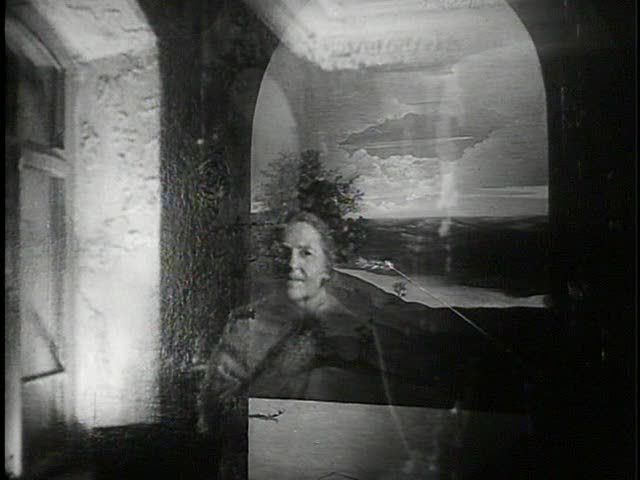
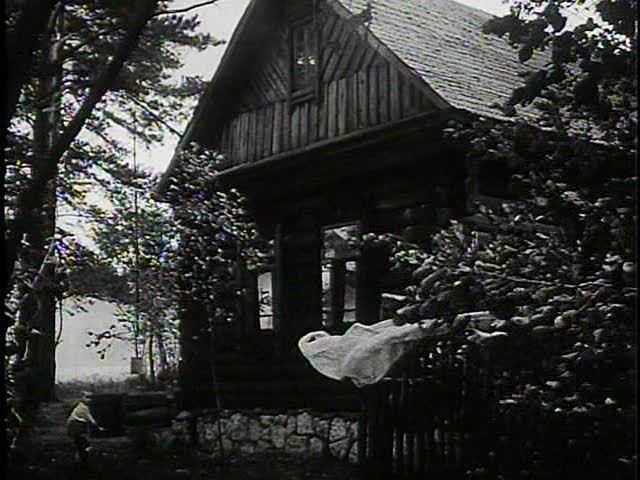
The film does not have a narrative through line, although it begins with what might be understood as a birth and ends with a kind of death (of the body, if not the spirit). Built of moments, some like vignettes, some like passing observations, Mirror can confound sense at first. Elsewhere I have argued that the film is after a kind of eternity: that we may pass from this world and somehow remain in it, either in spirit or other manifestations, as in a light on a field (and through the woods) or as in a family inheritance one passes down (and leaves behind). Mirror tells a story of a man, perhaps Tarkovsky himself (we see a poster of the director's Andrei Rublev on the wall of the narrator’s home), and his tenuous hold on memories of his mother and his wife (both played by the same actress) and his son and himself as a boy (both played by the same young actor) and certain stages of childhood in a country cottage during the first World War. Digressions abound as Tarkovsky imports footage from early in the 20th century of balloons floating above a field and children fleeing Spain for Russia and the Red Army marching across Manchuria. As much as it confounds, Mirror aims to situate itself within a certain historical tradition, or a certain approach to history, that fuses the horizons of history. This fusion of horizons (pace Gadamer) is where eternity comes into play.

Mirror’s eternity is not born strictly from film stock but other film grammar, like the poetry read over passages of montage. Tarkovsky’s father wrote the poems, and reads them on the soundtrack, but, as intriguing as this background may be, it is irrelevant. The poems in the film exist unto the film as far as the film is concerned. The audible poetry, as opposed to the visual, is simply another horizon matched in Mirror’s eternal plane of activity. But to parse just what these poems “mean” in relation to the images Tarkovsky marries them to proves difficult after an initial, affective intuition: it is a rich artistic gesture designed to color the image. As much as it marries words to image, Mirror is a film, through and through, concerned with images. In this sense, the poems, as passages designed to trigger emotions, can be seen as no different than — perhaps even equivalent to — the images themselves.

To bring such a film forward means another fusion of horizons where our further understanding of Mirror’s mysteries (hidden in our plain view of the moving picture) may help us understand the mysteries that abound in life here, in 2008, and there, in that whenever of the future. Who knows, we may not even be able to play my DVD copy when I get there.

Friday, January 11, 2008

Icons for the evening. UPDATED.

RWK:The PFA begins its new calendar tonight with a screening of Andrei Rublev. Surprisingly, this will be my first Tarkovsky seen on a big screen; I missed Stalker over the summer. Surprisingly, I forgot I got back from Oklahoma in time for Solaris (after missing Stalker) at the PFA at the end of the summer. I still hope they show more and more.


believe
he smiled

"When I speak of poetry I am not thinking of it as a genre. Poetry is an awareness of the world, a particlar way of relating to reality. So poetry becomes a philosophy to guide a man throughout his life."


UPDATE. This film is one of the great things. The second video doesn't have subtitles, but you can see, rather clearly, how gorgeous he makes a white wall, and a little girl splashing milk on a grown man. I plan on writing a little more and grabbing some images for a follow up post in the AM as a late Contemplative Cinema blogathon post. But now to bed.

Monday, August 20, 2007

No Claire Denis?

by Ryland Walker Knight


When Ed Copeland asked us to nominate 25 non-English films for a list to be voted upon by others I kind of dashed off my list. I have expressed some of my issues with lists here before. They rarely feel complete. Which is an impossible goal anyways, right? So my thought process was: I'll type out a bunch and then whittle it down to 25 or so. I initially only had about 30. I was surprised. Losing five wasn't too tough, actually, it was coming up with 30 I felt I could stand behind without any qualms that I found most difficult. So here's my list, silly as it may be, in the order they appeared in the email sent to Ed. After the first two the order is rather arbitrary but you can probably follow my train of thought.

Mirror
Rules of the Game
Playtime
Out 1
Celine & Julie Go Boating
L'eclisse
Persona
Fanny & Alexander
The Enigma of Kaspar Hauser
Stalker
Diary of a Country Priest
Au Hasard Balthazar
Contempt
Pierrot le fou
Masculin-Feminin
La Dolce Vita
8 1/2
2046
Talk to Her
Double Life of Veronique
Seven Samurai
Beau Travail
Law of Desire
Chung Kuo Cina
J'ai Pas Sommeil

I guess a fair ammount of my choices did not make the final list. The most shocking, to me, at least, was the absence of a single Claire Denis film (where you at Travis?!), and Bresson's Diary of a Country Priest. (And, yes, this list means I have now seen both Playtime and Celine and Julie. I cannot begin to express myself yet. I may have to shell out for both, though, when that fall disbursement comes through the pipeline.) But, you know, whatever, the list is good, fun. Lists are good and fun, even when they are frustrating endeavors for nerds like me who can obsess over idiotically banal, and minor, details. That is, nerds who niggle. (What a fun phrase! Alliteration!) If I were to spend more than five minutes on a list it would probably strain to look a lot "cooler" with less director repetitions and a broader scope of time, perhaps stretching back to include something like Le Million or throwing in one of those Mizoguchi films I fretted about a couple months, or so, ago. Or, if only we could stretch the timeline to include some Carlos Reygadas and Apichatpong Weerasethakul up in this. See: it's all silly. So, there's my list, for what it's worth. I know I'll think harder, and probably longer, about my next ballot for this project.

BTW: Jim Emerson is hosting the individual lists in the comments of this post on Scanners. He's a kind fellow. Enjoy. This is a helluva learning tool for a young film nut looking to broaden his or her horizons beyond the googleplex and Coca Cola. There's shit like art houses and red wine out there, too, and they're both delicious. But then again so is Coca Cola. Also, as Darren Hughes points out in the comments at Ed's site, this list shows how much the Criterion Collection has effected the shaping of the modern canon (notice the links above?). But let's not bring that word up again. That was really silly, right Zach?

Thursday, July 19, 2007

Making the Mortal Immortal, and Goblin'd

by Ryland and Steven


I'm very happy to have contributed an essay to Reverse Shot's 20th issue, Take Two, which you can read here. It's about Andrei Tarkovsky's almost-autobiography, Mirror, and immortality. There's some poetry thrown in there, too, if you like that sort of thing.

Steven Boone, on the other hand, has a different take on Mirror, in video form (seen above) and featured on youtube. It marries images of Tarkovsky's film with score elements from Argento's Suspiria. In the description box he writes,
Andrei Tarkovsky's autobiographical art film The Mirror is not a horror movie, but it has plenty of frightening images. This crude montage slaps together some of those images along with Goblin's music for the Dario Argento horror flick Suspiria. It's interesting to see how certain images can be repurposed, cheapened or even deepened by music and editing.
I was hoping he might have more to say about it, perhaps how he saw to choose Goblin's work and not some other composer's (or the soundtrack of some other film of Argento's). I don't think this is crude whatsoever, btw, and rather remarkable, just like Tarkovsky's low-budget genius. Comments? Questions? Hopes? Dreams?