Showing posts with label Michael Mann. Show all posts

Thursday, November 26, 2009

Convergence for your Thanksgivings [ii] (11/26/09)

by Ryland Walker Knight


fire fight fire light

fall be kind, leak

Light fire with fight
Axe at it til you see sky
Graze a highway wail

Wednesday, July 22, 2009

Public Enemies: We Spray Spots.

by Ryland Walker Knight


fire away, charioteer

What began in giddy anticipation as Michael Mann's Public Enemies fast approached through June, with talk of something like a symposium, turned out to be that series of set dispatches by Ignatiy Vishnevetsky (one, two, three) and this: a subsequent, massive e-mail exchange between Ignatiy, Kasman and yours very truly. The movie's moment may be past in blog-time but that doesn't stop us from throwing our belated lot in with the crowd of almost equal parts praise and derision. For one thing, for us, it's one of the real highlights of the summer. For another, who says we need to be so timely? In any case, we know this thing is long, but we do hope you like it, and try to read it all. Or, I really do, if only because I know Danny took a lot of time to cobble together these broad range missives. And to think that we could still miss talking about so much.

hold on tight
staring at the sun

For my money—big shocker here—Manohla wrote the best review of the weeklies. And to re-link, here's the Log's post and Martha's enthusiasms.

Sunday, July 05, 2009

Viewing Log #1: Settling OK [6/24/09 to 7/4/09]

by Ryland Walker Knight


falling

[I hope to make this a weekly feature, for me as much as for you, since it seems I'm able to watch a lot more over here, and I'd like to track my thought a little better than simply within my moleskins since, in theory, among other things, the internet is forever. And I don't want to use Twitter for this for some reason. I must say: watching all these, that is being this indulgent, has been super fun.]

jumping

  • Laura [Otto Preminger, 1944] Knotty and endlessly interpretable. One of those movies you can tell straight away is sure to be a classic. Also, the whodunit is hardly a hard puzzle, and that is hilariously on point.
  • Christmas in July [Preston Sturges, 1940] # Kind of perfect, and surprisingly pictorial for Sturges. Really appreciate both how prol-trumpeting and how brisk the picture winds up: luck is swift, and stretches beyond class; in fact, it may even leaves class behind. Perfect for the 4th.
  • Ishtar [Elaine May, 1987] Really doesn't deserve the bad rap. Elaine May is smarter than most movie people, especially the brand of comedy coming out of Ho'wood now. All her pictures are about the world, not just bedrooms.
  • Ma Vie Sexuelle... [Arnaud Desplechin, 1996] # (scattered twenty minutes) For fun, but chiefly for an image.
  • Daisy Kenyon [Otto Preminger, 1947] This made me sad. Dana Andrews is good, and Joan is something else, but Henry Fonda is spectacular. Also, I hate phones, too.
  • Public Enemies [Michael Mann, 2009] # Second time was better. More soon elsewhere.
  • Esther Kahn [Arnaud Desplechin, 2000] # (twenty more minutes) For an ongoing project.
  • Holiday [George Cukor, 1938] # Oh, I want that life. Cary Grant, man, is undoubtedly the best.
  • Transformers 2: Rise of the Fallen [Michael Bay, 2009] I said plenty, if not too much over here.
  • Marnie [Alfred Hitchcock, 1964] # (scattered hour or so) Was interrupted a lot. Its formal rigor still amazes me.
  • Rebecca [Alfred Hitchcock, 1940] # Too long, too talky. Still, some great stuff, as ever, but Selznick's fingers are felt too much.
  • Bonjour Tristesse [Otto Preminger, 1958] Simply fabulous. So wobbly and ironic. Nivens is too, too good for his own (the movie's) good. And Seberg... why hello.
  • The Passionate Friends [David Lean, 1949] Better than Brief Encounter. Yup, I said it. I mean, come on, this one has Claude Rains. Perfect for early AM grogginess and transitional sadness.
  • Esther Kahn [Arnaud Desplechin, 2000] # (maybe twenty minutes) For an ongoing project.
  • A New Leaf [Elaine May, 1971] # One of the great films, I'm fairly certain. Why can't there be more black as hell comedies? I'd like to write more about this one, and about comedy in general, and why the best ones organize money in complicated ways.

Thursday, July 02, 2009

Convergence for our new horizons (7/2/09)

by Ryland Walker Knight


light, bounce

light, burn

Friday, May 29, 2009

The hand that we have been dealt.

by Ryland Walker Knight


edges
eyes

After some hummus and half a cucumber sliced, but before any beer, I found my way on the eve of another move (via twitter, of course) to a thread on The Auteurs about a topic I'm particularly, well, obsessed with—in fact, that I have been obsessed with for some time: cinema's shift to digital. So I gave it some more words, jotted rather quickly, which I quote below. It should be noted that this is not so much a full argument as a volley, an invitation to more, as ever.
For this record, while I'm here, as if it needed repeating on this interweb: I find INLAND EMPIRE to be truly beautiful. I love the smear. Likewise, Mann knows what's up. The paradoxical mechanics of aperture and shutter speeds makes Mann's argument that much more interesting, too, since a lot of what seems to have motivated his shift is his interest in the speed (and the ramping up of the speed) of story and of action to the point where it gets hardly representational. I think this impatience operates differently in Soderbergh, though both men are interested in working and how one works and how much one works. It's never a question of why one works. One simply works. That is, if they do not work, then they die. What's cool about Mann is how much he's after a vividness of the world over against the remove of Soderbergh; both are fascinating, but the world Mann makes is the world I want to live in; or, at least, the world I want to see every day. Then again, one might say that those are the same (though different, of course).

I'm sure my friend Danny would love it if you kept the conversation to the thread you can find by clicking those words above, but I would love it even more if you continued a conversation with me here! Expect more Michael Mann stuff soon, when that new movie opens.

shadows

I feel compelled to say that this conversation, by necessity, ignores both the broader history of digital trends in cinema and the particular efforts of some genius frogs who have been playing with grain and mauling light like this for some time: Godard and, more importantly, Chris Marker. (To say nothing of Costa and Jia and their projects.) But I don't have time for that right now. Now is the time to hunt for that beer, to fly off a little ways into a brighter dumber haze.

waves

Saturday, March 14, 2009

Convergence for your weekend (3/14/09)

by Ryland Walker Knight


smokes

fires

Wednesday, March 04, 2009

Gangster violence and some language. Sold.

by Ryland Walker Knight


this man is in jail
[This man is in jail.]

Wherein the fan side of things gets tickled into action. Thank you, Michael Mann. (And the ad people at Universal.) Why? The teaser trailer for his summer tentpole, Public Enemies, is now available for viewing. After last night's waste, I'm happy to be excited about Ho'wood product because I can trust that, unlike that bloated advertisement masquerading as a "movie," this feature will only get better the longer it lingers on screen. Also, it will be gorgeous without a ton of digital paint. It will weigh something, too, I imagine, despite its speed. [fN!]

this lady is sexy
this man is the law
break out
of jail
in style
see the wide country side
wave to the public

Monday, April 28, 2008

The New World: Reverse Shot Goes Digital


spots
smoke
focus

It should probably come as no surprise that I wrote about Michael Mann for Reverse Shot's newest issue. He's been on my brain for a while now thanks to my thesis work and, well, his excellent films that invite scrutiny. You can read my contribution, "The Touch," by clicking here. And, of course, the intro is always a nice place to start, to give you an idea of what we were after in this latest symposium. You can read it clicking here. Hope you like. I invite any comments on my piece here since the main site does not; there's plenty to talk about. Or, if you read another, like Leo Goldsmith on VINYL-favorite David Lynch or Chris Wisniewski on VINYL-favorite Terrence Malick or my buddy Kevin B Lee on the immortal Ingmar Bergman, let me know. This is a very thoughtful and plain cool issue. --RWK

Thursday, March 27, 2008

Tactile affect for the evening.


reba
dollarhyde

[Maybe the best scene in Manhunter, maybe the best scene in Michael Mann.]

Elsewheres on screen for the day.


manhunter
miami vice

[1. Manhunter / 2. Miami Vice]

Thursday, February 14, 2008

A thought on "authorial intentionality" in film, in criticism

From Ryland:

Not sure if I 100% agree with Noel Carroll's reading of The General in Comedy Incarnate* (I have not finished, and I may not finish, reading the book) but I appreciate this brief characterization of "authorial intentionality" he offers in the introduction. Its something I'm hoping to incorporate into my idea of film criticism as a kind of phenomenological hermeneutics. But I really want to stay away from somebody like Heidegger, for now, because, at the least, that would require quite the diversion from my project. This is much more in line with what I'm after:

In addition to being impressed by Merleau-Ponty's work, I was also smitten by the phenomenological criticism of the so-called Geneva school, most especially by the writing of Georges Poulet. For Poulet, an author, by means of his emphases and selections, presents his "intentionality" to the reader -- the way in which his consciousness is directed toward the world. The task of analysis then is to identify these patterns of experience as they emerge in a text -- to notice toward what the author's attention is drawn, and, as well, to characterize the manner in which that attention is articulated. Discussing Balzac, Poulet locates an experiential pattern of recurring physical thrusts forward which he thematizes in terms of a movement toward the future; in Whitman, Poulet finds a mode of consciousness of the world that is marked by infinite receptivity as multitudes crowd into emptiness and things collect, meet up, and fill space. Both authors offer the reader a model of their "intentional consciousness," their fashion of encountering the Lebenswelt through reference to very fundamental modalities of experience.

The notion of "authorial intentionality" is immensely suggestive when it is transposed from the literary author to the film director. For essential to the notion of intentionality is directedness toward the objects of consciousness and that, of course, is arguably what a director does with cinematic apparatuses -- directs cameras towards objects and selects views and perspectives on situations through editing. Thus, cinematic technique can be a way in which a director may objectify, externalize, or incarnate his style of attending to or relating to the world -- articulating the temper of his consciousness of things on celluloid, his intentionality or mind embodied, so to speak, in silver nitrate. Though no allusion to Poulet's idea of authorial intentionality occurs overtly in the text -- perhaps for fear of sounding too literary -- this notion stood behind my analysis of Keaton's visual style, which I unequivocally thought of as rooted in his personal style -- his way of inhabiting the world.

I hope to make a similar argument, although tailored towards a different end (involving other concerns than bodily intelligence, like intelligibility, for instance), in favor of Terrence Malick and Michael Mann and their respective, most recent films (The New World and Miami Vice). Plus some stuff about what this kind of attention in a work of criticism means for the project of criticism and all that jazz. There's a lot at play already so I may wind up ditching my original plan to look at two later Hitchock films (North by Northwest and To Catch a Thief) that fit with the films of Malick and Mann for their individual interests (and the conversation between the films that such interests provoke) in what Stanley Cavell calls the mythical America, that place where pursuits of happiness are encouraged, and possible.

*Thankfully I got a copy from the UC Berkeley library. As is often the case with these "academic" works of criticism, to own a copy means forking over a rather large lump sum of your budget -- as you can see here on Amazon. I don't know why this always astounds me, but it does.

Thursday, September 27, 2007

Peter Berg brings America to The Kingdom. Get ready for the onslaught.

by Ryland Walker Knight
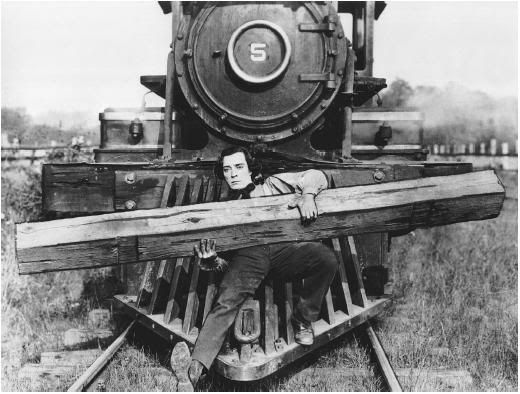

You tell me about fashion?

Despite its questionable politics, Peter Berg’s busiest film yet, The Kingdom, blows up a lot of stuff, and kills a lot of people, really well. Which is to say it never bores however bull-headed it may bluster. The flip side, of course, is that the film assaults its audience as much as its villains (and its heroes). Aping Paul Greengrass (the Bourne sequels) and producer Michael Mann’s recent work (Miami Vice), Berg’s always-already moving camera has neither the sense of style (composition, color, editing) nor the formal curiosities of his influences. Worst of all, though, The Kingdom has a simple bully mentality, not any generosity.

[For the rest of the review click here and you will be forwarded to The Daily Californian's website.]

You want to do what?

My review does not mention that in four minutes of screen time, maybe, Jeremy Piven steals every second he's given. I didn't see Smokin Aces but I heard he was a little toned down. I think we all know he's at his best (or most fun) when playing a jerk, or simply a frail human (on the inside; his physique is astonishing, impressive, fit). But he's no reason to see the movie. If you plan on seeing the movie go for the shoot out scenes. I think Berg is developing a nice filmography as a director but he may be relying on his version of the Greengrass aesthetic a little too much. Friday Night Lights succeeded because there were moments of calm littered throughout, and a few terse home-life scenes that dug deep, not because it was nonstop motion. The reason the third Bourne movie works well is because the plot is all MacGuffin. Every scene is exposition. This makes plot irrelevant. The film announces itself, all at once, as a deliberate recapitulation of the whole trilogy while renewing and rewriting its purpose. Also, Bourne is not about politics: it's about movement through the ever-encroaching modern world. Its motives are squarely ethical. The Kingdom, on the other hand, subverts its ethics/morals under the weight of its politics. And it's not like it's got some novel ideas. It's Syriana, but oddly right-wing; and it has a less complex (obfuscated?) plot. What's funny, though, is both The Kingdom and Syriana rely on their plots in a way Bourne Ultimatum does not, which makes Bourne's political implications (while oblique and vague) resonate in a more honest, less propagandized, fashion. If Greengrass argues for anything in the last installment it's that surveillance is scary-quick now and you are its prey at all times, even if you have magic in you like Jason Bourne. Also, the Manhattan car chase is fucking dope. The Kingdom doesn't have anything to rival that. But it does have a good, if slightly misguided, cast. (That enough side-commentary? Maybe I'll finally write more about why The Bourne Ultimatum actually does kick some butt at a later date. Now I've got to see about some Wes Anderson.)

UPDATE: Friday, September 28th, 2007:
Steven Boone has some similar thoughts over at The House Next Door. I think his first sentence says it all: "The Kingdom is a two-faced liar." (Also, the comments section is already contentious. I mean, wow!) So a few more words to the wise: Skip The Kingdom this weekend. Go see Morocco on Sunday at the PFA, if you live in or near Berkeley, California. And tonight you have the opportunity to see Seconds at the Castro, in San Francisco. (It's clear how I organize my film-going timeline, right?) Also, you could go see The Bourne Ultimatum since it's probably still playing in a lot of cities. Or, how's this, see both Bourne and The Kingdom and tell me if you think I'm way off base in my practice of evaluation regarding these two objects of interpretation and how they (kind of) speak to one another -- or how they use wildly different voices while (superficially) employing a similar visual vocabulary. (Another key distinction: The Kingdom is about how Jaime Foxx and his team engage the world they are temporarily inhabiting, whereas Jason Bourne literally runs through everything.) Okay, now I really need to write this thing up, right?

Sunday, September 02, 2007

Big face, small razor for the day.

by Ryland Walker Knight


I'm not a red herring

I'm thinking I located a good primary object of interpretation for my Honors Thesis, which holds so many more objects within that it will take a lot of elucidation. Especially if I relate the conversation to, oh, say, Michael Mann's Miami Vice and Stanley Cavell and VF Perkins and the nature of film style on screen and in criticism. There's a lot at stake, and a lot riding, in that big face. Now, don't get me wrong, Hitchcock's film is almost unreal in how good it is and Miami Vice is far from that brand of perfection, but there's a lot of dialogue here. Like, how these directors are constantly referencing themselves and their own work, and how they exist in those oppositional genres Cavell set up: Comedy of Remarriage VS Melodrama of the Unknown Woman. For a primer, of sorts, check out this nifty site about Cavell's essay (found in Themes out of School) on North by Northwest. They have more pictures, including one of Eva Marie Saint, the statue, crying; it kills me.

Monday, December 25, 2006

Merry Christmas Cotton Candy Screenshot of the day

Cotton Candy Clouds
From Ryland Walker Knight to you, dear readers.

Friday, July 28, 2006

Miami Vice

But the Blackberry still connect
by Ryland Walker Knight

My admiration for Michael Mann has nothing to do with his TV history and the show that spawned his often brilliant (but uneven) career and this new often breathtaking (but muddled) film version: it's all about his movie making. And from what I hear, the show was so great because it was so cinematic. No wonder he broadened his canvass. Mann's got out of bounds visual skills, lofty aims and he knows how to show off. Often those lofty aims get in the way of compelling subject matter (ALI) but more often than not you'll hear people complain about his Mamet-lite approach to dialogue or a prediliction for style over substance. Or that he keeps retelling the same story. At least it's a compelling story. A story full of guns and sex and adrenaline, even existentialism.

MIAMI VICE, the movie, has the weakest, skeletal (though still convoluted and tangential) screenplay of his crime pictures but by and large the strongest, boldest visuals. Employing a high definition digital camera that gives each shot unbelievable depth of field, every composition is a pleasure to behold. With nothing to rival the pristine comic book beauty of SUPERMAN RETURNS' mythic allusions, Mann's world is rather the flip side, all grain and rain, an insane tactile experience. There's a lot of distant thunder and lightning just visible off the edges of the frames you can't ignore. You feel the cloud cover, you dodge the bullets, too.

Without any credits we're not invited into the movie but thrown, head first, into what I'm assuming is a typical Miami club pounding the new theme song, that hideously catchy ditty by Jay-Z and Linkin Park. Dancing, drinking, flirting and staking out a Caribean pimp--typical Vice activity for our new Crockett & Tubbs. Only, now they go by their first names, Sonny & Rico, and Sonny actually wears shirts with buttons, and a handlebar mustache. Why? It's fresh, it's oddly hip, it's badass. Mann's movies are usually badass, all alpha males with issues and guns. (Even Hawkeye, the indiginous hero from LAST OF THE MOHICANS has a gun.) And this movie has some brutal guns, if not subtle issues; in fact, nothing is subtle and that's just fine. As Rico warns middleman heavy José Yero (a smarmy John Ortiz), there's a lot of Jackson Pollock blood on the walls. Except there isn't really that much bloody action: rather, the action we're given(?) is brief and infrequent, yet visceral, punctuated by the deafening sound design and those splatter sites.

Is that the vice a summer movie is supposed to supply? To some degree, yes, and those set pieces certainly deliver. But Mann's lofty aims are bullseyed on that recurring theme of duality across the line of the law. These guys spend most of their time acting as crooks working crooked jobs importing drugs and occasionally killing people. But its dramatic asperations are not followed through on, so, its sobreity fails the vice side of a popcorn flick: the violence is realisticly horrific in its severity and, as such, not quite entertainment. Yet I still find it more engaging (worthwhile?) than that critic's darling PIRATES 2. Mann knows exactly what he's doing when it comes to staging a battle or mapping out a tense raid on a hideout, however, he forgot to write a compelling plot to go along with the action. And there's this romance subplot I haven't mentioned yet.

Sexy disco gunrunners

Gong Li is a fine actress and she does her best with our unruly language but most of her dialogue is lost to her limiting accent. Not that she's unappealing because of it, nor does it really matter given her slight, plot-element characterization--instead, it renders the exchanges between her Isabella and Colin Farrell's Sonny naive and phony. The actors use their eyes and pauses (aided by the editing team, no doubt) to sell their obvious physical chemistry as emotional compatibility for the most part despite their forgettable dialogue. The sex scenes help, too. What's most unfortunate about the romance subplot is its predictability--involving Isabella's ties (business and pleasure) to the drug czar our Vice boys are targetting--and diversion from the already complicated plot.

More convincing, if tenuously so, are Jaime Foxx & Naomie Harris as Rico and Trudy. Their equally sexy love scene is the only time Foxx uses his comedic gifts to flesh out his wooden, constricted role--and performance--while Harris exudes charm throughout, leavening the mood when allowed. Mann is clearly fascinated by how these uber macho men balance home and work but these relationships are routine movie romance in their slight approximations of the soul. But, as I said before, here it's more about the men and their dirty work than their failed loves. This premise simply cannot support what Mann himself so deftly balanced in HEAT & THIEF: its purpose is the gritty action.

Which is why the movie is ultimately a let down. There's a lot of smart filmmaking and beautiful images yet with its flimsy script and isolated action scenes it cannot hope to hold up 20 years later. But, as marketing has proven, that doesn't really matter when there's money to be made. It just helps to have Michael Mann directing traffic and bullets. When the snipers tore that car to pieces you felt like your arm flew off, too, didn't you?

02006: 146 minutes: dir. by Michael Mann: written by Mann, based on characters created by Anthony Yerkovich