Showing posts with label Philippe Garrel. Show all posts

Sunday, July 12, 2009

Viewing Log #2: Beyond The Pail [7/5/09 to 7/12/09]

by Ryland Walker Knight


the pail
—It's been too hot to go outside.

  • The Big Sleep [Howard Hawks, 1946] # A classy picture, a funny picture. The shamus protagonist makes perfect sense for Hawks. Something to chew on: Bacall's a dime, no doubt, but Vickers (the lil sister) has sass for days, and that kills me.
  • Gentlemen Prefer Blondes [Howard Hawks, 1953] # Finished on my computer, and thoroughly enjoyed. As deep as Marilyn's eyebrows are active—and lively, too. Again, about the forms of intelligence we are keen to, which, here, is made clear by way of talking about "keen on"...
  • Beyond A Reasonable Doubt [Fritz Lang, 1956] Pitiless and spare, drained of sentiment but full of life, despite Lang's will to the conceptual (as Rivette argues), this one can be read in the flames of the car wreck: we're pawns, owned by the world and at its mercy; we're elements among many bustling and bursting. Weird way to start a day.
  • Gentlemen Prefer Blondes [Howard Hawks, 1953] Just twenty minutes, then the disc messed up. Gave up, wrote other things.
  • Monkey Business [Howard Hawks, 1952] The old married couple version (inversion?) of Bringing Up Baby, and maybe even smarter. Proof Ginger Rogers still had it, and that Grant can do almost anything when it comes to physical humor. Also, Hawks is, like, the best.
  • L'intrus [Claire Denis, 2005] # For Cuy; watch freeNIKES! soon.
  • La Frontiere de l'aube [Philippe Garrel, 2007] Not quite as frightening as the Robson, but just as down. I never want to fall (away from the world) like that. But, of course, Lubtchansky makes nightmares look like dreams. So serious.
  • The Seventh Victim [Mark Robson, 1943] Death looms, provides an out. Bizarre that this got made, and just plain bizarre. Don't know how much I "agree" with it, but I sure did enjoy its wacky frights of darkness.
  • US Go Home [Claire Denis, 1994] # (a few minutes here and there) Youth is a dance. Or it should be.
  • Nenette et Boni [Claire Denis, 1996] Finally, yes. (My apologies, MK.) As I noted, this picture "makes me miss smells. Stinks, even. Also, my sister." Love the way Greg dances in the pizza van.
  • My Favorite Wife [Garson Kanin, 1940] # Irene Dunne sure is something, as is Grant, as ever, and I sure did laugh a lot, but it's pretty damned goofy. Way goofier and slapdash than The Awful Truth. Watched this on youtube, FYI.
  • Stalker [Andrei Tarkovsky, 1979] # Another greatest movie ever made. Vicarious applies to me, sure, but it applies to these three dudes, too, don't you think?

the can

Monday, October 20, 2008

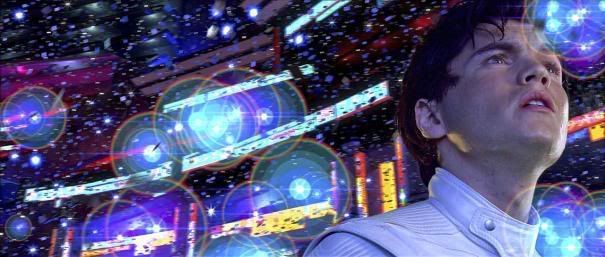
Late night exchange: How about this? Speed Racer kinda makes me weepy.

by Ryland Walker Knight (and Rob Humanick)


shine bright!
flashing. lights.

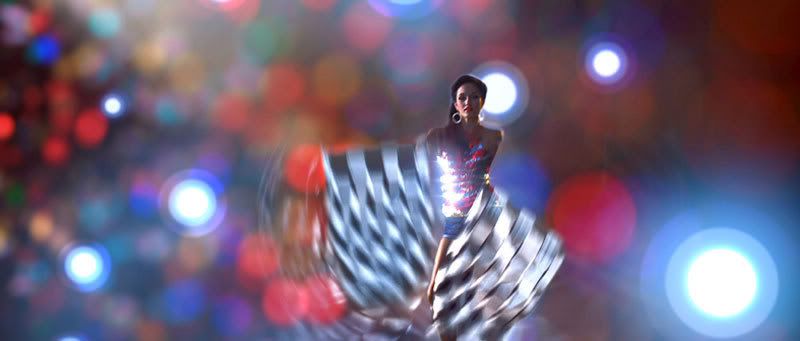
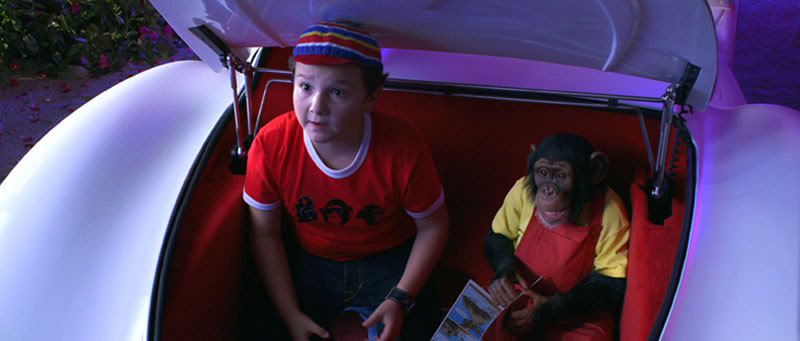
Over on that surprising trap we've all embraced (for the most part; against better judgment), I wrote a "status update" that went like this: "-- how about this: _Speed Racer_ kinda makes me weepy. Were it not for that fucking Spencer Breslin shit and his chimp-kick, it would verge on great." The ensuing exchange with colleague-buddy Rob Humanick (via "comments" upon this "status"), makes me realize I definitely think this thing is assuredly great, precisely because it is complicated and problematic and weird and absurdly uneven--and beautiful to behold. Here 'tis:

Rob: I'm still working on my thoughts for a piece at The House, but I'd absolutely call it great. I look at Spritle and Chim-Chim as surrogates for the Wachowski's; themselves two kids of crazy antics, absorbed in their own fantasy-land, sometimes annoying (like when Racer X comes to their home -- eesh), but absolutely necessary. And 4 times out of 5, I think they're hilarious.

Seriously: one of the best "kids" films ever. Years from now it'll be appreciating. And I'm downright sick of the shallow write-offs given to the cast. Can we please stop reviewing Episode I, people?

That whole climax is incredible, no doubt. I can't understand why more critics aren't behind this as a beautiful meditation on the role of the artist in society. It's completely personal, and, equally important, free of irony.

Ryland: yup yup. the climax MOVES me.

I dig that reading of the idiots (their LOOK MA stands out against the --blank slate-- of everything/everyone else) but I still can't shake my irritation at their hot air. There's too much. And when you've got so much other great stuff -- so much BEAUTY -- it's hard to be generous to that kind of jumping up and down. If anything, and this is something, I'm certain: they're fucking weird. And weird here is good. Great, even. Spin me, spiral of light!

Rob: It really is videogaming technology used in service of art. And that last shot of the Mach 5's melting wheel is worthy of Cronenberg. My interpretation of his ridiculously wonderful front-tip balancing act post-Beyond the Infinite final lap cum victory, is that the artist is signing his work. And that swirling shot of the car spinning as if on a tie-die canvas.

My favorite quote about the actor who plays Spritle is that he's a 40 year old trapped in a 10 year olds body. Totally weird. Papa Racer says it best: "You're too *pale*!"

Ryland: Yea, that pirouette is another trace Speed leaves on the track (on life!), and that drip is his joy come and spent, another mark left. It's the flash of success that wakes him. Success, of course, being his route to making the world's passage a little easier--if only for the moment. And what a moment! All those pinpoints reflecting, all those bulbs burning. I like to think of the flash as always single use, a tiny life begun and ended in an instant. All those lives out there looking to be lifted!

SO, when the idiots interrupt our revelation, I cannot take it. I revolt. Lemme get consummation! I guess that's the point, tho, right? It's a "kid" movie after all.

consumate.
idiots.

Then again, this makes me weepy too: Daney on Garrel.

Saturday, October 11, 2008

VINYL IS PODCAST #3: Synecdoche, Eustache

by Ryland Walker Knight and Mark Haslam


looking out
looking around
looking through

[Podomatic stream]
[Direct audio download]
[iTunes subscription available]
[Simple syndication subscription]

RWK here. We're back this episode to talk about some films we've seen but haven't finished writing about despite our due diligence (we promise) and a certain setback specific to Mark, which you'll just have to hear to believe. The episode starts with a talk of a recent advance screening in Berkeley of Synecdoche, New York that Mark was able to attend, which leads to a host of issues, including that trope of the/a title. In fact, I make passing reference to Michael Sicinski's review of Hunger, in which he makes passing reference to Charlie Kaufman's "regrettable" appropriation of the term as opposed to Steve McQueen's "mindbogglingly simple" solution to making the "Issue picture" viable though "cinema as synecdoche," which I then turn into talk about Bresson's cinema of metonymy, even metonymy of sensation, which somehow leads into (an altogether too brief) talk of our recent adventures with the current Jean Eustache series at PFA, which continues this weekend with, yes, a soft-titled presentation of Numéro Zéro on Sunday evening. There's also room for more talk of On Dangerous Ground and the Jia Zhang-Ke films I've been seeing, too, with special attention (at the close) to The World, which I hope to write about soon. Oh, and, there's two songs this episode, which you can find on my imeem page right here. (Again, if you want them gone, just shake a hand via email.) So, please, listen and tell us things. First, though, while our words (down)load, maybe look at these things--


Tuesday, March 25, 2008

Perpetual Motion


hide your eyes
wipe your face

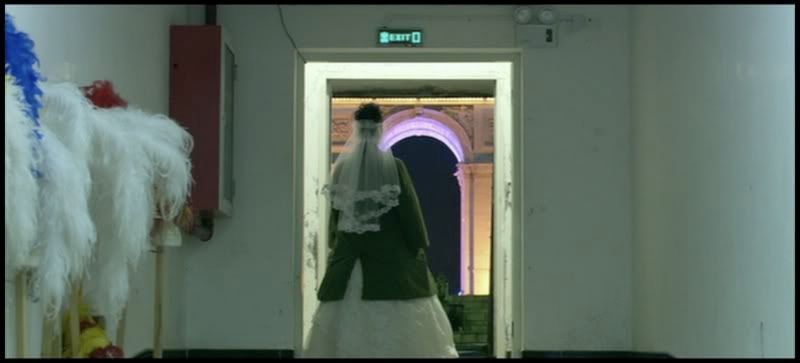
These images come from two films that are superficially divergent but thematically (spiritually?) very close, maybe even kin. A small part in this cross pollination is the use of The Kink's "This Time Tomorrow," which I've made available right here. The other parts are, among other things, youth, cinema, lust versus love (locating desire), fraternity, movement, making colors and spaces (say an affect) in words and physical forms (through poetry, sculpture, cigarettes, prayers), and taking drugs. I wish I had more time to explore these paths. But for now I can say, after seeing just two pictures by Philippe Garrel now (each viewed during the early, half-light AM hours normally reserved for writing (my apologies, Michael)), that I'm digging his vision of how to organize a film: it's measured, one might say doucement in French (has anybody?), to deny big moments, to linger on quiet spaces between people, between stories even. I hope that new print of Je n'entends plus la guitarre travels West. It probably will, right? --RWK