Showing posts with label Claire Denis. Show all posts

Sunday, May 08, 2011

SFIFF54 #5: Hear the words in here out there

by Ryland Walker Knight


Onlookers on

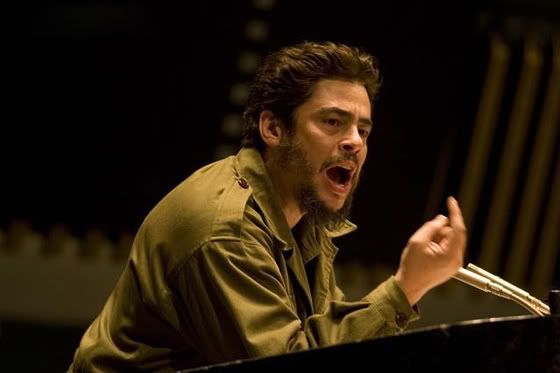
Last week I had the pleasure of meeting Toronto's own Adam Nayman as he was in San Francisco on FIPRESCI jury duty for the festival. One of the fruitful conversations we shared was about Kelly Reichardt and her new movie, Meek's Cutoff, which, at first, made me madder than a snake. (What're spoilers?) The finest point to point at in my reaction to the film is its ending, which is exactly the kind of storytelling move that I've grown to detest: that seemingly open-ended "grace note" that feels if not over-determined then a cop-out. I complained to another friend that, if you're going to write a story about life and death consequences (risking starvation) on the road to the frontier, then you ought to make some real choices about trajectory, about what those consequences mean; and that it appeared Reichardt "copped out" on any such choices by opting for a "mystic allegory" that makes the film's alarmingly literal lefty slant unavoidable and, well, without argument beyond what I already know about how confused and confusing humans can be. That is, the political element is as rootless as the characters, awash in reaction not conviction. After all, the majority of the film made me angry because the way Meek is characterized—the ignorant blow hard wearing a red shirt quick to beat The Other he refuses to grant any value, let alone agency—leaves little room for interpretation outside allegory when met at first glance (1). But I must admit that not only was I rapt through the plodding but also that I marvel at Reichardt's gift for film grammar and staging. And, yes, that, while grimacing my way through the post-screening talks, trying and failing to bite my angry tongue, I tried to add to every exchange that I did not trust my basic reaction because it felt reductive and far too broad (funny how those dovetail!) for a film this specific.

When Adam and I started talking about the film a few days later nobody had presented any kind of argument to get me out of my funk with the film. I still explained the anger in terms of expecting the ending: "In that reverse shot through the trees, looking at the Indian, before the penultimate one of Williams, I was thinking, Please don't do it, and then you get Williams' face—did you realize her lips are perfect no matter what?—and she's all 'confused' or whatever before the final reverse, this time with less leaves, and I kept thinking, Don't fucking do it, and then it starts down, starts to fade, and I'm a riot inside, just totally, You fucking did it, didn't you? And I wanted to bolt from the theatre." Adam's reply was as simple as it was brilliant, one of those, ouch, I-should-breathe-better moments where your jaw doesn't drop but your mouth does open. He asked, "Does it matter that it's Williams' point of view, looking through those trees, to you?" My head went click and thud, my eyes widened and I said, "Huh, well, okay. Yes, of course that matters. How did I not think of that?" It's not like that question precipitated a complete reversal but it did open a new way to appreciate the film, or, at the very least, a way to let my useless anger abate. Because I'm still not sold on it, nor Reichardt, though I do like being forced to think about a movie, about a filmmaker, about my criteria, about myself. Thinking about thinking and thinking about how you are thinking are rather indulgent modes, I suppose, but that's all I understand criticism to be at bottom. Or, that's the kind of philosophical criticism I'm attracted to: the kind that brings intentionality into play while guiding a reader through one's experience of an object. I realize that ideal is not always possible, or desirable.

There is nothing as hideous as criteria based on emotion.

Part of what makes it improbable is that sense of duty a critic feels inside a festival's screening schedule not only to see as many films as possible but also to have something to say about all those free tickets she's received (2). "Duty" may be the wrong word, however, when what's really motivating me (I can only speak for me) is that I simply like going to the movies. But, in turn, I guard that enthusiasm by not going to the movies. (In fact, after Meek's, I only saw five films of the fifteen I'd planned (via iCal) to see. There were a lot of reasons, but the truth of the matter is that I wanted to watch basketball more than I wanted to watch movies. Luckily, this is something Adam is amenable to since he is, among other things, a big basketball fan as well. We will return to this.) Which gives me pause on the eve of my first visit to the Cannes Film Festival. I'm in Nice writing this and though my fatigued body wants to stay inside and lay down or get into some stretching, my brain wants to push that body outdoors as often as possible to feel a different sun and speak a different language walking around a city I do not know. Granted, I'll have a running mate in Danny at the festival and I don't doubt some odd kind of competition will push me to see more and write more than normal. Yet, no matter how flat out cool it is to the fan in me that I get to participate in this festival this year, the sun will always tempt me. Which is another motivating factor to pump out this post to wrap up my SFIFF54.

Thus, to regain the thread: I enjoyed Adam's question of perspective because it brought back a rather basic question I'd forgotten in the haze my eyes had created, reacting to the simple story onscreen in Meek's. Because that is the great thing at work in the film: bringing this woman's eyes to the fore. Her gaze may not be clear, or always level, but she's the moral rock of the picture and by the close she has, in fact, been brought from the back of the wagon ditching heirlooms to the center of the frame with a voice and a face for all to reckon. This reading, too, is reductive of course. But I'd much rather value the film for its picture of a woman emerging than disparage a film for its (by my lights) lazy storytelling. Reichardt may not be interested in story the same way I am, I must allow, since she has a certain a-g background that speaks to interests in space and time (both paramount abstractions here), but the fact is she chose to make a narrative feature that is only ever subtle in its patient formal craft, not its ideas, and that still bugs me. Then again, all three of Reichardt's Oregon pictures are on the cynic's side of the table and part of my problem may simply be my desire for a more generous world, my desire to see some new way towards charity. Put otherwise, I know I rate magnanimous movies higher for their obvious alignment with my own values. This may be selfish.


This is also why I love something like Claire Denis' 35 Rhums, which is nothing if not charitable. So imagine my thrill to meet Stuart Staples of Tindersticks prior to their event at the festival, adding a live score to a sort-of clip-reel of films they have worked on with Mme Denis. Our chat was brief but I can assure that Mr Staples is a gentle and patient man. He talked about a duty, too, he feels to the object at hand, to do right by it by the end of the process. On their first score with Mme Denis, for Nenette et Boni, he said the band had the idea that they would follow in Miles Davis' footsteps by trying to play live to the images, to be real jazz musicians, before they realized it would take time to find apt melodies and write real songs where needed. Now, he says, they get ideas earlier thanks to the script and dailies but it really takes seeing a rough assembly to have the kind of emotional reaction necessary to inspire his/their/that responsibility to the object that can produce such wonders as the delicate, lilting rhymes of the opening image-and-score tandem of 35 Rhums, where the train and its tracks shuffle a bit in time with the accordion. Or the title track from the soundtrack to Trouble Every Day, which was a highlight of the live performance (3) along with the song "Tiny Tears" from that first partnership on Nenette et Boni. Lucky for us, somebody talented shot that part of the show, its finale, and put it on youtube:


It was a low-key event. But it was certainly more about the concert than it was about the visuals (or the interplay between stage and screen) from my vantage. Which is fine, of course, since I feel privileged to live in one of the two U.S. tour stops for the show. And the music is really great, no matter how much I wanted to re-order things or at least open with more of a bang than that (admittedly lovely) shot of Alice Houri floating in the pool near the front of N&B. So I'll quit that tact by saying, Thanks.

Some other things I was grateful to catch on a big screen before departure include: Ben Russell's Trypps #7, which really did start its shorts program with a bang (or a bong, or a gong), as it took me forever to figure out we were looking in a mirror at that lady's face stay placid in the quivering frame; T.Marie's Slave Ship was projected smaller than the rest of the series but it still impressed the hell out of me because it flips the "watching paint dry" quip into something productive, forcing us to see an image not take shape but explore its own variance; The Mill and The Cross by Lech Majewski is somewhat confounding, especially from the 2nd row, but its palate is wide and deep and its ideas, though rooted in the narrative structure of the painting, feel yet more modern in how arrayed (not inter-related) they are, but then maybe Breugel was just ahead of his time (in any case I was too tired to offer a more cogent take); Michelangelo Frammartino’s Le Quattro Volte is by turns cute and brilliant, with far more whimsy than any note could prepare me for, which isn't a bad thing since we should welcome some levity inside a largely wordless observation on cycles of life (it's not Disney, ok, though its like-minded brevity is a blessing) that still exist outside cities; Breillat's The Sleeping Beauty is nowhere near Disney and so full of stuff that I can't say what I think other than I like how she sees a dream life in a similar way to Lynch on a thematic level if nowhere close on a stylistic or formal level; and, finally, that big bad momma of some smoke and a shitload of mirrors, RWF's World on a Wire.


Believe me, I'm sorry to have missed plenty, but at the least I saw this large-scale goof of a thesis on modernity that's so funny and smart it's hard to believe people get daunted by its size. It's the kind of movie all cinephiles will enjoy, if not adore, and the kind they can never sell to non-movie-people they love. The running time is unavoidable in any description one might try to entice with due, in part, to the fact that the film just keeps getting better as it goes along, accruing incidents of insanity designed for maximum punchline effect. The gambit is easy enough, though, and largely ripped off: there's a government-funded project to build a computer world that mimics our own with a series of programmers, each holding the (invisible marionette) strings on fabricated subjects, going mad when they realize the very apocryphal truth of their own reality. Sounds familiar, huh? Well part of the joy in the thing is precisely its lower case, 16mm filmmaking that relies on performance and structure and sound design with very minimal set decoration to get at a sense of a future just past our present (even if the costumes are unmistakably 1973)—as well as a world enveloping itself. I'm astounded this is only the second Fassbinder film I've seen. But that just gives me another autodidact project, among so many, for after Cannes.

The trick is to step out of such impulses, though, when you're in a foreign country (4) (5) and look how I've failed today, spilling so many words. Whatever, I say; I say, my body saw the sun this morning—for a stroll to the market and beyond, for a lunch in the park and for a snack on the patio at my hotel with the owner. So out I go again, hoping for a cheap pizza and some good wine on a sidewalk where I can watch people in clean clothes try their best to act like they don't have a million eyes on them at all times, or actually convince themselves their lover's the only one looking at them—and only them!—in the world.

NICE
—Happy Mothers Day, moms

(1) He's an easy Bush stand-in, if I must use that name, and Michelle Williams' character has a line of dialog that only helps cement this link: "I don't know if he's ignorant or just plain evil."

(2) Not to mention the fact that you want to ply press people with clips to quiet at least one chorus of voices ringing in one corner of one ear.

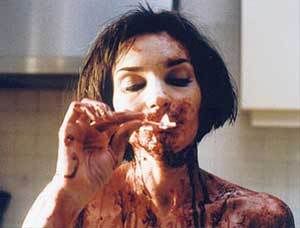
(3) However, the selection of the man-eating scene was, as S.S. promised, shocking. Even when you see that scene in the context of the greater film it's brutal, gross and nigh gratuitous. Here, it rankled more than most and, again, I looked away for the duration, though that didn't spare me the sounds of the horny young dude screaming and choking and bleeding to death.

(4) I'll be in Europe for a while post-Cannes.

(5) That's the trick anywhere, I think, which is part of the point of World on a Wire: you should want to want your own body, you should want to live in it, you should want to move it and slap windows with delight at movement and light.

Friday, April 01, 2011

Viewing Log #79: Opening daze counting down [3/23/11 - 3/31/11]

by Ryland Walker Knight


Opening day

  • The External World [David O'Reilly, 2011] Watch it here. Anybody familiar with O'Reilly's twitter knows how morbid he can get, but this thing is fucking funny. In part, duh, because it's morbid. It's no surprise that those T+E guys loved it at Sundance, and I wouldn't be surprised (again) if they wound up working together.

  • Beau Travail [Claire Denis, 1999] # Still the best ending ever. Too bad that snore monster made an appearance two seats away from me and wouldn't sit up straight or wake up when I moved the seat his arm was resting on. Hate that guy.
  • Nenette et Boni [Claire Denis, 1996] # Not my favorite, but I love the play between fantasy and reality that makes adolescence a haze of projection. But there is just a little too much awful to be the kind of affirmation so many of her other films are; in other words, there are no good choices made by any character.

  • I'll Do Anything [James L. Brooks, 1994] Wow this is a mess. Glad Brooks loves kids, kind of as a rule, and understands how sex can be funny, but, man, the only reason I finished this thing was because I was ironing.

  • Terms of Endearment [James L. Brooks, 1983] # I watched the first half and then had to eat some brunch. I forgot about it and haven't found a good time to start up again. I've seen it before so I know where it's going. Main takeaway this time: Larry McMurtry writes women really well. And I have a crush on Debra Winger in her flustered-yet-confident "throw your hands up at this life" fits.

Ruts make you reach

Monday, March 07, 2011

Viewing Log #76: Who You Are and Who You Say You Are [3/1/2011 - 3/7/2011]

by Ryland Walker Knight


  • Uncle Boonmee Who Can Recall His Past Lives [Apichatpong Weerasethakul, 2010] Not sure why I feel compelled so immediately to compare it to Syndromes but I do: I like the latter better, though this is surprising given how devoted to liquids this newer picture is. Matter of fact, Boonmee has a lot of things I love all working together, but specifically light and liquids grounded by loss and romance and real people in a real (political) world. It's also easy to analyze when you start thinking but it's not quite here for that; rather, its flow is to be felt through the eyes. I will try to see it again this week.

  • The Ricky Gervais Show [HBO animated iteration, 2nd Season, a few different episodes] The best part is how Ricky thinks everything is the funniest thing ever every single time.
  • Fighting [Dito Montiel, 2009] As Iggy says, "Un vrai film." But what's weird is that the fights are the least interesting (certainly the least interestingly shot) parts of the movie. Unless of course you like beefcakes like Channing Tatum, who is real here, with slowly building confidence that never outshines his quietness. Matter of fact, it's a really quiet movie in general and that's what I like so much: how much action plays on faces. Terrence Howard is a master at whispering and deflecting and I think he's going to be an even better actor in his 50s. I hope he stays in shape so he can do some Walken-like bad guy turns.
  • 30 Rock "TGS Hates Women" [Beth McCarthy-Miller, 2011] There hasn't been an episode this funny and this on point on so many targets in ages. Read this list and tell me she's wrong. (Don't, btw.) I busted a few guts, but none harder than at Baldwin's dismissive skip-over delivery of: "He's not a strong writer." And that was the secret to this episode: Jack had a great role against another great ludicrous obstacle figure.

  • Rango [Gore Verbinski, 2011] # Ran into Daniel and Felix by chance outside and Daniel summed it up: "That Gore Verbinski's pretty lit up, eh?"

  • Chocolat [Claire Denis, 1988] # Somehow I'd forgotten how funny this one is, how breezy despite the big stakes for the little lady. The print wasn't lousy but it sure was old. And, boy, Issach de Bankolé sure was young then; not to mention exceptionally gorgeous; now, as a middle aged man, his face is more handsome than pretty. Would've been nice to see how it played off White Material, but I had to skip the first one to finish some work. Great final shot, as ever, set to some great music with the world just happening around and through the frame.

  • Rango [Gore Verbinski, 2011] Got to see it a first time at Skywalker Ranch thanks to Emma's dad, Michael, who did the dialog sound editing. So it was a charmed screening to start, and the setting certainly put me in a generous mood, but I truly think it has a shot at staying amongst my favorites of the year all year long. Because it's not just clever quotes. There's real interpretive work done here on the part of G.V. and his writer John Logan and his actors (chiefly Depp, duh) and his animators. That is, for all it points to and lifts from, it's a unique work of art about acting and action. And it's beautiful. Every single composition and set piece. And it's funny. Every single scene and sequence. There are so many gags it's crazy. It's really hard to keep up, to be honest, since it skips along rather well. But more on all of that soon. This is just a late night scribble of pure enthusiasm.

  • In The Loop [Armando Iannucci, 2009] # With the Hambone, who loved it, I'm happy to report. Gandolfini sure steals the show.

Sunday, May 02, 2010

Viewing Log #43, SFIFF53 #4: The word happy is sad [4/26/10 - 5/2/10]

by Ryland Walker Knight


—Hey ladies!

  • Cyrus [Duplass Brothers, 2010] I laughed my butts off and thought all the zooms actually served a purpose in the general uncomfortable zone of these dudes' idea of comedy: one premised on miscommunication and lies and making people squirm. Jonah Hill does deadpan better than most, and maybe better than "wacky" (though his "wacky" in Superbad is pretty great); Marisa Tomei is a babe, still, and this wows me along with every other drooly idiot boy in the audience; guess that's the point, too, since John C Reilly's all wide eyes and goofy "Love! Me!" freak outs most of the way. I'd say see it in theatres if only because that'll probably mean you'll see it with a crowd and being drunk in a crowd of similarly inebriated, jazzed young people definitely added to my pleasure.
  • I Am Love [Luca Guadagnino, 2009] In one light (the wrong one, duh), this is the silliest movie ever. But in the right light, it's one of the most beautiful: everything baroque expression, an all-caps film brimming with canted angles and swoons and tilts and a score to die for all around Tilda's face. As much a film of affect as INLAND EMPIRE, but to practically opposite ends, with damn near opposite means. That is, both filmmakers score their images to sound how they look but Lynch makes mud cakes with a grin while Guadagnino crafts gourmet plates for twenty with tears. Put otherwise, all the images drip and some rack focus fast and everything's lit to look delicious. I can't wait to see it again. Wish I could see it with a Vitti (or a Tilda, hell) wrapped around me, fingers locked. I'll likely write a real essay when it comes out in wide release.
  • Senso [Luchino Visconti, 1954] I made a joke on twitter about how I was bored, then I qualified that with a (still-reductive) explanation that I did like the opening—I'm a sucker for stages, and audiences—and the abruptness of the ending, but otherwise I didn't need it or its tableaux of "hurt" or all that "hysteria." And, call me crazy, but I go crazy watching those mouths move out of synch with the soundtrack. Further: the colors are nice, no doubt, but the restoration, which seemed muddied in spots, paled in comparison with the Ray from the day before, which was crisp like new. Could be a print traffic thing, but it seemed more like a print striking thing.

  • To Die Like a Man [João Pedro Rodrigues, 2009] A real film. Maybe not as great as I want it to be, and surely hard to handle in a lot of spots, but boy does it have style. At the Q+A, Rodrigues said he wanted to structure it as a musical comedy but that it was also inspired by Raoul Walsh's Objective, Burma!, which you can sense looking at this scene, but, to be fair, Rodrigues doesn't film any clouds the way Walsh does. What he does film, though, he films especially well. And we all know I'm a sucker for films about performance, and acting, and acting in the world in whatever determination that takes.
  • The Music Room [Satyajit Ray, 1958] Caveat: got no sleep because of an airport run, so I dozed a few times. The restoration was beautiful. The film's craft was, too. But I tell you what: I'm kind of done with hubris. Doesn't feel tragic.

  • Wild Grass [Alain Resnais, 2009] # At home, looking for images. Image-essay likely coming.

  • White Material [Claire Denis, 2009] Didn't want to believe my buddies who'd seen it previously but, well, yes: this is not her finest two hours. Still ratcheted tight, and a few edits are jarring in the best ways, and murder by machete in any iteration is always terrifying, brutal, gross. Wish there were more ideas, and a better screenplay, but as it is there's just one and a kind of tired narrative structure. The filmmaking structure, however, proves its worth in its angles at end points and the camera's near hush. Every image seems stolen, as if they lucked out every time they turned the camera on and pointed it at things or didn't. The problem, though, with everything pointed inwards, is that it kind of cancels itself, proves its own null. I don't need Claire Denis to tell me about this kind of cesspool.
  • Wild Grass [Alain Resnais, 2009] Had me from the get-go all the way up and down and around its folles follies to that finale that loops and dips and scans and pushes and soars and zooms and just feels great all inside my body and my brain. Danny was right: maybe the most generous. Dense, as ever, and "typically French," as many numbskulls said walking out, but I see those things as positives. Mileage varies, sure, but when you're flying you cover so much ground!

  • Cold Weather [Aaron Katz, 2010] So much fun. Somehow didn't expect it to be plain entertaining, but it was, and I really had a fun time with it. Since Aaron's a friendly acquaintance, I know I'm a little biased, but I don't think that fraternal thing is necessarily a part of what I dug. More so I loved that it wanted to be, and rightly is, a comedy at heart. Cris Lankenau and Trieste Kelly Dunn really play off one another well, seem to have fun in every scene (even the deadpan, annoyed ones), and I bet a lot of siblings will enjoy seeing this together. Also, Brendan was pretty funny in his cameo. I hope everybody involved gets a spring board off this project.
  • Father of My Children [Mia Hansen-Løve, 2009] What a lovely little film. Shows a family resemblance to plenty of her country's best, including Pialat (elisions, candor) and Doillon (children and their brains), though her interest in ladies and the importance of being a lady dealing with the weight of men, even as ghosts, is distinctive and maybe even singular. I'll see it again and I'll see her first and I'll write more.


—Drive, die

Monday, August 17, 2009

Reverse Shot 25: Claire Denis

by Ryland Walker Knight


dance, greg, dance!

Readers of this blog by now know my affinity for Claire Denis. I've written a few love letters before, such as that piece on 35 Rhums, but I've always found it difficult. Her grammar eludes the linguistic. Yet I keep trying to find the right words because her films keep seducing me. In any event, she has a lot of fans—including many of the Reverse Shot crew, of which I'm something like a "featured player," making symposium cameos every now and again. So it was a real pleasure to take part in this new one, which Koresky and Reichart have titled The Art of Seduction. My essay, about her hour-long reminiscence of teenage hurt—and celebration of dancing—U.S. Go Home, can be found right here. To look at the others, which I'm hoping to do throughout the week, you can see a table of contents, of sorts, by clicking here. Also worth looking at is my buddy Kevin Lee's video essay about L'intrus, which I helped him brainstorm back in May.

Sunday, July 19, 2009

Viewing Log #3: Celebrity tenants [7/13/09 - 7/19/09]

by Ryland Walker Knight


size
up
—Scale me, mount of shale; here, that's how

  • In A Lonely Place [Nick Ray, 1950] # More vicarious stuff, as I'm missing something grand again. I like how Steve described Bogie: "Mean X-rated expressions." Read Glenn and Hoberman, too, if you have yet to.
  • Celine and Julie go boating [Jacques Rivette, 1974] # Because I can. Because those girls are good to dream about. Because it's FUN.
  • Kings and Queen [Arnaud Desplechin, 2005] # Cuz a got a lovely note about it, I watched the last half hour. Then I skipped back to Amalric's dance before bed to wash the loneliness from my head-mouth. Listen: Marly Marl.
  • Harry Potter and the Half-Blood Prince [David Yates, 2009] Oh, my. What a waste, as usual, of all that talent (surrounding and guiding our boy in the middle); alternately, of all that money; further, of space (re: the kids). More here.
  • US Go Home [Claire Denis, 1994] # Trying to decipher the opening monologue sans soustitres.
  • Esther Kahn [Arnaud Desplechin, 2000] # For an ongoing project.
  • The Man Who Shot Liberty Valance [John Ford, 1962] # Looking for law talk, in skim mode.
  • Cadillac Records [Darnell Jackson, 2008] # Watched with the grandma, on her behalf, though I never thought I would sit through it again. It's still hack cinema, through and through, from screenplay to execution, but Jeffrey Wright is a pleasure and so are all of those songs.
  • Scarface [Howard Hawks, 1932] # Grimey, angry, ugly. A real treat. Muni is sick, gross. She's all elbows, perfect in her lust.
  • US Go Home [Claire Denis, 1994] # Greg's dance, and some other points of interest.
  • The Man Who Shot Liberty Valance [John Ford, 1962] # Still one of my favorites, and it keeps getting richer as I keep getting older.

celebrity tenants

Sunday, July 12, 2009

Viewing Log #2: Beyond The Pail [7/5/09 to 7/12/09]

by Ryland Walker Knight


the pail
—It's been too hot to go outside.

  • The Big Sleep [Howard Hawks, 1946] # A classy picture, a funny picture. The shamus protagonist makes perfect sense for Hawks. Something to chew on: Bacall's a dime, no doubt, but Vickers (the lil sister) has sass for days, and that kills me.
  • Gentlemen Prefer Blondes [Howard Hawks, 1953] # Finished on my computer, and thoroughly enjoyed. As deep as Marilyn's eyebrows are active—and lively, too. Again, about the forms of intelligence we are keen to, which, here, is made clear by way of talking about "keen on"...
  • Beyond A Reasonable Doubt [Fritz Lang, 1956] Pitiless and spare, drained of sentiment but full of life, despite Lang's will to the conceptual (as Rivette argues), this one can be read in the flames of the car wreck: we're pawns, owned by the world and at its mercy; we're elements among many bustling and bursting. Weird way to start a day.
  • Gentlemen Prefer Blondes [Howard Hawks, 1953] Just twenty minutes, then the disc messed up. Gave up, wrote other things.
  • Monkey Business [Howard Hawks, 1952] The old married couple version (inversion?) of Bringing Up Baby, and maybe even smarter. Proof Ginger Rogers still had it, and that Grant can do almost anything when it comes to physical humor. Also, Hawks is, like, the best.
  • L'intrus [Claire Denis, 2005] # For Cuy; watch freeNIKES! soon.
  • La Frontiere de l'aube [Philippe Garrel, 2007] Not quite as frightening as the Robson, but just as down. I never want to fall (away from the world) like that. But, of course, Lubtchansky makes nightmares look like dreams. So serious.
  • The Seventh Victim [Mark Robson, 1943] Death looms, provides an out. Bizarre that this got made, and just plain bizarre. Don't know how much I "agree" with it, but I sure did enjoy its wacky frights of darkness.
  • US Go Home [Claire Denis, 1994] # (a few minutes here and there) Youth is a dance. Or it should be.
  • Nenette et Boni [Claire Denis, 1996] Finally, yes. (My apologies, MK.) As I noted, this picture "makes me miss smells. Stinks, even. Also, my sister." Love the way Greg dances in the pizza van.
  • My Favorite Wife [Garson Kanin, 1940] # Irene Dunne sure is something, as is Grant, as ever, and I sure did laugh a lot, but it's pretty damned goofy. Way goofier and slapdash than The Awful Truth. Watched this on youtube, FYI.
  • Stalker [Andrei Tarkovsky, 1979] # Another greatest movie ever made. Vicarious applies to me, sure, but it applies to these three dudes, too, don't you think?

the can

Thursday, March 12, 2009

Taste the cloud: 35 Rhums
Rendez-vous #3

by Ryland Walker Knight


night shift

Tried to tackle a lot with this new piece on Denis' new film. You can read it here. It may be a little abstract, but, then again, when you're talking Denis, that seems unavoidable. One of the ideas I did not explore quite fully therein is one that came to me riding a train: riding a train often feels like floating, or hovering, as trains are not ever quite connected to their tracks—or they are, but briefly, forever connecting to a new space. And, sure enough, from the first shot in 35 Rhums, Denis has us hovering on a train. What struck me further about the hovering metaphor to describe her "cloud style" (as I name it in the linked-to piece) is how this suggests the feeling of the diffuse nature that typifies her ability to surround an event, to envelop a feeling, without much concretion and yet less explication. Somehow, here, she turns this into an invitation to think about tactics over against the denial of L'intrus and its globular and, agreed, baffling-yet-beautiful arrangement.

Though most shows are sold out, do click here to buy your tickets to see the film. If you see me there, feel free to say, "Hi." I guarantee I'll be in a good mood.

drink it up!

Wednesday, February 18, 2009

Run into a swim, sleep by a beach.
Rendez-vous #1

by Ryland Walker Knight


fam

I will say more soon (for a different outlet), but I wanted to say right now that, yes yes yes, I am predictable: this new Claire Denis film, 35 rhums, is lovely. Walking around in the rain this afternoon I continually thought, "Perfect; one hundred percent." This endorsement is assured hyperbole but, please, let me tell you: there is nothing else around as easy to love for all the right reasons as this film. It plays four times in mid-March as part of this year's Rendez-vous with French Cinema series programmed by the fine folks at the Film Society of Lincoln Center. The film opened in France today, as the no-subs trailer attests below, but because I cannot give an additional link to some kind of release schedule here in the States, I should like to encourage all those who can to see this thing while they can, to hop uptown and soak up that big and bright screen that the Walter Reade offers.


Also, this gives me a no-embedding-allowed opportunity to link to The Commodores' only Grammy-sanctioned hit, "Nightshift" (some already know this is a personal favorite of mine), as, once again, Mme Denis' taste is impeccable and her timing better than perfect and the use of this song in the film is well past sublime.

UPDATE:
More from Martha at What Is This Light. Read it!
so cool, so sexy it hurts

Saturday, January 31, 2009

Quick Plug: Medicine for Melancholy

by Ryland Walker Knight


witnessing

Last Thursday I had the pleasure, first, to finally see Barry Jenkins' debut feature, Medicine for Melancholy, and, second, to meet Barry briefly alongside the film's star (also a Daily Show correspondent), Wyatt Cenac. They proved as affable as their film and it came as no shock that Barry named three lady filmmakers as his favorites, whose influence one can trace in his work: VINYL-favorites Claire Denis and Lynne Ramsay as well as another we here would like to know more about (that is, we would like to see something), but have not yet encountered, Lucrecia Martel. And while I've not seen a Martel film, if pressed I would say that what ties these three filmmakers is their interest in the cinema of sensations, or impressions, built from oblique (yet discrete) moments. There is a delicious passage in Medicine for Melancholy where our leads, Cenac's Micah and Tracey Heggins' Jo, jump aboard a carrousel that can easily be seen (for all its yummy and tender singularity) as bearing a certain tradition's stamp. However, this film's image, made with digital cameras fronted by "old" SLR lenses and pushed in post towards a sepia hue, tends to bleed light in a way more akin to what Jia Zhang-Ke and Yu Lik-wai capture with their kino-eyes. And, like Jia's films, Barry's is definitely about witnessing a space (here San Francisco instead of, say, the World Park) and how its angles and complexities play out in both the private and public spheres, and what's available in both those arenas. Medicine builds into this project an often-angry portrait of how unwelcoming the upper-middle-class skew of San Francisco's demographic can be to its marginal residents, and specifically how one young black guy can't shake his anxieties during what has to be one of the most blissfully ignorant 24 hours of his young life.

tender

It's a love story, see? Only, not so much one of those everlasting kind of things. More like one of those, "This is a one night stand," she says, kind of things. It's about naive assumptions, about willful ignorance to look beyond your lap, about youthful indiscretions many of us have indulged for better or (more likely) worse. It's a really lovely thing to watch. Especially since its vision of young San Francisco is shockingly similar to the one I recently left behind. For instance, Micah and Jo go dancing at the Knockout where we see the guys behind Elbo Room's Saturday Soul Night spinning 45's. (For the record: Barry confirmed in the post-screening Q'n'A that these dudes were spinning their usuals but for the sake of consistency he scored the dancing to "indie stuff"...)

The film opened yesterday at the IFC Center here in NYC with plans to roll out across the country, which you can check up with at this website. So go see it. It may not be earth-shattering but it's easily a lovely, thorny letter to a city I miss and a lot of its often-annoying problems, including but not limited to the consistent shunting of any people of color. I'd love to say more, and dig in, but plenty have already so for more reviews, consult the guru Hudson right here. I just felt good that night so, well, I thought I'd repay the favor and say, Thanks, one more time. I hope all you VINYL readers in the Bay who have yet to see the film (that is, I know Michael was hip before us all) will track it down. I'd love to hear what you have to say. If anything, it'll make you smile with pride that Micha's right: San Francisco is beautiful, and you shouldn't (in fact you do not) have to have money to enjoy that. Here's the tasty trailer:

Wednesday, August 27, 2008

Throw a rock, board a plane. Fly that flag and sing.

by Ryland Walker Knight


Yuba
Rum
Fire
Oranges

Spent Tuesday in the sun with those guys and that girl; Wednesday is her birthday. The Yuba River was low but still perfect. I'm a bit burnt and worn out. I should be in bed. I need my sleep with all the activity to come this weekend. But, you know, fuck it. This little adventure should be a lot of fun. Definitely something new. Guess I have to come to terms with the fact that, since the TIFF schedule says it's hosting the North American Premiere, I won't get to see the new Denis; ditto Che. However, I'm sure there will be other high profile pictures. For instance, Lucrecia Martel's La Mujer Sin Cabasa is not on the TIFF docket; ditto Waltz with Bashir. On top of the new stuff, there will be Zizek to contend with (or let go and enjoy) and a bunch of fellow film fiends to meet. I still have yet to decide if I'll make the time to blog from Telluride but my guess is that I'll write a journal by hand (in some fashion) and transcribe the cool stuff for a longer essay, or some other form of criticism (dun dun dun), once I'm home. Seems like the only way when they say we'll be busy from 8am to midnight every day. And when I'm really tired, and I'm too jazzed to sleep, like now, I can settle into two books, among millions, every kid should read after s/he graduates college. I mean, de Certeau's is what every book should be called -- and it's not some new age mess; it's a thoughtful account of how we operate in all the systems big and banal that we encounter each day through (dig this) what he likes to call "a science of the singular." Then there's Burroughs, a man it's taken me some time to understand. I don't know if do, yet; I may soon. Returning-to-class Daniel understands, or claims to, and I grant him what he's related here. (See: it's about singularity, too.) As I get ready to fly into Denver, a city careening, I hope I find some Johnsons, and not Vampires, on my trip. I trust I will see both. As ever, I'm just hoping for a decent ratio around me and that I don't play Vampire too much, or (uh-oh) too often.

Monday, July 14, 2008

Neon never naps and Paris kills. J'ai pas sommeil.

by Ryland Walker Knight

[Part of VINYL IS HEAVY's Bastille Day celebration. Click here to see our index. Click here to view all the entries at once.]


[To trace this trajectory out click here.]

Tuesday, July 01, 2008

ANNOUNCEMENT: Bastille Day on VINYL.

by Ryland Walker Knight


grand fromage

No, we're not making a record. At least not a real, live long player. Rather, we're gonna write some essays. Or, simply, assemble some blog posts. My buddy Claire over there may get a little murderous again by looking at Anna Karina in Pierrot le fou. You may remember Jennifer Stewart's contribution to our email chain with Kevin Lee (we talked about desire and the gaze and all that); well, Jen's writing something about Contempt, which is about desire and the gaze (among other things) by her lights. Being a big fan of Claire Denis, I may write about how un-patriotic her movies are; how crucial Agnès Godard is to Denis' success; how her troupe of actors builds an interesting demi-monde of characters across the films she's made; how desire and the gaze may work in her pictures; how cool it is that she's, well, a female director -- and how that bolsters her significance in the Franco-film world specifically and the world of film generally. Or I may write something about Playtime, since I'll be seeing that in 70mm on July 8th or 9th. I'm hoping some of the rest of the gang can contribute but it's summer time and I can't get mad at anybody for enjoying the sunshine instead of the glare of a monitor. And, if any of our beloved, if mostly silent, readers want to offer any Francophilic thoughts on July 14th, let me know, either via links in the comments or via emails. Until then, go see Wall-E on a big screen when you aren't out and about, eating cheese or throwing cake or dancing in the woods or driving into the Mediterranean.

passion
splash

Monday, May 12, 2008

Liquid Angles and Rivulets: Claire Denis and Jean-Luc Nancy.


liquid angles
like a bat

The uncertain status of the image in Claire Denis’s cinema, its immeasurable limits, whether forward into the spectator’s perceptual space, backward into the abstract terrain of signification, or sideways within its own narrative space – Laura McMahon discusses the crucial use of off-screen space in Beau travail – tends to create a distinct sense of unease in the spectator, or what Beugnet identifies as paranoia. This is also related to Denis’s use of genre. There is something almost Kubrickian about Denis’s play with genre in a way that consistently thwarts expectations. Beau travail is a film about the military but one with little action, where even the training appears redundant. To offer a revisionist, ‘queer’ reading of the film around latent homoerotic desire is at once too obvious and misses the point – which rather seems to lie somewhere in the impenetrable reality of these male bodies. As Nancy points out, a single shot of Trouble Every Day – that of Béatrice Dalle raising her coat above her shoulders like bat-wings – is enough to evoke the entire history of the horror genre, yet the film teases us with horror clichés (such as the erotic/horrific encounter) before showing us what is truly unyielding in the mystery of the body and desire. Meanwhile, as Beugnet suggests, there is something monstrous about Trébor (Michel Subor) in L’Intrus, as though he were a refugee from a vampire movie that had wandered into a spy film.
--Douglas Morrey's introduction

I realize I'm probably late to notice this newest, current collection of essays that the online film journal Film-Philosophy has collected and published about Claire Denis and Jean-Luc Nancy. I don't have the time this week to read all of the essays but the collection certainly piques my interest as I'm quite the Denis fan and sometimes, when I forget how great Beau Travail really is or how seminal Trouble Every Day was for me, I think L'intrus (which was inspired by an autobiographical monograph of Nancy's of the same name) is her "best" or most intriguing work. So, head on over. As alluded to in the quote, there's even an essay by Nancy himself, on Trouble Every Day, which, although I didn't realize it at the time in 2002 (I was mostly dumbfounded and grossed out), really pushed me towards a whole new way of looking at movies. This idea of her use of genre is really cool, too, as another way to talk about the instability in her films, in her images: what does genre do for Denis as a medium? Something to think about. Just not now, not for me right now; but soon. If you happen to follow this link and read these essays, please tell me which ones strike up your imagination. --RWK

delicious devil
rivulet

Friday, February 08, 2008

My Friday Screen Test. There's talk of Cary Grant and Richard E Grant, liquids and words and films; there's even a Claire Denis reference.

Maybe you've heard of Adam Ross' Friday Screen Test series? Every Friday he "interviews" a blogger about their interests in film and film writing. Today he posted my responses to his queries. It's fun. You should read it. You can read it by clicking here. There's talk of Cary Grant and Richard E Grant, liquids and words and films; there's even a Claire Denis reference. I filled out the questionnaire a while back, actually, so the DVD question is a little off. Since then I got a few DVDs for Christmas and just last week got that Charles Burnett set from Milestone as well as Syndromes and a Century. Anyways, read the rest of Adam's blog, too; he's a swell dude. Big up yourself. And big ups to Beatrice Dalle, again, always. She lites my fire. --RWK

Thursday, January 10, 2008

Claire Denis and Sonic Youth? Too cool.

RWK says: Daniel Stuyck talks about this dream pairing in the new issue of Film Comment. Read it here. (Via DH's Daily Greencine, of course.) I used to listen to SY a lot; I currently watch Denis movies a lot. How did this happen? Goes to show how out of the loop I am. Or how uncool I am? I've often thought I wasn't cool enough to listen to Sonic Youth. Especially after hanging around backstage during the first stateside All Tomorrow's Parties. It makes sense to feel dwarfed by Thurston Moore's imposing size (dude's a giant), but I felt like I was a foot taller than Kim Gordon and she still intimidated me like crazy. Guess that goes to show how much of a fanboy almost-20-year-old I was. At least Steve Shelley looked like a goofy ex-punk dad in his tweed blazer, nerd glasses and beat up high top Chucks. (Coolest, most down to earth dude that weekend? Nels Cline. Stephen Malkmus was kind enough to grant us a stupid interview, too.) Anyways, I found two of the videos on youtube. They're pretty cool. Maybe too cool. Here they are:


Sunday, October 21, 2007

Close-Up catch up for the day.

by Ryland Walker Knight


Ana

When Matt announced his idea for "The Close-Up Blog-a-thon" I got excited. I thought I would contribute a whole bunch of posts like Odie. School, alas, takes a lot of time away from blogging since my schooling is a bunch of reading and a bunch of writing. Combine that with a renewed Netflix account and you've got a lot of time filling up. But I'm trying to slow my roll on the Netflix Q, and move from near-constant consumption to more respective production via reflection. That is, I want to write more about more of the movies I watch.

For instance, I'm taking a course called "The Action Film." It's a ton of fun. The filmography is packed with cool movies and we get to watch them in a big room on campus complete with powerful surround sound that was built in honor of the man who started UC Berkeley's Film department. Last week we watched John Woo's Hard Boiled. It was perhaps the most riotous screening yet, which is saying something a week after jailbird McTiernan's Predator. I thought I might try to write about that close-up at the end of the first firefight, where Chow Yun Fat gets blood splattered all over his flour-covered white face after he shoots a dude in the face at close range. It's a shocking moment and my classmates sure did jump. What's cool about it, though, is it's just another moment for Woo to color his melodrama. It's really no different from how Pedro Almodovar shoots a lot of Matador, which is also after the melodrama of classic Hollywood (like Sirk, like Duel in the Sun). But a whole essay seemed too much.

In the end I wrote up a music video. When they work, music videos can be really alive and beautiful, not just shill tactics. And it's really weird (cool?) to me that Juvenile's first hit single, "Ha," was even chosen as a marketable single. Sure, it's got a killer hook, but the fact that you can't hear/understand fuck-all he's saying around the hook (at least at first) is pretty odd for a lead single. On top of that, the video is a kind of minor masterpiece blending the artificial performances with this queasy-distanced "documentary" footage. So I fumbled around with it and came up with this piece.

Another thing that flashed in my head when thinking about close-ups were past posts here that focused on screenshots of close-ups (or any striking compositions) as a visual kind of criticism. I'll let the images do the talking, so I grouped some links to those here, in chronological order:

feel my heartbeat

A Happy New World New Year looks at some rhyming images from Terrence Malick's masterpiece.

nothing

Born Under Punches: Véronique's hands offers some key images of Irène Jacob's tactile performance.


Evergreen syrup screenshot/s for the day peeks at a delicious moment in Claire Denis' Trouble Every Day that seems to get forgotten amongst all the bloodletting.


On A Dime Screenshots for the day delights in Zhang Ziyi's multifaceted facial expressions in one sequence from Wong Kar Wai's 2046.

Marcos

CINCO DE VINYL: Negotiating Battle in Heaven looks at Carlos Reygadas' second feature as more than just a bad-boy routine.

I think you're a fake

Fake screenshot for the day, or evening is a quote from The Life Aquatic.

she knows, homie

Claude Rains for the day is a brief reflection on a key moment in Hitchcock's Notorious.


Exploding heads, and hearts: 28 Weeks Later is thick with blood. tries its best to convey the weight of said film's brilliant opening sequence by grabbing key frames of blood, and eyes.

You can also simply click the tag "screenshot" below and see all these posts simultaneously, plus some others. But this looks pretty good, right? Oh yeah, here's the Juvenile video:

Friday, September 14, 2007

The Denis kind of Chocolat for the day

RWK says: I was looking at Darren Hughes' 1st Thursday blog and then went into his regular blog, Long Pauses, and found some screenshots he'd (presumably) captured from Claire Denis' first film, Chocolat. Denis and Agnes Godard are a miracle team. I'm trying to see the rest of her oeuvre and then write about each one. Travis Mackenzie Hoover almost has her corner of the cinematic world marked out as his own but I think there could be room for two of us in there. So, take a look at Africa, and France:


surf
land
green