Showing posts with label Kelly Reichardt. Show all posts

Friday, December 23, 2011

BANG BANG: Brian Darr

[BANG BANG is our week-long look back at 20!!, or "Twenty-bang-bang," or 2011, with contributions from all over aiming to cover all sorts of enthusiasms from film to music to words and beyond.]


5 x 5 by Brian Darr

2011 was a year filled with terrible and wonderful things for me. When it comes to film-watching, there was plenty that fell into the "wonderful" category. My relationship with the cinema, and especially the "new" cinema, is constantly changing, and finding a way to put together a coherent top ten list encapsulation was more of a struggle for me than ever this year. So in true obsessive fashion, I've made a "modular" top ten, exploiting various quirks of eligibility that diehard list-watchers and -makers may recognize, but that everyone else can just read as an excuse for a nice round top 25.


Five magnificent films that had a week-long "commercial" release in San Francisco in 2011. Definitely on my top ten list, no matter how you slice it.
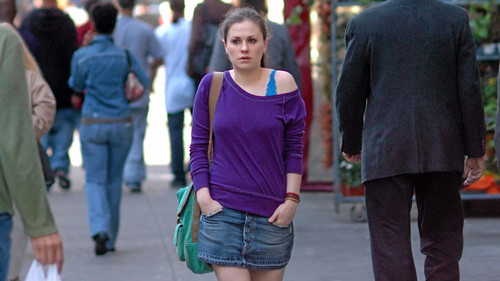
  • Margaret (Kenneth Lonergan, 2011) From the beautifully slo-mo opening sequence of Manhattanites in ritualized motion, reminiscent of James Benning's early collaborations with Bette Gordon, I suspected I was seeing something special. Drying my eyes during the closing credits, I knew for sure that I had. "You will weep and know why." If you've heard of this sprawling, 150-minute character drama about a teenager (Anna Paquin) struggling with every emotion under the sun in the wake of a traffic accident, you've probably also heard how it was given short shrift by a studio contractually obliged to release it but seemingly determined to take a loss on it. Though frustrations of the legal system is a sub-theme of the movie, (as are poetry, post-9/11 stress, burgeoning sexuality, opera, and a million other concerns) it's a shame that the story of Margaret's belated and shoddy distribution has overshadowed all other discussions about the film. To be expected when prints disappear from theatres after a week or two, and perhaps reversible now that the film is re-opening at a Greenwich Village theatre today; I hope a Frisco Bay venue tries the same gambit soon.
  • Uncle Boonmee Who Can Recall His Part Lives (Apichatpong Weerasethakul, 2010) Into the cave.
  • The Tree of Life (Terence Malick, 2011) Into the light. Multiple viewings and much ruminating have made its evident flaws insignificant in the face of its visionary design.
  • A Dangerous Method (David Cronenberg, 2011) Keira Knightley's polarizing performance in this impeccably composed, perfectly Cronenbergian film, led my way to a new understanding of my long-least favorite genre: the biopic. Historical figures perform specific functions for modern humans; why not allow actors to embody these functions by acting them out on screen?
  • Certified Copy (Abbas Kiarostami, 2010) It's a bit strange that the San Francisco Film Critics Circle picked a largely English-language film for their 2011 Foreign Language Film award. I'll approve and attribute it to the masterful illusionism practiced by its Iranian director, its French star (Juliette Binoche), and the Tuscan countryside setting. All three create a mesmerizing surface beneath which there is even more to see, and contemplate. English-language films just don't do that, do they? Except for the exceptions.

Five superb films I saw in 2011 that screened in San Francisco for the first time this year. All had so-called "commercial" releases except the first one listed; it played for a week in New York but had only a handful of screenings at the San Francisco International Film Festival here.
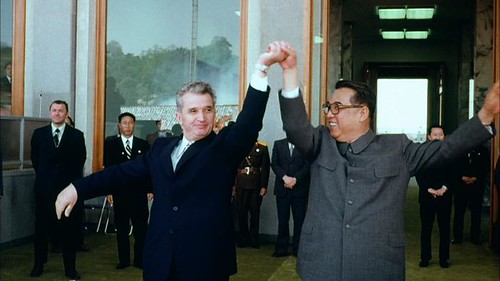
  • The Autobiography of Nicolae Ceaucescu (Andrei Ujica, 2010) "Look in my eyes; what do you see?...I'm the smiling face on your TV..." The past months have seen the final days of two of the world's most reviled dictators. We can hope, but not really expect, that they won't be replaced by others equally heinous somewhere in the world. But how often does tyranny conform to the images we expect from it? Such a question is at the center of this three-hour compilation of naked newsreel footage taken from the archives of the 1965-1989 Romanian leader's personal photographers. Kim Jong-il's father Kim Il-sung makes an astonishing cameo appearance.
  • The Time That Remains (Elia Suleiman, 2009) Palestinian director Suleiman applies the darkly absurdist, somewhat Tati-esque style he perfected in his previous film Divine Intervention to even more overtly autobiographical material. If its predecessor is any indication, it should only grow in my estimation with repeated viewings in the coming years.
  • The Arbor (Clio Barnard, 2010) A strange and remarkable work. The documentary tradition in theatre is long but little-known, so bringing some of its techniques for merging non-fiction material with acted performance into a cinematic sphere feels like a real breath of fresh air. It's particularly inspired in the service of its subject: the life and legacy of Yorkshire playwright Andrea Dunbar.
  • The Skin I Live In (Pedro Almodovar, 2011) I run hot and cold on Pedro's filmography, and had even skipped Broken Embraces after being disappointed by his previous two features. I'm back on board. Here, he forays into horror and science fiction without upsetting his delicate balance of telenovelistic melodrama and cinematic spectacle. To hint at why this film is something only Almodovar might have devised is to give too much of its plot away. I'll just say that maybe Bad Education could've been improved with a hint of Karl Freund's 1935 Mad Love in it.
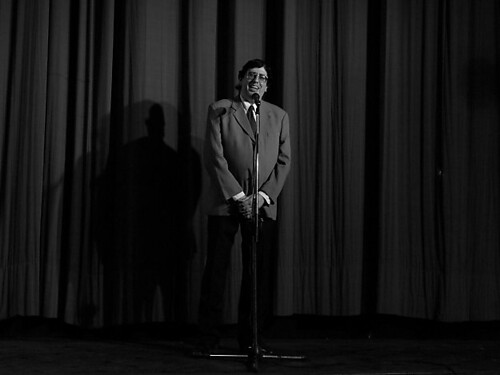
  • Inni (Vincent Morisset, 2011) Is this monochromatic, visually experimental shadow box a new way forward for the concert film? If you prefer imagining the Icelandic band's sustains ricocheting against the back of a darkened concert hall rather than off beautiful mountains and lakes (as in 2007's Heima), then this is the Sigur Rós movie for you.

Five beautiful films which I didn't see in 2011, but which were first publicly screened in San Francisco this year and were a big part of my conversations about cinema. Having seen them in 2010, I wish I'd made time to see them again when they played in local cinemas in 2011.
  • A Useful Life (Federico Veiroj, 2010) I never had to see a Uruguayan film before this one to fall in love with this neorealist-goes-expressionist oratorio for that tiny country's cinema culture and one average man's place in it. And out of it.
  • The Mysteries of Lisbon (Raul Ruiz, 2010) A fitting swan song for one of the most mysterious filmmakers I know. The impossible-to-peg Chilean died in August but not before gracing us with a beautiful, sprawling adaptation of a novel by 19th-century Romantic Camilo Castelo Branco. (No, I hadn't heard of hm before either.) Dig those digital split diopter shots!
  • Another Year (Mike Leigh, 2010) The British misanthrope-or-is-he's most Ozu-esque film to date.
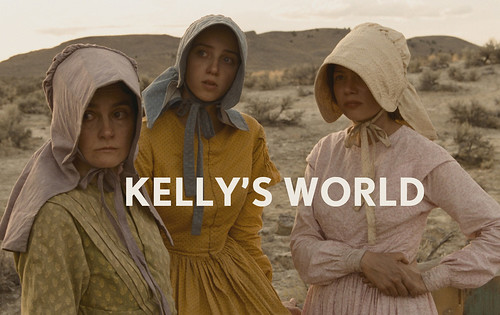
  • Meek's Cutoff (Kelly Reichardt, 2010) One of the American filmmakers best at portraying the so-called "outsiders" (or should I say the 99%?) of our modern society points her camera into history, showing us the stratifications found among a small community of pioneers heading West circa 1845.
  • Essential Killing (Jerzy Skolimowski, 2010) Just as exciting as The Fugitive except far more ambiguous and ambivalent about its moral position. Pure cinema.

Five terrific films that I saw at San Francisco festivals or other alternative venues in 2011, that have yet to secure "commercial" distribution in this country, as far as I am aware. In alphabetical, not preferential, order.
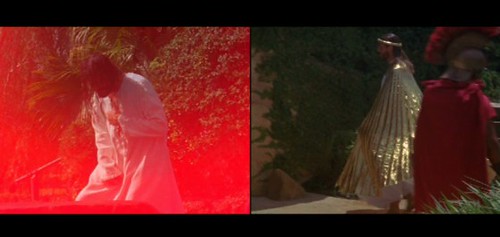
  • 28.IV.81 (Descending Figures) (Christopher Harris, 2011) A brightly-colored dual-projector comedy set amidst a Florida amusement park passion play where baseball caps mingle with Centurion helmets.
  • Chantrapas (Otar Iosseliani, 2010) Films about filmmaking are cinephile catnip, right? Well, this certainly trumps The Artist as an authentically moving tribute to a vanished mode of production left behind for a new life and search for meaning.
  • Disorder (Weikai Huang, 2009) Around Guangzhao in an hour. Dizzying in design, execution, imagery, editing style, and political audaciousness. Truly the closest thing to Dziga Vertov's vision for his kinoks the 21st Century has seen thus far in a single work.
  • HaHaHa (Hong Sangsoo, 2010) One of the funniest and most thought-provoking films from one of my favorite working directors. Need I say more?
  • Lethe (Lewis Klahr, 2009) Klahr's collage films can provide a closer look at vintage comic book art than even the most finicky collector is likely to take unless scrutinizing that line between "very fine" and "near mint". We see the visual DNA of colors and shading magnified, and at the same time we read between the panels, guided by the filmmaker's temporal and spatial dislocations. The standout of a strong set of new-ish work Klahr brought for local premieres this year, Lethe is a remix of a 1960s Doctor Solar story that becomes a noirish drama set to Gustav Mahler.

Five amazing films I saw in 2011 that have yet to screen publicly anywhere in San Francisco. In alphabetical, not preferential, order.
  • Almayer's Folly (Chantal Akerman, 2011) Entrancingly old-fashioned adaptation of Joseph Conrad's first novel, transposed to stuck-in-time Cambodia.
  • the Day He Arrives (Hong Sangsoo, 2011) Is Hong's return to black-and-white cinematography, eleven years and as many films after Virgin Stripped Bare By Her Bachelors, a sign that we should question the veracity of every scene, but this time around without a bifurcated structure to help guide us?
  • Ghost Dance (Mark Wilson, 2009) Named for the call to apocalyptic change performed by the Modoc (as beautifully described in Rebecca Solnit's book River of Shadows), this brief, but spectacularly ever-expanding animation recalls Eadweard Muybridge's own technological call for for a paradigm shift.
  • Longhorn Tremelo (Scott Stark, 2010) Begins and ends as a study of black shadows against mobile fields, but goes through a dazzling array of burnt-orange-and-white permutations in between. A version is viewable on vimeo, but I'd love to be able to see the full two-projector version somehow.
  • The Turin Horse (Bela Tarr, 2011) A Nietzche-inspired tour-de-force from one of the most forceful visions around.

THE DAY HE ARRIVES


____________________________

Brian Darr lives in San Francisco, where he watches movies, though he's been known to travel for cinema as well. He blogs here and twitters here.

Sunday, May 08, 2011

SFIFF54 #5: Hear the words in here out there

by Ryland Walker Knight


Onlookers on

Last week I had the pleasure of meeting Toronto's own Adam Nayman as he was in San Francisco on FIPRESCI jury duty for the festival. One of the fruitful conversations we shared was about Kelly Reichardt and her new movie, Meek's Cutoff, which, at first, made me madder than a snake. (What're spoilers?) The finest point to point at in my reaction to the film is its ending, which is exactly the kind of storytelling move that I've grown to detest: that seemingly open-ended "grace note" that feels if not over-determined then a cop-out. I complained to another friend that, if you're going to write a story about life and death consequences (risking starvation) on the road to the frontier, then you ought to make some real choices about trajectory, about what those consequences mean; and that it appeared Reichardt "copped out" on any such choices by opting for a "mystic allegory" that makes the film's alarmingly literal lefty slant unavoidable and, well, without argument beyond what I already know about how confused and confusing humans can be. That is, the political element is as rootless as the characters, awash in reaction not conviction. After all, the majority of the film made me angry because the way Meek is characterized—the ignorant blow hard wearing a red shirt quick to beat The Other he refuses to grant any value, let alone agency—leaves little room for interpretation outside allegory when met at first glance (1). But I must admit that not only was I rapt through the plodding but also that I marvel at Reichardt's gift for film grammar and staging. And, yes, that, while grimacing my way through the post-screening talks, trying and failing to bite my angry tongue, I tried to add to every exchange that I did not trust my basic reaction because it felt reductive and far too broad (funny how those dovetail!) for a film this specific.

When Adam and I started talking about the film a few days later nobody had presented any kind of argument to get me out of my funk with the film. I still explained the anger in terms of expecting the ending: "In that reverse shot through the trees, looking at the Indian, before the penultimate one of Williams, I was thinking, Please don't do it, and then you get Williams' face—did you realize her lips are perfect no matter what?—and she's all 'confused' or whatever before the final reverse, this time with less leaves, and I kept thinking, Don't fucking do it, and then it starts down, starts to fade, and I'm a riot inside, just totally, You fucking did it, didn't you? And I wanted to bolt from the theatre." Adam's reply was as simple as it was brilliant, one of those, ouch, I-should-breathe-better moments where your jaw doesn't drop but your mouth does open. He asked, "Does it matter that it's Williams' point of view, looking through those trees, to you?" My head went click and thud, my eyes widened and I said, "Huh, well, okay. Yes, of course that matters. How did I not think of that?" It's not like that question precipitated a complete reversal but it did open a new way to appreciate the film, or, at the very least, a way to let my useless anger abate. Because I'm still not sold on it, nor Reichardt, though I do like being forced to think about a movie, about a filmmaker, about my criteria, about myself. Thinking about thinking and thinking about how you are thinking are rather indulgent modes, I suppose, but that's all I understand criticism to be at bottom. Or, that's the kind of philosophical criticism I'm attracted to: the kind that brings intentionality into play while guiding a reader through one's experience of an object. I realize that ideal is not always possible, or desirable.

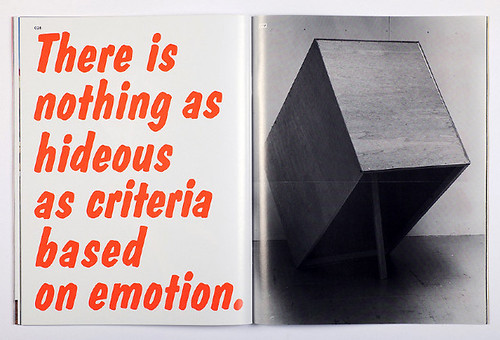
There is nothing as hideous as criteria based on emotion.

Part of what makes it improbable is that sense of duty a critic feels inside a festival's screening schedule not only to see as many films as possible but also to have something to say about all those free tickets she's received (2). "Duty" may be the wrong word, however, when what's really motivating me (I can only speak for me) is that I simply like going to the movies. But, in turn, I guard that enthusiasm by not going to the movies. (In fact, after Meek's, I only saw five films of the fifteen I'd planned (via iCal) to see. There were a lot of reasons, but the truth of the matter is that I wanted to watch basketball more than I wanted to watch movies. Luckily, this is something Adam is amenable to since he is, among other things, a big basketball fan as well. We will return to this.) Which gives me pause on the eve of my first visit to the Cannes Film Festival. I'm in Nice writing this and though my fatigued body wants to stay inside and lay down or get into some stretching, my brain wants to push that body outdoors as often as possible to feel a different sun and speak a different language walking around a city I do not know. Granted, I'll have a running mate in Danny at the festival and I don't doubt some odd kind of competition will push me to see more and write more than normal. Yet, no matter how flat out cool it is to the fan in me that I get to participate in this festival this year, the sun will always tempt me. Which is another motivating factor to pump out this post to wrap up my SFIFF54.

Thus, to regain the thread: I enjoyed Adam's question of perspective because it brought back a rather basic question I'd forgotten in the haze my eyes had created, reacting to the simple story onscreen in Meek's. Because that is the great thing at work in the film: bringing this woman's eyes to the fore. Her gaze may not be clear, or always level, but she's the moral rock of the picture and by the close she has, in fact, been brought from the back of the wagon ditching heirlooms to the center of the frame with a voice and a face for all to reckon. This reading, too, is reductive of course. But I'd much rather value the film for its picture of a woman emerging than disparage a film for its (by my lights) lazy storytelling. Reichardt may not be interested in story the same way I am, I must allow, since she has a certain a-g background that speaks to interests in space and time (both paramount abstractions here), but the fact is she chose to make a narrative feature that is only ever subtle in its patient formal craft, not its ideas, and that still bugs me. Then again, all three of Reichardt's Oregon pictures are on the cynic's side of the table and part of my problem may simply be my desire for a more generous world, my desire to see some new way towards charity. Put otherwise, I know I rate magnanimous movies higher for their obvious alignment with my own values. This may be selfish.


This is also why I love something like Claire Denis' 35 Rhums, which is nothing if not charitable. So imagine my thrill to meet Stuart Staples of Tindersticks prior to their event at the festival, adding a live score to a sort-of clip-reel of films they have worked on with Mme Denis. Our chat was brief but I can assure that Mr Staples is a gentle and patient man. He talked about a duty, too, he feels to the object at hand, to do right by it by the end of the process. On their first score with Mme Denis, for Nenette et Boni, he said the band had the idea that they would follow in Miles Davis' footsteps by trying to play live to the images, to be real jazz musicians, before they realized it would take time to find apt melodies and write real songs where needed. Now, he says, they get ideas earlier thanks to the script and dailies but it really takes seeing a rough assembly to have the kind of emotional reaction necessary to inspire his/their/that responsibility to the object that can produce such wonders as the delicate, lilting rhymes of the opening image-and-score tandem of 35 Rhums, where the train and its tracks shuffle a bit in time with the accordion. Or the title track from the soundtrack to Trouble Every Day, which was a highlight of the live performance (3) along with the song "Tiny Tears" from that first partnership on Nenette et Boni. Lucky for us, somebody talented shot that part of the show, its finale, and put it on youtube:


It was a low-key event. But it was certainly more about the concert than it was about the visuals (or the interplay between stage and screen) from my vantage. Which is fine, of course, since I feel privileged to live in one of the two U.S. tour stops for the show. And the music is really great, no matter how much I wanted to re-order things or at least open with more of a bang than that (admittedly lovely) shot of Alice Houri floating in the pool near the front of N&B. So I'll quit that tact by saying, Thanks.

Some other things I was grateful to catch on a big screen before departure include: Ben Russell's Trypps #7, which really did start its shorts program with a bang (or a bong, or a gong), as it took me forever to figure out we were looking in a mirror at that lady's face stay placid in the quivering frame; T.Marie's Slave Ship was projected smaller than the rest of the series but it still impressed the hell out of me because it flips the "watching paint dry" quip into something productive, forcing us to see an image not take shape but explore its own variance; The Mill and The Cross by Lech Majewski is somewhat confounding, especially from the 2nd row, but its palate is wide and deep and its ideas, though rooted in the narrative structure of the painting, feel yet more modern in how arrayed (not inter-related) they are, but then maybe Breugel was just ahead of his time (in any case I was too tired to offer a more cogent take); Michelangelo Frammartino’s Le Quattro Volte is by turns cute and brilliant, with far more whimsy than any note could prepare me for, which isn't a bad thing since we should welcome some levity inside a largely wordless observation on cycles of life (it's not Disney, ok, though its like-minded brevity is a blessing) that still exist outside cities; Breillat's The Sleeping Beauty is nowhere near Disney and so full of stuff that I can't say what I think other than I like how she sees a dream life in a similar way to Lynch on a thematic level if nowhere close on a stylistic or formal level; and, finally, that big bad momma of some smoke and a shitload of mirrors, RWF's World on a Wire.


Believe me, I'm sorry to have missed plenty, but at the least I saw this large-scale goof of a thesis on modernity that's so funny and smart it's hard to believe people get daunted by its size. It's the kind of movie all cinephiles will enjoy, if not adore, and the kind they can never sell to non-movie-people they love. The running time is unavoidable in any description one might try to entice with due, in part, to the fact that the film just keeps getting better as it goes along, accruing incidents of insanity designed for maximum punchline effect. The gambit is easy enough, though, and largely ripped off: there's a government-funded project to build a computer world that mimics our own with a series of programmers, each holding the (invisible marionette) strings on fabricated subjects, going mad when they realize the very apocryphal truth of their own reality. Sounds familiar, huh? Well part of the joy in the thing is precisely its lower case, 16mm filmmaking that relies on performance and structure and sound design with very minimal set decoration to get at a sense of a future just past our present (even if the costumes are unmistakably 1973)—as well as a world enveloping itself. I'm astounded this is only the second Fassbinder film I've seen. But that just gives me another autodidact project, among so many, for after Cannes.

The trick is to step out of such impulses, though, when you're in a foreign country (4) (5) and look how I've failed today, spilling so many words. Whatever, I say; I say, my body saw the sun this morning—for a stroll to the market and beyond, for a lunch in the park and for a snack on the patio at my hotel with the owner. So out I go again, hoping for a cheap pizza and some good wine on a sidewalk where I can watch people in clean clothes try their best to act like they don't have a million eyes on them at all times, or actually convince themselves their lover's the only one looking at them—and only them!—in the world.

NICE
—Happy Mothers Day, moms

(1) He's an easy Bush stand-in, if I must use that name, and Michelle Williams' character has a line of dialog that only helps cement this link: "I don't know if he's ignorant or just plain evil."

(2) Not to mention the fact that you want to ply press people with clips to quiet at least one chorus of voices ringing in one corner of one ear.

(3) However, the selection of the man-eating scene was, as S.S. promised, shocking. Even when you see that scene in the context of the greater film it's brutal, gross and nigh gratuitous. Here, it rankled more than most and, again, I looked away for the duration, though that didn't spare me the sounds of the horny young dude screaming and choking and bleeding to death.

(4) I'll be in Europe for a while post-Cannes.

(5) That's the trick anywhere, I think, which is part of the point of World on a Wire: you should want to want your own body, you should want to live in it, you should want to move it and slap windows with delight at movement and light.

Wednesday, January 07, 2009

Two thousand weight? #6: Quick Wendy and Lucy plug.

by Claire Twisselman


see?

I think I want to call it the American film of the year. I think it's for me the way There Will Be Blood was for me last year. Like: how come more people won't see this thing? It's only 80 minutes long! It won't eat up your day like Che. Check here to see when it comes near you. And then see it, of course. People tell me to kick myself that I didn't see Ballast, but I don't think that one will kick me the way this one kicks me. It's a good thing. Heck, it's a great thing. We need to look at the margins more.

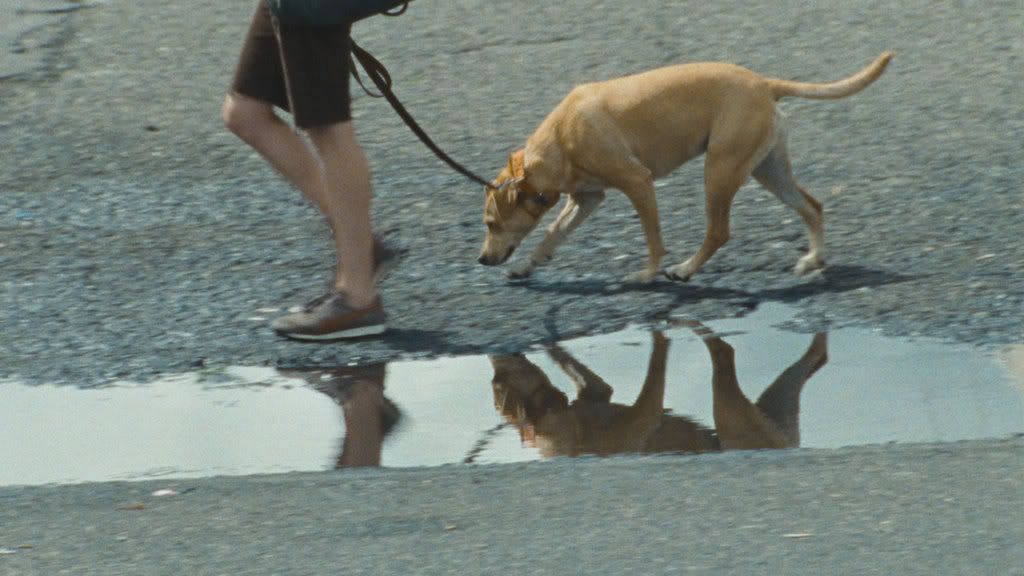
puddle

Wednesday, October 08, 2008

Woofs #1

by Ryland Walker Knight


not looking
dying light

[Click right here to see what else is barking in our backyard.]

Wherein I begin to lay out some images that keep calling to one another, either in my head or in a film or in a few films or in all of the above all at once, which is what this is really about: how my mind is directed towards these things. I've chosen the series title, of course, from the MMP quote I threw up in the last conjunction. (Also: throw up.) I think one might see any of my image-essays (maybe the best, brief example) as a member of this new series, but I'll just start the number fresh cuz this will be a little different, and new.