Showing posts with label Raul Ruiz. Show all posts

Friday, December 23, 2011

BANG BANG: Brian Darr

[BANG BANG is our week-long look back at 20!!, or "Twenty-bang-bang," or 2011, with contributions from all over aiming to cover all sorts of enthusiasms from film to music to words and beyond.]


5 x 5 by Brian Darr

2011 was a year filled with terrible and wonderful things for me. When it comes to film-watching, there was plenty that fell into the "wonderful" category. My relationship with the cinema, and especially the "new" cinema, is constantly changing, and finding a way to put together a coherent top ten list encapsulation was more of a struggle for me than ever this year. So in true obsessive fashion, I've made a "modular" top ten, exploiting various quirks of eligibility that diehard list-watchers and -makers may recognize, but that everyone else can just read as an excuse for a nice round top 25.


Five magnificent films that had a week-long "commercial" release in San Francisco in 2011. Definitely on my top ten list, no matter how you slice it.
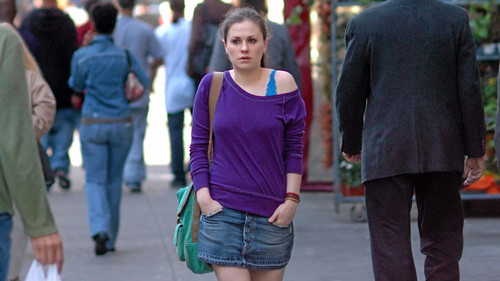
  • Margaret (Kenneth Lonergan, 2011) From the beautifully slo-mo opening sequence of Manhattanites in ritualized motion, reminiscent of James Benning's early collaborations with Bette Gordon, I suspected I was seeing something special. Drying my eyes during the closing credits, I knew for sure that I had. "You will weep and know why." If you've heard of this sprawling, 150-minute character drama about a teenager (Anna Paquin) struggling with every emotion under the sun in the wake of a traffic accident, you've probably also heard how it was given short shrift by a studio contractually obliged to release it but seemingly determined to take a loss on it. Though frustrations of the legal system is a sub-theme of the movie, (as are poetry, post-9/11 stress, burgeoning sexuality, opera, and a million other concerns) it's a shame that the story of Margaret's belated and shoddy distribution has overshadowed all other discussions about the film. To be expected when prints disappear from theatres after a week or two, and perhaps reversible now that the film is re-opening at a Greenwich Village theatre today; I hope a Frisco Bay venue tries the same gambit soon.
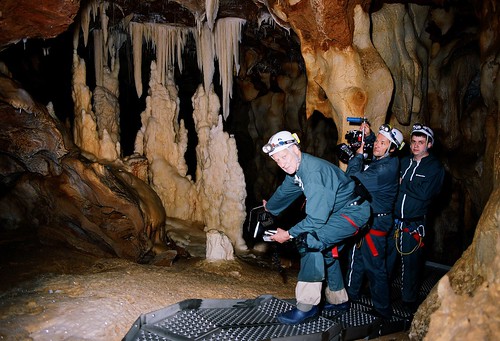
  • Uncle Boonmee Who Can Recall His Part Lives (Apichatpong Weerasethakul, 2010) Into the cave.
  • The Tree of Life (Terence Malick, 2011) Into the light. Multiple viewings and much ruminating have made its evident flaws insignificant in the face of its visionary design.
  • A Dangerous Method (David Cronenberg, 2011) Keira Knightley's polarizing performance in this impeccably composed, perfectly Cronenbergian film, led my way to a new understanding of my long-least favorite genre: the biopic. Historical figures perform specific functions for modern humans; why not allow actors to embody these functions by acting them out on screen?
  • Certified Copy (Abbas Kiarostami, 2010) It's a bit strange that the San Francisco Film Critics Circle picked a largely English-language film for their 2011 Foreign Language Film award. I'll approve and attribute it to the masterful illusionism practiced by its Iranian director, its French star (Juliette Binoche), and the Tuscan countryside setting. All three create a mesmerizing surface beneath which there is even more to see, and contemplate. English-language films just don't do that, do they? Except for the exceptions.

Five superb films I saw in 2011 that screened in San Francisco for the first time this year. All had so-called "commercial" releases except the first one listed; it played for a week in New York but had only a handful of screenings at the San Francisco International Film Festival here.
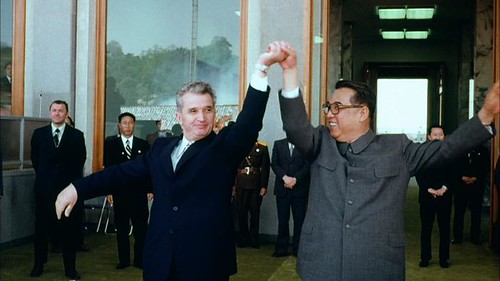
  • The Autobiography of Nicolae Ceaucescu (Andrei Ujica, 2010) "Look in my eyes; what do you see?...I'm the smiling face on your TV..." The past months have seen the final days of two of the world's most reviled dictators. We can hope, but not really expect, that they won't be replaced by others equally heinous somewhere in the world. But how often does tyranny conform to the images we expect from it? Such a question is at the center of this three-hour compilation of naked newsreel footage taken from the archives of the 1965-1989 Romanian leader's personal photographers. Kim Jong-il's father Kim Il-sung makes an astonishing cameo appearance.
  • The Time That Remains (Elia Suleiman, 2009) Palestinian director Suleiman applies the darkly absurdist, somewhat Tati-esque style he perfected in his previous film Divine Intervention to even more overtly autobiographical material. If its predecessor is any indication, it should only grow in my estimation with repeated viewings in the coming years.
  • The Arbor (Clio Barnard, 2010) A strange and remarkable work. The documentary tradition in theatre is long but little-known, so bringing some of its techniques for merging non-fiction material with acted performance into a cinematic sphere feels like a real breath of fresh air. It's particularly inspired in the service of its subject: the life and legacy of Yorkshire playwright Andrea Dunbar.
  • The Skin I Live In (Pedro Almodovar, 2011) I run hot and cold on Pedro's filmography, and had even skipped Broken Embraces after being disappointed by his previous two features. I'm back on board. Here, he forays into horror and science fiction without upsetting his delicate balance of telenovelistic melodrama and cinematic spectacle. To hint at why this film is something only Almodovar might have devised is to give too much of its plot away. I'll just say that maybe Bad Education could've been improved with a hint of Karl Freund's 1935 Mad Love in it.
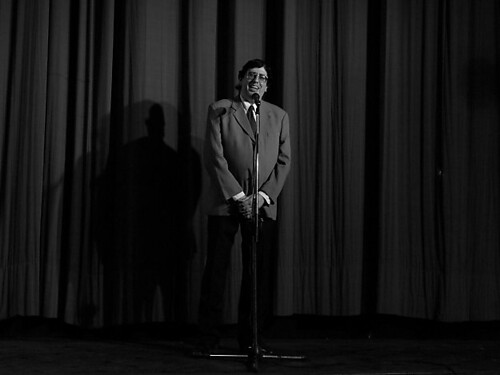
  • Inni (Vincent Morisset, 2011) Is this monochromatic, visually experimental shadow box a new way forward for the concert film? If you prefer imagining the Icelandic band's sustains ricocheting against the back of a darkened concert hall rather than off beautiful mountains and lakes (as in 2007's Heima), then this is the Sigur Rós movie for you.

Five beautiful films which I didn't see in 2011, but which were first publicly screened in San Francisco this year and were a big part of my conversations about cinema. Having seen them in 2010, I wish I'd made time to see them again when they played in local cinemas in 2011.
  • A Useful Life (Federico Veiroj, 2010) I never had to see a Uruguayan film before this one to fall in love with this neorealist-goes-expressionist oratorio for that tiny country's cinema culture and one average man's place in it. And out of it.
  • The Mysteries of Lisbon (Raul Ruiz, 2010) A fitting swan song for one of the most mysterious filmmakers I know. The impossible-to-peg Chilean died in August but not before gracing us with a beautiful, sprawling adaptation of a novel by 19th-century Romantic Camilo Castelo Branco. (No, I hadn't heard of hm before either.) Dig those digital split diopter shots!
  • Another Year (Mike Leigh, 2010) The British misanthrope-or-is-he's most Ozu-esque film to date.
  • Meek's Cutoff (Kelly Reichardt, 2010) One of the American filmmakers best at portraying the so-called "outsiders" (or should I say the 99%?) of our modern society points her camera into history, showing us the stratifications found among a small community of pioneers heading West circa 1845.
  • Essential Killing (Jerzy Skolimowski, 2010) Just as exciting as The Fugitive except far more ambiguous and ambivalent about its moral position. Pure cinema.
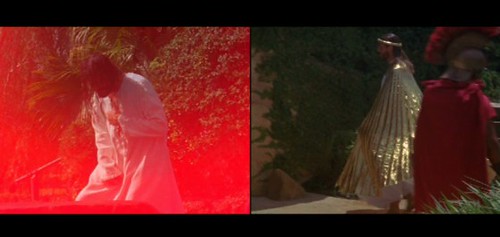

Five terrific films that I saw at San Francisco festivals or other alternative venues in 2011, that have yet to secure "commercial" distribution in this country, as far as I am aware. In alphabetical, not preferential, order.
  • 28.IV.81 (Descending Figures) (Christopher Harris, 2011) A brightly-colored dual-projector comedy set amidst a Florida amusement park passion play where baseball caps mingle with Centurion helmets.
  • Chantrapas (Otar Iosseliani, 2010) Films about filmmaking are cinephile catnip, right? Well, this certainly trumps The Artist as an authentically moving tribute to a vanished mode of production left behind for a new life and search for meaning.
  • Disorder (Weikai Huang, 2009) Around Guangzhao in an hour. Dizzying in design, execution, imagery, editing style, and political audaciousness. Truly the closest thing to Dziga Vertov's vision for his kinoks the 21st Century has seen thus far in a single work.
  • HaHaHa (Hong Sangsoo, 2010) One of the funniest and most thought-provoking films from one of my favorite working directors. Need I say more?
  • Lethe (Lewis Klahr, 2009) Klahr's collage films can provide a closer look at vintage comic book art than even the most finicky collector is likely to take unless scrutinizing that line between "very fine" and "near mint". We see the visual DNA of colors and shading magnified, and at the same time we read between the panels, guided by the filmmaker's temporal and spatial dislocations. The standout of a strong set of new-ish work Klahr brought for local premieres this year, Lethe is a remix of a 1960s Doctor Solar story that becomes a noirish drama set to Gustav Mahler.
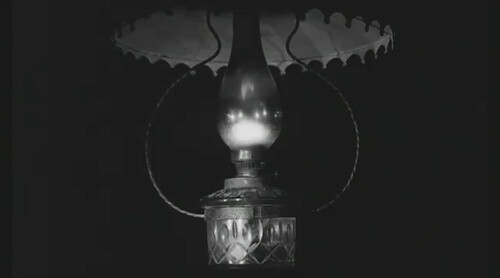

Five amazing films I saw in 2011 that have yet to screen publicly anywhere in San Francisco. In alphabetical, not preferential, order.
  • Almayer's Folly (Chantal Akerman, 2011) Entrancingly old-fashioned adaptation of Joseph Conrad's first novel, transposed to stuck-in-time Cambodia.
  • the Day He Arrives (Hong Sangsoo, 2011) Is Hong's return to black-and-white cinematography, eleven years and as many films after Virgin Stripped Bare By Her Bachelors, a sign that we should question the veracity of every scene, but this time around without a bifurcated structure to help guide us?
  • Ghost Dance (Mark Wilson, 2009) Named for the call to apocalyptic change performed by the Modoc (as beautifully described in Rebecca Solnit's book River of Shadows), this brief, but spectacularly ever-expanding animation recalls Eadweard Muybridge's own technological call for for a paradigm shift.
  • Longhorn Tremelo (Scott Stark, 2010) Begins and ends as a study of black shadows against mobile fields, but goes through a dazzling array of burnt-orange-and-white permutations in between. A version is viewable on vimeo, but I'd love to be able to see the full two-projector version somehow.
  • The Turin Horse (Bela Tarr, 2011) A Nietzche-inspired tour-de-force from one of the most forceful visions around.

THE DAY HE ARRIVES


____________________________

Brian Darr lives in San Francisco, where he watches movies, though he's been known to travel for cinema as well. He blogs here and twitters here.

Sunday, April 24, 2011

SFIFF54 #2: Waking up to life sometimes seems worse

by Ryland Walker Knight


— Getting naked with clothes on

Despite the worst projection/presentation I have ever experienced at the Kabuki*, Hahaha proved once again all you need to make a fabulous movie is a sense of humor and a couple of good actors. This flick has more than just a couple, though, with at least seven fully realized characters criss-crossing, eluding each other even, over a rainy week in the port town of Tongyeong. I don't need to really tell you who these characters are, though, nor what really happens, since the charm of the picture is just how conceptual it is without being clever or, as is often the case in Hong, overtly structural. Granted, there is a device: the present tense of the story is rendered in black and white still photographs, heard as narration, as two friends meet for drinks to talk about their recent visits to Tongyeong, ignorant of the peripheral role each played in the other's vacation. However, it becomes more of a tool for rhythm than anything else as these two stories cohere around the perpetually liminal space of the port with one friend finding a way to leave untethered to anything or anybody and the other finding his way towards the commitment he's been avoiding. True to its blood as a comedy, it ends in a marriage of sorts—let's call it a pledge—and a laugh.

Though the majority of the film is spent observing the problems boys encounter when they wear the bodies of men, the women somehow matter more even though we're never granted a look from inside their eyes. One lady keeps saying, "You see me," without realizing this boy-man does not know her, truly; rather, he knows how to compliment her—not to mention stalk her, to the point of breaking into her apartment while she's gone. Almost an axiom: men in a Hong picture, even when they are True, are always creeps. That is, they all drink too much and they all seem mainly interested in sex, not love, to say nothing of work. Which is odd since Hong's the ultimate professional. He debuted two pictures in 2010 for Heaven's sake. And this one is just superb. It's casual, like a good dinner: one story leads into another and after a couple hours you're full or you're wasted and it's time for one last joke before you hit the road satisfied you understand your friend, and maybe life, a little better.


A movie at opposite ends—not once does it picture a better world—Christoph Hochhäusler's The City Below is practically apocalyptic from the get-go. As lucid an interpretation of a certain Mille plateaux perspective on our recent global crash climate, the film isn't strictly a political engine though its main structure as far as I can see is to de-center everything, to expose how this fiberobtic planet of moving monies is as thin as a glass wall is a look-don't-touch denial. To that end, I'm slightly sympathetic to the people who find the film "cold," but, that's a starting point not an argument. And, in fact, its distance is simply part of its Resnais-like openness. Its Biblical coda is (I'd like to think D&G would approve) crazy multivalent with significance moving in a million directions thanks to its oblique construction. A "complete" read is impossible for me at this point in part because I was so seduced by the aesthetics.

Looking forward to exploring more of Hochhäusler's work with the help of my Cargo editor, Ekkehard Knörer, who interviewed the filmmaker and his writing partner here (in German, but you can hit "translate" in Chrome and get the gist), who agrees I could probably make an argument about the apocalyptic gloom of this easy-to-allegorize but still-rich tower of depravity. (Bonus: any movie that makes Gang Gang Dance** a part of its characterization of the lead earns lots of points.) And I've said nothing about how excellent the acting is, nor the economy of the script, or any other thing I might want to praise, because I don't really need to, I'd hope; after all, compliments are nice but often boring. The most thrilling moments of this film are the ones where characters literally or metaphorically wake up because it's great to watch a face recognize a shift in the world they live in.


Which reminds me, it's okay to love somebody and tell a story about it. And Mysteries of Lisbon is nothing but stories. In fact, Ruiz makes a joke about the length and breadth of his film right at the start of the second part, presumably experienced after an intermission as we relished, by having one character tell another that he has a long story to tell and it will be mystifying as to why he's telling the story but that if his audience of one is patient and keeps listening everything will be told in the proper order for maximum cathartic effect. This is the film, of course, talking to us in the seats***. Because the film takes its time. And it repeats itself. We hear one story after another, with stories within stories, making audiences of every character at almost every encounter; or every character has a chance to play narrator. Which reminds me, the voice is a powerful tool.

This polyphony is a way to bend your ear, the same way that the way Ruiz circles scenes bends the space, and because we learn so many histories, motivations get bent into new senses or understandings of the world. The entire film is trying to bend you to its formal will, put you in a place, force you into roles you hear inside your own head, make you lose yourself as much as our first/primary narrator winds up losing himself through the course of his maze of a life. With most of the movie taking place indoors, a series of interlocking chambers, this makes rigorous sense thanks to Ruiz's roving eye so nimble to traverse a wall or glance past a hidden stairwell with a face gone sour listening to evil perpetrated beyond this private box of echoes. Again, audiences; again, multiplied; again, again. It's so interior that locales beyond walls remain concepts, fantasies, stages. And we remember the dioramas that double the scenes here and there where everything's a cut-out, a make believe, and you begin to wonder just how much of any of these stories are—here's a dumb word—real. Real is necessary, though, since it's the root of surreal and that's just what this labyrinth winds up: a magic mirror dolly into the light of a new life yet to be dreamt.

To the moon!

* The center of the frame was out of focus for long stretches and at two separate points in the last third of the film, the SFIFF digital slideshow of sponsor ads popped up in purple and pink to cover the screen.

** I feel like GGD is what I always wanted from Deerhoof and never got.

*** SFIFF, like any film festival, has a number of grey hairs who think they're retaining some grasp on high culture by coming to "obscure" foreign movies only to talk their way through whatever it is they've forked over however many dollars they had to in order to spend, as was the case here, four hours in the dark. My complaint is an old one: let the movie tell you how to watch it. And shut up. Asking, "Does this mean he's his son?" right before the reveal is announced (we all felt it, lady) is one hell of a way to not be subsumed by the images in front of your eyes. Which is a long, stupid rant shoved into a footnote so I could include a likely-useless bit of blogging tid bit saying that, thanks to a mom and a daughter under the impression that movie time is gab time, I switched seats at intermission from a perfectly good seat with a decent neck-bending ratio to the front row, which, though it is recessed thanks to a rather deep stage in K1, forced a slouch I did not want to make my body perform. I know, boo-fricking-hoo. At least my ticket was free and the movie itself didn't suffer because of my pet peeves.

Wednesday, April 20, 2011

SFIFF54 #1: Viewing Log #82: Lilac under linen [4/7/11 - 4/20/11]

by Ryland Walker Knight


In the cave
"landscapes and mindscapes"

One of the funny things about the San Francisco International Film Festival, which starts tonight, is that a good portion of its offerings are festival circuit "holdovers" that started their trek to SF last year at the Cannes Festival. Well, funny only because this year I'll be playing catch-up here and then leapfrogging a lot of tour stops by hitting Cannes in May. Granted, this year's Croisette selections are not quite as appetizing as a lot of us had hoped; however, it's still the premiere fest and it still costs an arm and a leg to be a part of it. But more on that adventure later. Here, I'm concerned with laying out what my last few weeks in town look like from a cinephile standpoint.

There's certainly plenty to see at SFIFF54 (pronounced "s'fiffty-four" by some), and I do plan on attending daily, but I also don't want to get burnt out on a bunch of movies all at once. So, as often as I can, I'm going to just see one film a day. And then I'll throw up a quick take here that night or the next morning. Given that two of my most anticipated titles are 272-minute and 212-minute affairs, this one-a-day dictum should be easy enough on those two Saturdays: this weekend I'll settle in for Raul Ruiz's Mysteries of Lisbon for the entire afternoon, starting right at noon, and the following week I plan to head over to the PFA for the 35mm screening of Fassbinder's World on a Wire. Yet there are a number of shorter films as well, such as Federico Veiroj's A Useful Life, which is only about an hour long and easy to pair with an evening of avant-garde shorts in a program called The Deep End, with newer work from people I respect and enjoy like, say, Ben Russell and Vincent Grenier to name two of the nine featured filmmakers.

I only caught two press screenings prior to the festival and I don't think I'll be looking at any screeners but I do have a copy of Athina Rachel Tsangari's Attenberg that I've been meaning to watch ever since I saw/felt Dogtooth. The two films I have seen, I should say, are Patricio Guzman's Nostalgia for the Light and Werner Herzog's The Cave of Forgotten Dreams. Both of these films will open in the Bay in the summer months so, logistics wise, there is no real rushing need for you to see them at the festival. However, both are very good pictures. The Guzman is a tad less poetic than I'd've hoped (in fact it's kind of hokey near the close) but the Herzog, though I could quibble with it, is just great. You might know by now that it's his first and last film in 3-D, but his use of the medium makes so much more sense than so many productions force fed at kids these days. Ostensibly a documentary, as they often are, the 3-D is less about realism than it is about phenomena and creating new realities for your eyes; that is, the experience you have seeing these rare paintings matters because you're given a sense of their physical depth and of their curves for light to play against. You see new movement of old visions. It's thrilling, moving even, and it should only be seen as big as possible.


The main highlight of the run, for me, is likely the evening with the Tindersticks at the Castro (more here), which will feature clips of Claire Denis movies accompanied by live performances of the scores of the films in the clip reel. Truth be told, it sounds like quite the nerd event (it could be a major let down), but I'm more than game to see those images and hear those sounds in that theatre. If all goes according to plan, I'll have something extra on this event.

Other items on the list include: Hong's Hahaha, Christoph Hochhäusler's The City Below, Kelly Reichart's Meek's Cutoff (which I hafta catch at SFIFF54, despite its wider release a week or so later, because I'll be gone for so long), Breillat's The Sleeping Beauty (which sounds even better than the superb Bluebeard), Lee Anne Schmitt's The Last Buffalo Hunt (in part because Haz liked her last film at SFFIFF52 and in part because James Laxton shot some of it), Michelangelo Frammartino's Le quattro volte, Lech Majewski’s The Mill and The Cross, J.P. Sniadecki & Véréna Paravel's Foreign Parts, Florent Tillon's Detroit Wild City, Otar Iosseliani's Chantrapas, Andrei Ujica's The Autobiography of Nicolae Ceausescu, Takashi Miike's 13 Assassins, Mike Cahill's Another Earth, Romain Goupil's Hands Up, Christopher Munch's Letters from the Big Man (one of Sean Uyehara's favorites), and Sergei Loznitsa's My Joy. There are yet others, of course, but those are the ones I'm targeting, the ones I'd feel less "ok" skipping, the ones I hope I can find something to say about in a timely manner.


In any case, I do hope to offer more than glib summaries. But I've got these last two weeks of dayjob work that I must focus on before the fun of the festivals takes over my life, fostering a whole new set of anxieties (am I writing enough? is it worthy of eyes? where's the coffee? why can't I stay awake? is there food in my beard? do I stink? how bad can my posture get?) to wade through. So, until then—let's say, Saturday—end that week with a bang! Any way you want to! Any way you can!


— I thought it'd be more fun to go down the street this way.