Showing posts with label linkage. Show all posts

Saturday, December 24, 2011

BANG BANG: An Index

by Ryland Walker Knight


TALMADGE 1
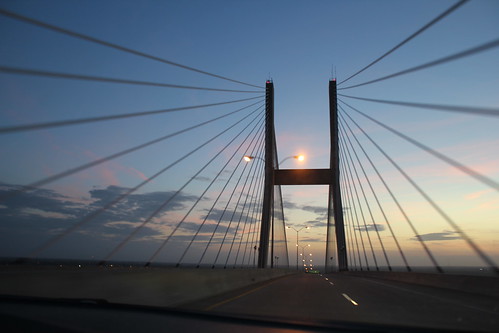
— The Talmadge Memorial Bridge in Savannah

All this week we'll be running a series of year-end pieces by friends of the blog in a manner that, I trust, suits the blog and its character. That is, there weren't many rules. We just wanted to share our enthusiasms about a number of things that impressed us and helped each of us on our way to today, tomorrow, to 2012. Each post will be cross-published on Brian Darr's still-invaluable SF-centric cinephile blog, Hell On Frisco Bay not as a traffic generator but because he's my good buddy and we thought of this project together. It's also just fun to spread the wealth/love. So check back, subscribe, whatever. There will be daily updates to the feed and to this post in particular (as well as to Brian's blog). Until then, bite your nails and eat your hearts out.

Crimmus Eve Update: We're all done! Thanks for reading. Hope it was fun for you. It was fun to share. Merry Crimbo and a Happy New Year. Go see some movies!


— Mia is in South Africa, in Cape Town


THE RUN DOWN

Friday, December 23, 2011

BANG BANG: Ryland Walker Knight

[BANG BANG is our week-long look back at 20!!, or "Twenty-bang-bang," or 2011, with contributions from all over aiming to cover all sorts of enthusiasms from film to music to words and beyond.]


Observations

My, How Impermanent by Ryland Walker Knight

Earlier this week my Indiewire ballot appeared. I still stand by it, I suppose, but even just a week after publication I itch to change things. In fact, the whole enterprise gives me hives to a certain degree. The whole idea of absolutes in general, in any context. If you take a look at that list, you'll see a collection of films, I'd wager, premised on contingency, or some form of mystery or mess or exuberance. Even the more "straight" narratives (Cronenberg's & Jacobs' portrait-films) exhibit an interest in how things do not fit, or ever fix into reliable—much less accepted, normal—forms. Perhaps the best term I can reduce this idea to is a favorite on this blog: navigation. Life's not a maze, but there are hurdles every day, including waking up, not to mention the unexpected tidal wave every so often. We're so used to the narratives we're given or that we give ourselves that eluding the unwanted can wreck a day, a month, a year. (Lucky me: my year saw hiccups and headaches but nothing got wrecked. Truth is, I had a fantastic year. And I'm grateful.) Naturally, I'm attracted to films about finding ways through life.

———

Finding a way to make movie-going more a part of my movie-watching has been difficult this year, the past couple years. Granted, I got to attend Cannes. But the pleasures of that were certainly "extracurricular" as much as within the salles and theaters. The dinners, the new friends, the jokes over whiskey and rosé with Danny and Adrian after long days. But I still cherish movie-going.


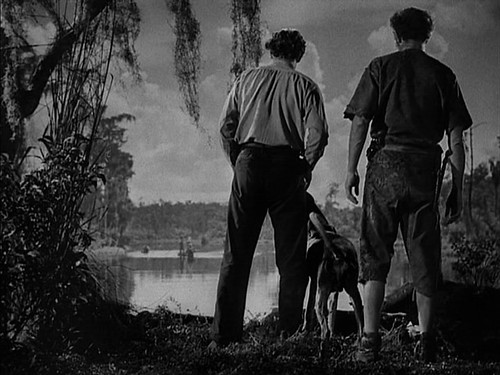
Early last week, in fact, I had the supreme pleasure to take in one of the best double bills in recent memory at the Roxie Theatre (with Brian, yes): the early show was Borzage's Moonrise followed by Renoir's first H'wood venture, the insanely under-seen and apparently under-recognized Swamp Water. Two films about the south made by not-southerners that understand the south and southerners in ways you rarely see anymore. (Of course, I'm not a southerner; I'm a Californian. My Okie roots are roots and my relationship to GA/SC is tertiary at best.) But aside from any obtuse anthropological/ethnological reading I can offer, the films exist and excel simply as films. Borzage's at his Murnau best and Renoir is at his dollies-everywhere (and "people as people") best. And they spoke to one another in delicious ways the way a double bill is supposed to work. Steve Seid usually knows what he's doing but this was a special program. The swamp has different narrative functions in the films, but in both the swamp is a hunting ground, a space of violence, something untamable that few can master or at least negotiate (or inhabit!). Again, this speaks to how I see the world at large. Life takes skills we never anticipate requiring, but nonetheless accrue. True to this optimism I harbor—inside an unavoidable but I hope healthy cynicism w/r/t life's obstacles, including people (above all people?)—both protagonists of these films find ways to join the world by their stories' ends.


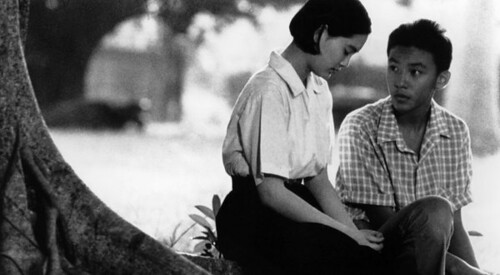
Then again, not every path is a success. The film I felt worst about leaving off my "official" top ten was Edward Yang's A Brighter Summer Day. That movie's all about the disconnect we're forced to confront as we grow through adolescence. It's about a lot more, too, including light, but there's a violence in adolescence that it understands (something Haz and I talk about as he is a teacher). This is true of all the Yang pictures I've seen, but this one is obviously special. Its length affords its narrative the space for us to observe characters rationalize their way through choices good and bad alike (though mostly bad) all the way. This is what critics mean when they call a film novelistic: time affording space for character. Granted, that's a limited view of what "the novel" is or can be, but this film in particular, as with many likewise classified films, is after a Dickensian kind of scope forever grounded in place and details. This, too, is how best to think of something like Breaking Bad, which Jen talked about yesterday.

Television, after all, is serialized much how the early money-making novels were; both are strategized as much as constructed with plot doled out in delimited chunks. But, as Jen noted, one of the pleasures of BB is just how digressive it is, how much air time is given to behavior and go-nowhere episodes of bickering. And it's not like this show's hopeful. It's got a pretty grim take on human desire and nature and intelligence. As I've said before, these characters are idiots. Walter White seems to have figured out a few things watching Gus operate, like the cost of survival in such a dangerous game as the drug racket, but he's still a bald, selfish, myopic stranger to himself and his oh-so-beloved family by the end of this last season. And the person he's closest to has every reason in the world to want to slit his throat.

———

I've been using my tumblr more than this home base throughout the year. Part of it is simply ease of use. Another is desire. The last is time. I like the scrapbook/notebook feel of the microblog. It feels like a repository of reminders. And it usually takes very little effort. Writing here is more work. (Writing anything is work!) Not sure what the new year will bring, but I'm not quite ready to quit my baby. But I quit making zines to make this blog and I may wind up quitting this blog to wind up making more films. Even if they're just little goofs about the sounds of seagulls or odd poems about light and memory. The future has more answers than me.

———


One thing I know for sure: though I've made some great friends via emails (cf. this week), there's a lot I'm proud of from this past year outside the walls and tubes of the internet. Thank you to everybody who helped make those realities real. You know who you are.

________________________________

Ryland Walker Knight is a writer and filmmaker living in San Francisco. He has three names, which you can read above, at left, and all over this blog.

Tuesday, December 20, 2011

BANG BANG: Dave McDougall

[BANG BANG is our week-long look back at 20!!, or "Twenty-bang-bang," or 2011, with contributions from all over aiming to cover all sorts of enthusiasms from film to music to words and beyond.]


Selected 2011 discoveries, briefly noted and across various media by Dave McDougall.

———


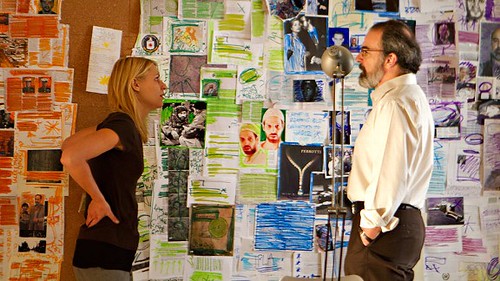
Homeland —— the characters on this show run deep; their history and demons are as much a driver as the twists of plot. Which certainly helps Claire Danes and Mandy Patinkin and Damian Lewis and Morena Baccarin act their asses off. Allegiances don't shift as much as they are gradually revealed; even though the audience isn't only in the headspace of Danes' rebellious CIA agent, everything is filtered through the line between the watchers and the suspects, and the further into each world we're given access, the more complicated the line between terrorist and hero. This isn't a war of ideas as much as a war between wounded people who've sided with ideas, and those wounds are what drive both the terrorists and those trying to stop them. This week's showstopping season finale toyed with heavy political and personal dénouement and teased an even greater moral complexity to come. If there's a better show on television right now, I'd like to see it. 

The Color Wheel (Alex Ross Perry, 2011) —— A masterpiece, a perfect screwball comedy, and a vicious, misanthropic, prickly little thing. What Ignatiy said, and then some.


And two other filmic masterpieces-to-be-named-later that also tackle communication (and shared histories) between men and women, on which I'll have more to say in the Mubi year-end roundup.

———

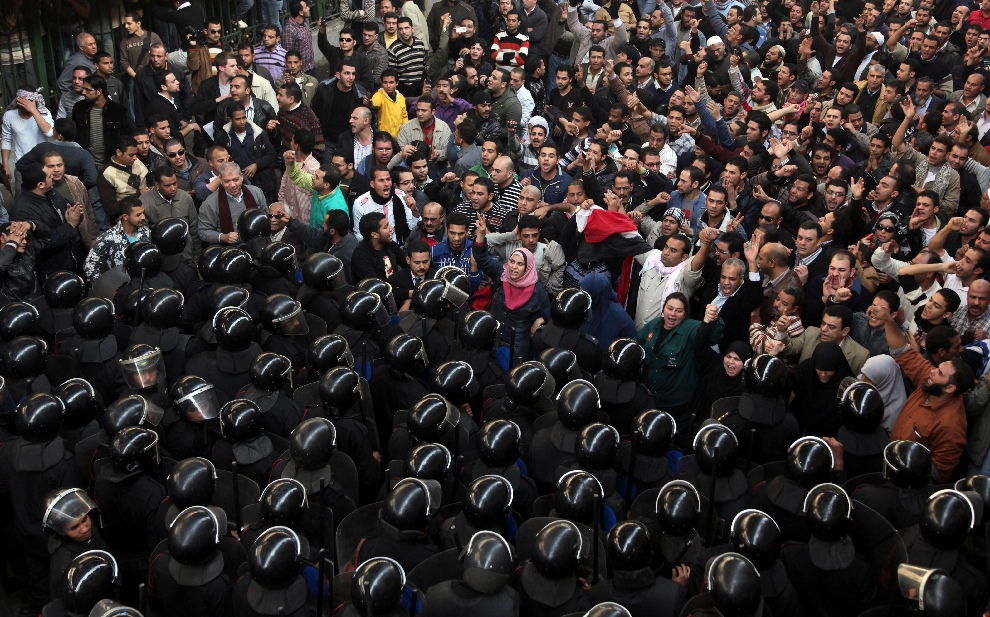
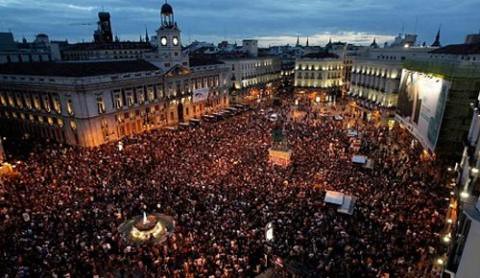
Governments toppled, not by social media but by people going to the streets to battle for their due. But the dynamics of open source protest and new media communication flows were a big part of why this was the year that kicked off an #ArabSpring, an indignado movement, a global coalition of #Occupy protests. It's not just coordination of protests but the ability for knowledge flows to reveal the silent political preferences of a people, and to rally supporters to the cause. None of these movements were created by the emergence of social media -- all grew out of previous organization by activists on the ground, over years and decade -- but it's hard to deny that these movements could only coalesce through communication, and that new forms of one-to-many communication smooth the friction of reaching out to wide audiences. 

———

As the 2008 financial crisis has shifted to become a crisis of solvency and liquidity in the Eurozone, the economic intelligence of the left-ish political blogotwittersphere rises almost as fast as events shift; but the key insight is that, unlike the people-powered movements and revolutions mentioned above, the fate of all of our economic lives still hangs in the balance of deals to be cut in back rooms by power brokers. Which, as those same movements will attest, is the opposite of democracy. If the revolutions of Egypt or Libya or Tunisia (or Syria or Bahrain or Yemen, if you're looking for revolutions-in-the-making) were best revealed by the participants themselves in 140 characters (or 140 character updates, compiled), then the stories of our economic dilemmas have been best told by those savvy enough to get to the bottom of capital flows and reveal these inner workings via blogs, articles, and interviews, whose links were embedded in 140-character updates themselves. Information, in all its forms -- pictures, videos, charts, analysis, stories from the front lines -- move and flicker and flow just the ways frames do in the cinema. For me, these were a few of the sources that made the leap to essential in 2011, from the MENA uprisings to the Econopocalyse and the social movements pushing back:


———

Among all the books and blogs and analysis, an epic cornerstone of how to even begin to think of how we got here — David Graeber's Debt: The First 5000 Years
________________________________

David McDougall is a writer, filmmaker, and media strategist based in London and Los Angeles. He's got blogs and films and words in various places, some of them on the internet. He twitters here.

Wednesday, May 25, 2011

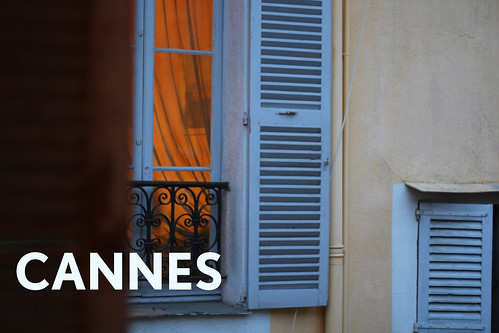
Cannes 2011 #5: Wraps so lissome she could fly

by Ryland Walker Knight


WITH A VIEW

Got a few more dispatches hitting the Cargo site late, post-fest due to my computer being tied up with FCP work and my aversion to writing on "foreign" keyboards all last week. Granted, I wrote a lot by hand, but not all of that's for the internet's eyes to see. So keep checking that link.

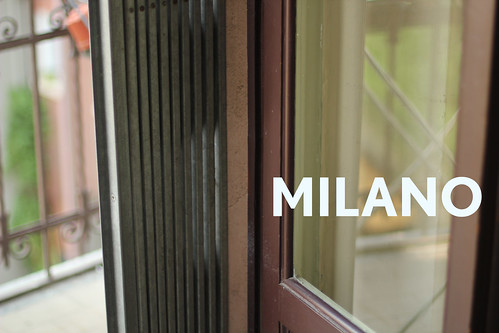
There's a high school behind my friend's apartment in Milan and the constant babble is almost better than music. Except when the glee club (they have those here?) starts trying to harmonize "Don't Stop Believing" for a good half an hour. That's when I retreated to headphones. But watching basketball happen, even when it's bad and these kids can't shoot, was better than half the movies I saw at the festival. Too bad I forgot to grab my camera. Too bad I just watched. But also not: living and making don't have to be one and the same at every juncture and I'm glad I hold that memory, like the waves off the beach at Cannes those first two days, or like certain dinners out in the streets, in a corner of my brain you will never open even if your eyes are wide. I'm reminded of windows at all events; it's probably why I shoot them so much.

LÀ FUORI

UPDATE WAY LATER: Found the Indonesian TV clip I was in over here. I play the yokel quite well.

Monday, May 16, 2011

Cannes 2011 #3: There is no tunnel, only light

by Ryland Walker Knight


SAUMON FUMÉ

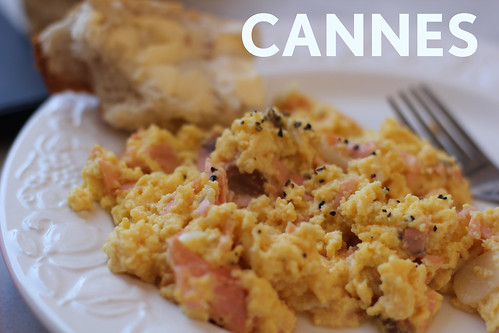
After Tree of Life I made some eggs (above) and wrote my mom a letter about the movie, which I am very happy to have seen but that made me miss a lot of people at home and elsewhere. Here's the link to Cargo again.

UPDATE:
If you want to see me still dazed (though also re-caffeinated) and bemused in the bustling lobby of the Palais after the film, watch this video at The Guardian.

Friday, May 13, 2011

Cannes 2011 #2: Making things happen

by Ryland Walker Knight


D-CANNES-MAN

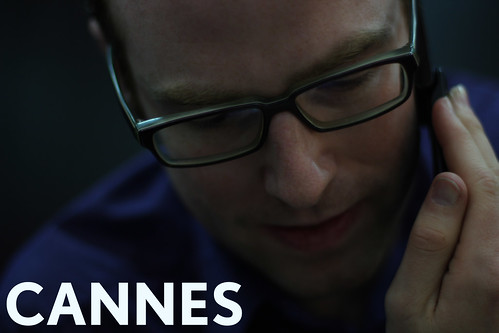
So far, so sweaty. Or, thank heavens we have a clothesline outside our kitchen window. Without providing any real content, let me remind you that you should check in with this dedicated blog at Cargo's website for my more or less long-form coverage the festival. My first missive, about the new Woody Allen movie, which I liked, is up. Early Thursday morning, I saw We Need To Talk About Kevin, Lynne Ramsay's newest, the one we've been waiting for since 2002 or 2003, and it's got chops like her other work, but I'll save my more potent/cogent thoughts for another Cargo blog. If you follow me on twitter you can get more immediate, though maybe cryptic, takes as I find wifi post-screenings. And, oh yeah, Danny and I will have some moving images at The Notebook in due time. Never fear: there will be updates.

GREENORE NIGHTS

[Note: I thought I posted something yesterday but it seems to have disappeared; the text above has been changed. Bonus, maybe: here I am, drinking some good whiskey.]

Friday, March 25, 2011

Heft in here like still cold in the pipes water hitting your face

by Ryland Walker Knight


The visible and the invisible
—Like a ruler it both measures and defines the object

It's official, folks: I'm going to Cannes this year. I've been accredited as a correspondent/critic for the film magazine Cargo*, which is German in print but open to English on its blog, where I hope to write as often as possible about the films I see. Odds favor that I'll contribute some things to The Notebook for/with Danny, and I may have some other opportunities to write about my experience/s, but more on all that later. Hell, I don't know yet what we'll be seeing with any certainty. I sure do hope we see Tree of Life but all I can do right now is cross my fingers. (Well, that and save money.) In any event, what plays the festival and what doesn't play the festival—or, what I get to see, what I don't—doesn't matter to me as much as, simply, my good fortune to be in a position to make the trip. Not everybody gets to go to Cannes. So I promise to enjoy it, first of all, and, second of all, I promise to make my reports (whatever form they take) worthy of your time. That is, they won't just be tossed off viewing logs. I'll try to make real, cogent arguments for my Cargo blogging. I still might post a stray log (with links) here at home base, for fun, but I'm going to try to focus my energies outside my current, little routines.

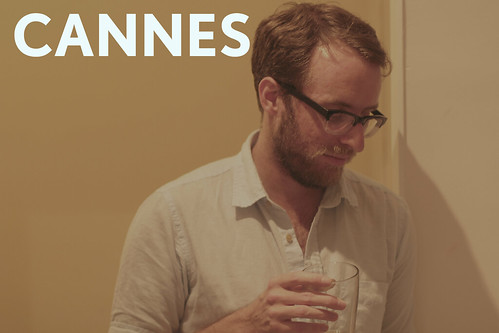
Since I know you're super curious (doubt it) and since my parents like this photo, here's the picture that will grace my festival badge for Cannes and for the SF Int'l just prior to my departure. I suppose offering the image is not just narcissism but also a reference if, by some miracle, you happen to spot me at either festival and want to say hi. Funds are slim (cough, we do have a tip jar on the side bar), but I'd be willing to buy you a free drink and talk about things beyond the silver screen. Otherwise, you can find me on twitter, as ever. I don't begrudge twitter haters, or people who've grown bored with my shtick in said arena, but I will say that I may (though I may not) tweet my way through the two fests and you might want to tune in (follow? subscribe?) to keep abreast of all my observations in a more immediate, two-point-oh way. Odds are good on the twitter angle, too—San Francisco in particular as it's kind of like a warm up round before the real plunge (and I do hope to swim some, I'll have you know)—but I've still got a day job in the meantime and it requires a lot of energy so posting, as it has for a while, will remain largely light around here. Just so we're clear. Until such time as I may say grace again at your table, or just post a viewing log, I bid you fond farewells.


* My latest essay for the magazine, on David O. Russell and The Fighter in particular, can sort of be seen by clicking here. The title in German is "Demolierte Pathosformeln" and Google does me a hilarious service by translating it as "Demolished pathos formulas" (I did not submit a title, fwiw).

Tuesday, March 22, 2011

We cover ourselves, our cities

by Ryland Walker Knight


I.

Ready for SF distribution

Ready for distribution


II.

Cover Stamp

Shells Nape

Reflecting

Midnight Window Lear

Convergence for your back page

Eight pages


III.

Pleating with you 1

Pleating with you 2


IV.


See the site, too/again, of course

Click the images to see'm bigger on my flickr stream

And stay tuned here and here and here for whereabouts

Saturday, March 19, 2011

The shush of the interstate off past the windbreak

by Ryland Walker Knight


— For Matt and Haz, title via

Tuesday, March 15, 2011

Viewing Log #77: Waindell Rainwell [3/8/2011 - 3/14/2011]

by Ryland Walker Knight


You Fucked Yourself
Quasi

  • Archer [Season One, 2010] A hoot. Very "of our time" in a cultural cache way. Which means there's a lot of references to "esoteric shit" and a lot of dickhead characters. Also lots of jokes about sex. No wonder clammy hands all over love it, amirite?

  • I watched a lot of basketball this week, but I also went to that Warriors OT come-from-20-down win against the Magic on Friday night. I sat in some great seats with Bomber and the next day I realized that, in fact, I'd lost my voice because I screamed so much. But I wasn't drunk, just so happy. Seeing basketball from the 8th row is some kind of experience, I'll tell you. Not only can you hear some choice banter from the crowd, you can hear some retorts and some shit talking from the players. Plus, from that close, in real time, Monta Ellis looks faster than Taz. But the number one stunner highlight might have been when Stephen Curry threw that outlet pass and, right when I thought it was too far, Dorrell Wright literally put his head down to sprint for it, caught it for one dribble and lept with his momentum, turning, to flush a reverse while the place erupted.


via mia

Friday, February 18, 2011

&Review no.4, Garments

by Ryland Walker Knight


West Dressed

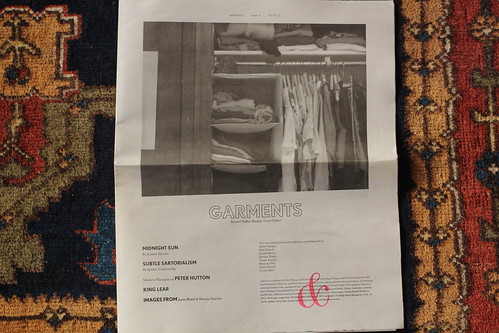
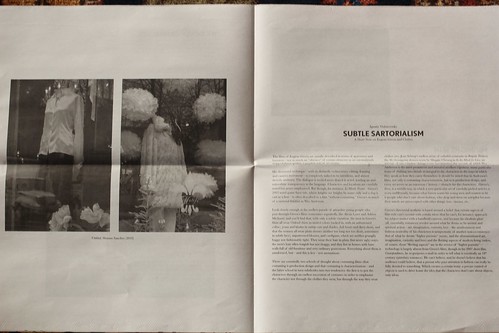
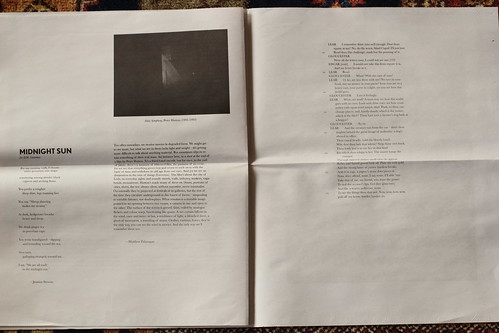
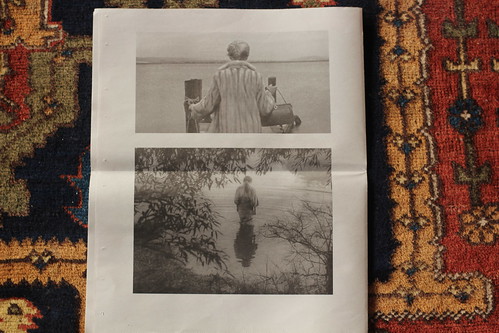
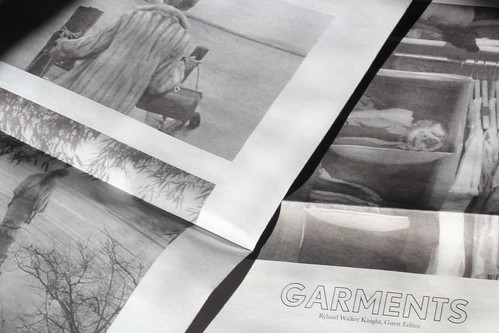
The issue is live! SEE IT NOW! However, the print version will not be available in your hands until March 1st, or thereafter, given the printing and distributing and mailing schedules that come with wet ink newsprint. That is, the internet's easier—far easier—to manage than a real live publication. In any event, we're up and running and I'm proud of the jigsaw we pieced together. Above you'll find a video I made for the issue, which is rather raw, and below you'll see my favorite image from the issue, which is nothing but lovely. Please do take the time to look at all of it, subscribe to the &Review tumblr, maybe follow the twitter feed, tell your friends and stay tuned to my twitter and Mia's twitter for news of where we're dropping off those newsprint editions around our towns and anywhere else.

Update (3/7/11):
Click here to see a pdf of the print version.


Serrah Russell, She Wore Her Grandma's Dress

Monday, January 10, 2011

Mark me down for a deuce

by Ryland Walker Knight


Everything does

Though in 2010 I largely strayed from the eat-everything cinephilia that drove a lot of my last decade (as I mentioned here), which makes me fear I'll be outpaced in this little group of us doing the Out of The Past series, I still saw a number of good, older flicks in the past twelve months. You can read my five that mattered most in The Notebook here. It's probably predictable given this, but there's more meat in it.

I should also take the time, here, since I'm up so early, to note my participation in the year-end Fantasy Double Bills, which I'm very happy Danny and I brainstormed last year, and continued this year. We both had a hard time picking this year (for very different reasons) and I love the fact that Danny, closing things out, took such license to not limit himself, to disobey his own rules. His picks are great. I kept mine pretty simple, to be fair, and only divulged one bill. Earlier, in December, Martha'd talked about pairing I Am Love with The Last Picture Show, but I guess time got away from her; in any case I didn't want to "steal" that one. So I wrote about some other forms of love. The kinds on the side of that word associated with mania, I guess, because I find them funnier. I also like the Resnais a lot more than that Tilda zig-zag (though I do love that one, too) and I hadn't written enough on why, though it could be simplified to my preference to favor (not that I always do) the ludicrously hilarious, not the ludicrously affective.

Top to bottom, I liked all the pairs, really, but there were of course stand-outs. Miriam's up top definitely stood apart beyond its placement in the scroll for its audacious pairing—and, it should be noted, her likely-unnecessary, more-than-welcome defense, which invokes Stanley Cavell a little further, is a good thing to read. My other favorite pairing, probably, was R. Emmet Sweeney's, though I've seen neither of the films he chose, because it does what my favorite criticism does: not only does he make connections, elucidating significance, but more importantly his note makes me want to see the movies. Along these lines, I have to thank David Ehrenst​ein for the comments he left, alerting me, non-scholar that I am, to Warren Sonbert and his lasting imprint on collage-like cinema that interests me so. Unimportant declaration: I'll make a mission of seeing his films in 20!! as I largely forgot such missions through most of 2010. Not sure how it'll happen, with my day job and my new image-making projects I'm throwing myself into, but with the help of a friend like Brian Darr—one of the truest cinephiles I've ever had the pleasure to meet and eat pizza with—I'll have a leg up for sure. In any event, please do follow those links! The internet's a wicked game, prone to circled wagon spats, but it's also full of good things.

First Friday Fifty

Oh, and read Steve's 2010 wrap-up at The House why don't you. I'm biased, of course, but there's a unique take, a real individual, a jaunty run-through everybody'd do well to enjoy and not fight with, as many may well attempt.

Viewing Log #68: Very [1/3/11 - 1/9/11]

by Ryland Walker Knight


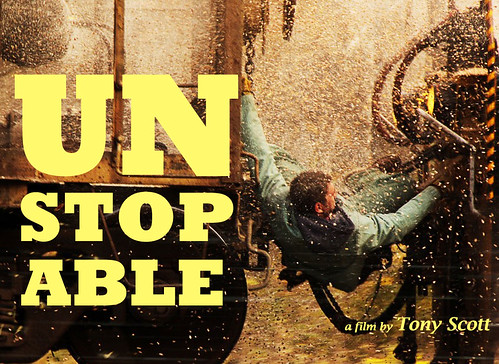
Unstoppable lobby card 2
—For fun; why not?

  • The Small Black Room [P&P, 1949] # Looking for an image.
  • La Captive [Chantal Akerman, 2000] # Looking for an image.

  • Heathers [Michael Lehmann, 1989] # The best movie ever? Some afternoons, yes. And, seriously, is it any big mystery why so many young men (and women, I'm certain) of a certain age are still obsessed with Winona? I don't think my love will ever die. Nor for this movie, as it happens. What I'm saying is: it'd been way too long. (Not sure it required a BluRay rental, but it still looked, well, crisp. The filmmaking's in the performances, not the stylistic touches.) —Veronica, why are you pulling my dick?! has to be one of the best lines ever said by a teenage babe in a movie or otherwise.

  • East A [Will Gluck, 2010] All kinds of fantasies went into this one. But it's a hoot, thanks largely to Emma Stone's actual acting prowess (not just a cute girl with a great voice, dudes!) and the timing of it all, which again makes me think Gluck is a pop filmmaker to watch (ahem) and makes me forgive a lot of the broader, wannabe-satirical jokes. That said, there's a lot of good self-awareness/self-analysis going on in the script. And it shows you can be sex positive without equating that with lots of sex. Not that it's prudish, either; rather, there's real choices being made by a seemingly real, well-rounded little lady character in this temper-tantrum.

  • Plenty from the first season of The Larry Sanders Show, which is on Netflix Streaming now. FWIW, I tweeted that the whole show is on there, when in fact it's about half. Regardless, watch as many as you can, as I will, because its maybe the best sitcom ever.

Tuesday, January 04, 2011

Getting going in 20!!

by Ryland Walker Knight


Hall ways in


———

If you follow me on twitter, the image atop this is no surprise, nor is the news that I got a new camera. But this video is something new. That is, it's a test run that a couple people egged me on to make public and share. So, here's a nugget, a tease of what's to come in 20!!.

Monday, January 03, 2011

Was vom Jahr bleibt (What lasts of the year)

by Ryland Walker Knight


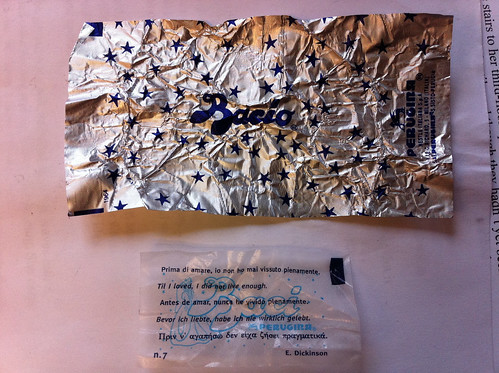
Til I loved

Over at CARGO's site, there's a slew of trios from the writers and friends of the magazine, just like last year, about what mattered in 2010. You have to allow google to translate most of them (if you don't read German), but you can read mine in my version of English (google will still play with it after you hit 'translate' FYI). But, still, I thought it'd be good to cross-post the list here since I'm sure EK et al would enjoy the link-back and because these things do matter to me so. And because I will be writing a bit more for these fine gentlemen as we move through the year.

1. Pressing pause

Slowing my intake of cinema and output of criticism has proven a boon. Though I wish I'd seen a few films from the rep circuit that I missed on purpose (eg, those two Oliveira films), I am confident that the choices I made those nights lead to more fulfilling engagement with this mad world we're in. Besides, it has lead to different creative writing projects — to say nothing of the new lessons learned about living a better life, which is what we're supposed to do, I'm fairly certain. In the cinephile department, though, it also lead to fully embracing…

2. Blu-Ray discs

I'm certainly lucky to have had access to Blu-Rays for a while yet, but it wasn't until this year, and late within it, that a player entered my home. Perhaps against my better judgment, I already owned some BRs, but the new device gave me a more legitimate opportunity to buy The Red Shoes and that Brakhage set (both put out by Criterion Collection). The BR image can't quite ever be expected to approximate the flicker of celluloid, but these films have their own, new, sometimes-bizarre shimmer. The crisp lines and erupting colors make a new vision of what images are capable of, and what their purpose may be now, which I'd like to believe is closer to affect than representation, given these don't look real or hyper-real (whatever that means) but rather some fancy, new interpretation of light. There is likely an entire book of theory to be written on this new phenomenology, but I won't try any harder (get started) here. I'll just say, try to see something big and bright and colorful. Be sure to have the right HDMI cables. And let it wash your face in luster.

3. Tim & Eric

Back to lo-fi for a second. These weirdos make me laugh more than just about anybody, and they did an especially great job in 2010. Not only did they give us two shows full of goofs and spoofs only film nerd assholes in love with VHS and closed circuit cables could make, they went on tour with their brand of disorienting lunacy. They brought it to our backyards. On certain days in the second half of our late year, in fact, you could hear me tell my friends that I thought their announcement for the Tim and Eric Awesome Tour Great Job 2010 (as well as their inimitable Chrimbus Special) was the single best piece of filmmaking (and comedy) that I saw all year long. You can watch it and judge for yourself right here, below.

Viewing Log #67: With a bang bang [12/27/10 - 1/2/11]

by Ryland Walker Knight


Sycamore snoozer 2
in the middle of the bed

  • Déjà Vu [Tony Scott, 2006] # This time, I kept thinking about how lazy my initial reaction was, back in Seattle, in 2006, when I thought the film not only crass but offensive. Shows how easy it is to not pay attention to stuff outside story. Shows how much I grew going back to school. Because there are some truly beautiful moments/visions in this film. My favorites are confined to that little room, for the most part, with all the overlays and interactions across that surveillance window screen, but the semi careening at the camera is great and who can forget: yet another Tony Scott movie ending on a freeze frame.

  • Close Encounters of the Third Kind [Steven Spielberg, 1977] # One of the odder Hollywood hits, for sure, that's pretty much all exposition and build up for its entirety. Dreyfus going nuts throwing the yard into the kitchen sink is the only concrete action/scene not spent dancing about, waiting for a concept to emerge. If anything, it's one of the better (more beautiful-looking) arguments about the allure of the concept. There's also a lot of goofball jokes that Steve is always trying really hard to get away with, and always only hitting about half the mark.

  • square shot [Daniel Kasman, 2010] Very conceptual, but also very cool. You can watch it below, if you haven't already (or if you have), and you can read more contextualizing from Danny in the Notebook. I think it's pretty unique but Kevin had a few nice compliments about influences in the comments that are quite clearly a part of the make-up. In any event, as I dropped in there, can't wait for more DKaz words put into images in 20!!.

  • Father of My Children [Mia Hansen-Løve, 2009] # One of the more wonderful films from last year, full of life amidst all those goodbyes. A great way to say goodbye, in fact, to a lot of things. And hello to others.


— expect more like this (and like this)

Monday, December 20, 2010

A Conjunction of Quotations #12

— edited by Ryland Walker Knight


smart is dead
Hugo Alexander

1.

She seemed divided about herself and her image right from the beginning. She claimed she never knew she was to do nude scenes in “Ecstasy,” though people on the set said otherwise. On the breast issue, she researched the possibility of glandular augmentation, but later insisted she would never do anything about them. (Hers were perfectly fine except by the increasingly grandiose mammary standards of Hollywood.) She never mentioned her Jewish background, but assisted in the war effort and in later life congregated with fellow European exiles. There’s nothing intrinsically wrong about changing your name or your breasts or your hairline or your voice or your accent, or with suppressing your ethnicity and background, but with Lamarr the process involved whittling away parts of an identity without quite finding a new one to inhabit.
Molly Haskell

2.

Capitalism is a male construct.
Tilda Swinton

3.

There is no why for my making films. I just liked the twitters of the machine, and since it was an extension of painting for me, I tried it and loved it. In painting I never liked the staid and static, always looked for what would change the source of light and stance, using glitters, glass beads, luminous paint, so the camera was a natural for me to try—but how expensive!
Marie Menken

4.

My, and I suspect Nathaniel's, basic concern is with the frame-rate and whether a DVD is capable of emulating his 18fps rate. And of course in electronic modes there is no black out between frames, which is really the fundamental difference between video generated images which are constant and traditional filmic projection in which half the time the screen is black.
Jon Jost

5.

We’ve had a loss of the sense of the frontier. We have to reclaim that.
Peter Thiel

6.

I'm not so fond of Foucault, it's because he's always saying, "During this period, people thought 'A,B,C,'; but, after such and such a precise date, it was thought, rather, that '1,2,3'." Fine but can you really be so sure? That's precisely why we're trying to make movies so that future Foucaults won't be able to make such assertions with quite such assurance. Sartre can't escape this reproach, either.
JLG

7.

J-R-SMITH! WE JUST SAW A MAN FLY!
Kevin Harlan

8.

Like sittin' on pins and needles
Things fall apart, it's scientific
Talking Heads

9.

But architecture couldn’t hold him either. Philosophy, he was forced to realize, was his supreme gift, yet when he returned to philosophy in 1929, his mind never settled there. Still, much as he hated Cambridge, he instinctively knew that college life, and the relative freedom it afforded him, was more conductive to his work than a life spent on the Russian steppes, tending an endless line of human misery. But because he couldn’t settle on anything, the young men around him couldn’t really settle, either. And so this, too, was his legacy: to leave them and, later, philosophy deluged with his huge half-conscious will, which, like a sweeping flame, sucked up all the oxygen.
Bruce Duffy º

10.

The bad poet is usually unconscious where he ought to be conscious, and conscious where he ought to be unconscious. Both errors tend to make him "personal." Poetry is not a turning loose of emotion, but an escape from emotion; it is not the expression of personality, but an escape from personality. But, of course, only those who have personality and emotions know what it means to want to escape from these things.
T.S. Eliot

11.

It must be done with mirrors
my head that rests on nothing in mid-air.

Where is my body
where oh where?

I can see the stones
hidden in the hands.

O bring back my body to me, to me,
O miracle bring it back
before the mirrors break.
Maya Deren

12.

The perfect page, the page in which no word can be altered without harm, is the most precarious of all. Changes in language erase shades of meaning, and the “perfect” page is precisely the one that consists of those delicate fringes that are so easily worn away. On the contrary, the page that becomes immortal can traverse the fire of typographical errors, approximate translations, and inattentive or erroneous readings without losing its soul in the process. One cannot with impunity alter any line fabricated by Góngora (according to those who restore his texts), but Don Quixote wins posthumous battles against his translators and survives each and every careless version.
Borges º

13.

What is a wedding? Webster's Dictionary defines a wedding as "The process of removing weeds from one's garden."
Homer Simpson

14.

I feel like Gene Wilder is my Marlon Brando or something. He just presents you with an array of emotions and leaves it up to you to decide. You know, when he played Willy Wonka [in Willy Wonka and the Chocolate Factory, 1971], there was always something slightly terrifying and angry and sadistic about that character, all of which you would imagine might take away from the magic of it. But there was something about how he played it that let you see how this guy living alone in this place, as Wonka was, could have been affected by all of that, how it would have affected his emotional state.
Ryan Gosling

15.

He's the engine that stirs the drink.
Charles Barkley, on Rajon Rondo

Sunday, November 28, 2010

Viewing Log #61: Nothing's arrears [11/22/10 - 11/28/10]

by Ryland Walker Knight


Joan's dissolve

  • The second season of Mad Men [2008]. Compromise is the name of the game in this season. Life's full of it, or so it would appear in Matthew Weiner's world of tropes, and the joy to be had here isn't flight; it's here, if anywhere. The schematism of the writing in this show is really something. It often works, really. But it's also so tidy in the structure that characters, however well drawn, are reduced to ideas. I think it has to do with the period setting as much as the actual writing. Something about signifiers that I'm too lazy to read closer here beyond a favorite damning word of many so-called intellectuals like myself: over-determination. The allure of the show may be its sheen and its ludicrously gorgeous cast (television's a medium of faces at its best and at its worst), but I keep watching because of those moments when things fudge and because there's way less exposition in this season than last. For instance, the low-light of the season, which I lead with above: Joan's rape. It's a terrifying scene in part because it's about competing perceptions, and because of its final dissolve, which is easily the most striking image so far in the show. Joan's looking at her future in that shot: an idle man waiting for his mess to be cleaned. And I don't think my sympathies for Joan and her continued belittlement over the course of these thirteen episodes stems from Christina Hendricks' beauty but her talent at quivering, and my amazement at what these writers want to put her character through in order to counterpoint Peggy's ascension. It's no secret that Peggy's the biggest success (so far) because she's self reliant. What's doubly amazing is that she is, in fact, our model for America in the show, which may be its home run trot in the end. She loves popsicles, she asks for what she wants, she believes in a loving God, she's great at her job, she continues to out-do herself, and she's open to life for all her tight-lipped interactions with the world. Don's fascinating and Hamm's beautiful, too, but his "arc" is the hanger the suit drapes from, as that line in San Pedro attests; no, this show belongs to its ladies, including both Mrs. Drapers. Can't wait to see how Betty—that dingbat—fords the future.
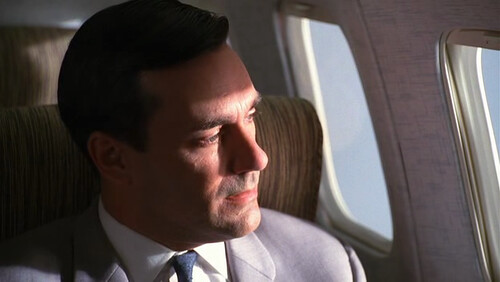

  • Inglourious Basterds [QT, 2009] # I do love this movie, lumpy though it may be, and the BluRay looks pretty incredible. The colors aren't quite celluloid rich but they still impress the eye at interesting wavelengths. Plus, the editing in this movie tickles synapses so well. (And not just bc RIP S.M.) Awful close to a masterpiece.

  • Shadow of a Doubt [Alfred Hitchcock, 1943] # Well, the first half hour. Then we went to dinner, to give thanks. (Chloe wasn't impressed, by the way, though she did find Cotten's drawl creepy.)

  • The second half of the first season of Mad Men [2007]. Seems like an unavoidable set-up season, with plenty to play out, but there were some moments I really dug: Betty shouldering the BB gun without a shred of affect save the smoke from her cigarette, that way John Slattery can be a total asshole but still charming, Joan's/C.Hendrick's eye brimming, Peggy's rise, Harry Crane, and the first glimpses of Duck Phillips' brand of creep. Not to mention Don's ability to, well, be a man despite also being another brand of louse prone to self-delusion and good old fashioned alcoholism.

Window seat
—Come on back from way out west

Friday, November 19, 2010

Convergence for your call and review (11/19/10)

by Ryland Walker Knight


Issue 4 Call for Submissions

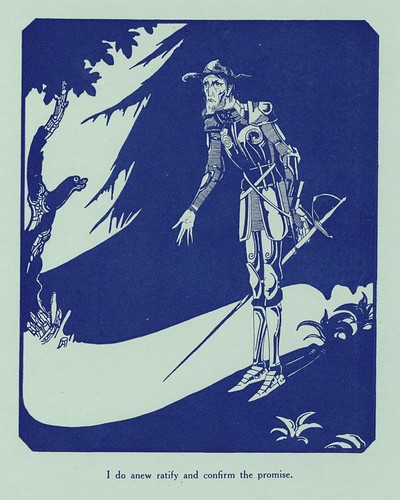
anew ratify confirm


...


Yours truly will serve as "guest editor" this go-round
Some inspiration comes from Agee, too


...


issue 3 still "live"
(earlier)


Monday, November 15, 2010

Viewing Log #59: Mine, all mine [11/8/10 - 11/14/10]

by Ryland Walker Knight


Tableaux

  • The Taking of Pelham 123 [Tony Scott, 2009] As prep for Unstoppable because I didn't make it to the theatre this weekend and I did want to watch this one first since they're both about trains. As Danny and Andrew and I laughed on 6th Avenue that one time, its final shot is so fucking cheesy cheese balls that it almost works. And the movie's goofy enough along its nowhere way to love like a pet, like a fishtank maybe.
  • —A bullet for the entire week. The first four episodes of the fourth season of The Sopranos [Fall 2002]. The early star of this season is Janice and her insanity, which is good for a "holy shit" as often as a laugh, as when she's encouraged to talk to Ralph about breaking up with the compassion she's famous for—only to, instead, throw him down the stairs. That this event also involves the other stalwart of this season, Joe Pantoliano's Ralph, speaks to the writers' obvious excitement at throwing these two hairballs of crazy at each other, if only for a few hours of screen time. And it's a great analog to Ralph's relationship with Tony, as evidenced in Ralph's kink to be pegged and degraded in bed. Because this show, fearless as it is, goes there.

  • Whip It [Drew Barrymore, 2009] Kinda clumsy and clichéd, but winning with its jokes and its tight script and its performances, this thing's a real rawr'r for all the girls out there. And for saps like me, I suppose, who aren't afraid of the word "feminist" as much as they might've been, say, a couple years ago. Also, because, duh, this kind of strength is sexy as much as simply charming.
  • Van Gogh [Maurice Pialat, 1991] Almost feels like a Renoir with all the hanging out at parties and the theatrical staging of certain events, but it's certainly a Pialat in its offhanded, everyday dealings with sex and desire. That is, nothing's sensational or trumpeted. Or, if things are, it's the violence people do unto one another, not the acts of love, which are always understated and (here at least) often edited around. Nudity isn't racy, it's a fact, for Pialat. Just as are flings and the fluid (some might say fickle) changes a person can seem to undergo in the course of an afternoon, or 67 days, though it's obvious to the aware viewer than the person hasn't changed; it's how s/he's choosing to interact with others, with the surrounding world. Which is to say that once again here's a film about perception as registered in actions, without psychology, or without access to the minds inside the many clam-like characters.

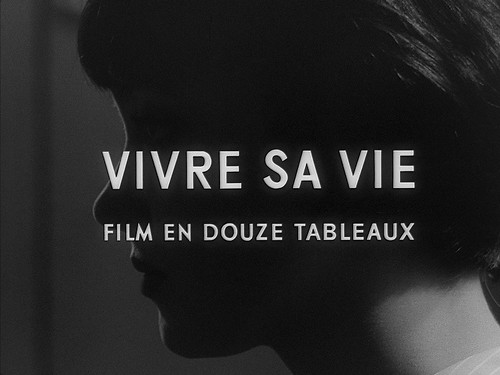
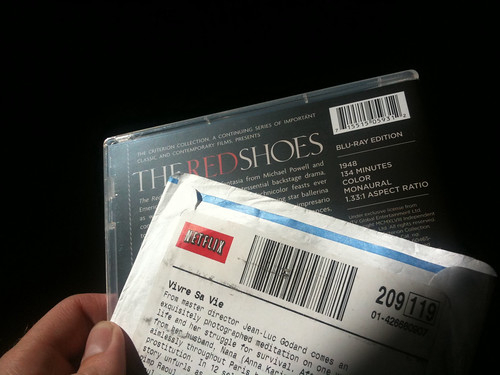
  • Vivre sa via [JLG, 1962] # Another ringing BluRay recommendation. Amazing what JLG's able to convey with simple title cards, how two words will color a face five minutes later; a face, as is often the case, turned from the action that the camera's turned from, doubling the negation and the horror. The film also wins, of course, because of Anna Karina—but you knew that already. The point is to watch this and pay attention to the shape of it, not of her, as JLG's films are often blocky, as reflected in the 4:3 frame, but this one takes it further to break up the blocks themselves; it's a film of segregation, really, in the most basic way—separations determine everything. It's bleak. But it looks so good! (Sometimes I think it's the best one of this, the much vaunted, early period, because it's such a "pure" document. All the "tricks" serve some concrete answer to the question. After all, A.Baz's Q is the only one we all answer differently, and never the same way twice.)
  • The Red Shoes [Powell & Pressburger, 1948] # Consider this my endorsement for the BluRay Criterion put out of the new Film Foundation restoration. Everything's sharp, sure, but there's grain in there. And the colors feel real as much as caked-on and painted-loud surreal. Not to mention the fact that the movie is superb, of course, and speaks to a number of things on my ideas-worth-thinking-about check list. This time all I could focus on, whether due to a flu or to this presentation, was the well-renowned mise-en-scene of the film. A favorite moment is somebody saying something about Lermontov leaving on the 8:15 train to Paris, to which Vicky responds by looking up at the top left corner of the frame, which aptly dissolves to a clock on the platform, hands at 8:05, with her eyes directly on it. It's a simply thing, really, and obvious, but it's also an effective visual touch that's become rather rare in the making of movies these days. It's also the kind of thing people like to laugh at, or point at, in current cinemas like, say, a Wes Anderson picture, as some kind of arch touch when it's simply good visual storytelling. Sure, there's variances in tone between my two examples but I get the same thrill from, say, Kumar saying, "There he goes," followed by a shot of Owen Wilson hailing a cab, as I do this clock moment. Though, of course, in a world of "cut-away" humor (even good versions of it like on this week's 30 Rock) this pointing within a story can seem short-hand for clever instead of actually being clever. At any rate, this picture is not just clever, it's gorgeous. And worth sharing.

  • 30 Rock "Brooklyn Without Limits" [S5E7, 2010] We all know, as somebody on This Recording said, that it's Tina Fey's rack, not her butt, that turns LL's nerd chic into some kind of sexy (and makes TF's classier IRL attire that much more attractive) with, among other things, all those deep-V's. We also know that this season is turning out great, with "veiled" jabs all over the place: at the show itself, its character construction say, and at this modern world, as some say, with a bunch of dumb gross out jokes I can't get enough of since they're neither dumb nor all that gross.

  • Open Five [Kentucker Audley, 2010] More here.

  • That Paul Millsap explosion in that Jazz-Heat game sure was something. It's almost like Carlos Boozer's an afterthought these daze. Also, the Heat-as-villains can't quite work when they play like chumps coasting on cred they haven't earned yet together.

Sick day recipe