BANG BANG: Eric Freeman
[BANG BANG is our week-long look back at 20!!, or "Twenty-bang-bang," or 2011, with contributions from all over aiming to cover all sorts of enthusiasms from film to music to words and beyond.]
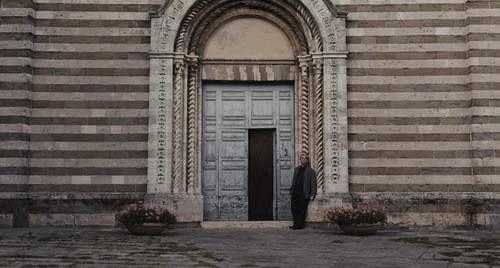
Some Things I Found Interesting in Some Things I Saw This Year by Eric Freeman
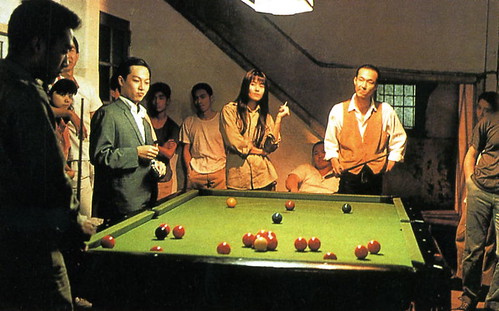
A Brighter Summer Day (dir. Edward Yang): I saw this in January at a mostly empty screening with no intermission in Berkeley, and it’s still probably the best thing I’ve seen all year, old or new. Read Rosenbaum's longer piece if you want more comprehensive breakdown. I’ll just note that what strikes me about ABSD (and Yi Yi, as well) is that the epic scope follows not from stunning natural vistas or loud pronouncements of import, as we’ve come to expect from the medium, but finding an interesting situation and treating the context and its characters with complete respect and as much depth as necessary. It’s an epic because it’s so true to the way people relate to one another.
World on a Wire (dir. Rainer Werner Fassbinder): If ABSD is the best movie I saw this year, then this one has proven to have fascinated me the most. It was my first Fassbinder, and since then I’ve steadily run through a good chunk of his career. One thing I love about this one, apart from the “what if we shot through four panes of glass?” aesthetic, is how RWF sets up shots where a pan finishes in a hilariously overdetermined setup. It’s the movie in microcosm: things may appear free-flowing, but everything has been decided already.
Martha Marcy May Marlene (dir. Sean Durkin): A disappointment even as I enjoyed it, if only because it’s so easy to see how it could be better. While the structure is indeed very clever, many of the match cuts fall flat because it’s immediately when and where the scenes take place. As the last shot proves, Durkin wants the audience to identify with Martha’s displacement, yet continually keeps her at remove. Which is all a way of saying that the film needs more moments of actual ambiguity, like the several shots of Martha walking through a dark hall, when it’s unclear where she is until she ends up in a room she herself might not have expected to enter.
Certified Copy (dir. Abbas Kiarostami): Ryland thinks this film is fundamentally a work of criticism, and I mostly agree with that statement. But I also think it comes across as more dismissive than it should, because in this case the criticism gets at important points about how relationships change over time, the value of authenticity in everything from art to interactions, and all sorts of other deep philosophical questions that we tend not to consider on a daily basis. So, yes, it’s criticism, but also proof that criticism isn’t really about the thing it directly addresses, but deeper conceptions and feelings about how people relate to the world around them.
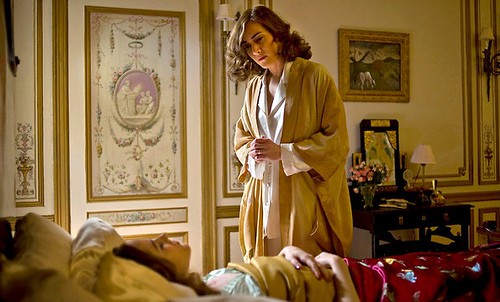
Mildred Pierce (dir. Todd Haynes): It’s no surprise that a director who regularly gets great performances from actresses does so well with Kate Winslet, who plays this role as a mix of her usual technical strength and the rare looseness usually lacking in her most awarded work. What’s less expected is that Evan Rachel Wood acquits herself so well. Veda can easily come off as a monster, but Wood instills her with enough relatable pride to seem human. Her best moment (and also the one that will make me seem particularly pervy for noting) comes when, directly after Mildred finds out about the affair with Monty, Veda gets out of bed fully naked, struts over to her vanity, and regards herself in the mirror, all as a sort of victory celebration after embarrassing her mother. It’s a triumphant moment for the character, the point at which she believes to have finally proven herself as a dominant woman. For different reasons, the scene makes the same case for the actress.
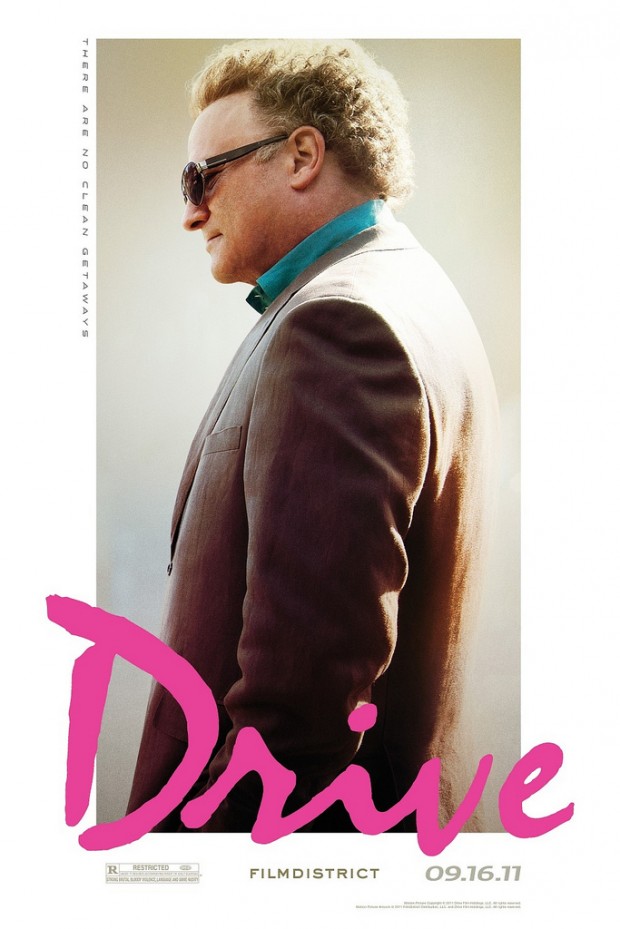
Drive (dir. Nicholas Winding Refn): I’m of the camp that takes this movie as a massive spastic fuckup, mostly because NWR has no idea what he was trying to do and not for some difficulty in melding tones and styles. But there are some delightful moments of clarity, especially the opening set-piece and the various music videos (not like music videos) that distill the latent emotions of the piece into perfect pairings of image and sound. For all the talk of Drive as an arthouse action movie, the best parts are almost always the most overtly commercial.
Rango (dir. Gore Verbinski): It’s become standard in some circles to say that the home-viewing experience is almost as good as the theater these days, but Rango is the first movie that ever made me think it could be true. I loved the movie in March, mostly for its gag-a-minute pace, but I don’t think I fully appreciate the visual dazzle until I saw it on the very excellent Blu-Ray transfer on a reasonably-sized TV. Multiplex projection standards are so poor that, for a detail-driven, wide-audience movie like this one, it’s almost preferable to watch it on a couch.

Bridesmaids (dir. Paul Feig): As the thinkpieces all said, an important step forward for the status of women in Hollywood comedies. Unfortunately, the movie itself is a sad commentary on exactly what those Hollywood comedies entail. Almost all the best parts are moments of emotional discord between Kristen Wiig and Maya Rudolph or throwaway lines from the amazing Melissa McCarthy -- the worst are the zany, insert-setpiece-here laugh-generators that could have been ported in from any Apatowville (or, worse yet, Farrelly Bros) creation. Turn this into a movie about adult friendship with regular laughs, and it might have felt a little more true to its characters. Instead, it’s all too familiar.
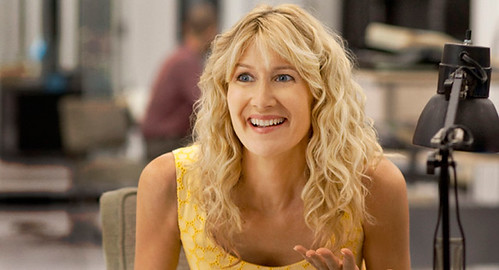
Enlightened (created by Mike White and Laura Dern): This HBO series isn’t especially cinematic, but it deserves mention on this list for Laura Dern’s performance as Amy Jellicoe, in my opinion the best acting work of the year. It’s easy to caricature Amy—the pilot arguably does it too often—as a hypocritical woman who believes herself to have found inner peace when she falls victim to the same sort of jealousies and grudges she did before getting a few weeks of new-age counseling. In Dern’s hands, however, Amy is fascinatingly complicated, oblivious enough to peacock a new friend in front of past confidants but introspective enough to acknowledge that pettiness a few hours later. In a TV landscape heavy on melodrama, Enlightened stands out as a series about the everyday difficulties of trying to be a better person in a world that tends to incentivize the opposite behavior. It’s about self-awareness and emotional processes, and those battles register on Dern’s face as often as they manifest in an external conflict.
________________________________
Eric Freeman writes regularly about sports at The Classical and Ball Don’t Lie, and intermittently elsewhere. Follow him on Twitter @freemaneric.



 Posts
Posts


