Showing posts with label noir. Show all posts

Monday, January 31, 2011

Viewing Log #71: High occupancy vehicle [1/24/11 - 1/31/11]

by Ryland Walker Knight


Best promo still ever.

  • The Hunted [Jack Bernhard, 1948] Kind of a clunker, but Belita was the business. A perfect example of a B-picture where budgetary concerns force a lot of formal ingenuity, and a fair number of long takes. The early exposition-heavy tete-a-tete scenes are the best because of the long two-shots with Belita and our idiot gumshoe on opposite sides of the frame, the way old lovers give each other space.
  • Angel Face [Otto Preminger, 1952] # A unique shape of a film, always pushing in. Apt that the big finale's wreck ends in rugged close-up. Frightening that these two dudes (OP & HH) put this lady through so much bullshit. Heartening that "Bob" was a real man. I will see this movie whenever it plays on any silver screen.

  • True Grit [Coens, 2010] The first one of theirs I was ever plainly bored by; but the ending is rather perfect and Damon's timing is priceless. I can't imagine watching it again, but it'll be on HBO some day, or I'll get bored one night after it's on Netflix Streaming, and I'll most likely warm to its go-nowhere-ness and its dialog's turns. Still caught in the afterglow of the novel to really be any kind of fair to the picture. Still, it's a paycheck flick. Part of the appeal of A Serious Man is that it was mounted with such care; that it was a picture they clearly lived with for a long time. This one's a dash.

Factory girl
—Her zipper's broken down the back

Tuesday, August 12, 2008

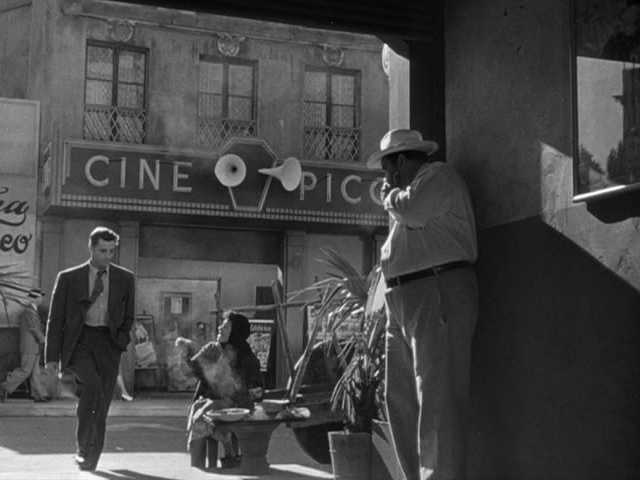
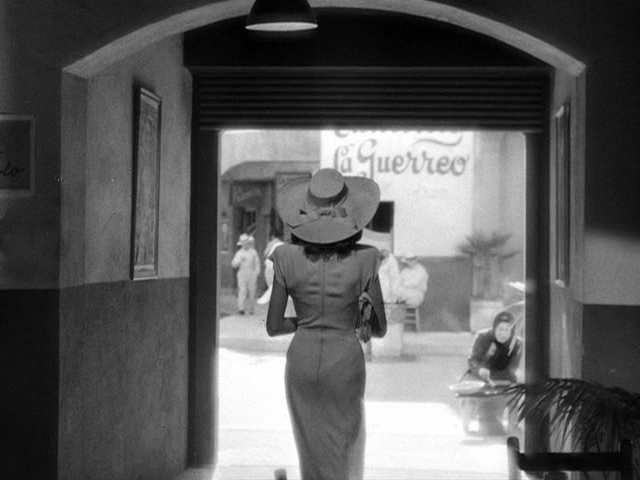
Thatches and blankets. Out of the Past and Nightfall.

by Ryland Walker Knight

[OR: "David Goodis at PFA so far." Nightfall played Thursday, August 7, 2008, as part of PFA's current Streets of No Return: The Dark Cinema of David Goodis series, which continues this Thursday, the 14th, with a screening of The Burglars, starring Jean-Paul Belmondo and Omar Sharif. The series runs three more programs thereafter through the 23rd. I hope to offer some more thoughts next week.]
pastnight

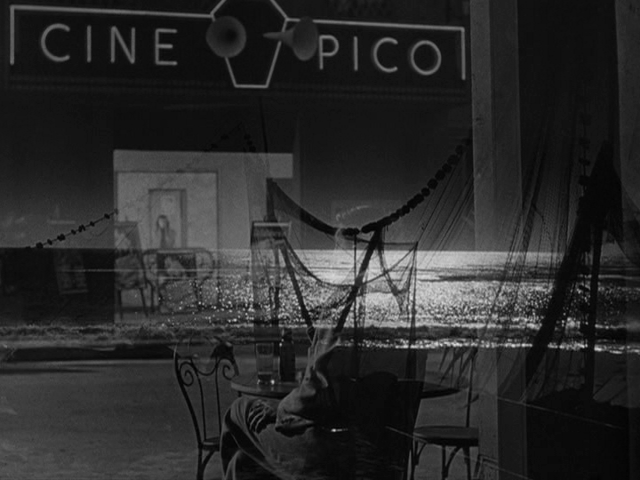
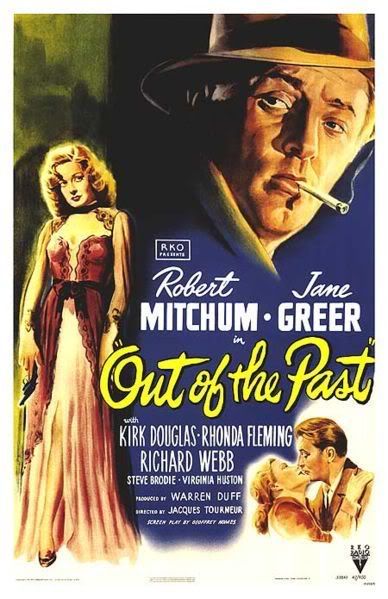
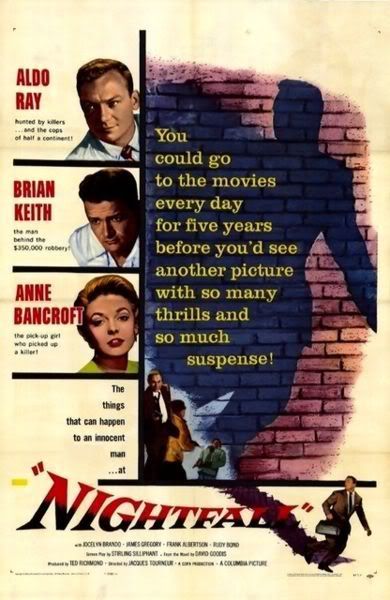
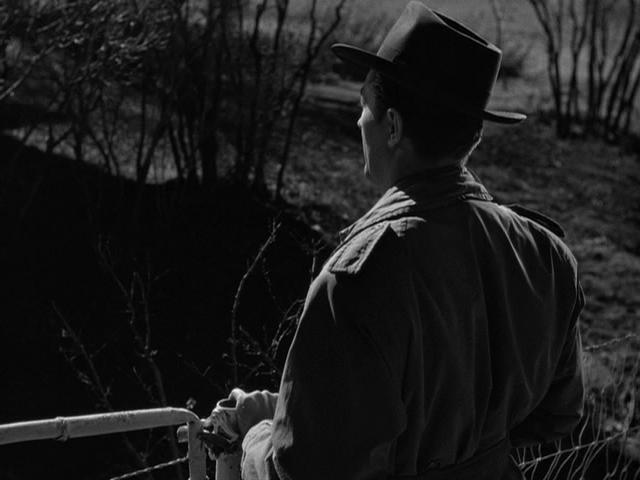
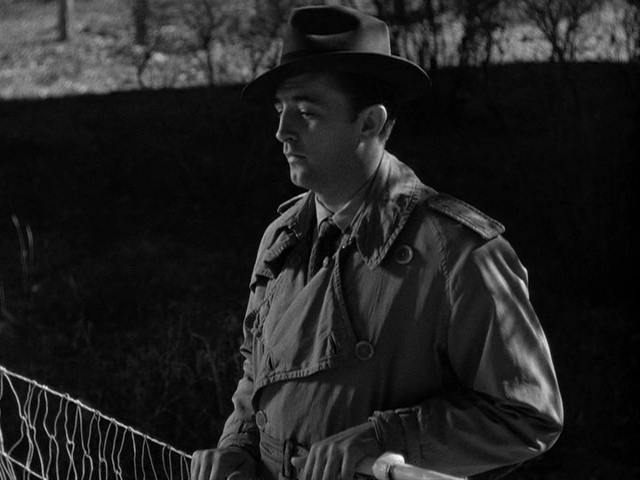
Eddie Muller specifically asked last Thursday's audience to not compare Nightfall to Jacques Tourneur's earlier proto-noir, Out of the Past, so I'm going to do just the opposite. In his introduction, Muller said that it's a fruitless comparison, that it would only do harm to the later film, but I think they make a fine pair precisely because they are so divergent (yet remarkably consistent). Made a decade apart (1947, 1957), both fear the city and its traps, both distrust people, both seek escape from the world. However, the paranoia of the former is eased, slightly, in the latter into circumstantial nuisance: Jane Greer precipitates an economy of lust, her come hither enigma lighting desire like a good femme fatale, whereas Anne Bancroft rather represents a haven, her curves safe and her eyes welcoming. Nobody owns the upper hand in Nightfall, really, over Aldo Ray's Art Rayburn/Jim Vanning -- he's fighting time, and the seasons, as much as the villain bank robbers -- while Robert Mitchum's Jeff Bailey/Markham, from his first encounter with Joe Stephanos (that sly, fey and lovely analog to Greer, Paul Valentine), finds himself trapped by history (his story), by people, by plots, by desire.
back
front

Tourneur didn't seem capable of making a dull image, even in the almost-bland patches of Nightfall's location exteriors. Part of this may be due, simply, to the print and its upkeep, although the picture has a less striking, more television-grade contrast/construction than its predecessor with fewer set-ups and less glamor. Yet an early dolly retreat, to make way for a bus that fills the screen, is a signature, subtle Tourneur move; and in the day for night interrogation sequence at a derrick field, the flat light does not take away from the compositions. Everything lays at an angle. Even direct, 90-degree frames sit uncomfortable with objects thrust in on a slant, fudging perspective. Tourneur's world is acentered and fluid, despite its classical trappings, the termite auteur par excellence, littered with odd interstitials to syncopate the mise-en-scene. While more pronounced in the earlier film, the more modest later work still rests uneasy, growing out of the performers as much as the technique. Aldo Ray's hemmed posture and choked voice work at odds with his broad Navy body. Anne Bancroft can't quite get comfy and fades into the picture, another prop, almost; something else Ray has to carry. As the go-nowhere villians, Brian Keith and Rudy Bond play off each other so well that it's easy to forget all the other calm-crazy instantiations of other heist duos; Keith, especially, uses that laconic distance to genteel effect, rounding a square character as much as possible.
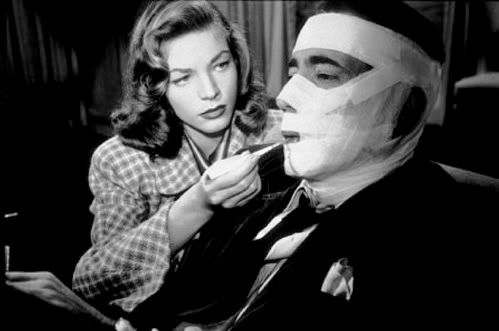
What I find most curious through the first two weeks of the David Goodis series, situated firmly in the middle of cinema's century, is how often things end well. The series opened with Dark Passage, Goodis' splash project. A Bogie-Bacall film directed by Delmer Daves, Dark Passage opens brilliantly, almost exclusively in first person point of view shots, keeping Bogie off screen until he has reconstructive plastic surgery to hide his identity (a San Quentin break-out) until he can prove his innocence, or simply flee for good, as he winds up doing. It's a pretty goofy film, to be honest, but its leads' charisma and chemistry buoy the plot and help sell every melodramatic turn, including its aw-shucks ending, as some kind of idea of what it takes to make your future, to make your dreams real, even if it means forsaking your past. I had to skip the second picture, The Unfaithful (unfortunate since it sounds compelling), and I'd seen Shoot the Piano Player before (a fine, smart picture), so I next caught up with the series with Nightfall. It seems to really do Steve Seid's program justice one should go ahead and read a Goodis or two, but my final weeks of school prevent too much outside reading (I'm slow and swamped), so I feel I'm only getting half the picture. Adaptation is an interesting, demanding process that seems shaped as much by studio demands as authorial concerns, at least in this early phase.
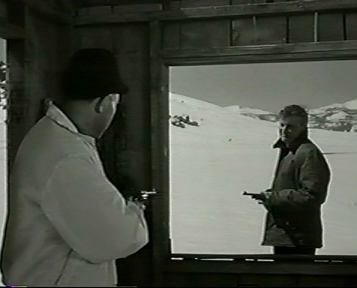
Nightfall is a meager thing, and as Seid's pre-screening read from the novel suggests, plenty was left unfilmed -- in particular because of its black and white film stock -- sticking to the plot and little else; however delightful those brief asides with the Frasers are (James Gregory and Jocelyn Brando are the most theatrical actors in the piece, clearly relishing their screen time), the passages operate as exposition, not color. And that's the biggest difference between this later film and Out of the Past: things breathe more in the darkness of the earlier work, each set (and each set-piece) another layer of story, mood, complication. By contrast, Nightfall looks more open, more blank, and allows for more projection; for a film named after night, there's a lot of day, a lot of white. And yet, it's another source of indetermination. The threat in Nightfall is precisely the chance that those empty spaces will be filled by guns and violence, that the wide white blanket at the close has buried things is untenable. Aldo Ray says he wants to keep the money company at the film's close but we don't get to see him and Bancroft and Gregory surround the satchel. It sits solitary, the lone dark spot in a bright field. The music plays triumphant, conclusive, but the image is stark and forlorn. Ray's Vanning/Rayburn may be exonerated and free to start life over with his new bride but it feels undercut. Or, the picture may simply be saying it's a first step; night will fall again and cover this once more. As we may remember from the beginning, the night brings artificial lights that isolate. Indeed: what will Vanning/Rayburn return to? Will he adopt this new name for good, as he tells Gregory's Fraser? Who is he now?

Such ambiguity turns differently in Out of the Past. For one thing, it's sexier. From the lateral camera moves to Jane Greer's neck, from the abyss shadows to Mitchum's passive ire, this film is about as desirable as possible. It's plain gorgeous. Only Roger Deakins seems to shoot darkness this well in today's Hollywood productions. Which is another reason Muller's right to warn against comparing these two. It's just not fair. However, there's a nice dissonance to draw out, a tidy dichotomy between the clutter of things forcing action in circumscribed contexts (Mitchum's a detective caught between people, and later a mechanic, a profession spent under and inside things-spaces-systems) over against drawing out a map on the blankness of the world (Ray's an artist working in water color who cannot remember crucial (spatial) facts, which is a characterization of him as an actor as well). But that's not all. You could just as easily talk about how the films figure emergence (of the past, of memory, of violence, of desire) or repression or sacrifice or actualization or disclosure or lies. And, of course, all those are related. For this is an art of relationships. An art where it matters that Mitchum sits across from the cinema but never enters, only hears it, and lets it score his first encounter with Greer's Kathie Moffat. She's an illusion from the get go. After all, nearing the close, she says it herself, while wearing what looks like a habit: "I never told you I was anything other than what I am: you just wanted to imagine I was." It's a sick joke: Look all you want, I'll keep drawing back; in fact, I'm barely what you want. But, heck, we know she's only luring us in again, right along with Bob, there. Indeed: I want to go there sometimes. And I'll go. And I'll get out alive. That's the fun, right?
enter
sometimes
fade
See a companion image essay: There's a world out there.
Monday, February 04, 2008

The Monday Evening Wire. Just a Step Behind.
Episode 55, "React Quotes"

by Cuyler Ballenger


peep the new toys, son
react, son

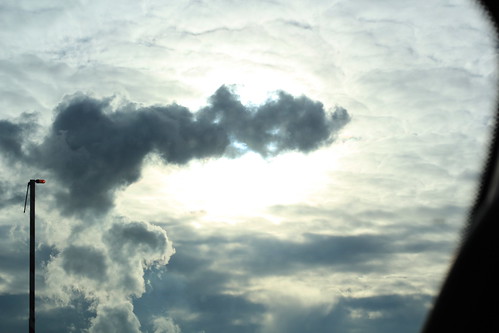
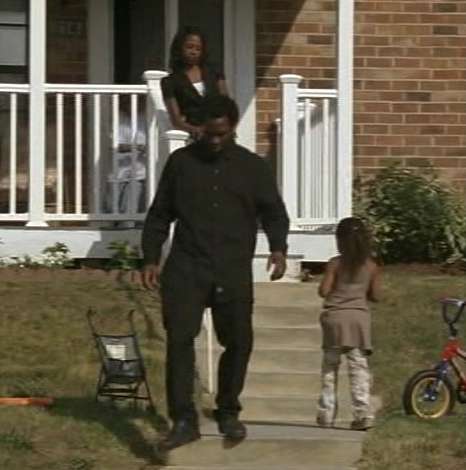
There was a sort serene glow to last night's Baltimore: something oddly peaceful about the light, a sort of calm after the storm that was the previous two weeks. Vondas brought a newly crowned Marlo up to speed on the alternate functions of a cell phone as birds chirped in the trees above them. Mr. Stanfield smiled as he and Chris walked triumphantly away from the meeting, a bright sun shining down on them both. It was equally strange to see Marlo's teeth as it was to be introduced to a family Chris was never known to have. As his son waved goodbye to him from their front yard, Chris let his girl know that he's gonna be gone for a couple weeks, "that's all it should be," says Marlo, and, "it better be," Chris responded. As last night's episode strolled along, we're at the halfway point in this final season, I, too, remembered there is only weeks left, and I questioned my previous thought, "It's not calm at all is it? Only the eye of the storm." The quick pace of "React Quotes" was deceiving. There were none of the deafening silences as Marlo or Snoop stared into the eyes of their latest victims, no shots of a young boy with post-trauma blankness, and no difficult confrontations between a cracked-out mother and her hardened son. Rather, this week moved at a speed indicative of the show's comfort. Plot lines developed, seriousness and hilarity walked hand in hand. Tensions and anticipations of what is to come are perfectly high.

The Wire is a show that, in my mind, at least in retrospect, I always see as happening at night. All the sunshine and t-shirts in "React Quotes" masked well an episode that offered so much more than simply reactions to the last two weeks. McNulty and Freamon were seemingly able to make progress on their "case," getting overtime (though limited) and a wire tap on Marlo's cell. Maury, and, in fact, Herc and Carver, all saw great opportunities in holding that same number. But they were all just a step behind Vondas, who, whether he was conscious of it or not, provided Marlo with the means of communication perfect for his style -- no talking -- therefore no interruptions, no middle men -- strictly business via email. What the effect of the now-insignificant tap on Marlo's phone will be is unclear, though the future of Jimmy's "long con" is most likely in jeopardy. (Although the two exchanges between Jimmy and Templeton, first at the bar, then at the Sun, were smart and hilarious, it's important to remember he's been drunk the whole fucking season. Bunk on the other hand, is exercising an unusual sobriety in his attempts to dissuade the crazed McNulty).

Omar is definitely back! But his short time away saw a dramatic change in the streets, and the final shootout of last night's episode positioned him in an entirely foreign territory; he was not only outgunned and out-manned, Omar was caught by surprise. After last week's "Transitions," my buddy said, "I'm not sure why he (Omar) should be feared anymore -- he's just got a gun like every other person Snoop and Chris killed before." And I do somewhat agree now. What separated Omar from his counterparts in the past was his ability to know what was going down before it does, to be prepared, to be the aggressor. Chris and Snoop, like their boss, are workers now, with a certain understanding of the game they didn't have before. I can recall a poignant scene from early in Season 4 when a package was delivered to the old corner store that Fat-Face Andre owned and ran. Outside, Kima and Sydnor watched the delivery; but behind the two detectives, Omar sat, in his van, watching the watchers. That level of removal (and resultant, advantageous vantage point) is no longer available to him -- and his main sources of information (Butchie and Joe) are, well, you know. With his new right hand man Donnie (who we know from Omar's brief stint in the joint last season) wearing a bullet between his eyes (and will miss now), and Omar's own miraculous four story fall, his revenge may, in fact, go unrealized.

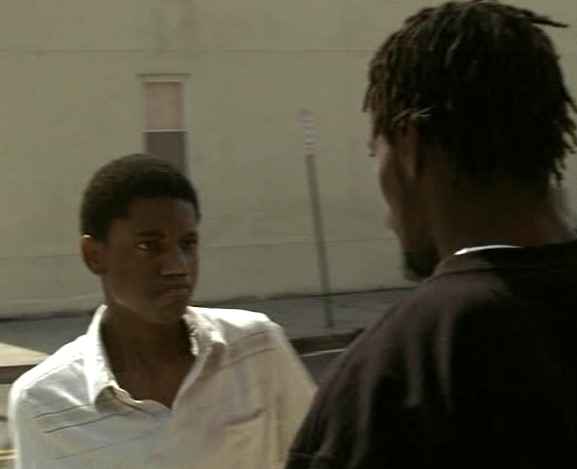
The interruption of Dukie's and Bug's father-son conversation by the hateful and pathetic Kenard set in motion a string of events that I (and Ry Knight) believe (hope) will lead to a Prezbo spot in this season. Boxing and shooting proved (thank God) hopeless for Dukie, and his question to "Mr Dennis" Cutty, "like, how do you get from here to the rest of world?" couldn't be answered by someone who only knows the ring and the corner. The constant references to Dukie's brain being his ticket off the street will hopefully register in the quickly-maturing (and growing!) young guy. And though his role in Bug's life is no doubt preferred to corner, he seems uncomfortable no matter where he is. A sad truth easily attributed to his lack of ever having a place in his own home. The sweet, but somewhat ambiguous, re-emergence of Bubbles may have been the only lagging part of the episode. I'm not so sure what his unfinished story is attempting to communicate. Walon tells him, after revealing to him a negative result on a blood test, that it's important to not attribute false significance to the past, but to understand his healthy future to be just that. If that is to be the only message transmitted through such an incredible character, I might end up feeling a bit short changed. Conversely, if I really listen to what it is Walon is saying, I might just accept that Bubbles is not that tour-de-force (of conflicted morality) he once was, and just accept the potentially anti-climactic, though successful, bow-out D. Simon is offering him.

I hate to think Marlo basking in the sun of his own glory is anything even semi-permanent, but seeing him fall like Clay Davis is about to appears rather unlikely. Again, and most likely for another couple weeks, I'm forced to end on a note of blind anticipation as it would be a push to make an argument for the entire season (and all 5 seasons really) just yet. That day will come, though, with a promised series-ending blogged-out conversation with my editor-in-chief that we should make good on. For now, I'd say this week, while not as immediately striking as the two preceding it, was the best of the three. It proved that this show can move through daytime with as much grace as it trudges through those seemingly endless street-lit nights, privileging nothing except that "things happen," when they are clear as summer or as reticent, raspy (and somehow spritely?) as Snoop's voice -- and that it's our duty as citizen-watchers to pay attention to The Wire's Baltimore.

fear
blankness

"Just 'cause they're in the street
doesn't mean they lack opinion."
-- Haynes

[Note: All apologies to AJ and MZS for stealing their pix.]

Tuesday, January 15, 2008

COEN COUNTRY: From the Second Chair to the Electric Chair. The Barber's American Odyssey. The Man Who Wasn't There.

by Michael Strenski


Behind what shield
"What kind of man are you?"


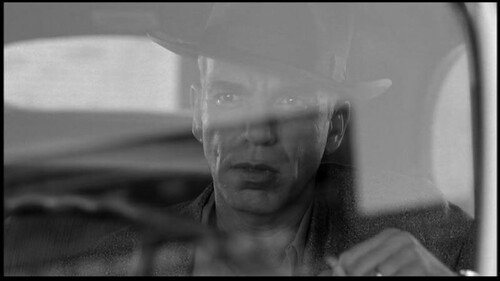
Many a review regarding their most recent film, the effectively affecting No Country For Old Men, has emphasized the flawlessness with which the Coen Brothers have translated Cormac McCarthy's novel from the page to the screen. Whole sections of dialogue have been lifted verbatim from the acclaimed book. The pacing and chain of events in the film are nearly identical to those in the book. Yet the whole film manages to filter its way through the Coen's eerily singular vision, ending up not just a meticulously respectful recreation, but also a well-worn, completely familiar experience. If No Country is one of the greatest book-to-film adaptations of all time then I argue that 02001's The Man Who Wasn't There (if not my absolute favorite of their films, definitely a member of the mile-high club with Barton Fink and The Big Lebowski) is the inverse. Namely, in the completely original screenplay of a reticent, retiring barber and the severe choices he makes, the Coens have not just written the Great American Pulp Novel; they've cast, produced, and directed it too.

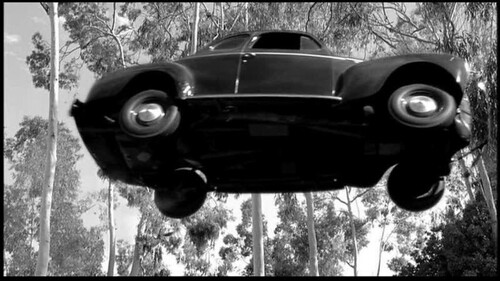
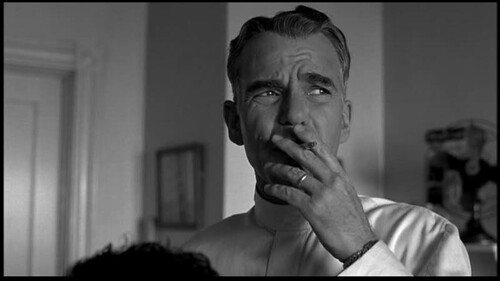
The Man Who Wasn't There feels much more at home as a last minute addition to Ethan Coen's enjoyable pulp pastiche, the short story collection Gates of Eden, than as the follow-up to a ridiculously popular George Clooney vehicle. Sure, film allusions abound in this black-and-white homage to the style of the '40's and '50's. There are classic Sci-Fi flying saucers and the story is set in the same Santa Rosa as Hitchcock's masterful Shadow of a Doubt, but I find these references far less interesting (and memorable) than the way the movie works as a piece of visual writing, a confident work of narrative fiction. The frequent fades to black, five or six throughout the film, act as effective chapter breaks, giving the viewer a peaceful moment of reflection before setting up the next chain of events. These pauses are aided and abetted by some of the Coen's choicest lines, most often delivered as narration by The Barber, Ed Crane (excellently portrayed by Billy Bob Thorton). This voice over sometimes strays from linear focus which is a common literary, rather than cinematic, conceit. At one point Crane apologizes for telling us too much. Hell, we discover at the end of the film that his narration is coming from the story he has been contracted to write for a men's magazine. It has been a written work all along.
mwwt_3
"Me, I don't talk much... I just cut the hair."

Ed Crane is less an Everyman than a Nowhere Man. A cypher, his character owes more to Camus than, say, Cain or Chandler. Yet like the work of the latter, his entire existence, or lack thereof, is laid out before us in the very first scene. As readers, we know of Philip Marlowe's ideals, persona and conviction from the opening pages of every novel he stars in and time and again, these qualities steadfastly refuse to change. The same goes for Ed Crane, although compared to Marlowe, who springs forth fully-formed, Crane has already been and will always remain a specter. We know implicitly in the film's first few minutes that he was born into this. No event altered his outlook or carriage. He has spent his entire life silently watching from the shadows. Observing, rarely judging. He sits quietly by as his brother-in-law tells one long-winded yarn after another. He has known for years of his wife's infidelity though it never really bothers him. Later, he uses this knowledge for nefarious purposes but it is really only a means to an end. He is -- in a word -- unflappable.

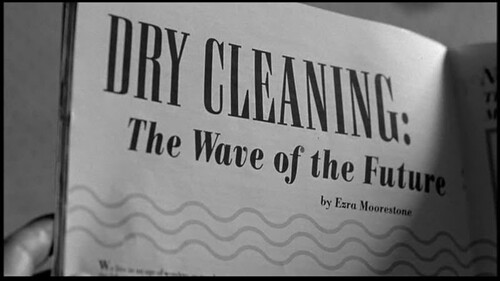
After a life of pure, simple existence, Crane finally decides to take a chance when he meets an entrepreneur looking for backers for a new invention called Dry Cleaning. We never really find out what about the proposal catches Crane's eye and sends his story down the fatalistic Noir path. Is it the money? If so, what does he want it for? This is a man of little ambition. Does he want to get back at his wife's partner in infidelity, her boss at the local department store, whom he eventually extorts? Is he just bored? Regardless, like No Country For Old Men, the money means nothing. It is utterly trivial. What does matter is that this man, this barber, has finally set something in motion that, for better or worse, changes his life and the lives of those around him forever.

I find Ed Crane's burgeoning passion, regardless of implicit reasons to be the movie's main motive. Though he remains outwardly unreachable through the duration of the film, beneath the surface he becomes excited with possibility. His interest in the dry cleaning scheme and later his not-quite platonic adoption of a teenage pianist are the first pangs of genuine enthusiasm this man has ever known. Of course in true Noir (and Coen) fashion everything quickly goes awry, often in devious ways we never saw coming. Crane ends up killing his wife's lover, who in turn killed the dry cleaning entrepreneur and accidentally impregnated Ed's wife, who herself is jailed for the first murder, who subsequently commits suicide. Eventually, after trying to make things somewhat right, but instead only further ruining the lives of those around him, Crane, too, is jailed for a murder. It just so happens to be the wrong killing but no matter. One could argue that, because of his actions, he's responsible for this one, too.

Gesticulate

"The more you look, the less you really know."

Spotlight

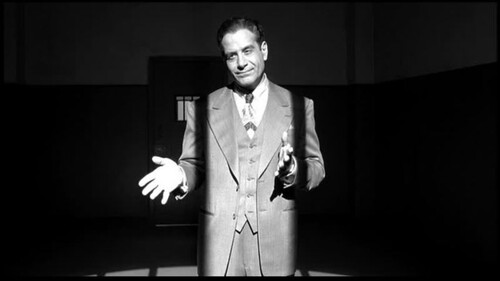
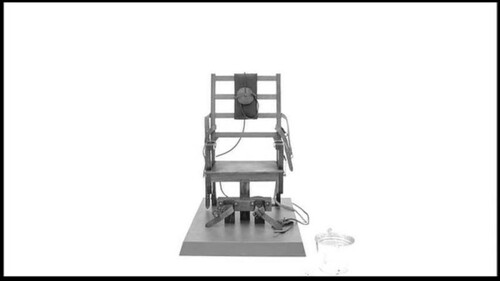
In the final scene, The Barber delivers the last paragraph of his manuscript while observing the haircuts of the men who have sentenced him to die. He does this from the electric chair as casually as he did in a waiting room earlier in the film. This final moment shares with it the calm literary coda that punctuates No Country's muted finale. In the latter, Tommy Lee Jones' retired, world-weary Sheriff tells his wife of his dreams. They involve his father and how he is ready to meet him, how he has accepted death. The Barber, too, is ready and willing to go, but his final words delve a little deeper as we watch this man, who was there all along in flesh, finally leave us. He talks of meeting his wife in the afterlife. Despite all of the harrowing, horrible things that have happened to the two of them, and besides the fact that they never really knew one another, he can't wait to meet her. He speaks of the words that don't exist here and how he'll find them when he gets there.

And then the switch is pulled and we too are gone, obliterated by pure white light. The final chapter break in our messy little story that just hasn't been published yet.

Salvation

Thursday, July 26, 2007

Netflix Experiment #3: Brick

by Ryland Walker Knight

Rian Johnson's Brick, a debut film, is rather unabashed, and fearless, but instead of inspired it mostly plays silly, which is a shame. Because it's also rather pretty, and clever. Yet the smarts are all surface, and not that smart. Johnson has a good eye and knows how to point his camera at people-windows-hallways but the filmmaking choices, on the whole, seem made more for posture than for presence. How many fish-eye jump-cuts do you need? And, did they actually fuck or did they just make out? Because, see, the film noir femme fatale really has to fuck the patsy for the seduction to matter. Not that Joseph Gordon Levitt's Brendan is an altogether patsy. (This is a genre rewrite, see, and it doesn't have to play by the rules.) Not that Levitt's performance is bad (hell, nobody's is technically "bad"), in fact, as per usual, he is excellent. But from the get-go the caveat of the film kind of self-sabotages the project. It was unavoidable. As unavoidable as the film's already-gaining-steam cult status: there's plenty to like, and it's plenty entertaining, but unlike Donny Darko, Brick can't cut the bullshit, or cut deep to the core, because of its pre-fab low-budget style. That is, it's stylized to death. Or, for all the success of Johnson's dialogue (he nails that aspect of the Chandler mold, and the idea of a detective deciphering words' motives as much as other characters' is fresh, and cool), the no budget for nighttime so instead we'll shoot at dawn strategy doesn't quite work. I didn't feel dread, just stagnation; which should work for a high school noir in theory but in practice really does not. Which is surely part of the point, but, sue me if you want, it's hollow. No amount of Nora Zehetner's baby-doll eyes or Meagan Goode's big lips can trick me, thank Him, 'cuz they're right deadly, if you aren't paying attention. (For an even better Levitt performance, and a whole lot more heart, I'd recommend the treasure that is Mysterious Skin any day of the week. I only hope he makes more movies like that instead of more like this and The Lookout.)


Goode face

02005: 110 minutes: written and directed by Rian Johnson.