Showing posts with label PFA. Show all posts

Monday, January 25, 2010

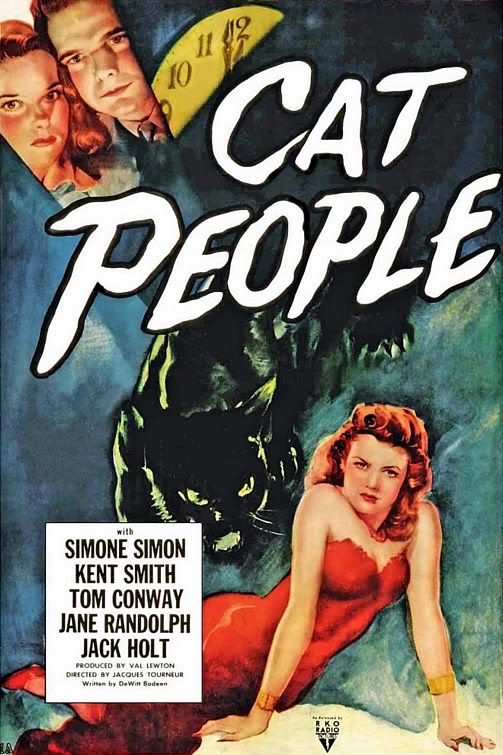
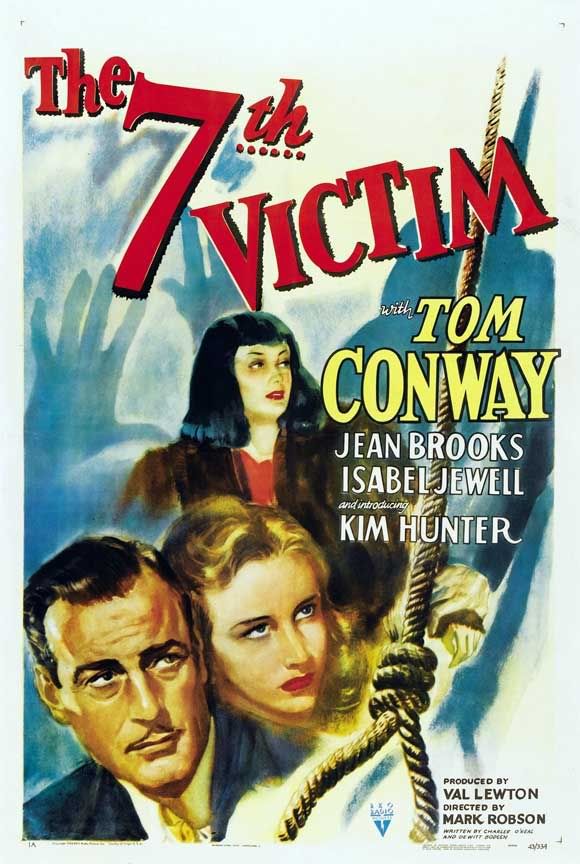
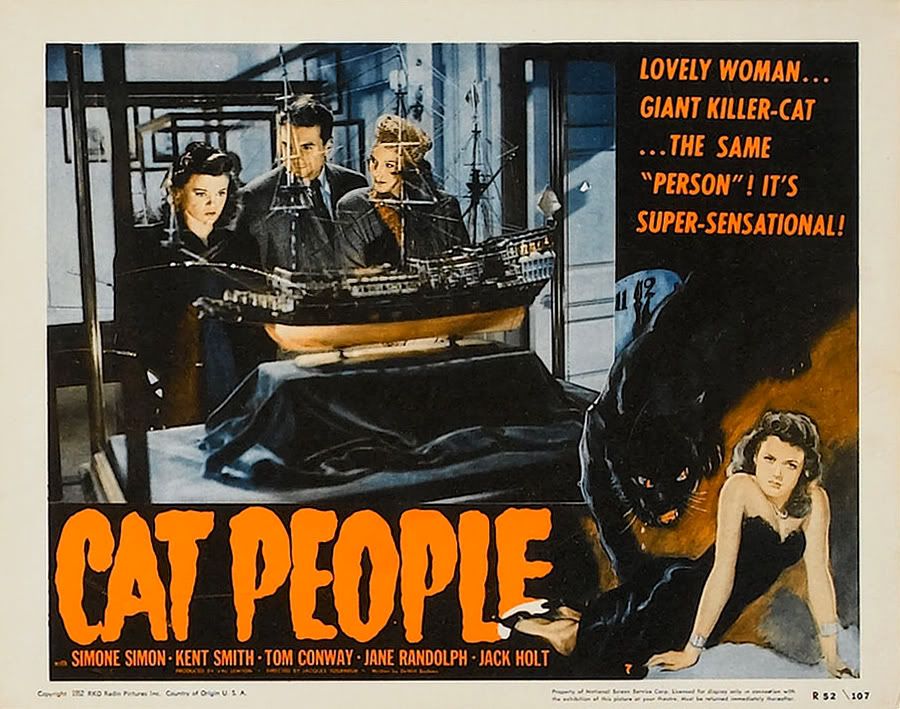
Lost Light Lewton: Cat People + The Seventh Victim

by Ryland Walker Knight

[PFA's got five double bills of Val Lewton pictures over the next few weeks. See the line-up here. I've never seen any of them on a silver screen until now, so here's a little catalog/tour of this new angle on things. If you want to play along at home, the films are all on Netflix thanks to this handy box set.]

7th 3

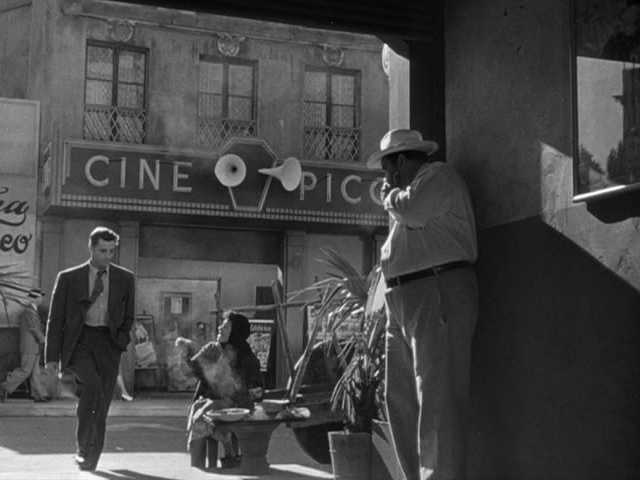
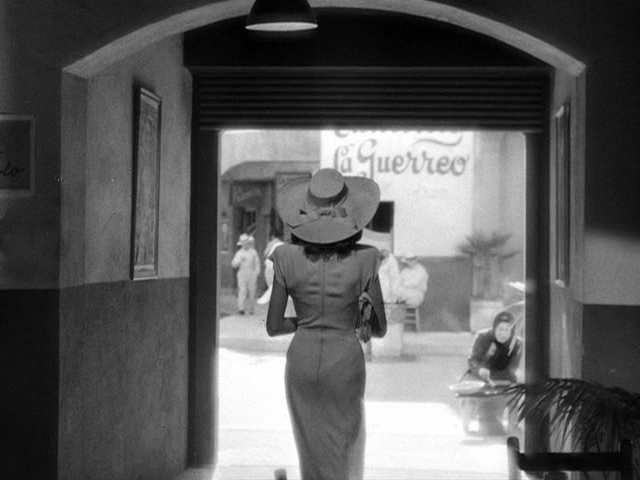
Cat People proved more popular, as ever, but The Seventh Victim's got audacity and depravity and terror in spades and in shadows all its own, all the deeper and deleterious. In more surprising turns than the Tourneur, this later, odder picture may also be the best argument for suicide ever put on film: the act is never not selfish, but the film seems to say that death's end can be a welcome and necessary release for some souls. Alternately, the sidelines of this Victim (most of which masquerade as the "a-plot" though the most poignant claims its right to speak near the close, as an aside) chant a hymn to living—in the world, with its vicissitudes and with its frights, without fear for the diurnal. But there is a pressure in this world, a cloud clamping its spirit, and it begins with the film's opening epigram, attributed as "Holy Sonnet VII" to Jonne Dunne (natch & sic): "I runne to death, and death meets me as fast, and all my pleasures are like yesterday."

The film begins in this plot, following little sister Mary (Kim Hunter's all eyes) as she searches for her missing sibling, Jacqueline. Robson and Lewton (and DeWitt Bodeen and Charles O'Neal) keep Jacqueline off screen for as long as narratively possible, and her first sighting is the briefest tease possible, which fits and throws fools for fits. She's more an idea than a person that way, kept intangible even when cloistered, impervious to the whole ball of wax rolled about her, including love. Every angle on her in the world is some kind of leeching, a pedestal or a clamp or a knife. That is, through its increasing ellipses, all things fly by like in life and demands pile up, the picture puts us in her paranoia, inside her depression, and all we understand is all that pressure from without. Mary's plight is motivated by saving her own skin, not her sister's, and once it's locked secure with that perverse reversal of fortune that is the love of Gregory Ward (Jacqueline's husband), the film drops her significance. She's played "naive" and kept a doll, at the world and Ward's surprisingly tender mercies. But it's the banal prejudices of these "betters" that keep Jacqueline tethered to life; we slowly see that their concern is just as selfish as her need to escape. It's about control, not debt. It's devastating precisely because it makes sense why this beauty might want to thud dead alone in an empty room. (So sad that Jean Brooks, too, was similarly unfit and unhappy.)


—not quite bottled, or adrift

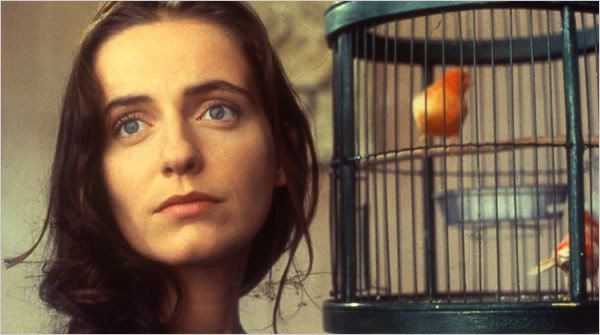
Control is of course the theme in Cat People, too, as its Simon Simone fails herself, but that's more or less unavoidable. We are beasts of lust, the film says, bent to prey on each other. It's a fantastic metaphor, and the film's so gorgeous you can easily forget how wonky it unfurls. You cannot forget, however, how Simone's Irena does herself in because she can't handle her truth, her history, her instincts. Things get fudged all the time and every image moves eight ways; as with Victim, each scene is laden with significance to pull interpretations in as many directions as possible. See, it's not just about sex, which is where Schrader failed. Of course, sex is a huge part, and the only problem I'd pose with these two films is their rather typical structures (though each climax is muted) date the film's view on women, and sex, in obvious ways—but that's like complaining that Chandler used sentences not stanzas. Besides, any time you can turn dread productive, as with The Seventh Victim's interrogation of the death drive, you've got a curious object. If I owned the DVD, I would like to look at just how blocky the film is, how its connect-four space links up lines of thought, and how that searchlight does cleave the picture to signal the descent. After all, even the girl looking for one last night on the town has to go down (some stairs) to find it, to find some last laughs.

Saturday, January 16, 2010

Represent Repertory #3: Tiers on tires, on tableaux

by Ryland Walker Knight


—Nothing?

Really, if you didn't read Brian's Tati preview, you should. He's got all the links you need and then some, including this one, which points to a translation by Bert Cardullo, complete with introductory table setting, of Bazin's review of M. Hulot's Holiday at Bright Lights. I missed the PFA screening on Thursday because of a certain poodle's stubborn ways and the resulting headache that installed but I am hoping to maybe trek up to the Rafael this week to catch it since that theatre is even better, and easily better than the YBCA screening room and the Red Vic (Jan 28 and Feb 3/4 respectively), not to mention the fact that, despite certain impulses (and my reputation?), I don't want to spend all day Saturday, January 30th, at the PFA.

I do, however, want to spend some time there on that day because, in addition to all the Tati going on around town these first two months of twenty-ten, the PFA will be hosting a Val Lewton series. Last summer I watched a bunch of the films via Netflix, but I've never seen them on a big screen so I'm pretty damned excited for that light and those shadows to meet my eyes all emulsified. What's more, the series is structured around double bills, which seems particularly apt given the B-movie status/history of Lewton's catalog. (Also, as many of you know, I'm a fan of that film-going format.) To a certain extent, I plan to mimic my Dreyer and Resnais format/s for this series, so expect some enthusiastic notes once the series starts next weekend, on the 22nd, with one of the best pairs imaginable: Cat People followed by The Seventh Victim. Not only are both films brisk (neither tops 75 minutes), they're plain bizarre—especially Robson's Victim, which I did not do justice to back at first blush. Flip-side: I'm particularly proud of this Cat People image essay. More to come for sure.


Though I may miss the James Benning night at YBCA on Friday, February 26th, I am marking the Nathaniel Dorsky evening earlier that week, on the 23rd at the PFA, as a must-attend. First billed as a trio, the night is now a full quartet of films. I've been very excited to see Sarabande and Winter since they debuted at TIFF 2008 and spawned a number of great articles, including a pair from The Notebook: Darren Hughes' interview with Dorsky and David Phelps' consideration of Sarabande (from its NYFF showing). If I play the game well enough, I might be able to interview Dorsky as well as have the chance to write about his newer works ahead of the pack as (I'm guessing, since he's bringing them with him) the second pair of films on the program that evening, titled Compline and Aubade, will be enjoying their Bay Area premieres. (I'll get back to you on all that, but, for now know that it's all very exciting. Especially since I've got my own brand-spankin-new copy of Devotional Cinema already broken in, already not-so-spankin-new.


Finally, to round things out, there will be a reprise of Hou Hsiao-hsien's City of Sadness on Saturday February 20th, which follows a putatively rare Ozu the night before, a silent gangster melodrama from 1930 called That Night's Wife. I hope to see both. But now, on this rather gorgeous day, I need to go for a run before I catch Jour de fête a little later on across the Bay.

Thursday, November 05, 2009

Represent Repertory #1: Fight sadness

by Ryland Walker Knight


The day after I returned to the Bay Area, I saw the new PFA film calendar online and tweeted twice (1, 2) about it. But that doesn't quite do justice to how cool a "Welcome Home!" these next two, final months of 2009 promise to be in my backyard cinematheque. A year ago I had quite a time covering the PFA, indulging in almost everything available by Jia Zhang-ke and Jean Eustache among other treats. This near-winter season I have the luck to catch a number of Alain Resnais and Otto Preminger films as well as four by Miklós Jancsó and a slew of features starring Ingrid Bergman. However, this go-round I hope to expand my horizons and attend both of the remaining Alternative Visions programs: next week, on November 10th there will be a series of recent a-g works by a variety of filmmakers and on December 1st, Harun Farocki's latest, In Comparison, will have its Bay Area premiere. I can't say I'm all that intrigued by the series on torture, but I do hope in the months and calendars to come that I look beyond the big-ticket items. That said, what a fun bunch of hit-makers!

mirrors

This weekend sees the start of the Resnais series with a Friday night showing of Last Year At Marienbad, which I'm overdue for again, and always happy to see on a big screen (though I should take a look at the Criterion disc for that short film about plastic). The series skips Hiroshima, but there are a few from the 80s and it closes with La guerre est finie, so it should all be a fine primer for whenever Sony Pictures Classics decides to release Wild Grass on the gold coast. (Also worth reading: Mark Rappaport in Rouge.)
———> Friday Update: Jonathan Rosenbaum kicks of Moving Image Source's series of articles on this traveling Resnais retrospective with a piece called "The Unknown Statue"

I've already seen a number of Preminger films before, and already a few here in 2009—most notably Bonjour Tristesse, which was an easy revelation. But aside from Bunny Lake Is Missing, which I saw at MoMA with Danny and Miriam, I've not seen any on a big screen. Most excited for Skidoo, probably, of the films I haven't seen, but I'm eager to see Jean Seberg pout and Jimmy Stewart play piano in Cinemascope as well. Not to mention those Dana Andrews boxes of pride and alarming prize-snatching from the '40s. And, what the hell, Saint Joan can't be all bad, right? For one, it seems like you have to see every possible iteration of that story if you call yourself a cinephile; for another, it's an 18 year old Seberg for Heaven's sake. Chris Fujiwara's upcoming book should be good, but until then here's a Senses of Cinema profile he wrote.

Lastly, last night was the beginning of the Ingrid Bergman program. I did not attend the selection of rarities. Nor do I know if I'll take in all those 1930s Swedish joints, despite their fetish-object obscurity. I do, however, plan on attending all three of the screenings of the pictures she made with Roberto Rossellini as, get this, I've never seen one of his films. Stromboli and Europa '51 play on successive days late this month (the 28th and 29th, a weekend) while Voyage in Italy plays a week later (Dec 6th, a Sunday). Phelps assures me this trio should be a great start on my way to discovering all there is to relish about what kept Tag Gallagher busy filling his massive tome (850 pages?!). Worth guessing that Rivette's letter to the Rossellini will hold yet more resonance after those screenings.

let's eat

But the PFA isn't the only rep screen in town, of course. Of course there's more than a few across the water in San Francisco. In fact, there's one right down town at the Yerba Buena Center for the Arts, where Joel Shepard keeps programming really cool things. I had to miss last week's one-shot showing of United Red Army, despite Danny calling it "unmissable," because of a family commitment. But I have no such ties tonight: Hou Hsiao-hsien's City of Sadness has a title that can turn off a lot of potential ticket buyers—and that's before you know it's over two and a half hours long, or made by a Taiwanese maestro known for long takes—but, silly me, I'm giddy for it. In fact, I'm the only person goofy enough to click "Attending" on the event's Facebook page. And, if you miss it tonight, there's a second show Sunday afternoon. That said, I know Brian will be joining me there—in fact, I'm planning on it—and I don't doubt a few other rep regulars will pop their bespectacled heads into the screening room.
———> Saturday Update: Brian wrote up a little something about the evening, and the film, and HHH, at his blog.

———

I may have missed out on a number of cool New York film events this summer, and I know I'll yearn to take in some cinema with all my friends back there as time marches on, but for right now I'm pretty jazzed to be here. I figure: I'm here, I'm planning on planting for the foreseeable future, I might as well go hard on the scene. After all, one of the pleasures of being a cinephile here, versus in Brooklyn, is that I have a social life outside the cinema; that movies are my thing, and that I can dip in and out of them as I please. I like being the biggest nerd in a group of friends who host wild dance parties and tussle in the streets and play basketball drunk. We're not "husbands" yet, nor do any of us even think that way right now, but, let me tell you, I definitely feel more alive around these guys—more prone to steal shoes and spill wine, to fall on the couch or spin on the hardwood floor. Besides, I'm not the only Pierrot fou in our crew. Nor am I hot doggin it all that often.

Friday, October 16, 2009

We Live OK: 22 Selections, 07.09 + 10.09

by Ryland Walker Knight


sunsetting 1
fielding
—Lucky clouds (return)

This eddy ends now, and I'd like to share my final collage of imaginary reportage. These weeks have seen me see plenty. However, I worry I saw more inside than out. But that's why I'm finding a line back to a coast—in fact, back to the gold coast. That is, back home. Time to own up to that: I'm a Californian. So with my smile widening, I look forward to playing basketball in the winter, to eating fresh vegies as often as I can, to the PFA's healthy calendar, to trips up to Truckee's snowbanks, to a quick flight south or north, to The Trappist, to pho, to the Mission, to yelping my way around more dance floors, to breaking that habit of you. Here's to the steps taken, and the leaps yet; to footfalls, maybe, turning into feathered-up flights from our hard-earthed dirt and from our tubes of infotainment. We must remember to move amongst! Thus, there might be a little less frequency here (and elsewhere) as the calendar year winds-grinds to a close. Priorities will be re-arranged and if I'm to live alone by my next birthday I will have to make some kind of living happen quicker outside this site.

So, enjoy this latest and last collection over at VINYL IS IMAGES.


—I see your light touch my eyes.

Wednesday, December 17, 2008

VINYL IS PODCAST #9: Dreamlands of the Night

by Ryland Walker Knight and Brian Darr


in grass
in moon

[Podomatic stream]
[Direct audio download]
[iTunes subscription available]
[Simple syndication subscription]

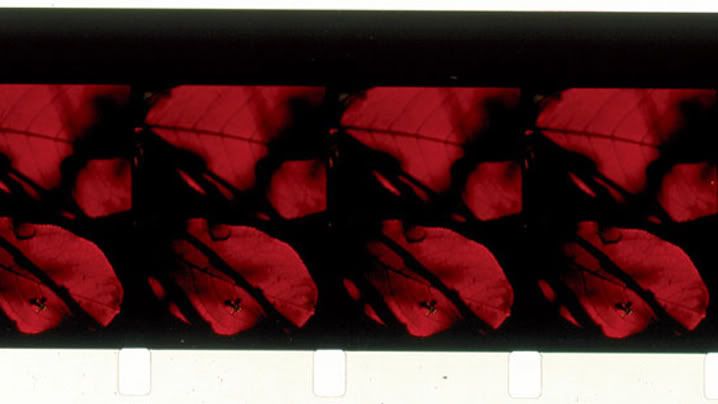
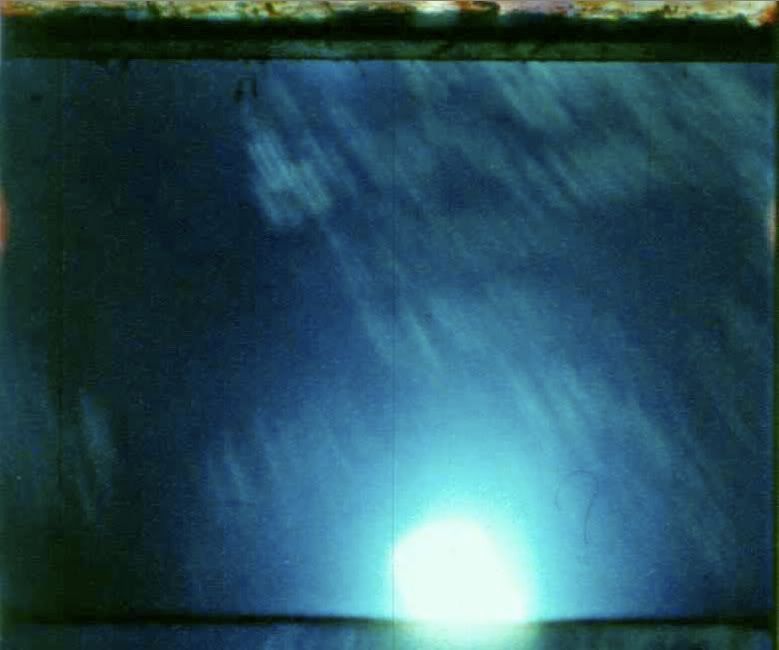
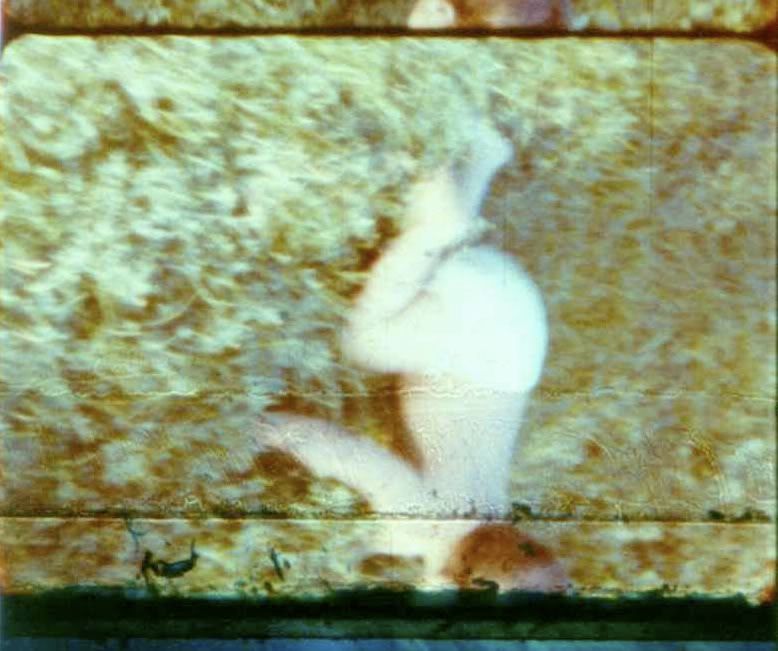
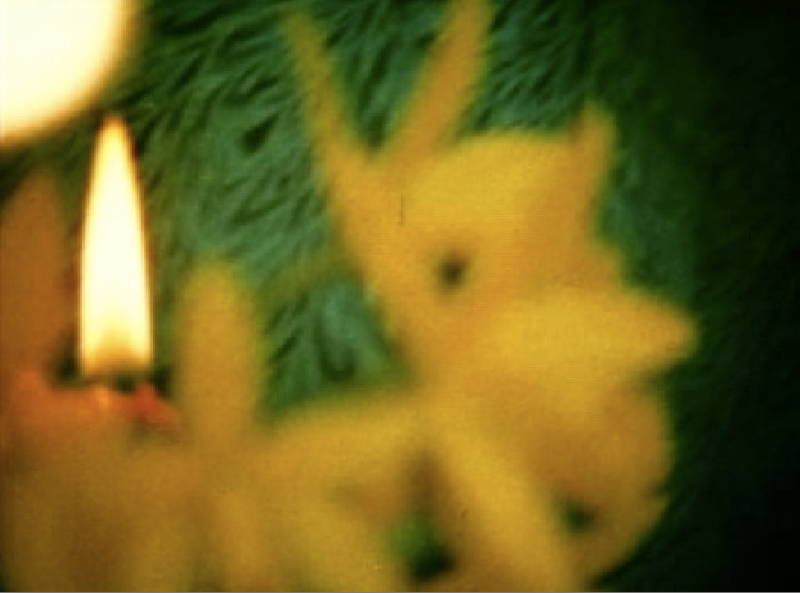
RWK here tryna glut our hello lil kitty (kiddy?) corner of the internet with two podcasts in two days. This late afternoon Brian Darr and I took in some dreamlands of the night at the PFA Library here in Berkeley. (You can browse their Film Collection online.) As I say in the podcast, I'm not particularly well versed in the avant-garde. Before today I had only seen stills from and read essays about and seen the littlest of little clips of Brakhage's bigger than big films. Before today I had seen zero films by Bruce Conner, much less read anything by him. And before, inside today, I was seriously down in the dumps of confusion after reading Sheila O'Malley's rather beautiful pean to Mickey Rourke and all his hurt. So these films this afternoon sure did lift. They did some real lifting. I think this comes through in our talk, too. It started with a Kenneth Anger film, called Eaux d'Artifice, which, surprisingly, you can watch by clicking right here if you want to watch it all monochrome blues, without the occasional pink highlight. Then we moved into Anticipation of the Night by Brakhage (the pix above are stolen from Fred Camper and repurposed/reordered and cropped/edited by me). Then, after Mothlight (yes!), we watched Bruce Baillie's All My Life, which you can watch by clicking right here, if you want to watch it on youtube, which seems like sacrilege after seeing it on what has to be one of the most beautiful 16mm prints around in this cinephile-world. Then my fatigue got the better of me and I missed out on some James Benning and Bette Gordon before we switched to DVD to watch two Conner shorts, which knocked my socks off my feet and (kind of) into my mouth. It was a hell of an inauguration. And now, here it comes, the compulsion to see more. Of course, given my love of words, there's a compulsion to read more, in turn, and I think a great first place to start has to be the Avant-Garde Blog-A-Thon that Girish started/hosted with this post. There's plenty there to keep a curious reader/seer busy for years to come. Guess that's my plan!

easter!

[Our talk is bookended by some Black Dice and Fennesz. You should buy Beaches and Canyons and Endless Summer if you do not own them; they're really great.]

Friday, October 24, 2008

Reminder: Mirror tonight at PFA.

by Ryland Walker Knight


looking at fire in rain

Tonight at 6:30 to be precise. Why does this get special mention among all the cinema I've been enjoying recently? Well, because. Just because. Because it's great; it's where the water's at; it's beautiful; it's a favorite. And I can link to some stuff I've written before on this masterpiece.

Do yourself a favor if you live near by and see one of the great things tonight.

Saturday, October 11, 2008

VINYL IS PODCAST #3: Synecdoche, Eustache

by Ryland Walker Knight and Mark Haslam


looking out
looking around
looking through

[Podomatic stream]
[Direct audio download]
[iTunes subscription available]
[Simple syndication subscription]

RWK here. We're back this episode to talk about some films we've seen but haven't finished writing about despite our due diligence (we promise) and a certain setback specific to Mark, which you'll just have to hear to believe. The episode starts with a talk of a recent advance screening in Berkeley of Synecdoche, New York that Mark was able to attend, which leads to a host of issues, including that trope of the/a title. In fact, I make passing reference to Michael Sicinski's review of Hunger, in which he makes passing reference to Charlie Kaufman's "regrettable" appropriation of the term as opposed to Steve McQueen's "mindbogglingly simple" solution to making the "Issue picture" viable though "cinema as synecdoche," which I then turn into talk about Bresson's cinema of metonymy, even metonymy of sensation, which somehow leads into (an altogether too brief) talk of our recent adventures with the current Jean Eustache series at PFA, which continues this weekend with, yes, a soft-titled presentation of Numéro Zéro on Sunday evening. There's also room for more talk of On Dangerous Ground and the Jia Zhang-Ke films I've been seeing, too, with special attention (at the close) to The World, which I hope to write about soon. Oh, and, there's two songs this episode, which you can find on my imeem page right here. (Again, if you want them gone, just shake a hand via email.) So, please, listen and tell us things. First, though, while our words (down)load, maybe look at these things--


Thursday, October 02, 2008

Reminder for the day: Saturday, Eustache begins at PFA.

by Ryland Walker Knight


don't look away

[Note the words at the bottom of the frame]

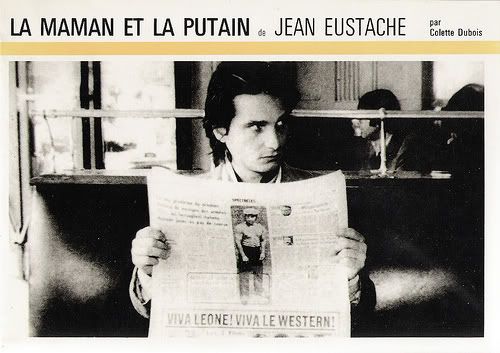
This Saturday, the 4th, sees the beginning of PFA's Jean Eustache series, No Wave, with a screening of his most famous film, an epic of hurt, or so I'm told, called La Maman et la putain. Back in February, on his podcast, Mick LaSalle recommended the Bay Area go see the film and the theatre sold out. I don't think this blog post can drum up quite that much interest, but, heck, we try. For some other words to strike up your imagination, read Rosenbaum here. Also of note, my friend Julien Guillemet told me last week that Numéro Zéro is hilarious, sordid, a must-see; of course it sounds great, as Juliet Clark has described it: "In a string of long, stationary takes, the camera watches over Eustache’s shoulder while he pours countless glasses of whiskey and [his grandmother] Odette tells the stories of her life. A number of her themes resonate with those of Eustache’s films: cruelty, male philandering, the Rosière festival of Pessac. Numéro Zéro is a return to origins—of cinema and of the self—and an experiment in narration, both restrained and deeply personal." It shows Sunday, October 12th, at 7pm. I hope to see all of the films, time and energy providing, and to write some words along the way through the month.

Monday Morning UPDATE: Why was I afraid? As much as Leaud's Alexandre is a pain, and as irritating as he can get, the film is wholly pleasurable, somehow. Part of it, no doubt, is Bernadette Lafont. More soon.

Monday, September 22, 2008

VINYL IS PODCAST #2: Future calendar highlights, with Brian Darr.

by Ryland Walker Knight and Mark Haslam


let's talk money

RWK here. This episode: we're joined by local hero and blogging buddy Brian Darr, of Hell on Frisco Bay, to talk the upcoming rep calendar. Of course, any talk about movies, especially a talk meant to cover so much, will spill over into other topics and other films other than the films and film series at hand. We even divert into a talk about Cut Copy and their upcoming, sold-out show in San Francisco on Sunday, October 5th, as well as Gus Van Sant and Michael Haneke, among other things, including my trip to Telluride, again, of course. Speaking of: a big apology to Howie Movshovitz, one of the real cool pair of moderators/hosts for our Student Symposium (the other: Linda Williams), whose name I totally blanked on during our recording session. If you make it that far, you'll hear me grasping, failing, griping -- and coming up with Harvey. The reason I didn't follow Brian's "on air" advice and splice in some kind of edit correction is because I just want to let the tape run. As I say at one point, this is not planned. I like it that way. I did a better job of projecting my voice this week, I think, which might make it easier to listen to, but I still dig how un-NPR we are on these experiments. Thanks for indulging us. We're still trying to make this mic work, but it's tough. I've got a (pretty cheap) directional mic so it really needs you to talk at it -- it doesn't record the space of the room all that well -- and, as is natural, Brian and Mark turned towards me to talk, to perform our conversation, so their voices are a little lower than mine in the mix. So turn it up.

Once again, we've got some dance music to introduce and end the episode, and you can grab it here. Yes, it's Cut Copy. Oh, you want a link to the podcast itself? Well, you can click this link to load iTunes and subscribe there or you can click this link to find our podomatic page or you can click this link to download the file directly from podomatic or you can click this link to subscribe to the RSS feed. The choice is yours. And, of course, please tell us things in the comments. If you're in the Bay, tell us what you're most interested in, what we may have forgotten. For one, I know there's a certain en vogue auteur we didn't talk about that will be exhibited in San Francisco in October. Do you know who? Where? When, exactly?

Since this episode is about twice as long as the previous one, and I always appreciate Rob's breakdowns, here's some minute markers for our rambling talk:

Friday, September 12, 2008

Post-punk, mainland style. Jia Zhangke retro at PFA.

by Ryland Walker Knight


Unknown Pleasures
Still Life
now submerged

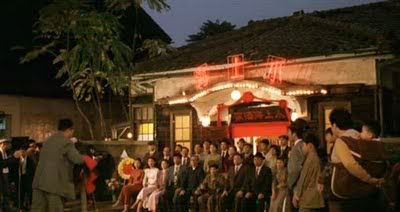
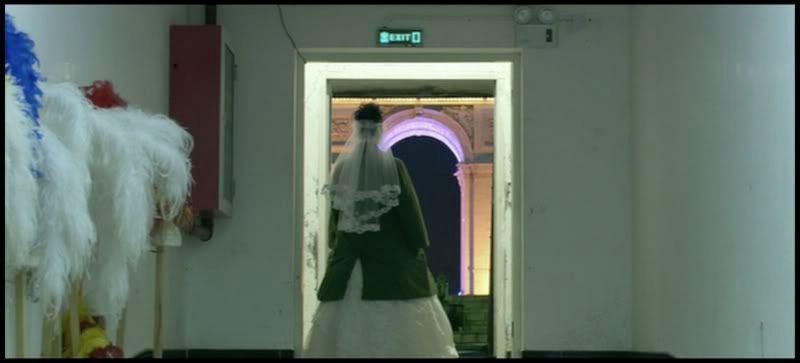
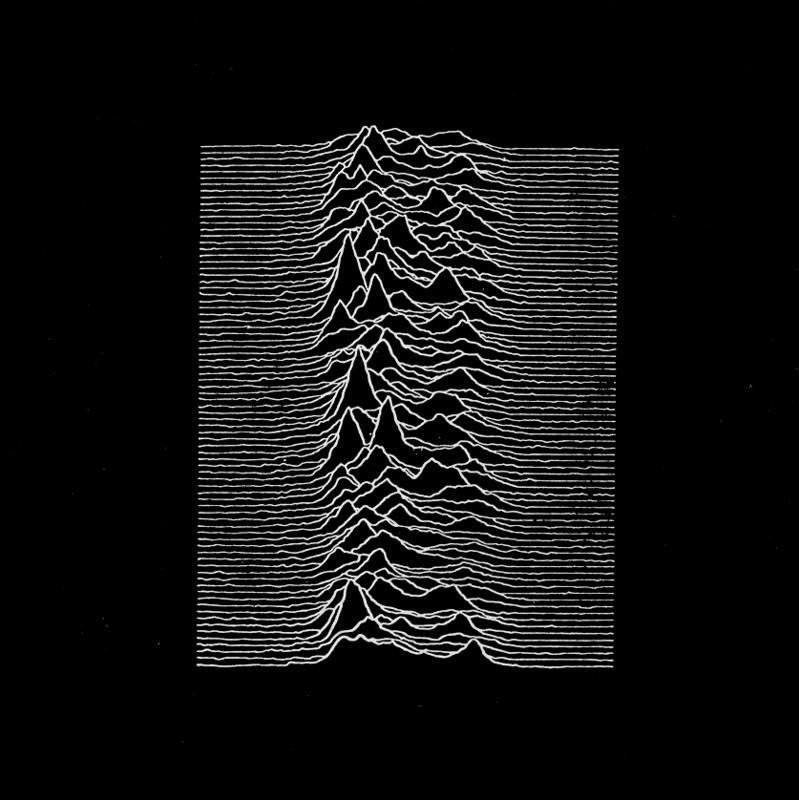
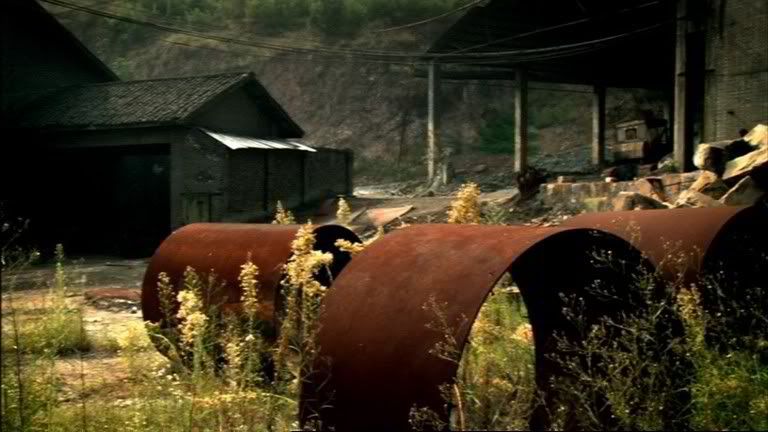
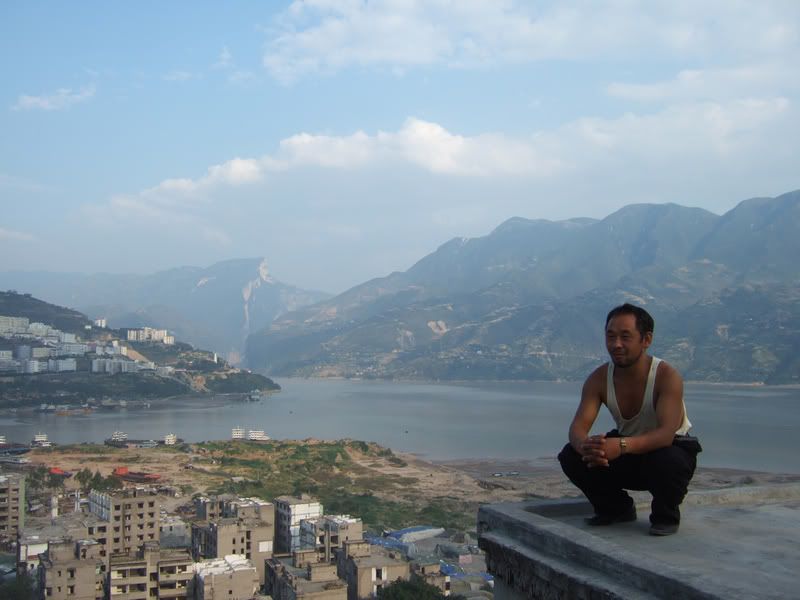
Unknown Pleasures: The Films of Jia Zhangke begins tonight at PFA with a screening of Still Life at 6:30 followed by Dong, with the short Our Ten Years, at 8:45. I'm new to Jia, but I love me some Joy Division (see sidebar), so the first things that popped to mind when I first heard of this Chinese auteur are those Manchester post-punks, which makes the series' title that much cooler. Spread over a month of screenings, the PFA will exhibit all Jia's features from Xiao Wu (Sept 18) through Useless (Sept 26). Plenty has already been written about Jia across the interwebs but, to drum up tonight a little more, here's a list of Still Life reviews, collected by Michael Guillen. As is my practice, I've not read much but cursory notes about why Jia is important (I've got my cocktail party knowledge), so this will be another learning experience. What I do know, and what intrigues me, is his interest in documentary fiction (I feel there should be a slash or an n-dash in between those terms, like, always) and digital (a recent turn in his work), both pet obsessions of mine ever since Pedro Costa rocked my world earlier this year. That, and I'm excited all my missed opportunities with Still Life's recent run will be absolved, and I hear he's into performance as well. I'll have to wait until October to see Unknown Pleasures (3rd) and The World (8th) and Platform (15th) on that big screen but I trust tonight's double bill will get me jazzed and primed. And, failing a trip to the art house, all three are available on Netflix. His Beijing Film Academy thesis film, Xiao Shan Going Home is not readily available for home viewing (for most viewing), and its Bay Area premiere will be accompanied by the short In Public on September 19th.

For more, read Hoberman (and again), Andrew Chan, Michael Koresky, Zach Campbell, Kevin Lee, Girish and pore over Harry Tuttle's links at Unspoken Cinema. I'll try to add to this conversation as the month progresses. [Pix stolen from all over.]

Tuesday, August 12, 2008

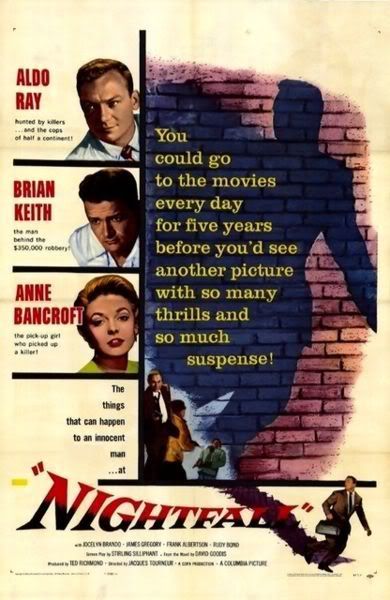
Thatches and blankets. Out of the Past and Nightfall.

by Ryland Walker Knight

[OR: "David Goodis at PFA so far." Nightfall played Thursday, August 7, 2008, as part of PFA's current Streets of No Return: The Dark Cinema of David Goodis series, which continues this Thursday, the 14th, with a screening of The Burglars, starring Jean-Paul Belmondo and Omar Sharif. The series runs three more programs thereafter through the 23rd. I hope to offer some more thoughts next week.]


pastnight

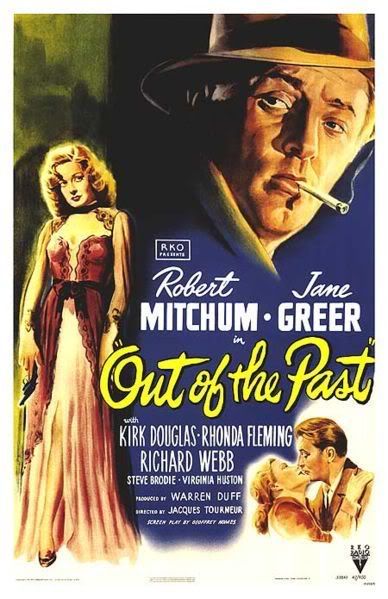
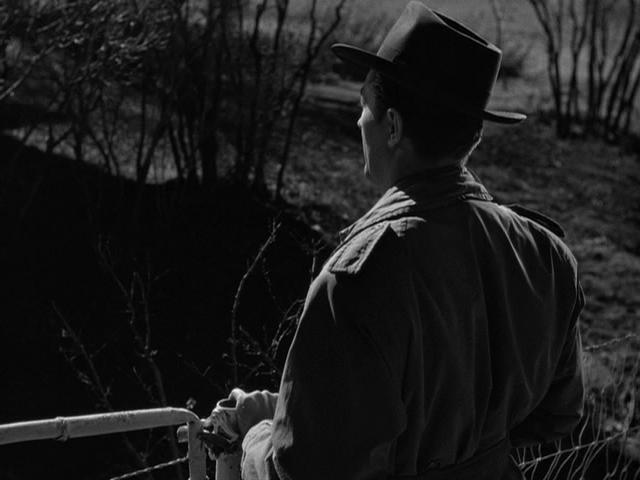
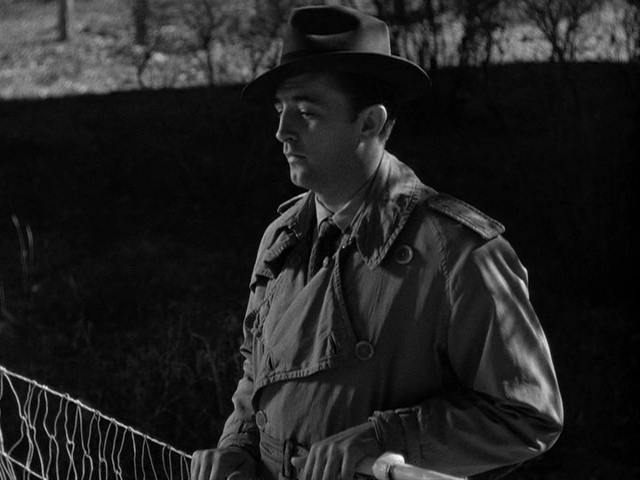
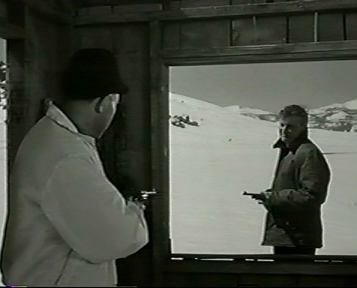
Eddie Muller specifically asked last Thursday's audience to not compare Nightfall to Jacques Tourneur's earlier proto-noir, Out of the Past, so I'm going to do just the opposite. In his introduction, Muller said that it's a fruitless comparison, that it would only do harm to the later film, but I think they make a fine pair precisely because they are so divergent (yet remarkably consistent). Made a decade apart (1947, 1957), both fear the city and its traps, both distrust people, both seek escape from the world. However, the paranoia of the former is eased, slightly, in the latter into circumstantial nuisance: Jane Greer precipitates an economy of lust, her come hither enigma lighting desire like a good femme fatale, whereas Anne Bancroft rather represents a haven, her curves safe and her eyes welcoming. Nobody owns the upper hand in Nightfall, really, over Aldo Ray's Art Rayburn/Jim Vanning -- he's fighting time, and the seasons, as much as the villain bank robbers -- while Robert Mitchum's Jeff Bailey/Markham, from his first encounter with Joe Stephanos (that sly, fey and lovely analog to Greer, Paul Valentine), finds himself trapped by history (his story), by people, by plots, by desire.

back
front

Tourneur didn't seem capable of making a dull image, even in the almost-bland patches of Nightfall's location exteriors. Part of this may be due, simply, to the print and its upkeep, although the picture has a less striking, more television-grade contrast/construction than its predecessor with fewer set-ups and less glamor. Yet an early dolly retreat, to make way for a bus that fills the screen, is a signature, subtle Tourneur move; and in the day for night interrogation sequence at a derrick field, the flat light does not take away from the compositions. Everything lays at an angle. Even direct, 90-degree frames sit uncomfortable with objects thrust in on a slant, fudging perspective. Tourneur's world is acentered and fluid, despite its classical trappings, the termite auteur par excellence, littered with odd interstitials to syncopate the mise-en-scene. While more pronounced in the earlier film, the more modest later work still rests uneasy, growing out of the performers as much as the technique. Aldo Ray's hemmed posture and choked voice work at odds with his broad Navy body. Anne Bancroft can't quite get comfy and fades into the picture, another prop, almost; something else Ray has to carry. As the go-nowhere villians, Brian Keith and Rudy Bond play off each other so well that it's easy to forget all the other calm-crazy instantiations of other heist duos; Keith, especially, uses that laconic distance to genteel effect, rounding a square character as much as possible.

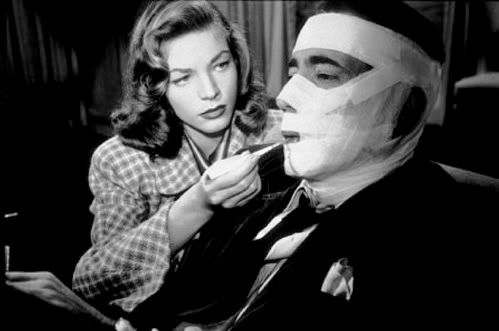
What I find most curious through the first two weeks of the David Goodis series, situated firmly in the middle of cinema's century, is how often things end well. The series opened with Dark Passage, Goodis' splash project. A Bogie-Bacall film directed by Delmer Daves, Dark Passage opens brilliantly, almost exclusively in first person point of view shots, keeping Bogie off screen until he has reconstructive plastic surgery to hide his identity (a San Quentin break-out) until he can prove his innocence, or simply flee for good, as he winds up doing. It's a pretty goofy film, to be honest, but its leads' charisma and chemistry buoy the plot and help sell every melodramatic turn, including its aw-shucks ending, as some kind of idea of what it takes to make your future, to make your dreams real, even if it means forsaking your past. I had to skip the second picture, The Unfaithful (unfortunate since it sounds compelling), and I'd seen Shoot the Piano Player before (a fine, smart picture), so I next caught up with the series with Nightfall. It seems to really do Steve Seid's program justice one should go ahead and read a Goodis or two, but my final weeks of school prevent too much outside reading (I'm slow and swamped), so I feel I'm only getting half the picture. Adaptation is an interesting, demanding process that seems shaped as much by studio demands as authorial concerns, at least in this early phase.

Nightfall is a meager thing, and as Seid's pre-screening read from the novel suggests, plenty was left unfilmed -- in particular because of its black and white film stock -- sticking to the plot and little else; however delightful those brief asides with the Frasers are (James Gregory and Jocelyn Brando are the most theatrical actors in the piece, clearly relishing their screen time), the passages operate as exposition, not color. And that's the biggest difference between this later film and Out of the Past: things breathe more in the darkness of the earlier work, each set (and each set-piece) another layer of story, mood, complication. By contrast, Nightfall looks more open, more blank, and allows for more projection; for a film named after night, there's a lot of day, a lot of white. And yet, it's another source of indetermination. The threat in Nightfall is precisely the chance that those empty spaces will be filled by guns and violence, that the wide white blanket at the close has buried things is untenable. Aldo Ray says he wants to keep the money company at the film's close but we don't get to see him and Bancroft and Gregory surround the satchel. It sits solitary, the lone dark spot in a bright field. The music plays triumphant, conclusive, but the image is stark and forlorn. Ray's Vanning/Rayburn may be exonerated and free to start life over with his new bride but it feels undercut. Or, the picture may simply be saying it's a first step; night will fall again and cover this once more. As we may remember from the beginning, the night brings artificial lights that isolate. Indeed: what will Vanning/Rayburn return to? Will he adopt this new name for good, as he tells Gregory's Fraser? Who is he now?

Such ambiguity turns differently in Out of the Past. For one thing, it's sexier. From the lateral camera moves to Jane Greer's neck, from the abyss shadows to Mitchum's passive ire, this film is about as desirable as possible. It's plain gorgeous. Only Roger Deakins seems to shoot darkness this well in today's Hollywood productions. Which is another reason Muller's right to warn against comparing these two. It's just not fair. However, there's a nice dissonance to draw out, a tidy dichotomy between the clutter of things forcing action in circumscribed contexts (Mitchum's a detective caught between people, and later a mechanic, a profession spent under and inside things-spaces-systems) over against drawing out a map on the blankness of the world (Ray's an artist working in water color who cannot remember crucial (spatial) facts, which is a characterization of him as an actor as well). But that's not all. You could just as easily talk about how the films figure emergence (of the past, of memory, of violence, of desire) or repression or sacrifice or actualization or disclosure or lies. And, of course, all those are related. For this is an art of relationships. An art where it matters that Mitchum sits across from the cinema but never enters, only hears it, and lets it score his first encounter with Greer's Kathie Moffat. She's an illusion from the get go. After all, nearing the close, she says it herself, while wearing what looks like a habit: "I never told you I was anything other than what I am: you just wanted to imagine I was." It's a sick joke: Look all you want, I'll keep drawing back; in fact, I'm barely what you want. But, heck, we know she's only luring us in again, right along with Bob, there. Indeed: I want to go there sometimes. And I'll go. And I'll get out alive. That's the fun, right?

enter
sometimes
fade
See a companion image essay: There's a world out there.

Trailers de Oliveira. Selections from the "Talking Pictures" series.

by Ryland Walker Knight


Bovary?

Organized by BAMcinématek last spring (read Dennis Lim), Pacific Film Archive began its hosting of Manoel de Oliveira: Talking Pictures last Saturday with Voyage to the Beginning of the World, which I was unable to attend because two of my dear friends will be leaving America for an extended period at the end of this week and we had a send off pool party in Sonoma County. It's next in my Netflix queue so I hope to catch up with it this week, maybe offering a few more words and accompanying pictures. I did get to see Aniki Bobo on Sunday, and found it delightful, but I don't know what else to say for it now; I was much more impressed, or taken with, the accompanying short, Hunting, a black comedy allegory full of equal parts fun and terror. But that's all I got right now. For now, in lieu of more words, here's some assorted trailers and clips I found on youtube. I can't understand the Portuguese, but I can tell these are striking images.


Doomed Love, August 24th.


Francisca, which I will miss on August 31, as I will be in Colorado.


Non, or the Vain Glory of Command will be introduced by Randal Johnson, who has written the first English-language book about Oliveira, on September 10th.


Clips from The Divine Comedy, September 17th.


Christopher Columbus: The Enigma, September 21.


Belle Toujours, September 24th. (Yes, I understood this one.)


Abraham's Valley, the closing film on September 28th.

Friday, February 29, 2008

Happy to live in Berkeley this spring.
-Some belated Out 1 notes.
-Pedro Costa at PFA Announcement.
-The New PFA calendar is dope.

by Ryland Walker Knight


out1, son
slumland empire

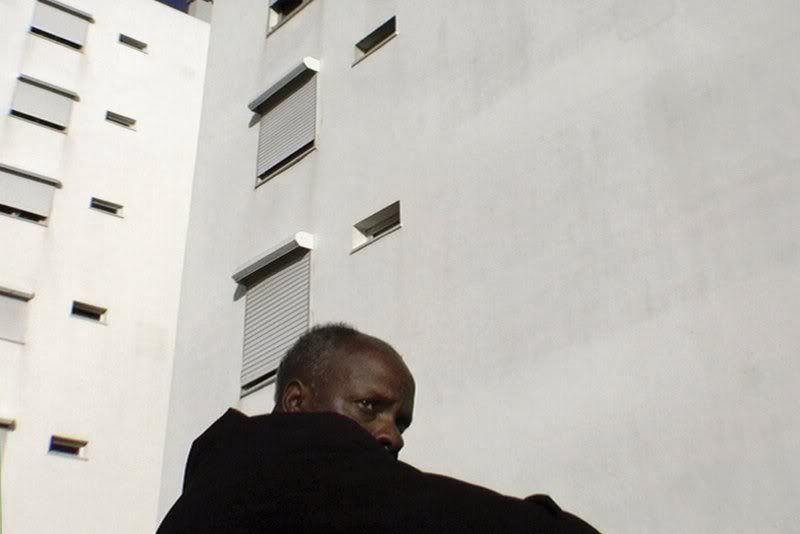
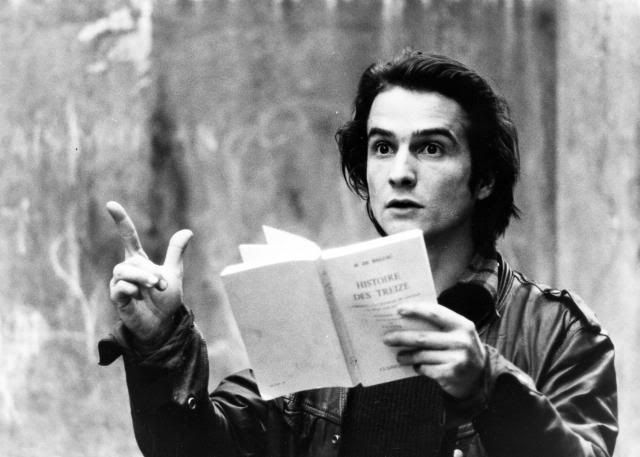
On Sunday, February 17, before that week's Wire, I saw Jacques Rivette's Out 1: Spectre. I'd planned on writing up a post to be titled, simply, "Out 1" (comparing this four-hour version to the twelve-hour Noli me tangere version) but then I heard their new calendar was days away and figured, with the concurrent excitement, I might fold the two projects into one. And, well, shit. I've gotten so giddy about all the offerings on this new calendar I've almost forgotten about the Rivette pictures: the Pedro Costa series (starting Saturday March 1st with Costa's newest film, the much-blogged-about Colossal Youth) even comes with an endorsement from Rivette himself: "I think that Costa is genuinely great." But let me not forget myself (do not think I'm silent out of pride?) and skip over what Dennis Lim once called "the cinephile's holy grail." It's taken me long enough to get to this messy, lovely picture.
JUM!

Safe to say Out 1 is monumental, right? Or, if not monumental, simply big — in either incarnation (12- or 4-hours). I thought I’d tested myself with Satantango’s all-day adventure in the muck (was that really more than a year ago?), but last summer’s two-day adventure in the theatre of life (was that nearly a year ago? really?) was, quite manifestly, a longer (bigger) undertaking. And, I must say, length and “sloppiness” and lack of subtitles notwithstanding, I find Rivette’s film much more joyful, sexy, funny and endearing — I’ll even hazard “better” — than Tarr’s film. For starters, Rivette’s film is about plays, about playing. And, with the twelve-hour Noli me tangere, you get three breaks, including a night to sleep halfway through; the four-hour Spectre has no intermissions. And my French is way better than my (nonexistent) Hungarian. And, of course, Out 1 has Juliet Berto.

How Berto’s Frédérique fits into Rivette’s two versions of film — what role she’s given to play, what end she meets (or doesn’t) — may help begin to characterize their differences. The simplest distinction is Frédérique's curtailed involvement in the shorter version, Spectre: she is denied not only her blood-marriage to Renaud but also her rooftop death scene. She leaves Spectre by turning her back to the audience, putting her face against a wall, denying us her countenance — and with that she’s never seen again. In Noli me tangere, Frederique’s death punctuates her story with more finality, of course, and it means more given the rest of the plot that Spectre elides. Nevertheless, in both versions, her end resembles and speaks to the ends Jean-Pierre Leaud’s Colin finds, just as both Frédérique's and Colin’s respective endings within the different films speak to one another. Frédérique ends both films laying down, turned away from the world, unsuccessful in her final game(s); Colin ends both films giving up on his pursuits to find an underground society (in Spectre he has the last line of dialogue: “It didn’t work…”).

Both incarnations of Out 1 are concerned with negotiating the vagaries and demands of living in and existing with this odd Paris Rivette sees as a network of people and of stages — of opportunities for play — but where Noli me tangere is a cinema of duration (testing its characters’ patience and will as much as its audience), Spectre is a cinema of interruptions (better to scatter the narrative, to defamiliarize the audience). Still, each version pushes to disassemble itself, one just takes longer than the other: the lengthier Noli me tangere multiplies events and identities and characters through mirrors and structural rhymes; the shorter Spectre shows only traces of those mirrored trajectories. Things are always connected and always disconnected in Rivette’s Paris. Think of the “accidental” title: what is out and what is one? Is one out as much as out one? The subtitles hold more meaning, but Noli me tangere (Latin for “touch me not”) is more ironic than Spectre (clearly: everybody is a ghost — to everybody else, to themselves) since the longer edit foregrounds how certain relationships exist primarily in the tactile sense, even in absentia.

Of course, this is also an argument about filmic and theatrical performance as ghostly — about films themselves as trace memories, evaporating ephemera. So fitting that I cannot remember more of these monumental myths. I wish I took better notes, or wrote this immediately after seeing the picture, because it’s pretty hard to remember everything — from a week ago and from a year ago.

Which makes me think: Maybe I should start to keep a film journal. Perhaps I should use blogging as a way to jot down ideas quick and rough. That’s what most people do, I think. Basically: it’s hard to sustain any journalistic level of production when in school full time, especially while writing a thesis. Not that I’ve been seeing a great deal of films this semester anyways. (I’ve been sticking to Michael Mann and Terrence Malick and Alred Hitchcock at home, for the most part; Juliet of the Spirits sits unwatched on my desk, a month after Netflix delivered the disc.) But that will change, at least during the first two weeks of March, during this upcoming Pedro Costa miniseries presented by the Pacific Film Archive, “Still Lives.” I plan on seeing each of the seven features (one of which is a Straub/Huillet picture) and the three shorts the PFA has scheduled and writing them up for a corresponding series of posts on The House Next Door. Having never seen a Pedro Costa film before, this will be quite the experiment, with ample opportunity to go wrong. (Like, what if the flicks suck balls? Doubtful, I know.) But I kind of gave myself the assignment as a personal challenge so I don’t want to fail (myself). Besides, it could be fun. Also cool: Costa will be in attendance for all the events, including a Regents’ Lecture on the final day of the series, March 9th, so I may be able to schedule an interview. (Will get back to you on that.) Many thanks to Shelley Diekman and my friend Meredith for the gracious aid on the tickets front. The series is scheduled as follows.
shunted

Saturday, March 1, 2008
Colossal Youth at 6:30pm. [This is the film that sparked my interest as it saw a lot of blog pub last year. Kevin B Lee wrote about it for The House. Also: Girish’s “One-Stop” post got my eyebrows to raise.]

Sunday, March 2, 2008
The Blood at 3:00pm. [Costa’s debut is apparently quite indebted to film noir. Dig.]
Bones at 5:00pm, accompanied by the short film “Ne charge rien.” [Bones is the first film in Costa’s Fountaínhas trilogy (more Girish here); the short stars Jeanne Balibar, who can be seen in Rivette’s newest film, Ne Touchez Pas La Hache (Don’t Touch The Axe/The Duchess of Langeais).]

Thursday, March 6, 2008
Where Does Your Hidden Smile Lie? At 6:00pm. [A documentary about the editing practice of the legendary (?) avant-garde cinema practitioners Danièle Straub and Jean-Marie Huillet.]
Sicilia! At 8:45pm, accompanied by the short film “6 Bagatelas.” [Straub-Huillet’s adaptation of Elio Vittorini’s Conversations in Sicily; short is six unseen snippets from Smile.]

Saturday, March 8, 2008
In Vanda’s Room at 7:00pm. [The second Fountaínhas film is an epic 179 minutes.]

Sunday, March 9, 2008
Regents’ Lecture at 3:00pm.
Down To Earth at 5:00pm, accompanied by the short film “Tarrafal.” [Feature stars Claire Denis regular Isaach de Bankolé as a “comatose” Cape Verdean returning home; a 2007 travelogue on Costa’s return to Cape Verde—to look at an island political prison.]

_______________________________
wife
lover

But wait, there’s more. The whole new calendar, which starts with tomorrow’s Colossal Youth screening, is, to put it mildly, fucking awesome.

  • The Magnificent Orson Welles offers all the big hits and even some rarer titles, like the way cool Chimes at Midnight (Sunday, March 30, 2008, 2pm), which I'm dying to see on a big screen. Also: Cuyler tells me he's never seen Citizen Kane so I think we'll definitely give him a lesson in awesome on Friday, March 7, 2008, at 7pm (if we don't wind up going out on the town). Easier to make will be the next day's Magnificent Ambersons screening at 5pm.

  • There's also a screening of Bunuel's Los Olvidados on Friday, March 7th, after Kane. But it's repeated the following Wednesday so we'll see how that plays out.

  • The Clash of '68 is highlighted by Gillo Pontecorvo's Queimada!, starring Marlon Brando, and Peter Watkin's La Commune (Paris, 1871), which is another all-day affair, but the thing that really catches my eye is another three-hour film: Chris Marker's A Grin Without A Cat (Wednesday, April 2, 2008, 7pm), which sounds too hard to summarize all pithy here so follow the link. [Will run in conjunction with Protest in Paris: Photographs by Serge Hambourg in the BAM galleries.]

  • The last thing I want to mention is the PFA's involvement in this year's San Francisco Asian American Film Festival. Specifically, two Edward Yang films will be shown: 1986's The Terrorizer (Friday, March 14, 2008), which I have yet to see, but will soon, and his final, lovely, probably-perfect Yi Yi (Thursday, March 20, 2008). I'm starting to really mourn the loss of this cine-giant. I'll have more to say on him soon thanks to a generous gift from one Zach Campbell.
a very special way
liminal little boy

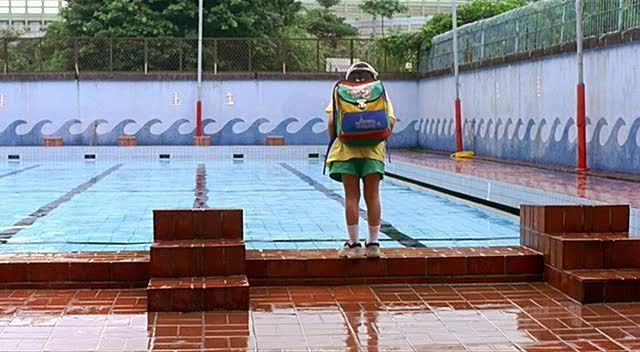
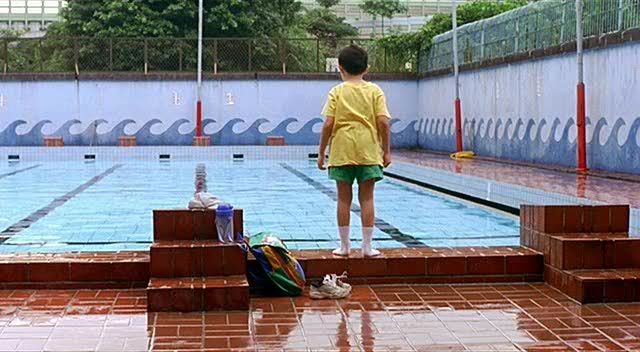
There's yet more in store that I have not drawn attention to but I have to go get on with my day and cook up some breakfast. For all the movie-going (and book-reading and thesis-writing) I've got in store, there's a whole lot of basketball to play, and dance parties to throw, and libations to imbibe, and meals to digest and life to live out of doors, in the light as much as in the dark. I hope I can do it all and come out smiling. Life shouldn't be a chore, it should be a delight -- it should be light! -- a walk in the park or a jump into a pool -- a lot of activity. Let's go.
ready
set
go

Monday, January 14, 2008

Catching up with 2007.
by Ryland Walker Knight


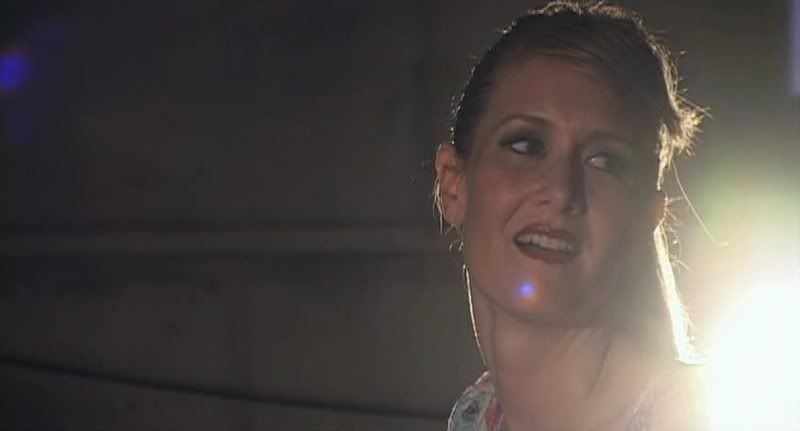
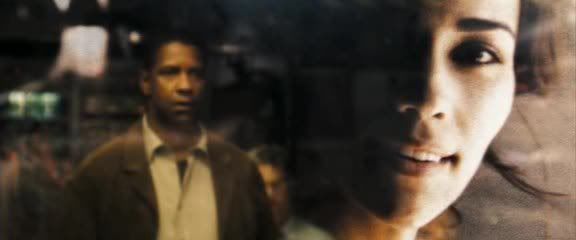
her blinding face
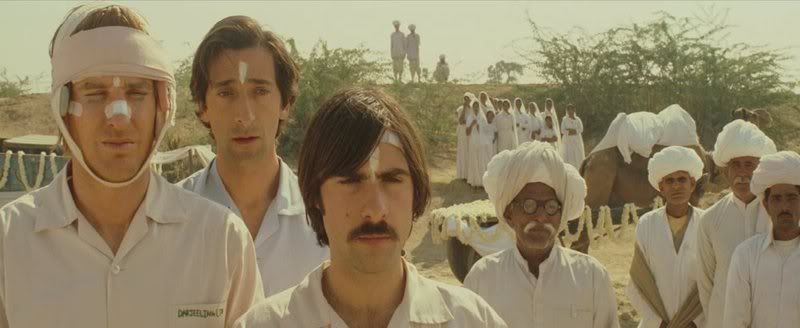
boy faces out
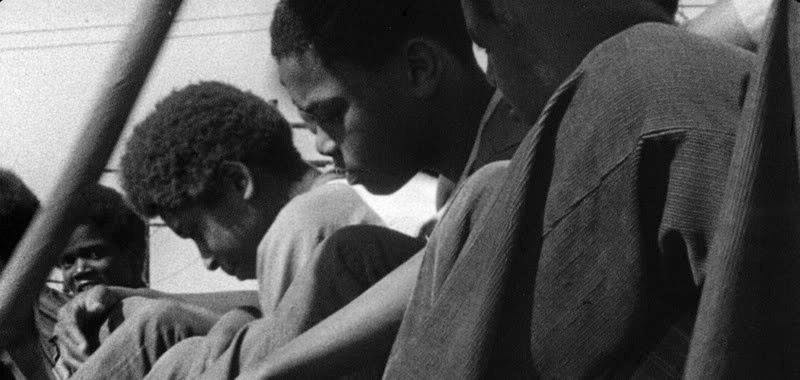
faces of brothers
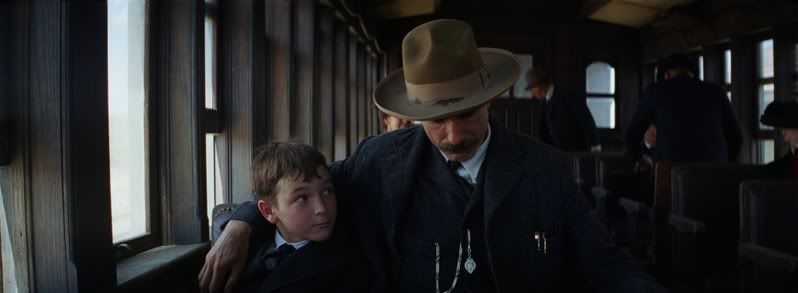
his hidden face
It is a characteristic criticism of Emerson to say that he lacks a sense of tragedy; for otherwise how can he seem so persistently to preach cheerfulness? But suppose that what Emerson perceives, when he speaks of his fellow citizens as existing in a state of secret melancholy, is that in a democracy, which depends upon a state of willingness to act for the common good, despair is a political emotion, discouraging both participation and patience. So when Emerson asks of the American Scholar that he and she raise and cheer us, he is asking for a step of political encouragement, one that assures us that we are not alone in our sense of compromise with justice, that our sense of an unattained self is not an escape from, it is rather an index of, our commitment to the unattained city, one within the one we sustain, one we know there is no good reason we perpetually fail to attain.
-- Stanley Cavell, Cities of Words: Pedagogical Letters on a Register of the Moral Life

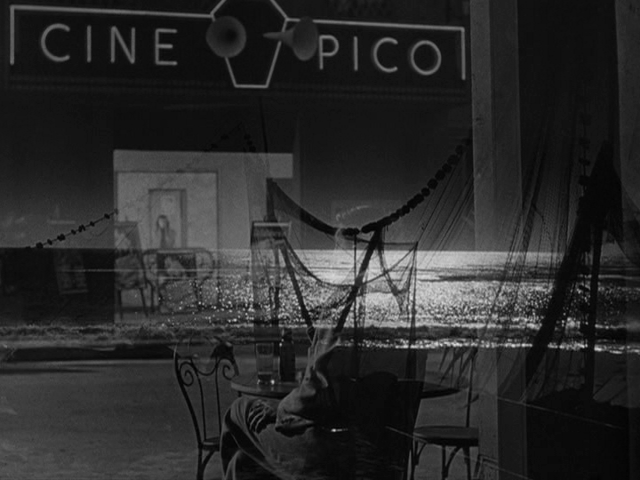
Go to The House to read a kinda-lengthy wrap up of what tickled me in 2007. While it's got pretty much the same format as what I used last year, this time I actually made a list at the end. Still can't rank anything, though, so it's an alphabetical list. I figure that most of the year-end lists and awards are redundant and silly to start with so why not throw my lot in with them? I guess the impetus to not make a list is because it's the same tired grammar most of film criticism continues to use. Not that I think a Better-Than List is worth much; it's still a posture. Not that my awards aren't a posture; my argument is with overbearing seriousness. (For example: I think it's awesome that my buddy Keith lists the Aqua Teen movie-film alongside The Horse.) Not that I'm not serious, but I like some levity; I like to laugh. Every film on my list, even the Reygadas, gave me a chuckle. But there's more of this over there so click this link if you didn't click that link at the beginning.

Also worth reading is Brian Darr's terrific Bay Area rep round up at Hell On Frisco Bay. It helps me to realize that as cool as New York City is (and it's definitely cool), San Francisco and the greater Bay Area have a lot to brag about. It helps to have a blogging buddy like Brian, too, with his calendar-scouring acumen pointing at things I don't always think to check up on. However, during this, my final, semester, I will probably only find time to attend screenings at the PFA. Thankfully, though, their newest calendar is pure dope: on Friday I got to go see Andrei Rublev on a big screen for the first time and during the afternoon of February the 17th I will see Out 1: Spectre, the shorter version (240 minutes) of the best film I saw and hardly wrote a thing about in 2007, Out 1: Noli me tangre (773 minutes). Plus: La Chinoise on my mom's birthday and a mini Terrence Davies retrospective (with the auteur in person at almost every screening, including a shot-by-shot discussion of Distant Voices, Still Lives). On to more merry movie watching and illuminating film writing in 2008.

Mais oui!
look at her
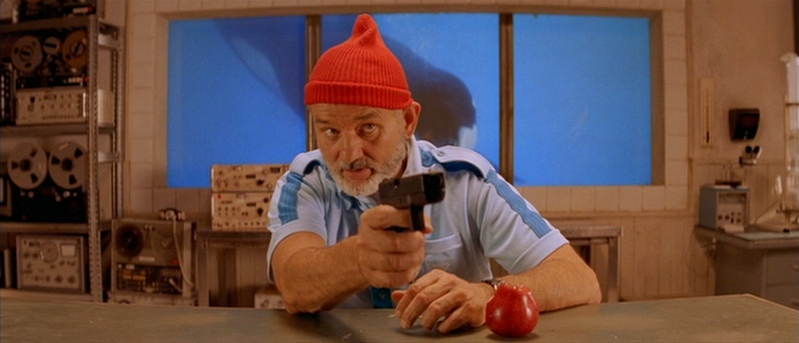
Does this look fake to you?
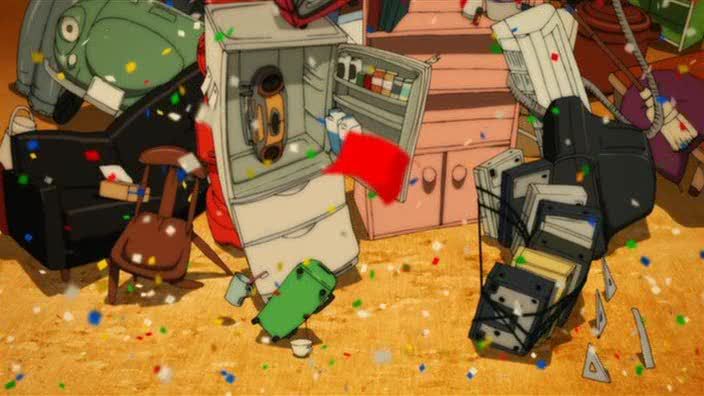
confetti junk comes alive
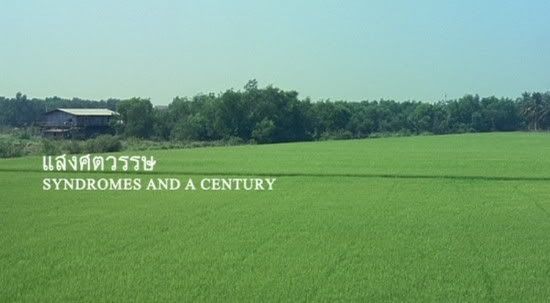
green world
up is down
swarm, flap, peck, kill
burn!
the end!
explode!
new lenses