Showing posts with label Jacques Tourneur. Show all posts

Sunday, January 31, 2010

Viewing Log #31: Foam forts make islands, traps [1/25/10 - 1/31/10]

by Ryland Walker Knight


Parade 2
Parade 1

  • Casa de Lava [Pedro Costa, 1994] # I'm about to start it. Seems fitting, given the Tourneur I watched and the box set coming out soon, about which I hope to say more when the time comes. Until then, I'll enjoy this masterful other mode he worked with first. And Inês de Medeiros. What a babe.
  • Band of Brothers "Crossroards" Episode 5 [Tom Hanks, 2001] The most theoretical episode so far with Winters literally writing history and bullets becoming letters at one match sound cut. But, as ever, the pathetic appeal is always thick, even in this quieter and calmer and altogether well constructed cliffhanger. Biggest surprise of this episode was easily Jimmy Fallon showing up for about five seconds of screen time.

  • Youth Runs Wild [Mark Robson, 1944] After a fabulous collage opener, all kinds of headlines and newsreels jumbled and layered, it got kinda boring. And I fell asleep. Shucks.
  • I Walked With A Zombie [Jacques Tourneur, 1943] # Stunning on such a screen despite the scratchy print. Despite all the murk moving, it's a crisp picture. More Monday.

  • Scarface [Brian De Palma, 1983] # Watched the first half. It starts so well, actually funny and wild and silly, but it quickly takes on Tony's worst qualities and does its own tailspin. Or so it seemed as I gave up and went over to watch the Warriors lose to the Bobcats.

  • The Informant! [Steven Soderbergh, 2009] # Still my favorite American film of last year. Precisely because it's so American, and funny. Lots there I'm not going into here. Maybe later, but probably not; probably, if you're really curious, you should just ask me about it. UPDATE: Actually, I'll probably publish some thoughts on it at the newly-launched website Thought Catalog, where I will join fellow VINYL-head Daniel Coffeen to contribute pieces on somewhat of the regular.

  • Band of Brothers "Replacements" Episode 4 [David Nutter, 2001] Nicely coiled episode that keeps things contained to one "Bull" character getting left behind, or having to stay behind, enemy lines after an ambush. That said, the same manipulative stuff irks me, and I'm mostly intrigued by Winters' calm ascent more than anything. I'll keep watching, of course, to see more visceral action scenes (but why the wash out standard, Steve and Tom?) and to see who all the old guys from the preludes are in this grand-scale re-enactment.
  • Casino [Martin Scorsese, 1995] # Finished it, as I tweeted, and boy does it drive itself down. A lot of scenes are hilarious, and others would be if they weren't so brutal. It shows life as perpetually preposterous, spectacle of death to the end one bloody baseball bat at a time. And, to reiterate my tweets, the cinema-as-a-gamble thing is crazy despairing, however beautiful, and I don't want it to make as much sense as it does.

Monday, January 25, 2010

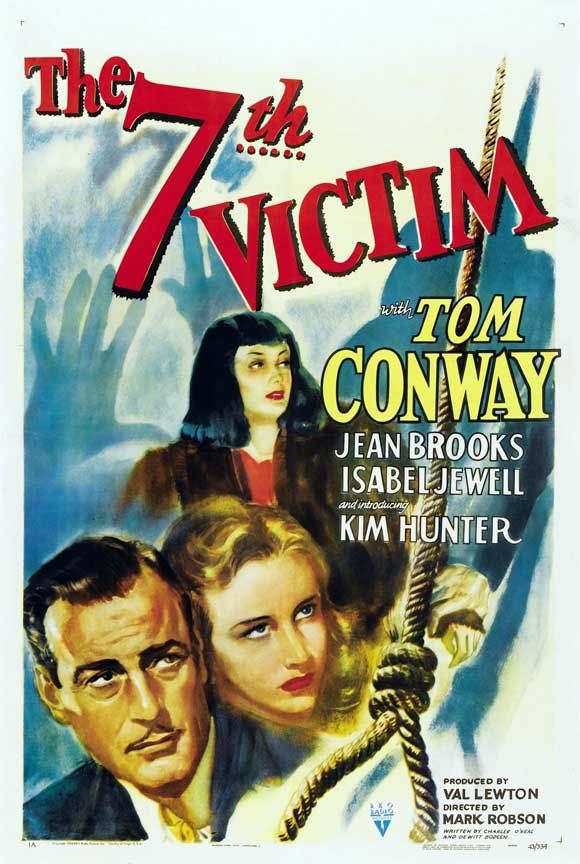
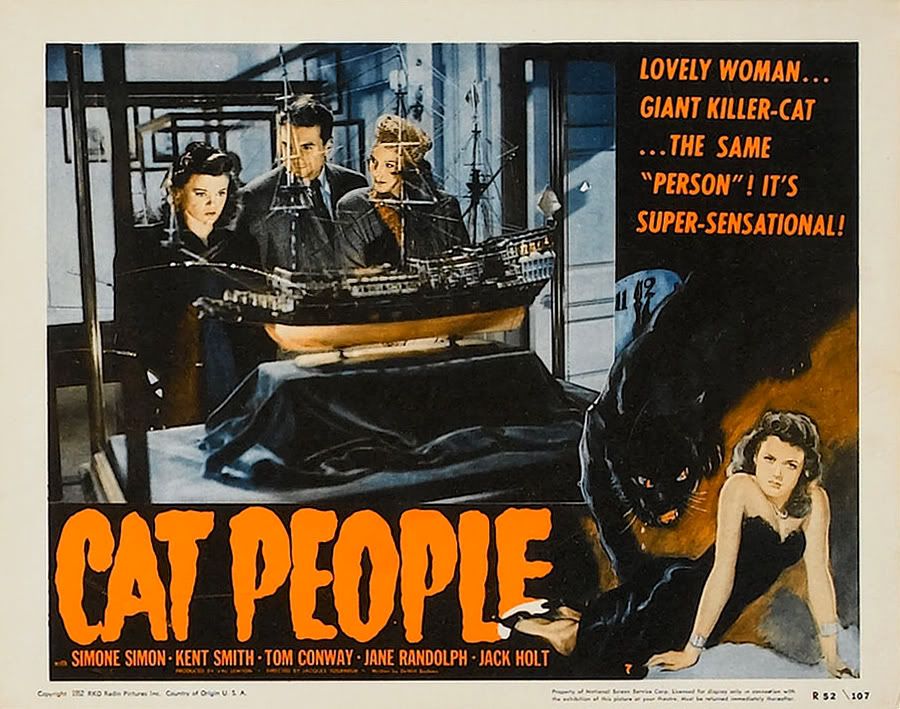
Lost Light Lewton: Cat People + The Seventh Victim

by Ryland Walker Knight


[PFA's got five double bills of Val Lewton pictures over the next few weeks. See the line-up here. I've never seen any of them on a silver screen until now, so here's a little catalog/tour of this new angle on things. If you want to play along at home, the films are all on Netflix thanks to this handy box set.]

7th 3

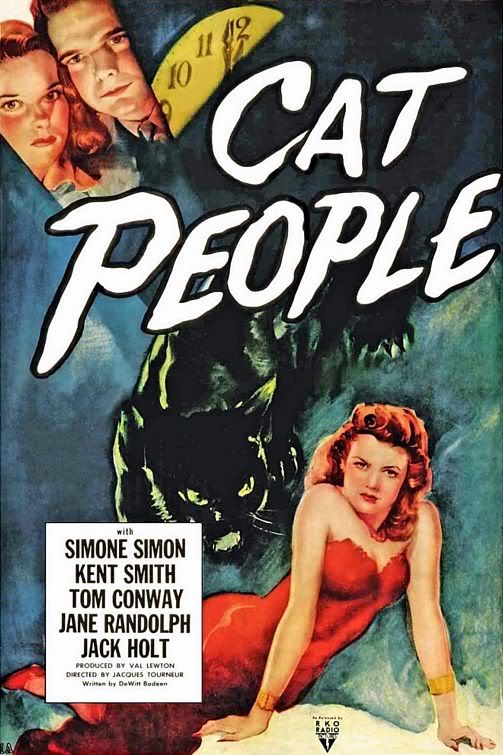
Cat People proved more popular, as ever, but The Seventh Victim's got audacity and depravity and terror in spades and in shadows all its own, all the deeper and deleterious. In more surprising turns than the Tourneur, this later, odder picture may also be the best argument for suicide ever put on film: the act is never not selfish, but the film seems to say that death's end can be a welcome and necessary release for some souls. Alternately, the sidelines of this Victim (most of which masquerade as the "a-plot" though the most poignant claims its right to speak near the close, as an aside) chant a hymn to living—in the world, with its vicissitudes and with its frights, without fear for the diurnal. But there is a pressure in this world, a cloud clamping its spirit, and it begins with the film's opening epigram, attributed as "Holy Sonnet VII" to Jonne Dunne (natch & sic): "I runne to death, and death meets me as fast, and all my pleasures are like yesterday."

The film begins in this plot, following little sister Mary (Kim Hunter's all eyes) as she searches for her missing sibling, Jacqueline. Robson and Lewton (and DeWitt Bodeen and Charles O'Neal) keep Jacqueline off screen for as long as narratively possible, and her first sighting is the briefest tease possible, which fits and throws fools for fits. She's more an idea than a person that way, kept intangible even when cloistered, impervious to the whole ball of wax rolled about her, including love. Every angle on her in the world is some kind of leeching, a pedestal or a clamp or a knife. That is, through its increasing ellipses, all things fly by like in life and demands pile up, the picture puts us in her paranoia, inside her depression, and all we understand is all that pressure from without. Mary's plight is motivated by saving her own skin, not her sister's, and once it's locked secure with that perverse reversal of fortune that is the love of Gregory Ward (Jacqueline's husband), the film drops her significance. She's played "naive" and kept a doll, at the world and Ward's surprisingly tender mercies. But it's the banal prejudices of these "betters" that keep Jacqueline tethered to life; we slowly see that their concern is just as selfish as her need to escape. It's about control, not debt. It's devastating precisely because it makes sense why this beauty might want to thud dead alone in an empty room. (So sad that Jean Brooks, too, was similarly unfit and unhappy.)


—not quite bottled, or adrift

Control is of course the theme in Cat People, too, as its Simon Simone fails herself, but that's more or less unavoidable. We are beasts of lust, the film says, bent to prey on each other. It's a fantastic metaphor, and the film's so gorgeous you can easily forget how wonky it unfurls. You cannot forget, however, how Simone's Irena does herself in because she can't handle her truth, her history, her instincts. Things get fudged all the time and every image moves eight ways; as with Victim, each scene is laden with significance to pull interpretations in as many directions as possible. See, it's not just about sex, which is where Schrader failed. Of course, sex is a huge part, and the only problem I'd pose with these two films is their rather typical structures (though each climax is muted) date the film's view on women, and sex, in obvious ways—but that's like complaining that Chandler used sentences not stanzas. Besides, any time you can turn dread productive, as with The Seventh Victim's interrogation of the death drive, you've got a curious object. If I owned the DVD, I would like to look at just how blocky the film is, how its connect-four space links up lines of thought, and how that searchlight does cleave the picture to signal the descent. After all, even the girl looking for one last night on the town has to go down (some stairs) to find it, to find some last laughs.

Sunday, January 24, 2010

Viewing Log #30: Color cannot clean a canting [1/18/10 - 1/24/10]

by Ryland Walker Knight


Playtimes 1
—Sat behind Godard.

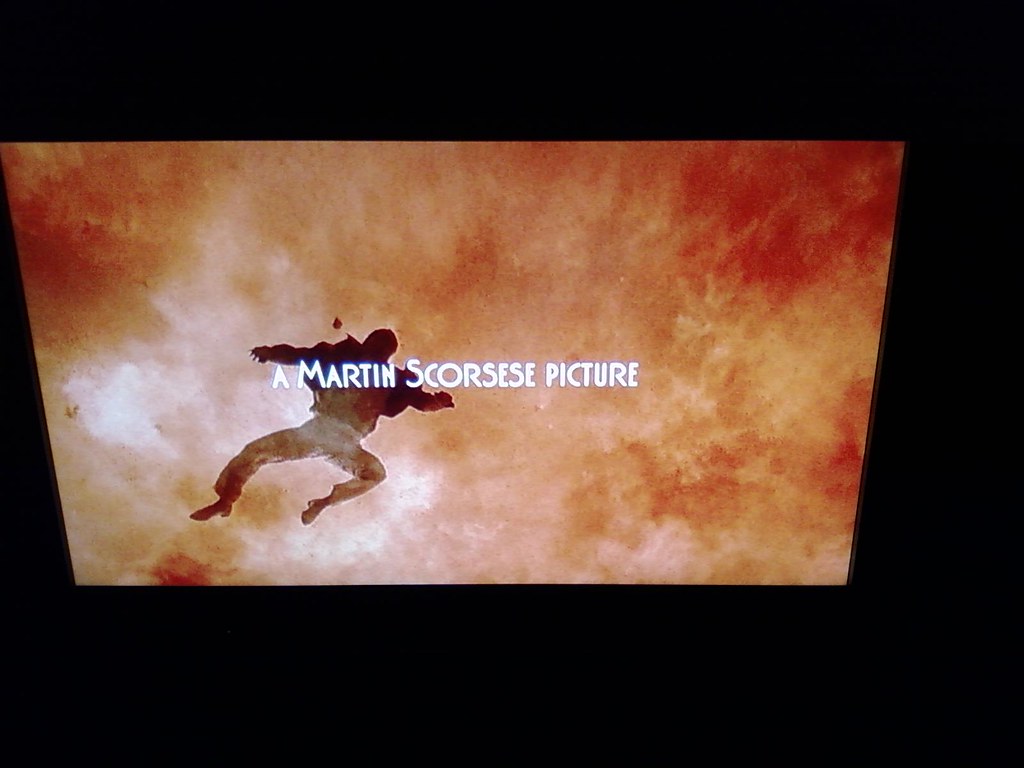
  • Casino [Martin Scorsese, 1995] # Like for the first time. I'm blown away. This is the ur-Scorsese picture. Everything's dialed up delirium, all the colors and lights and camera movements. For such a sad and scary movie, it's damned fucking giddy. I'm publishing this as I'm watching it, so my giddiness is sure to wane as these fools keep fucking up their silver lined lot.
  • Californication [Most of the third season] It was way too easy to do errands and little writing projects and just plow through this in one day. Rain played a part, but, also the sex.

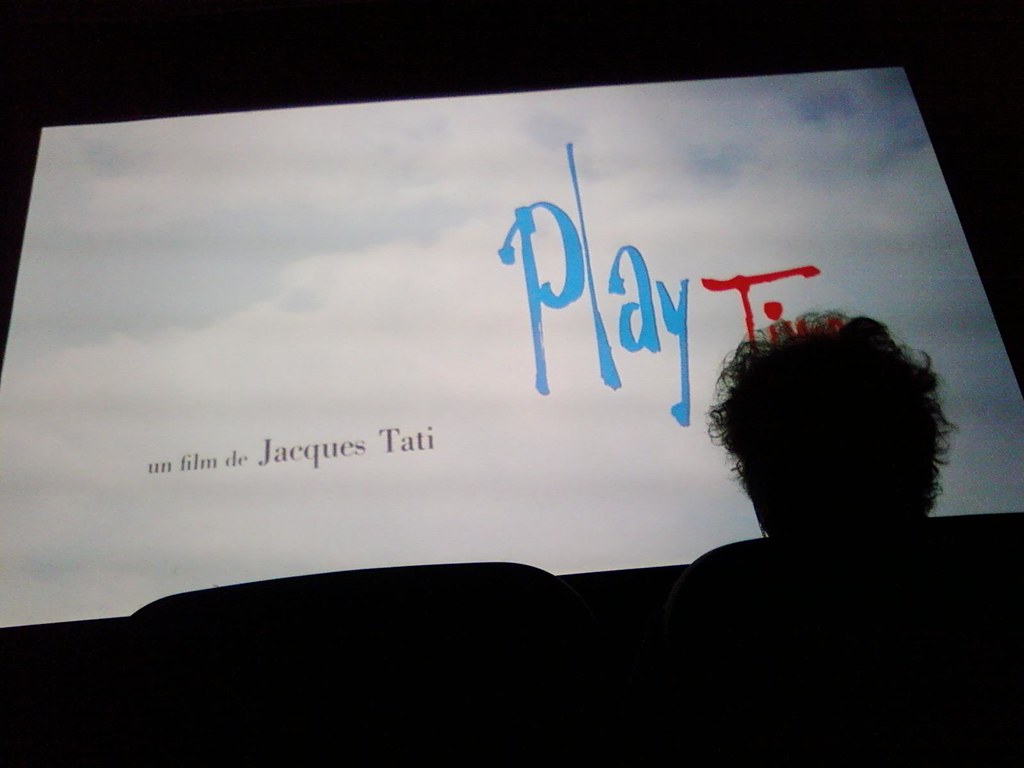
  • Playtime [Jacques Tati, 1967] # Yes, the best. Really: the best.

  • The Seventh Victim [Mark Robson, 1943] # I tweeted a hash tag (#bestmovieever?) that gets at how powerful this thing is for me, especially at this stage in the game, with its weight and frisson of social anxieties. More Monday.
  • Cat People [Jacques Tourneur, 1942] # Simon Simone's nose, let me tell you, can do things to a boy. Also, Tourneur's pace is all wonky: a real jam of angles keeps this from slipping down easy. More Monday.

  • A Letter to Uncle Bonmee [Apichatpong Weerasethakul, 2009] Watched on The Auteurs for free (click here) and then wrote this little nugget about it.
  • "Parisian Goldfish" by Flying Lotus [Eric Wareheim, 2009] Watched at the behest of Danny while talking Coachella. It's really something. Watch it here. It's very NSFW. It's weird: how much is celebratory? How much is a joke? Can it be both? I'm continually flabbergasted by the audacity of T+E.

  • Band of Brothers, "Currahee" Episode 1 [Phil Alden Robinson, 2001] Halfway decent, but a lot of it is what I hate about war movies and World War II movies in particular. I appreciate that generation, of course, since it gave us its youth in ways I can't imagine, but I'm pretty sick of it getting called "the greatest" all the time. Weird to see so many British actors playing Americans, including Simon Pegg of all people.
  • The Sopranos "Live Free or Die" (S6,E6) [Tim Van Patten, 2006] # The world opens for one man, for a bit, in the form of a vase and a bed & breakfast. Too bad you know this natural can't escape that hateful haunting in his history. There's more Paulie's than Tony's in this world. Even with Bacala's dunderheaded "Well we can't have him in our social club no more; that I do know."
  • The Sopranos "Mr. & Mrs. John Sacramoni Request..." (S6,E5) [Steve Buscemi, 2006] # A devastating episode of perceptions: misinterpretation abounds, even from the people fearing it the most (ie, Tony). Then again, the biggest perceptive revelation—Vito's true identity, as a gay man, um, coming out into view—is deferred an episode by Tony's misguided attempt to reassert his power. Oh, man, men make bad choices.

Casino credits 1

Sunday, August 23, 2009

Viewing Log #8: Eyes so green [8/17/09 - 8/23/09]

by Ryland Walker Knight


jennie
—I can stare for a thousand years.

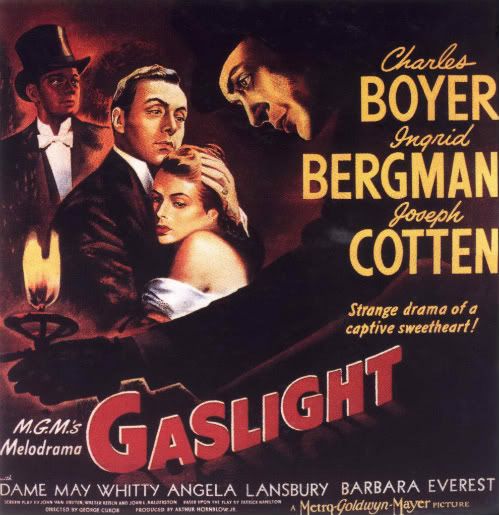
  • Gaslight [George Cukor, 1944] # So much more painful this time, though I can't imagine it not being painful. I really need to re-read Contesting Tears.

  • A Little Death [Gina Telaroli, 2009] Gina tells me this is a work in progress but it certainly looked cohesive and complete to my eyes.
  • Johnny Guitar [Nicholas Ray, 1954] # Color like you wouldn't believe, and all kinds of ideas of hierarchies. The stunt falls in the finale set piece really look like they hurt.

  • Inglourious Basterds [Quentin Tarantino, 2009] A blast, no doubt, despite prattle calls of ideological failure. More in The Notebook tomorrow (plus some extra notes at home). Gonna try to go again this week.

  • Design for Living [Ernst Lubitsch, 1933] Despite the class stuff, this could be made now. (Class is a no-no, it seems, in modern American comedy.) In fact, it's got a much more progressive idea of love and friendship than something like, say, Funny People. A real treat. And scandalous, too.
  • Trouble in Paradise [Ernst Lubitsch, 1932] # You can't change! Society is rigged! Hilarious!

  • The Thick Of It [Armando Iannucci, 2005/2007] Watched the whole show, including specials, all too quickly because I couldn't quit laughing at all that bile. Man, I am happy I don't know any Malcolm Tuckers.

  • In The Loop [Armando Iannucci, 2009] Yup: hilarious, biting, wonderful casting. I, too, take points off for the "aesthetic" but that's small potatoes in the bigger, faster, nastier, funnier scheme of things. Coogan cameo is brilliant.

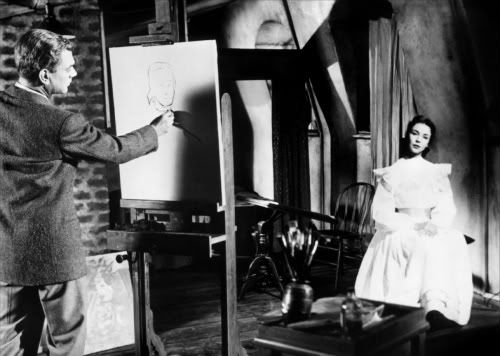
  • Portrait of Jennie [William Dieterle, 1948] Kind of devastating idea of inspiration: that what haunts us propels us—and we're lucky if we ever find an error in time to grasp that feeling in our hands. Jennifer Jones' aloof attitude is perfect; Joseph Cotton has the worst hat in cinema.
  • Night of the Demon [Jacques Tourneur, 1957] The power of writing to change the world, more often for ill, makes this windy tale spin. Lots to unpack. Was fun to revisit Kevin's work with Chris Fujiwara, maybe my favorite of the Shooting Down Pictures video essays.

down low

Sunday, August 09, 2009

Viewing Log #6: After midnight, searching [8/3/09 - 8/9/09]

by Ryland Walker Knight


for me
for you
—Whatever this world can give to me

  • Notorious [Alfred Hitchcock, 1946] # Yearning to hear those words, to find a way back from poison, how to restore faith. He says it early: Actions speak louder.
  • The Leopard Man [Jacques Tourneur, 1943] Fine vignettes of terror to instigate a lot of early "gaze" theory, but it doesn't hang together all that well. Still, each "hunt" is gripping and frightful.
  • Who Killed Who? [Tex Avery, 1943] Sunday morning cartoons discovered on youtube after reading a Rosenbaum entry way too early. I made note of these over on the tumblr microsite. Watching these in kind of rapid succession kind of gave me a headache but I was laughing a lot, too.
  • The Shooting of Dan McGoo [Tex Avery, 1945] click
  • Red Hot Riding Hood [Tex Avery, 1943] click
  • Little Rural Red Riding Hood [Tex Avery, 1949] click

  • Duplicity [Tony Gilroy, 2009] Not as knotty as some would have you believe, but easily sexy and fun and a little smart and, most surprising, none of it's done with condescension. Gilroy's not hiding any so-called "twist," either, with that credit sequence finger pointing or the emerging ("fractal") structure.

  • I Love You Man [John Hamburg, 2009] About as apt a double bill as can be imagined. This movie makes me feel good and I'm not ashamed one iota. I don't care if it's a simple thing; it works. Maybe more words will come of this.
  • Shaun of the Dead [Edgar Wright, 2004] # "Alright, gay..." There's a real picture of friendship couched inside this zom-rom-com, which makes it easy for me to get nostalgic for a few worlds I've lived in (not just the most recently departed). But, beyond that, it was nice to see again how smart the movie really is at all events. —So many long takes!

  • The Body Snatcher [Robert Wise, 1944] Just the beginning bit. Karloff is great, but I was tired and the Tourneur is real hard to follow. (In fact, I looked back at the zombies instead.)
  • I Walked with a Zombie [Jacques Tourneur, 1943] # Hadn't seen since seeing those Costa pictures. What a tight, humble movie. What night, what walking, what tall grass and what big eyes. In what darkness do we see?

  • A Man Escaped [Robert Bresson, 1956] # As hopeful as anything. Like comfort food, only healthier.

  • The Curse of the Cat People [Gunther von Fritsch and Robert Wise, 1944] Kind of silly, though occasionally pretty. No real consequences here.
  • Cat People [Jacques Tourneur, 1942] # A standby for all time. The dimensions of desire are deep and wide and violent. More said with pictures.

spent

Monday, August 03, 2009

Dimensions of desire. Cat People.

by Ryland Walker Knight


I.
leading away
—Going nowhere

For fear of clogging the load time of this main page, I've hosted this image essay over at VINYL IS IMAGES. Please do click through.

Tuesday, August 12, 2008

Thatches and blankets. Out of the Past and Nightfall.

by Ryland Walker Knight

[OR: "David Goodis at PFA so far." Nightfall played Thursday, August 7, 2008, as part of PFA's current Streets of No Return: The Dark Cinema of David Goodis series, which continues this Thursday, the 14th, with a screening of The Burglars, starring Jean-Paul Belmondo and Omar Sharif. The series runs three more programs thereafter through the 23rd. I hope to offer some more thoughts next week.]
pastnight

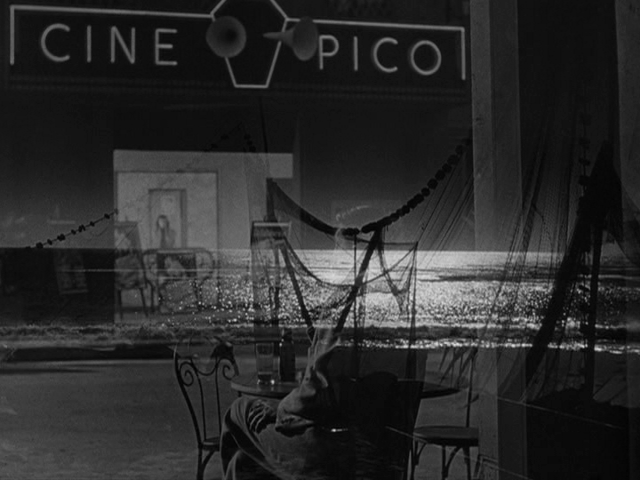
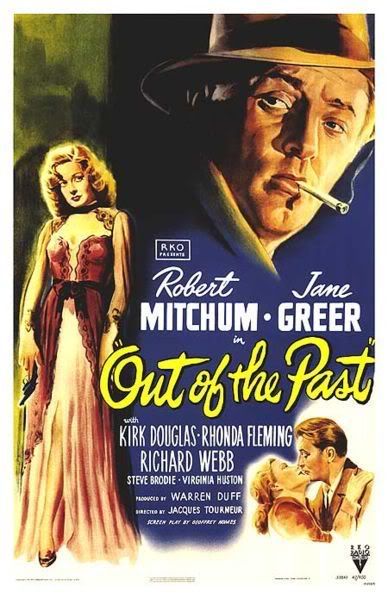
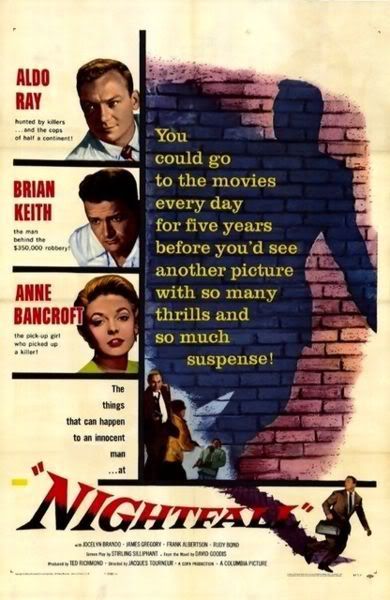
Eddie Muller specifically asked last Thursday's audience to not compare Nightfall to Jacques Tourneur's earlier proto-noir, Out of the Past, so I'm going to do just the opposite. In his introduction, Muller said that it's a fruitless comparison, that it would only do harm to the later film, but I think they make a fine pair precisely because they are so divergent (yet remarkably consistent). Made a decade apart (1947, 1957), both fear the city and its traps, both distrust people, both seek escape from the world. However, the paranoia of the former is eased, slightly, in the latter into circumstantial nuisance: Jane Greer precipitates an economy of lust, her come hither enigma lighting desire like a good femme fatale, whereas Anne Bancroft rather represents a haven, her curves safe and her eyes welcoming. Nobody owns the upper hand in Nightfall, really, over Aldo Ray's Art Rayburn/Jim Vanning -- he's fighting time, and the seasons, as much as the villain bank robbers -- while Robert Mitchum's Jeff Bailey/Markham, from his first encounter with Joe Stephanos (that sly, fey and lovely analog to Greer, Paul Valentine), finds himself trapped by history (his story), by people, by plots, by desire.
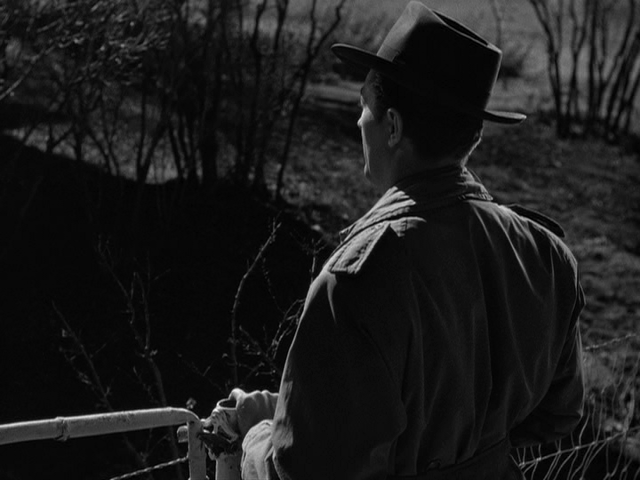
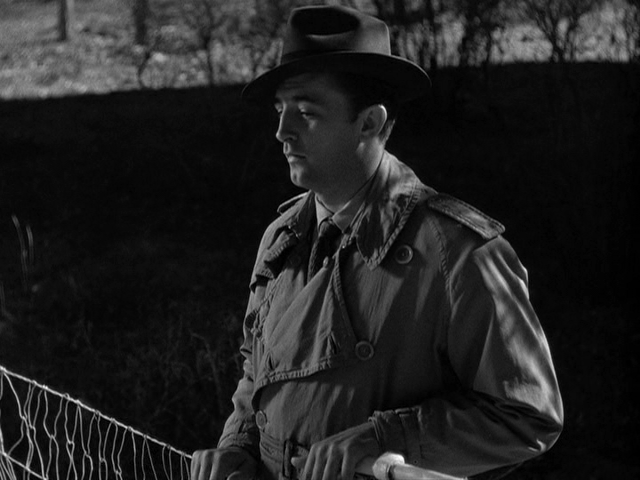
back
front

Tourneur didn't seem capable of making a dull image, even in the almost-bland patches of Nightfall's location exteriors. Part of this may be due, simply, to the print and its upkeep, although the picture has a less striking, more television-grade contrast/construction than its predecessor with fewer set-ups and less glamor. Yet an early dolly retreat, to make way for a bus that fills the screen, is a signature, subtle Tourneur move; and in the day for night interrogation sequence at a derrick field, the flat light does not take away from the compositions. Everything lays at an angle. Even direct, 90-degree frames sit uncomfortable with objects thrust in on a slant, fudging perspective. Tourneur's world is acentered and fluid, despite its classical trappings, the termite auteur par excellence, littered with odd interstitials to syncopate the mise-en-scene. While more pronounced in the earlier film, the more modest later work still rests uneasy, growing out of the performers as much as the technique. Aldo Ray's hemmed posture and choked voice work at odds with his broad Navy body. Anne Bancroft can't quite get comfy and fades into the picture, another prop, almost; something else Ray has to carry. As the go-nowhere villians, Brian Keith and Rudy Bond play off each other so well that it's easy to forget all the other calm-crazy instantiations of other heist duos; Keith, especially, uses that laconic distance to genteel effect, rounding a square character as much as possible.
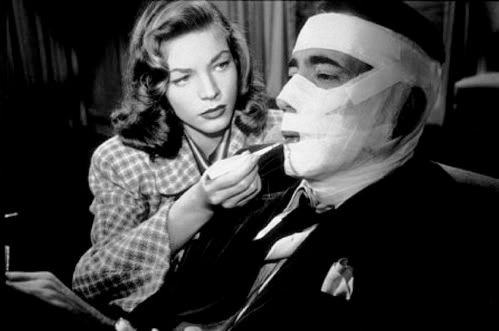
What I find most curious through the first two weeks of the David Goodis series, situated firmly in the middle of cinema's century, is how often things end well. The series opened with Dark Passage, Goodis' splash project. A Bogie-Bacall film directed by Delmer Daves, Dark Passage opens brilliantly, almost exclusively in first person point of view shots, keeping Bogie off screen until he has reconstructive plastic surgery to hide his identity (a San Quentin break-out) until he can prove his innocence, or simply flee for good, as he winds up doing. It's a pretty goofy film, to be honest, but its leads' charisma and chemistry buoy the plot and help sell every melodramatic turn, including its aw-shucks ending, as some kind of idea of what it takes to make your future, to make your dreams real, even if it means forsaking your past. I had to skip the second picture, The Unfaithful (unfortunate since it sounds compelling), and I'd seen Shoot the Piano Player before (a fine, smart picture), so I next caught up with the series with Nightfall. It seems to really do Steve Seid's program justice one should go ahead and read a Goodis or two, but my final weeks of school prevent too much outside reading (I'm slow and swamped), so I feel I'm only getting half the picture. Adaptation is an interesting, demanding process that seems shaped as much by studio demands as authorial concerns, at least in this early phase.
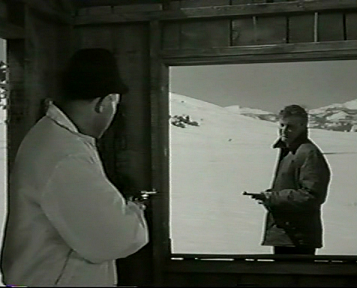
Nightfall is a meager thing, and as Seid's pre-screening read from the novel suggests, plenty was left unfilmed -- in particular because of its black and white film stock -- sticking to the plot and little else; however delightful those brief asides with the Frasers are (James Gregory and Jocelyn Brando are the most theatrical actors in the piece, clearly relishing their screen time), the passages operate as exposition, not color. And that's the biggest difference between this later film and Out of the Past: things breathe more in the darkness of the earlier work, each set (and each set-piece) another layer of story, mood, complication. By contrast, Nightfall looks more open, more blank, and allows for more projection; for a film named after night, there's a lot of day, a lot of white. And yet, it's another source of indetermination. The threat in Nightfall is precisely the chance that those empty spaces will be filled by guns and violence, that the wide white blanket at the close has buried things is untenable. Aldo Ray says he wants to keep the money company at the film's close but we don't get to see him and Bancroft and Gregory surround the satchel. It sits solitary, the lone dark spot in a bright field. The music plays triumphant, conclusive, but the image is stark and forlorn. Ray's Vanning/Rayburn may be exonerated and free to start life over with his new bride but it feels undercut. Or, the picture may simply be saying it's a first step; night will fall again and cover this once more. As we may remember from the beginning, the night brings artificial lights that isolate. Indeed: what will Vanning/Rayburn return to? Will he adopt this new name for good, as he tells Gregory's Fraser? Who is he now?

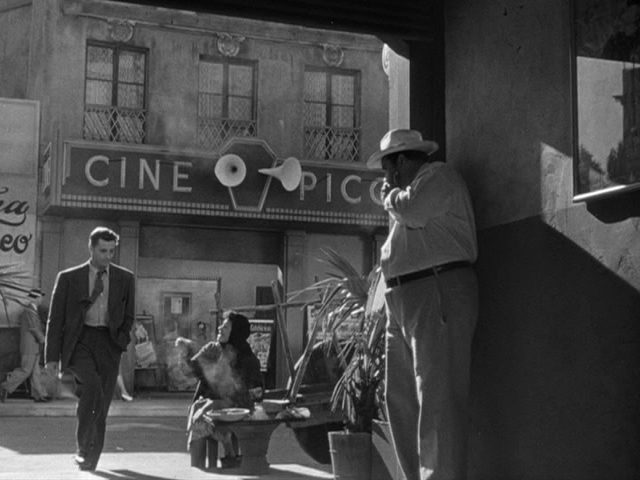
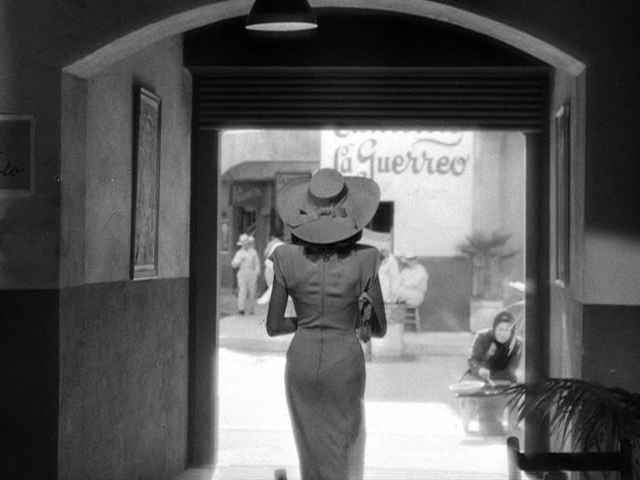
Such ambiguity turns differently in Out of the Past. For one thing, it's sexier. From the lateral camera moves to Jane Greer's neck, from the abyss shadows to Mitchum's passive ire, this film is about as desirable as possible. It's plain gorgeous. Only Roger Deakins seems to shoot darkness this well in today's Hollywood productions. Which is another reason Muller's right to warn against comparing these two. It's just not fair. However, there's a nice dissonance to draw out, a tidy dichotomy between the clutter of things forcing action in circumscribed contexts (Mitchum's a detective caught between people, and later a mechanic, a profession spent under and inside things-spaces-systems) over against drawing out a map on the blankness of the world (Ray's an artist working in water color who cannot remember crucial (spatial) facts, which is a characterization of him as an actor as well). But that's not all. You could just as easily talk about how the films figure emergence (of the past, of memory, of violence, of desire) or repression or sacrifice or actualization or disclosure or lies. And, of course, all those are related. For this is an art of relationships. An art where it matters that Mitchum sits across from the cinema but never enters, only hears it, and lets it score his first encounter with Greer's Kathie Moffat. She's an illusion from the get go. After all, nearing the close, she says it herself, while wearing what looks like a habit: "I never told you I was anything other than what I am: you just wanted to imagine I was." It's a sick joke: Look all you want, I'll keep drawing back; in fact, I'm barely what you want. But, heck, we know she's only luring us in again, right along with Bob, there. Indeed: I want to go there sometimes. And I'll go. And I'll get out alive. That's the fun, right?
enter
sometimes
fade
See a companion image essay: There's a world out there.