Showing posts with label Wittgenstein. Show all posts

Sunday, November 16, 2008

VINYL IS PODCAST #6: A waltz is a fault; like, falling.

by Ryland Walker Knight and Mark Haslam and Jennifer Stewart
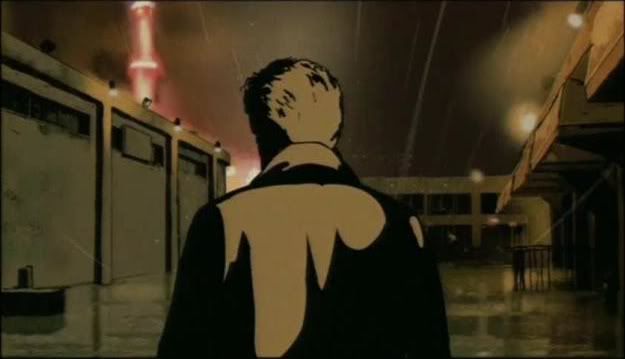

turn away

[Podomatic stream]
[Direct audio download]
[iTunes subscription available]
[Simple syndication subscription]

Today we saw Waltz With Bashir at the Landmark Embarcadero as the final film in the 3rd Annual SF International Animation Festival. It took us even longer to get home this time but, after some food, we talked on digital tape again. Last week's podcast saw us working through a very common reaction to Kaufman's film. This week we were more hesitant and disparate, largely because of Waltz With Bashir's traumatic ending. Juxtaposed with stunning animation, we struggled to account for the shock of its ultimate loss. Or at least, some of us did.... Ry's earlier thoughts can be read by clicking here, and we would also recommend the ever-astute Michael Koresky as well. Thanks for listening! Here's some songs; go buy them, too.

The Books - There Is No There
(zshare)
Squarepusher - Massif (Stay Strong)
(zshare)

Tuesday, June 24, 2008

Clarity, not expertise; an interest in singularity.

by Ryland Walker Knight


Sugar Daddy
Batty Mommy

Section 133 of Philosophical Investigations:

It is not our aim to refuse or complete the system of rules for the use of our words in unheard-of ways.

For the clarity that we are aiming at is indeed complete clarity. But this simply means that the philosophical problems should completely disappear.

The real discovery is the one that makes me capable of stopping doing philosophy when I want to.--The one that gives philosophy peace, so that it is no longer tormented by questions which bring itself in question.--Instead, we now demonstrate a method, by examples; and the series of examples can be broken off.--Problems are solved (difficulties eliminated), not a single problem.

There is not a philosophical method, though there are indeed methods, like different therapies.


Towards the very end of Film as Film:

Criticism itself is a public activity, concerned only with what can be communicated. I may feel a picture to be coherent but unless I can explain the nature of its coherence my feeling carries no greater critical weight than my response to the colour of the hero's tie. Though we may enjoy swapping preferences and prejudices among friends, a critical judgement is of value only when it can itself be criticized and tested against others' experience and perceptions.

A theory of criticism is useful, similarly, when it helps us to achieve a clarity and consistency in our discussion by providing an agreed language in which to express our perceptions and define our differences. Theory exists in the wake of experience and must remain adjustable to new experience. We cannot usefully construct a theory to aid in the judgement of movies yet to be made, but any theory (and particularly the one I have presented) should be disregarded the moment it is seen to obstruct rather than promote understanding and discourse.

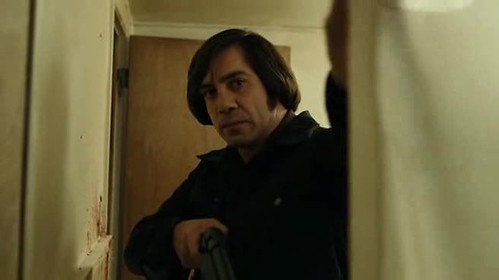
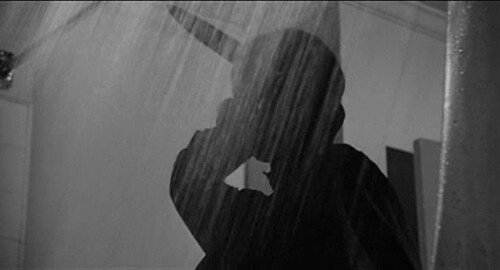
[The pictures, of course, are ironic. Although it may be argued, with relative ease, that those two bogies are after their own brand of clarity and personal interests in singularity. The problems they face are that their singular interests plain reject anything other than their singular interests. Those two aim to refuse and complete a singular system of rules that will have nothing to do with cooperation, with the public, with other people; it's insulation instead of expansion. The search for singularity should look to find the ways in which the singular can live with its counterparts. Try as you might, you cannot deny or ignore the bonds of the world.]

Friday, November 23, 2007

Late night notes: criticism of criticism, or something, via Run, Lola, Run.

by Ryland Walker Knight

Michael threw up some words about Tom Tykwer's infamous Run, Lola, Run the other day. If you click this link you can see his initial post, plus some comments from yours truly, Cuyler, and Michael, in regards to the film, and criticism in general. It's kind of a mini preview of one of the things I'm concerned with in my Thesis, too. As such, I decided to go ahead and cross post my most recent comment here. Please, feel free to comment on it here, or there.

Here's what I've come to think: if you choose to write something about a film, or about anything, you have chosen to deem it worthy of a comprehensive investment. It's part of why I've slowed my roll on the blog. Sometimes you have to write about things you know are not "worth your time," though, as is often the case in school, which can complicate the task of writing. But I figure you should approach any writing project with a mind to make it fun, to feel comfortable to write whatever you want. I've simply chosen to try to limit my writing to things I want to praise. This does not mean complete adoration; no, some films, or albums, or paintings, do not work (and this bears attention, too), but when approaching such an object I think the admirable writing is one which refuses categorical value judgments. The evaluation element in criticism is not simply whether an object is worthy of time and thought but evaluating what of the object itself is worthy (in relation to itself). This is why I'm averse to lists. Criticism is not about what's better than what. It's about how things work; and if they do not work, it's not about how it should have worked, nor how it could have worked, nor how the object of criticism's failure/s to work diminish its worth of the object; the writing itself makes the object worthy. (When a film fails its ambitions it can make for an intriguing essay, too, as if offers the critic the opportunity to take up certain possibilities in thought for him/herself. Such as: what's at stake in choosing the soccer ball to open _Lola_? if the film fails that trope, what might that say about the trope itself and not the film? what if the trope is simply games, and not soccer?) Also, criticism is an invitation to share the critic's experience of the film. The best works of criticism give the reader (1) a picture of the film (2) as it relates to the critic (3) and how the critic finds associations from what is given to him/her. As I find (the great) films to be works of philosophy, I find a passage of Wittgenstein so apt I get giddy thinking I get to share it with you (that is, reiterate it): 126. Philosophy simply puts everything before us, and neither explains nor deduces anything.--Since everything lies open to view there is nothing to explain. For what is hidden, for example, is of no interest to us. One might also give the name "philosophy" to what is possible before all new discoveries and inventions. What else is a film but a phenomenon where everything lies open to view before us? We do not add to the film in criticism. We add up our experience of the film. Our experience of the film triggers associations, which we can explore in relation to the film, but the burden of criticism, as an elucidation and not as an explanation, is not to build a film up (trumpet its many virtues) nor to tear a film down (harp its many deficiencies) -- it is to simply offer the best (say the most interesting and comprehensive) picture of the object at criticism for the reader. I do not think I live up to this definition yet. Or, it's real hard to table certain urges.

So: if you choose to write about, think about, talk about, _Lola_, then the burden of your work is to explode the film. Altho I would suspect he does, Thoret may not even like _MiVi_: it's not about that: it's about how he sees the object and attends to its functionality as an object of intentionality. Which brings me to the other big complication inherent to criticism: how to deal with the object in its relation to other objects (by its author/s and by other author/s it invokes, or inherits from). As Felipe said best, or better (more concise?) than me: "For me, this is an essential element of criticism; the expression of the singular value of a text always locates that text's singularity in relation to other texts. Criticism as monadic reading." Phew! This is a lot to struggle with, clearly, and makes blogging that much more difficult, or appear incomplete in many instances, as many blogs simply offer opinions of their authors, not actual criticism. It's enough to give me hives. So I try not to stress it. I try to make each writing experience fun, without ignoring how serious the practice really is.

Wednesday, August 08, 2007

Late night realization. A spark in you, just before bed.

HERE IT IS: If I lost my eyes I would want to die; and I would be afraid to cry. I love my sight. And my life. And Terrence Malick's movies. Also, I mean it when I say, "I believe in America, and rivers."

HERE I SEE SOME MORE, snatched from Ludwig Wittgenstein's Philosophical Investigations:


103. The ideal, as we think of it, is unshakable. You can never get outside it; you must always turn back. There is no outside; outside you cannot breathe. --Where does this idea come from? It is like a pair of glasses on our nose through which we see whatever we look at. It never occurs to us to take them off.

126. Philosophy simply puts everything before us, and neither explains nor deduces anything.--Since everything lies open to view there is nothing to explain. For what is hidden, for example, is of no interest to us.
One might also give the name "philosophy" to what is possible before all new discoveries and inventions.

131. For we can avoid ineptness or emptiness in our assertions only by presenting the model as what it is, as an object of comparison--as, so to speak, a measuring-rod; not as a preconceived idea to which reality must correspond. (The dogmatism into which we fall so easily in doing philosophy.)


HERE WE BASK IN DELIGHT: This does zero justice to the beauty at hand, what with pixelation and the downsizing of widescreen genius. Luckily, spirits shine bright no matter the darkness, or how small the cracks through which light leaks.


[You're a magician to me. --RWK]