— edited by Ryland Walker Knight
 1.
1.The modern fact is that we no longer believe in this world. We do not believe in the events which happen to us, love, death, as if they only half concerned us. It is not we who make cinema; it is the world which looks to us like a bad film. Godard said, about
Bande à parte: 'These are people who are real and it's the world that is a breakaway group. It is the world that is making cinema for itself. It is the world that is out of synch; they are right, they are true, they represent life. They live a simple story; it is the world around them which is living a bad script.' The link between man and the world is broken. Henceforth, this link must become an object of belief: it is the impossible which can only be restored within a faith. Belief is no longer addressed to a different or transformed world. Man is in the world as if in a pure optical and sound situation. The reaction of which man has been dispossessed can be replaced only by belief. Only belief in the world can reconnect man to what he sees and hears. the cinema must film, not the world, but belief in this world, our only link. The nature of the cinematographic illusion has often been considered. Restoring our belief in the world -- this is the power of modern cinema (when it stops being bad). Whether we are Christians or atheists, in our universal schizophrenia,
we need reasons to believe in this world.
—
Gilles Deleuze2.You have to be a fake first.
—
Jonathan Lethem3.All films are about the theatre, there is no other subject.
—
Jacques Rivette4.Run to the lights of the city.
These moments passing will be there.
Run to the lights of the city.
This dance will last us forever. Forever.
—
Cut Copy5.Now, too, the rising sun came in at the window, touching the red-edged curtain, and began to bring out circles and lines. Now in the growing light its whiteness settled in the plate; the blade condensed its gleam. Chairs and cupboards loomed behind so that though each was separate they seemed inextricably involved. The looking-glass whitened its pool upon the wall. The real flower on the window-sill was attended by a phantom flower. Yet the phantom was part of the flower, for when a bud broke free the paler flower in the glass opened a bud too.
—
Virginia Woolf6.The color is yet a variant in another dimension of variation, that of its relations with the surroundings: this red is what it is only by connecting up form its place with other reds about it, with which it forms a constellation, or with other colors it dominates or that dominate it, that it attracts or that attract it, that it repels or that repel it. In short, it is a certain node in the woof of the simultaneous and the successive. It is a concretion of visibility, it is not an atom.
—
Maurice Merleau-Ponty7.And then black night. That blackness was sublime.
I felt distributed through space and time:
One foot upon a mountaintop, one hand
Under the pebbles of a panting strand,
One ear in Italy, one eye in Spain,
In caves, my blood, and in the stars, my brain.
There were dull throbs in my Triassic; green
Optical spots in Upper Pleistocene
An icy shiver down my Age of Stone,
And all tomorrows in my funnybone.
—
John Shade8.This girl she didn't know where she was goin' or what she was gonna do. She didn't have no money or nothin'. Maybe she'd meet up with a character. I was hoping things would work out for her. She was a good friend of mine.
—
Linda9.His talent was as natural as the pattern that was made by the dust on a butterfly's wings. At one time he understood it no more than the butterfly did and he did not know when it was brushed or marred. Later he became conscious of his damaged wings and their construction and he learned to think and could not fly away any more because the love of flight was gone and he could only remember when it had been effortless.
—
Ernest Hemingway10.I believe that we are lost here in America, but I believe we shall be found. And this belief, which mounts now to the catharsis of knowledge and conviction, is for me—and I think for all of us—not only our own hope, but America's everlasting, living dream. I think the life which we have fashioned in America, and which has fashioned us—the forms we made, the cells that grew, the honeycomb that was created—was self-destructive in its nature, and must be destroyed. I think these forms are dying, and must die, just as I know that America and the people in it are deathless, undiscovered, and immortal, and must live.
I think the true discovery of America is before us. I think the true fulfillment of our spirit, of our people, of our mighty and immortal land, is yet to come. I think the true discovery of our own democracy is still before us. And I think that all these things are certain as the morning, as inevitable as noon. I think I speak for most men living when I say that our America is Here, is Now, and beckons on before us, and that this glorious assurance is not only our living hope, but our dream to be accomplished.
I think the enemy is here before us, too. But I think we know the forms and faces of the enemy, and in the knowledge that we know him, and shall meet him, and eventually must conquer him is also our living hope. I think the enemy is here before us with a thousand faces, but I think we know that all his faces wear one mask. I think the enemy is single selfishness and compulsive greed. I think the enemy is blind, but has the brutal power of his blind grab. I do not think the enemy was born yesterday, or that he grew to manhood forty years ago, or that he suffered sickness and collapse in 1929, or that we began without the enemy, and that our vision faltered, that we lost the way, and suddenly were in his camp. I think the enemy is old as Time, and evil as Hell, and that he has been here with us from the beginning. I think he stole our earth from us, destroyed our wealth, and ravaged and despoiled our land. I think he took our people and enslaved them, that he polluted the fountains of our life, took unto himself the rarest treasures of our own possession, took our bread and left us with a crust, and, not content, for the nature of the enemy is insatiate—tried finally to take from us the crust.
—
Thomas Wolfe11.By a paradox that is only apparent, the discourse that makes people believe is the one that takes away what it urges them to believe in, or never delivers what it promises. Far from expressing a void or describing a lack, it creates such. It makes room for a void. It that way, it opens up clearings; it "allows" a certain play within a system of defined places. It "authorizes" the production of an area of free play (
Spielraum) on a checkerboard that analyzes and classifies identities. It makes places habitable.
—
Michel de Certeau12.After all, one can only say something if one has learned to talk. Therefore in order to
want to say something one must also have mastered a language; and yet it is clear that one can want to speak without speaking. Just as one can want to dance without dancing.
And when we think about this, we grasp at the
image of dancing, speaking, etc.
—
Ludwig Wittgenstein13.Taking seriously.— In the great majority, the intellect is a clumsy, gloomy, creaking machine that is difficult to start. They call it "taking the matter
seriously" when they want to work with this machine and think well. How burdensome they must find good thinking! The lovely human beast always seems to lose its good spirits when it thinks well; it becomes "serious." And "where laughter and gaiety are found, thinking does not amount to anything": that is the prejudice of this serious beast against all "gay science." —Well then, let us prove that this idea is a prejudice.
—
Nietzsche14.This revolution is to be wrought by the gradual domestication of the idea of Culture. The main enterprise of the world for splendor, for extent, is the upbuilding of man. Here are the materials strewn along the ground.
—
Emerson15.Wait!
All-right.
Give me every little thing.
And don't stop.
—
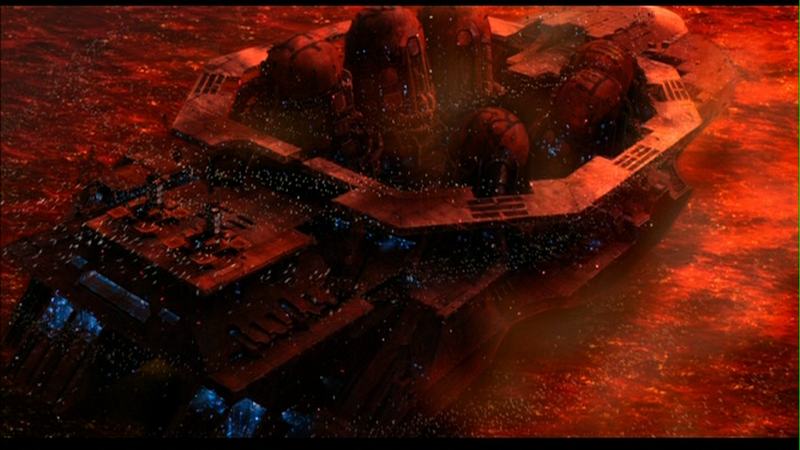
The Juan Maclean[Leading image: "What will be play now?"]



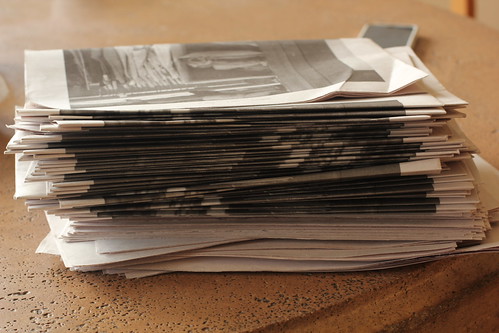
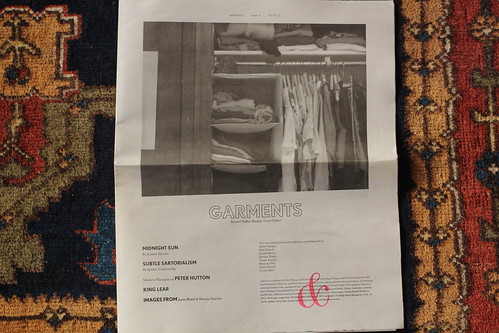
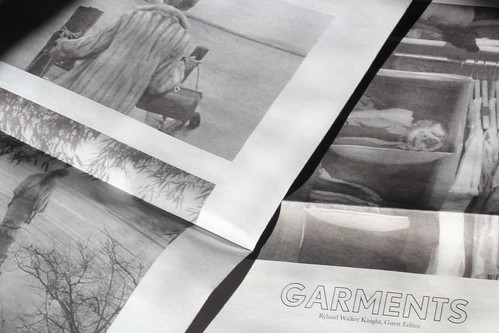

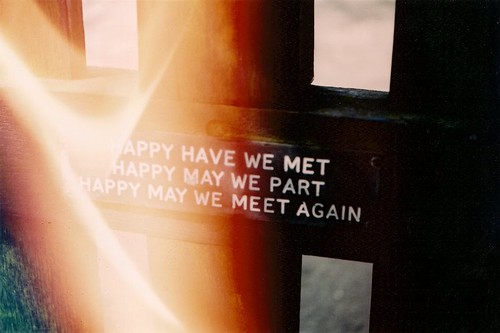
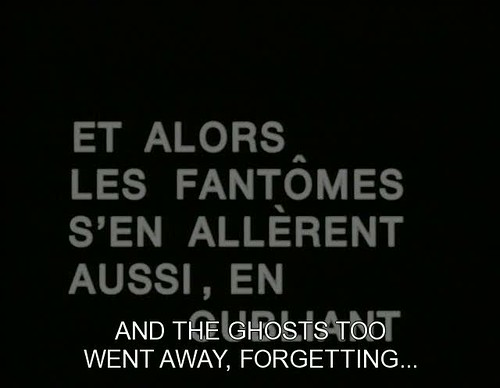
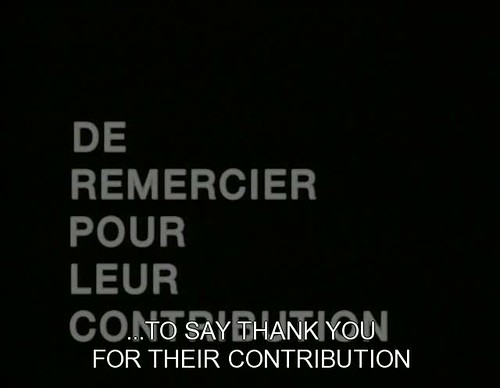





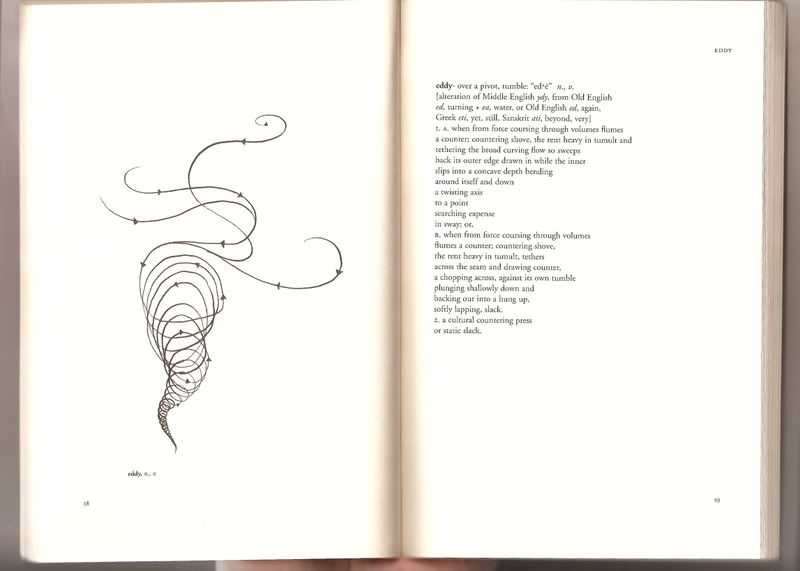
 ), in his Rhetoric 10 class; that's where I read it. It's damned smart, especially the stuff around the entries. From the introduction: "A gesture, an envoy, a conceptual avatar; the law, an electron, votive incense, a dart; a glassy bubble or a star--these are only a few of the possibilities for what a word can be. Rather than strip words of their variety, this Poetical Dictionary flexibly structures their heterogeneity. Like a coral reef, it gives the living standard for a system of multifarious life, with individuals that wheel and flash before its calcified lattices, with currents tangling in spiky bulwarks, with mimicry, poaching, and smelt, with dark shelter for soft bodies that show only an unblinking ogle of an eye. Here words are not so much defined as they are depicted in a kind of informed portraiture, a conceptual calligraphy, a combination of lexicography and poetry--a lexetry that knows the style of information, the viscosity of concepts, the atmospherics of these sonic cum tropic logics that we call words. (Even the lexicographical purist will have to admit that purple denotes its own style of prose.)" Every move announces itself, comments in every direction. It's poems as spaces. (Duh.) It can get cute, and purple, yes, but its contortions make sense; I wouldn't have any word, any design, any empty page different in any way. Lohren wrote his dissertation on Nietzsche, which fits, since to talk of words is to talk of metaphors is to talk of the poetic ("this Poetical Dictionary").

 Posts
Posts


