Showing posts with label space. Show all posts

Wednesday, February 03, 2010

Last Lost: "LA X"

by Ryland Walker Knight
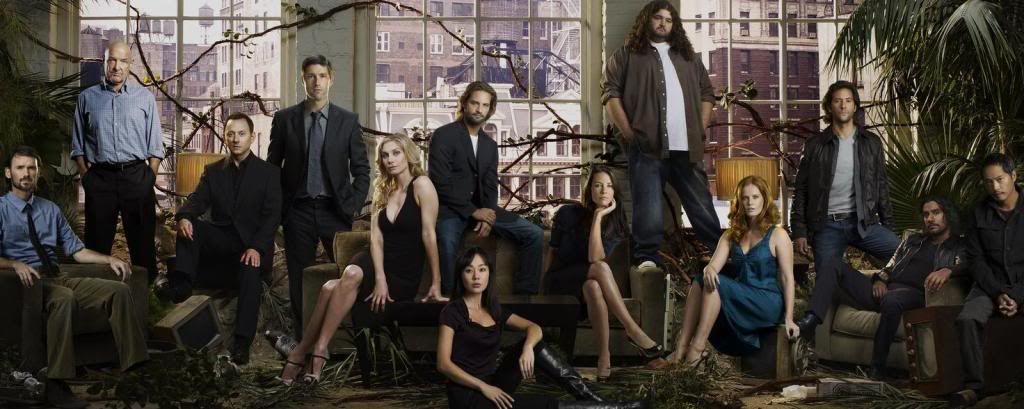

cast me

[FYI LUNCHTIME UPDATE: These weeklies will be posted weekly over at the new and improved House Next Door as well. We encourage comments at either joint, though I'd be fibbing if I said I wouldn't miss your eyes and words here especially.]


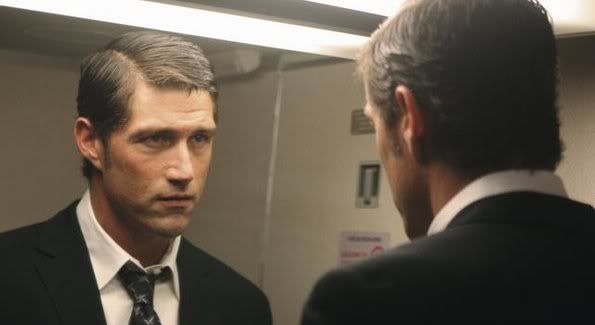
Though we got a glimpse of how good things would get early on with Jack looking into the mirror, tipping a hand to doubles, the real money came after that CGI plunge to reveal the foot, after the first commercial break: Kate, midair, hanging off a branch. There's even a wide shot to show her in a space of branches, the frame all a zig-zag of lines around this lady. After last season's record-skip start that saw our principals shuffled through time across the island's 20th century, here we get time as a tree. It's gnarled and knotty and nutty. It's branching, manifest in the title of the episode, too, with that "X" sitting apart from the "LA" as a clever signpost of things at a cross, or overlaid, or collapsed yet separate. Every turn's effect depends on a few different histories, including yours. Like any good soap opera, you've got to have your stories straight—and catch up is near impossible in the space of one episode. That fearless game of "stay with me" is what keeps amazing me with Lost. This show trusts its audience. However, it also asks a lot.

Yet my biggest complaint of the first night wasn't the speed of plot—that's the fun of the later seasons—but, call me crotchety, the frequency of the commercials. Were I not prone to front line fandom (I saw Avatar on opening day at the first IMAX 3D show possible after all), I would only ever watch Lost on demand/DVR. It's such a compelling chiasmus—both twining and untwining the plot; that X goes along two lines—that I, like so many, get impatient and anxious. I need to know!
home
—Home?

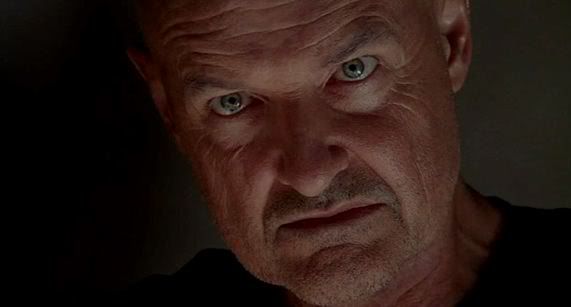
That said, it's all falling into place in a lot of fun ways, most particularly with this new Locke, or as I am going to call him from here on, Dark Locke, after his Man-in-Black heritage. (Guess we could call him Johnny Locke, or Cash Locke or some silly combo, too, but Dark Locke sounds like Darth Vader and I dig that more.) The scenes in the foot centered around the "reveal" of Dark Locke's identity were some of the best tête-à-tête match ups of the show between its two best (here I mean compelling) characters and character actors. Terry O'Quinn, in particular, kills it. He's got most of the best moments of the show, of this episode, and he seems to know it; there's an actorly glee about him when he says, "Sorry you had to see me that way," after, well, killing a cadre of Jacob-followers as the so-called smoke monster. (He also grins through, "Let's not get into name-calling.") This Dark Locke's more than vengeful: he's that great villain archetype of one part tyrant (unstoppable, apparently immortal) and one part sadist (I think the character, not just O'Quinn, is having fun toying with these pawns).

If it wasn't clear last season that we've left Sci-Fi for Fantasy, it should be doubly discernible at this point. I'm sure there's some physics I don't know behind the branching-universe (and -time) ideas at the core of this season's apparent structuring, but all the plot hanging on those limbs, like Kate, is wholly preposterous in the best ways possible. Put otherwise, there's no science to ghosts. Ghosts are an element of the fantastic, an interpretation of the real, not so much virtual as imagined, somehow. That's what I'm looking forward to understanding better as the season progresses: just how this specter became material, and how he can change back spectral at will again.

I'm also pretty jazzed to see how the "What If" plot plays out. Though after a few scenes I worried it would reduce itself to "look how crummy their old lives were," that scene between Jack and Locke in the missing luggage room sealed this branch's appeal. It was the one scene where I actually kinda dug Jack, for one, as it highlighted the good side of his altruism. And, for another, again, there was Terry O'Quinn all benevolent and calm. In fact, I have to say that it was O'Quinn's face in the final montage that closes "Part 1" of "LA X" that really sold me on the back-to-reality side: he projects thought unlike any of the other actors, including Michael Emerson, on the show; and he looked shamed and devastated and resigned in ways we haven't seen from Locke in some time. I'm a sucker for a misfit. And I'm loathe to admit it, but, well, I know a lot of my aversion to Matthew Fox isn't just his television-bound acting tics (how much can you nod and furrow your brow?) but also that Jack, plain and simple, is a go-getter asshole. Granted, his position in the show is very interesting, say his arc if you will, from outright hero type to confused dolt, but the dolt part has always been there. That said, it's the go-getter dolt who believes he can reverse Locke's condition, and that hubris is moving.
mirror
—Says who

Back on the island, though, it's all jock all the time and even Jack's bravado is the pose of, as I chatted with some friends, a FUCKING BITCH! In that, it's almost hilarious how Cuse and Lindelof seem to want to pile on Jack. Every choice he makes on the island looks wrong. If he's our true protagonist, it's certainly fitting because of all of Oceanic Flight 815 he is the most lost, chasing one red herring after another. He never hears a voice from within that isn't colored from without. He's prey. He's looking for a shepherd, not a flock; he cannot handle a herd with any aplomb. And now he's at the mercy of John Hawkes and some temple people all obsessed with ashes (or was that gunpowder?) to protect themselves from this new Dark Locke. Oh, and, he is let off the hook for Sayeed. Guess he can't be wrong all the time.

[Next week I'm hoping to make some TV Time images to go with these random-fire ideas. Until then, thanks for reading! This season sure does look like it'll be fun!]

Thursday, October 08, 2009

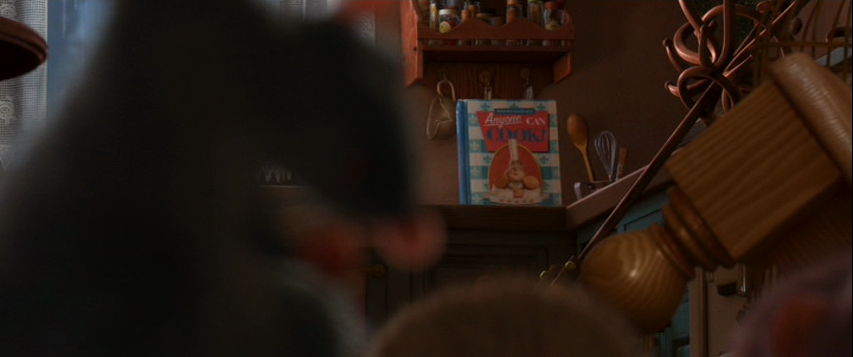
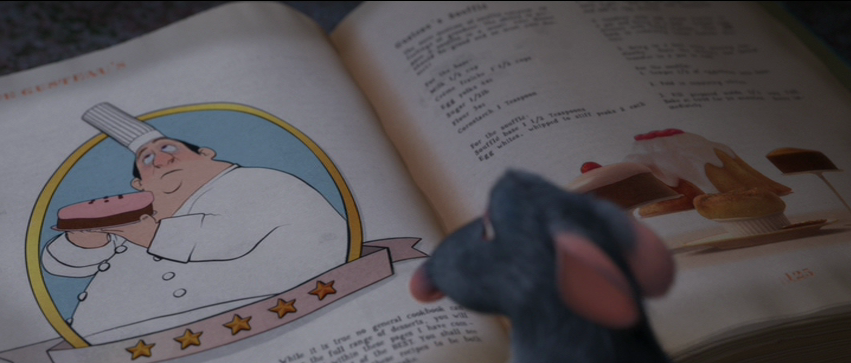
Ratatouille's sense of taste, of place

by Ryland Walker Knight


—It starts with a book.

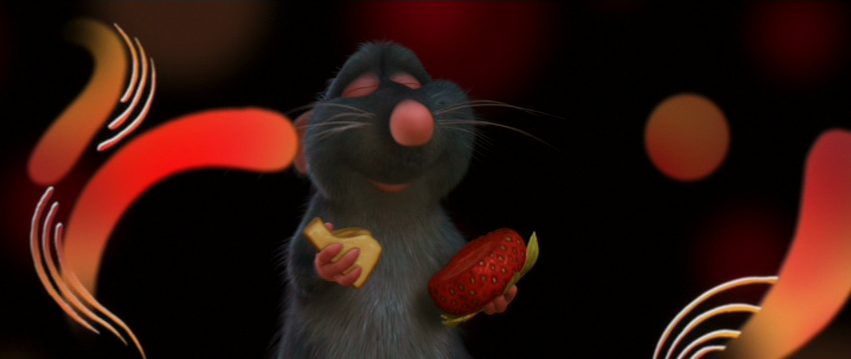
I put together a little image-essay for Todd's Pixar Week over at The House on Brad Bird's Ratatouille as it's easily my favorite Pixar film. Click here to see-drink-eat it. (If that takes some time to load, click here for VINYL IS IMAGES.) Every viewing gives me good things, and its pathos really hits hard what with its ideas about creativity and finding a place in the world for that passion. It's no secret that writing is a dying profession—hell, a dying skill set—let alone art form. But I keep at it, and I take pride in my miniscule accomplishments. I'm having fun with this stuff, with things like this work. Besides, these image-essays are something different, I hope, than your usual film blogging. At any rate, another thing I was thinking about rewatching this great little film is the different in choreography between something like this and something like, say, Playtime (or Tati in general), though there's definitely some overlap/inspiration at play. The most obvious is that Tati is a scientist, kinda, while Bird runs in trenches. Tati refuses identification and, as with most "kids movies," you can't help but find yourself in Remy's paws, scuttling here and there avoiding ovens and broken bottles. This gets at Bird's fluid camera perspective: the image shrinks and expands in fun ways. And—I still don't know, exactly, outside a stab at the idea of focus-blur—you really get the sense of a camera's presence in this film. (I find this true of The Incredibles as well.) Definitely something to think about more here, because it's subtle, unlike with the ostentatious zooms and lens flares of everybody-but-me's favorite, Wall-E. (Oh, right, Coffeen wasn't a fan either.) Gotta be more to say about plasticity inside these Bird Pixar films. The image, here, is itself an aperture—but it's been explicitly made, or built, so what, then, are we seeing but pure expression?


—Let it fill you! Use every sense, use every-thing you've got.

Friday, September 11, 2009

L'avventura: Mapping Monica

by Ryland Walker Knight


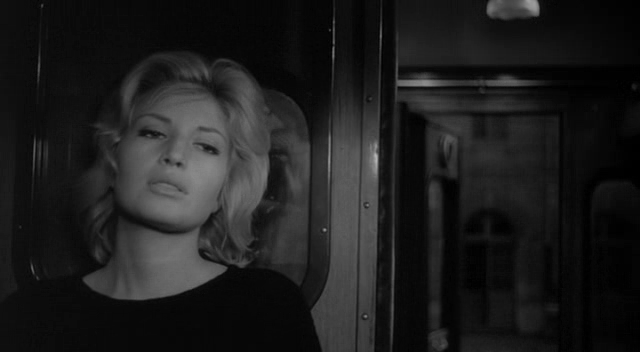
Seeing as this masterpiece is next week's Metro Classic and it stars VINYL's beloved Monica Vitti, Mike commissioned an image essay from yours truly to help sell the event. I was more than happy to oblige. You can see the work both at the Classics Blog or at VINYL IS IMAGES. My essay, however, doesn't quite address the theme of the series/week (as Mike laid out back here), nor does it address its own problem of fetishizing Ms Vitti, though Antonioni clearly has the same problem despite attacking men's lust and, yup, their proclivity to objectify women—even women they love, or think they love. Worst, I fear, is the picture of men treating women as disposable or interchangeable. It's not exactly a happy picture, if you, by some odd luck, haven't seen it and happen to be reading this blog. However, downer though it may be, it sure is pretty. And, of course, so is she. So, if this bit of furtive associations about space and faces (of one face) winds up enticing, and you live in Seattle: please, by all means, go see the film on a big screen with loud speakers. Otherwise, wait patiently for that new print that debuted at Cannes to make the art-house rounds. Again: click here to see my map.

Monday, August 03, 2009

Dimensions of desire. Cat People.

by Ryland Walker Knight


I.
leading away
—Going nowhere

For fear of clogging the load time of this main page, I've hosted this image essay over at VINYL IS IMAGES. Please do click through.

Wednesday, July 29, 2009

Convergence for new gravities (7/30/09)

by Ryland Walker Knight


suspension

leap

Monday, February 09, 2009

In the works: Doillon at FIAF.

by Ryland Walker Knight


doillon
criminals

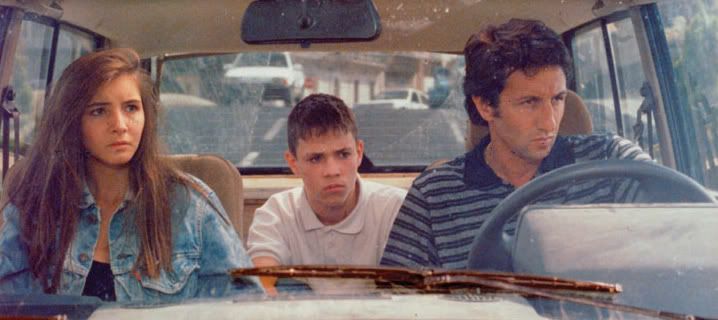
Last Tuesday marked the beginning of the current Jacques Doillon retrospective at French Institute-Alliance Française with a screening of 1985's La Vie de famille, which Dan Salitt says is lovely. I missed it, and I'm bummed. However, I can say that tonight's film, Le petit criminel, is well worth seeing if you happen to live in New York City. I hope to have some words formed about it, and next week's Ponette, for your reading pleasure at The Auteurs' Notebook soon. I'll keep you updated. What's most striking, so far, looking at Doillon's cinema in the order of its programmed appearance at the FIAF, is the focus on children—and their complete "naturalness" in front of the camera. The close-up effaces, or makes transparent, any masks they (wish or hope to) wear. Set mostly in a two-door almost-truck, Le petit criminel is meager, and subtle, a restricted (head) space prone to jammed signals, to cluttered thoughts. The endgame may appear "open" to some but, as the cop says earlier in the picture, there should be no doubt as to where the story winds up; how the angles converge and how the camera pushes into that space (as well as away) define its characteristic (to say, stubborn) resilience. I can only guess how this plays out fuller in La vie de famille, as this trailer below hints at a film teeming with a lot of things I love, like Juliette Binoche, words, language, direct-address, diegetic video use, family problems despite good intentions, life's inherent corruption (and corruptibility), Sami Frey all man-like some 20-plus years after Godard had him dancing all boy-like, and so on; my attraction should become readily apparent as you click play.


Since I'm following the screening schedule, kinda, this puts my viewing of Doillon's films of the 1970s back a bit in my personal queue. This is fine by me, of course, as I've subscribed to a certain curriculum, if you will, but it makes it a little harder to gauge at this point how much similarity his work bears to those of his post-vague filmmaking brethren (the press release mentions Eustache and Garrel to get nerds like me excited) over against a larger tradition of gallic cinema. So far, it seems like he's got more to say to Truffaut and Pialat than those other dudes. More soon. —Oh, and a quick thanks to all the ideas and thoughts thrown my way in that last (now enormous) thread at Girish's joint. [x-posted at the curator corner.]

Wednesday, February 04, 2009

The Che letters. Part Two: Canyons, Circles, Exiles

by Ryland Walker Knight


what a drag

[A note: Here we continue what Mark began back in Part One. (To see all the letters, click here.) We hope the letters continue, as we push forward into 2009, because we find this epic so typical of our (yes, fetishistic) interests in cinema as a tool for and of history; and of our aims as intellectually curious people of and in the world in general. I should like to say that these missives are hardly "polished" for a couple of reasons but that should become transparent soon enough. For instance: we are not done. Stay tuned for Part Three in the coming weeks.]

sex machine

Mark,

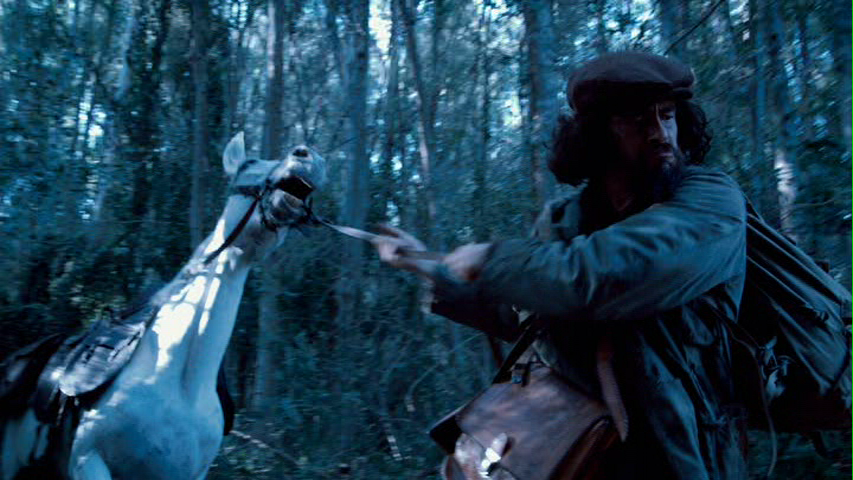
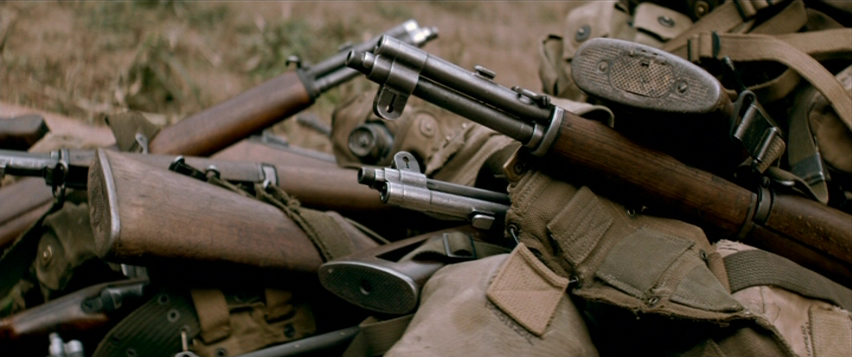
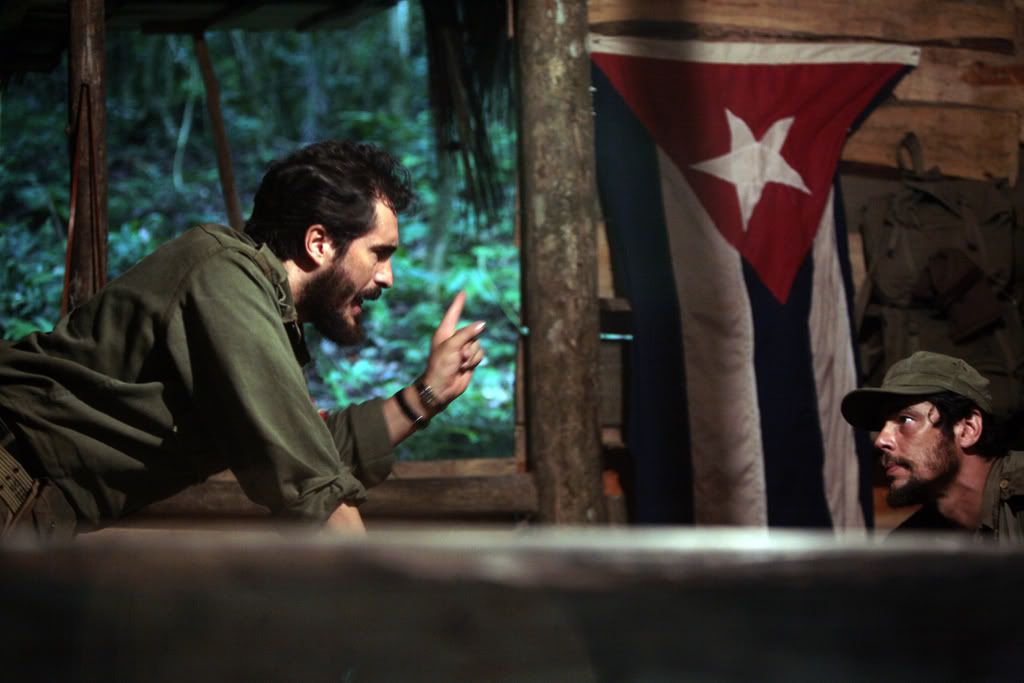
Your impulse to talk around the subject as a way to talk with the subject seems to mirror how Soderbergh's film works, of course, but what makes the film so curious to my eyes and ears is, first of all, how committed to its subject it remains. For all its distance, Che is rather intimate. For all its landscapes, the close-up figures into a large part of its argument. However, the close-up operates in (if not diametric then perhaps) divergent registers across the film's intermission rift. In Cuba, the close-up is pure affection, luminescent and loving expression; in Bolivia, close-ups catalogue and segregate elements of the whole. In both halves, these sets form a crucial part of Che's balance-equation in that their uses are explicitly related not just to form but how we witnesses will figure our "hero" at hand.

Reading Hoberman's essay in The Virginia Quarterly Review shortly after reading your first missive made me think twice about your preliminary assumption-declaration that "Che is not about Che." His essay begins with two weighty words for this man: "Ecce homo," which, of course, nods at Nietzsche and declares, with a colon, "this man." This man, Che, who means so many things. Hoberman lists a number of them, all fine labels, all fine in concert with each other, just as our sense of Ernesto Guevara is folded by so many forces of history and commerce and theory and philosophy and tradition and understanding and all tied to a single image appropriated (I want to say "abused" or even "slaved") into base, reductive, limited symbolism. My list here, as a response to Hoberman's, is an attempt to account for all those contradictory angles played in some name that really only means one thing at bottom: "man." It's redundant: this movie is about man, not just this man, but, of course, it can only ever be "about" this man in particular. And, as Hoberman astutely points, this man is a means for Soderbergh to explore personal obsessions such as process and technique. Look at any one of Soderbergh's films and you will find he is, indeed, or more than less, "a highly intelligent technician who sets himself a problem and goes about solving it."

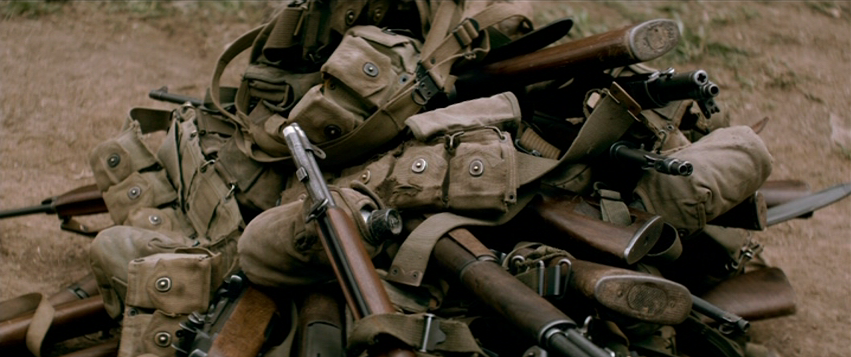
guns
before butter

Again, your question: how, if at all, do we approach Our Man, That Man, This Che? If we may see Che as mathematics, as Soderbergh has arranged it to rise and fall like the sun, that ever-reliable reminder of our finitude, then perhaps we should do well to grant science its place at this martyr's table of conversation. No doubt the masses have silkscreened the Guevara myth to a new death, or depth. No wonder the aura is drained. No surprise Benjamin comes to mind. No way to get around the repetition of Che. No modulation subsumed in total, the differences are shifts, the revolution a series without end: a perpetual reformation.

Others have said we must let the singular stand free, we must cherish and preserve these rarities. This challenge has largely been ignored by many of our (intelligent and critically thinking) colleagues. The exciting thing about Che is that, as a hermeneutical situation unto itself (as any work of art is, or can and should be), it rejects a lot of the strict language of closed or isolated subjects—here I think of Sartre as the great mis-reader of Heidegger, and of Gadamer's lucid restorations—but rather an appeal to vulnerability, to the allowance for failure that participation wills us towards, or simply makes impossible to avoid. Here is my humble proposition that the freedom Che argues for, while not that of Che's per se, is one where (useless though it may resound) tragedy looms. However, I do not want to say the film is defeatist. It may deny, but it ends on a boat, looking to the future (from the past), past a spray of light that triggers a reverse shot back at Our Che, standing bowed on the starboard side sharing fruit and looking wary at us, we whose gaze forges him as we wish.

The film is opaque yet transparent. A typically "academic" double move. And, indeed, Soderbergh's work is attacked as "academic." When will this cease to be a pejorative? When will the many under-readers—it's funny that those who tread the surface are hardly interested in a hermeneutics of surfaces and seek only to uncover the unknowable with an arrogance unavailable to my wary posture—begin to appreciate the fact that over-reading is, well, a virtue born of thoughtful attention to the world and its multifarious blossoming forth? When might we see the "real" revolution something like our blogosphere provides? When shall we shuck the calendar's arbitrariness to slow our rollout? When a real Marxism props up somewhere? —When will we get around to talking about the film?

dead eye

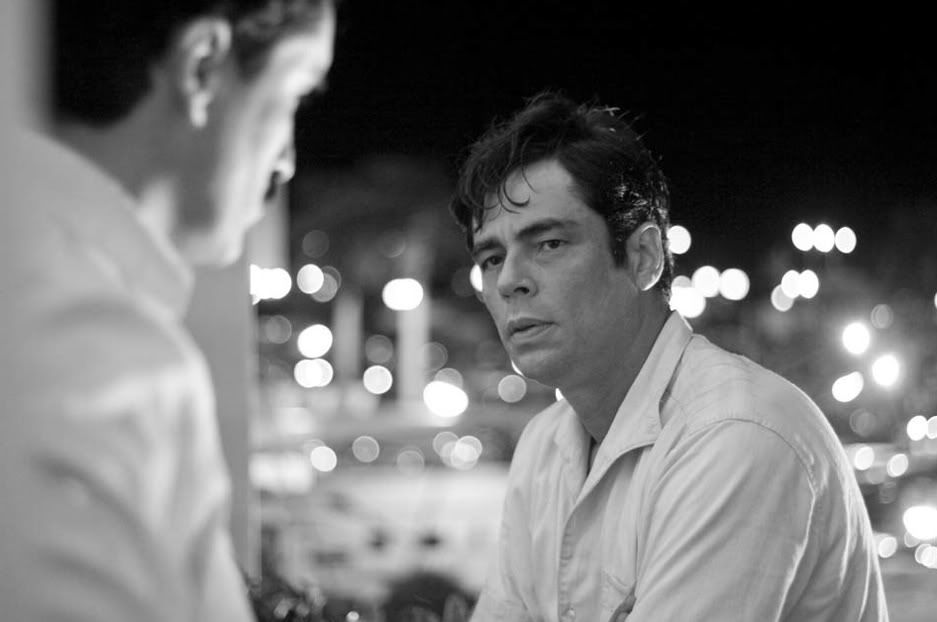
I often wonder if my interest in film has mutated into an interest in what film, or a film, provides in aftermath. I know this cannot be fully true as I do, indeed, keep watching. My watching has slowed so much in the past years because my watching now involves countless re-watching, revisions of my visions. I've said before on this blog (well, in a podcast) that the hermeneut's project is a compulsion, and it may not be healthy; I meant this to encompass cinephilia; this is old news. All of this to say: I do enjoy watching Che. I find Cuba gorgeous, if occasionally on the nose and a tad "cute," and I find Bolivia devastating, and quite often yet more beautiful than its counterpart for all its drain, its pale weight of time and its canyon-cinema-circles. I find Benecio Del Toro's performance pitched perfectly between sex symbol and myopic asshole. I find Soderbergh's mise-en-scène has not been this rigorous since his under-loved revision of Solaris—which features similar arguments about beautiful, stubborn men contending with martyrdom and love and the process of history, or memory-making (all themes shared by his great, deft The Limey; in fact these themes emerge present in all his films). I find the whole 257 minutes easily "too much" and nowhere near "perfect"—it's a "rush job" as much as Hoberman's "act of will" although it cannot nor should it ever be rushed. I find it impossible to recommend.

Che is foreign to itself like Che is forever foreign to his environment. His yearn for a united South America (present before Cuba, if hardly seen here, and announced throughout Bolivia) can never translate in practical terms for the simple fact that his fellows can never look past his face, his spectacle as a figure or a symbol. His comrades do not see his true singularity, his freedom of himself. Soderbergh may know he has no place in the world Guevara sought to build but he also knows that what we all look to Che for is that image of freedom that, as it is unavoidably poetic, comes only from exile. It's a negative freedom, if I understand, and, in a hilarious completion of one circle, a positively American picture that asserts our rights as humans to be a little crazy, to shuck rationale. Because, of course, freedom concerns our world, and not just humans; a space unanswerable to conceptual schemes, to maps of thought; a space given to productivity, to becoming made possible by our limits. Fitting, then, that Che is situated by a pair of maps. Boundaries mean something. Che sought transcendence and all he got was an ignoble death in a hut. His myth, on the other hand, necessarily separate, keeps gaining. If Soderbergh's film can do anything in that space, perhaps it can remind us that this was a man and that man, like this world, will pass into history; however, if we look to build something we have already taken a step towards something.

Until then,
ry

a lesson