Showing posts with label list. Show all posts

Thursday, December 22, 2011

BANG BANG: Durga Chew-Bose

[BANG BANG is our week-long look back at 20!!, or "Twenty-bang-bang," or 2011, with contributions from all over aiming to cover all sorts of enthusiasms from film to music to words and beyond.]


by Durga Chew-Bose

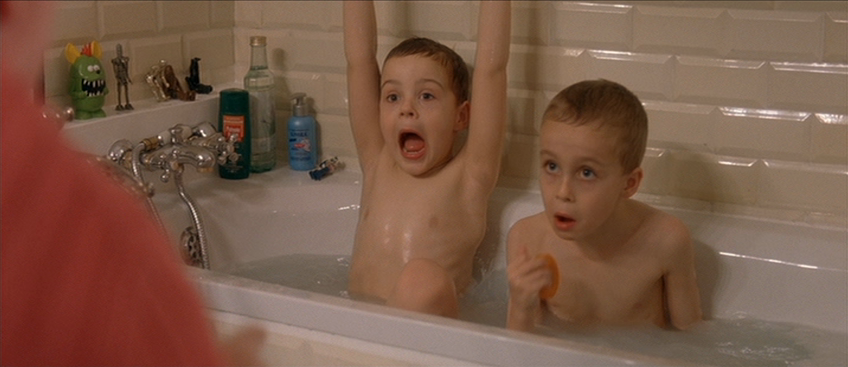
I’ve been especially preoccupied with women this year. My desktop is a cluttered mess of young Michelle Pfeiffers and Diane Lanes, a spitfire-y Linda Manz, a pouty Tatum O’Neal, Elaine May, Gilda, Sissy and Shelley, Karen Black (multiple times), Cher with Winona, and screengrabs of Gena as Minnie. The young mother in Andrea Arnold’s short film, Wasp, is giving me the finger, Haydée Politoff, her back, Geraldine Chaplin and Monica Vitti seduce, smoke…seduce, and Bibi Andersson is beside herself. Marie-France Posier—who in an eerie way, congeals into "Laura Palmer"—is slouched in a bathtub, moon-eyed and fully-clothed, hair braided and boots dangling over the edge like a child who’s not quite sure how she got there or if she wants to get out.

I should probably organize all of these pictures. Or at least drag them into a folder. But what’s the fun in that? I enjoy the distraction; their perpetual orbit, the familiarity. The delight of seeing Chiara Mastroianni and remembering the way she says “Ann-Gé-lah Bah-ssette” when ribbing about Emmanuelle Devos’ butt in Desplechin’s Un conte de Noël. Or even now as I write, on the top right corner of my screen, Diane Keaton’s Kay Adams is smiling: red dress and sun hat, she’s listening as Michael tells her to eat her spaghetti while he spins a story about Luca Brasi.


Barbara Loden’s Wanda aired on TCM in the fall. I watched it twice in a row—the first time completely crushed but immediately devoted; the second time, with a pen and my notebook. I jotted down images and words that drew near in the way some movies—the most pressing ones—appear to come from somewhere itchy inside me. I also copied dialogue; harmless in print, vivid, near wicked on screen. Like how credulously Wanda asks at a dive bar if “[She] can borrow a comb,” or how promptly a patron spots her sitting alone with no money and says, “I’ll take care of this.” I scribbled stuff like “washed-up cheerleader ponytail,” “WOOLWORTH’S parking lot,” “Mabel Longhetti, Rayette Dipesto…” “pincushion top bun, hand resting on forehead as cigarette burns,” “sitting in back of empty bus,” “sits with knees up at movie theater,” “follows instructions!!!” Soon after, I wrote about the film and Loden, and her marriage to Elia Kazan for This Recording.


At least twice a month this year I watched the same YouTube clip: a 1974 episode of the Dick Cavett Show with guest Lucille Ball. Cavett’s hair looks two days short of a haircut and Lucille is wrapped in a brown Muppet-trimmed jacket. Her legs are crossed away from him, impassive as if sitting at a coffee shop one table over. She turns her torso only slightly to answer his questions, as if saying, “Why are you talking to me?” It’s incredible. But when Cavett recalls the time a Marx brother appeared on her show, Lucille melts. Her eyes roll back as she says his name—“Haaaaaarpo." Pure piety. As Dick sets up the clip, Lucille falls back into her sad clown state, burrowing in her feathers, only to jump at any chance to honor her friend; a "darling man." Mimicking the famous mirror scene in Duck Soup, Lucy, dressed as Harpo, surprises him and matches his every move. Two Harpos. Two distressed top-hats. Two bulb horns. Out-and-out laughs. My face gets mangled with cheer each time.


Mia Hansen-Løve makes moments on screen that I'd like to elope with. Her 2009 feature, Le père de mes enfants, plucks ornament from the everyday—the way three daughters occupy adult spaces, a father's unexpected helplessness, adolescent agonies, a parent's things—and her follow-up, Un amour de jeunesse, kindly plots the elaborate confusion and spectacle of first love and teenage heartbreak. It screened once at IFC and I made sure to see it.


Teenagers, especially French girls, are terrifically soulful characters. Like Sandrine Bonnaire's Suzanne or Virginie Ledoyen as Christine in L'eau Froide, they are rash, sneaky, jumpy, and dip into dark bouts of misery or big dopey loves. Hansen-Løve (who too, looks eternally adolescent and slightly anonymous like a face in a found passport photo) perfectly maneuvers teenage girl unrest. Tethered to a boy who leaves her, Camille (Lola Creton) undergoes grueling grief—inexplicably endless when we're young. But before that—and what Hansen-Løve does so well—Romance is breathless, braless, a series of grand gestures and promises that bank on time never ticking. In one scene, Camille and Sullivan are in the country experiencing an afternoon cold war; she upstairs in bed moping, he outside, somewhere. He returns with food and cooks dinner for the two of them. Later, Camille stumbles downstairs and slides into her chair. She has one bite before slowly crawling across the table's bench which separates them and nudges her head into his neck. All is forgotten, for now. The audience knows that this brief moment of peace is bittersweet and that we cannot will it to last longer.

And finally, here are bits from a November 1993 PREMIERE piece, She’s Done Everything (except direct) by Rachel Abramowitz, about Polly Platt, a woman I truly admire. When she died on July 27th, I read everything I could find on her life.

"Tonight she seems quite ebullient, charged up by her recent discovery of two young filmmakers from Texas… Bottle Rocket makes her giddy….'If I were young, I’d give up everything -boyfriend, home- and go to Texas and beg these guys to let me work on their movie.'

…

"Still, when her ex-husband picks up, all her expansiveness vanishes. She seems to contract into an almost fetal position. Her voice becomes tight, careful. The conversation has a ritualistic quality: all the habits of intimacy, but no longer the trust. She treats him as if he were fragile, thanking him for the flowers he sent her, babying him with the good buzz she’s heard about his latest venture. She tells him about Bottle Rocket. 'It’s in Texas and there’s no Larry McMurtry, but it has a bit of the feel of The Last Picture Show, she says. She asks him to talk to PREMIERE about her. He refuses. 'I’ve been talking all these fucking years about you!' she erupts."

...

"One year later, they packed their meager belongings into a car, along with Platt’s one-eyed dog, Puppy, and set out for L.A., where they soon befriended the auteurs they worshiped. One night, Howard Hawks took the pair out for dinner, along with a beautiful young starlet from Rio Lobo named Sherry Lansing. Toward the end of the meal, Lansing decided to visit the ladies’ room. 'She stood up, and she was gorgeous. And I was not,' says Platt. 'Peter and Howard watched her. She walked to the bathroom, and I remember having Howard on my right and Peter on my left, and their eyes were following her.' As Lansing disappeared from view, Platt recalls, Hawks leaned across her and said, ‘Peter, now that is the kind of girl that you should be with.’ I remember thinking, It’s like I don’t exist.'"

…

"One summer while the children were with Bogdanovich, Platt drank seventeen cases of beer and wrote Pretty Baby."

…

"After sending other emissaries, Brooks asked her personally to produce Broadcast News, which she did. Her all-around dedication to the project renewed her legend for telling detail. Brooks had wanted Broadcast News’ key color to be red; now he was shooting the schoolyard scene where the young Aaron is getting beaten up. He looked up and saw the woman who fifteen years ago had removed the E from a TEXACO sign; she was down on her knees, painting a red accent line on a staircase. 'If you were putting together a baseball team, this is the person you’d kill for,' says Albert Brooks, who played the adult Aaron. 'She can play any position. She can hit; she can pitch.'"

…

"'There are times when I hear Jim talk that I experience something that is so much worse than the jealousy that I felt toward Cybill. I am so envious of his ability to think and express himself that I think I’m going to die. I totally identify with Salieri [in Amadeus], because when he picks up Mozart’s music and starts talking about how brilliant it is, I feel like that’s me. But I don’t have any desire to destroy Jim or Peter or anybody.'"


________________________________

Durga Chew-Bose is a writer living in Brooklyn. She twitters here and tumbls here.

Monday, December 19, 2011

BANG BANG: Julian Tran + Cuyler Ballenger

[BANG BANG is our week-long look back at 20!!, or "Twenty-bang-bang," or 2011, with contributions from all over aiming to cover all sorts of enthusiasms from film to music to words and beyond.]


The Man Who Hijacked The World

Julian Tran and Cuyler Ballenger Present: Crime

Netflix doubled our monthly fee this year. What a crime. Here are the best crime movies we saw on Netflix this year.


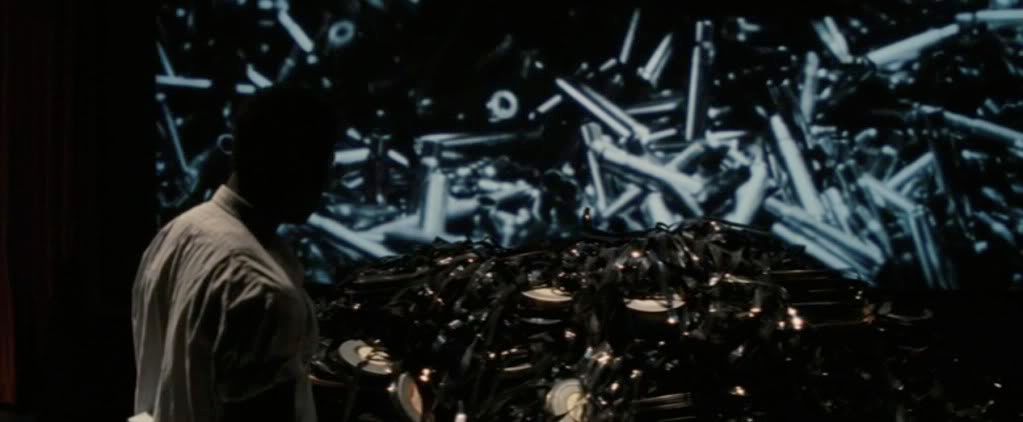
1. Carlos (Mini-Series), 2010, Olivier Assayas. Carlos is an interesting movie because the entire six hours is comprised of five repeating scenes: Cars driving up to a place; Johnny Walker Red being consumed; Shooting into a ceiling with an automatic weapon; Deboarding planes; The Cure. Because of, not despite, this simplicity, Carlos is irresistible, like (see picture). Don’t let the six hour running time dissuade you – Assayas burns through scenes with the naïve recklessness of a true Marxist. In a good way.


2. The Robber (Der Räuber), 2010, Benjamin Heissenberg. Further proof that rich people run. Madoff probably ran 5 miles, 5 days a week, before going into the office and robbing half the eastern seaboard. The Robber runs before and after his job. He also amasses a sizeable fortune, although his main asset is physical endurance. Unfortunately, even the best marathon runners tire and shit themselves, which is probably exactly what Madoff is doing these days.


3. Army of Shadows (L'armée des ombres), 1969, Jean-Pierre Melville. Not a crime movie exactly, unless you count Nazis as criminals, which basically nobody does anymore. Vive la Résistance.


4. Body Heat, 1981, Lawrence Kasdan. Body Heat is about a lawyer played by William Hurt who has an affair with the wife of a wealthy businessman. He is quickly ensnared in a plot to kill her husband. See, lawyers are people too. It’s the single largest act of betrayal perpetrated in Miami-Dade county pre-Lebron James. And the sex. Oh, the sex. It’s so inappropriately graphic, it’s like watching your parents do it. Great performances by Hurt, Kathleen Turner and Ted Danson, and Kasdan captures the fetid, damp rot of south Florida perfectly, which is fortunate, as I personally have no desire to visit.


5. Revanche, 2008, Götz Spielmann. We all know one of the dumbest crimes is trying to turn a Ho into a Housewife. Thankfully, Revanche knows this too. By killing off the female lead, the film is allowed to move onto more interesting relationships, like that of an aging father and his wayward son. Alex (played by Johannes Krisch) contemplates revenge numerous times: against his lover’s killer (gun), against his own father (Oedipal), and against many logs of firewood (axe) but manages to find a sort of redemption.


6. VOICEOVER: The Only Thing More Dangerous Than a Bartender Serving You Drinks is One That’s Feeding You LIES. The Friends of Eddie Coyle, a 1973 Film by Peter Yates.

[cut to: A MASKED MAN FIRING A SHOTGUN. The screen goes black.]

V.O. (CONT’D): With Friends Like This, Who Needs Enemies.

[title: NOW PLAYING.]

________________________________

Julian Tran and Cuyler Ballenger are writers living in New York. But they're friends, just like California. Julian can be found here and Cuyler writes at http://cablesports.blogspot.com

BANG BANG: Adam Hartzell

[BANG BANG is our week-long look back at 20!!, or "Twenty-bang-bang," or 2011, with contributions from all over aiming to cover all sorts of enthusiasms from film to music to words and beyond.]


by Adam Hartzell

I spend most of my time watching movies out of sync with my time and place. Since I prefer cinema from elsewhere, only one U.S. film makes my Top Ten, though it does make the top spot. Work and financial constraints keep me from traveling abroad for film festival premieres, which means I have to wait until they make it here to San Francisco. So my Top Ten lists usually say something about my cosmopolitan dreams that are anchored awake by my restricted finances and mobility. But here are 10 films which were released this year, or made their way to Bay Area festivals in 2011, about which I have found myself still ruminating in a positive way since they shined their light and heat on my eyes.
 
10. Passion (Khusel Shunal) (Byamba Sakhya, 2010, Mongolia) I knew nothing about Mongolian cinema until this documentary about said cinema, told through a lonely road movie, found its way into the program of this year's San Francisco Asian American International Film Festival. Now I want to know more, which is ironic since the film presents a pessimistic view of Mongolian cinema's future. But it's at least caught the fascination of one viewer even more isolated from this nation's cinema than the Mongolian residents portrayed in the documentary.

9. Aurélie Laflamme's Diary (Christian Laurence, 2010, Canada) A French language film from Quebec that was part of the NY/SF International Children's Film Festival that ran from October 21-23 at Viz Cinema, it ended up winning an audience award. I would have voted for it as well, had I seen it in the theater along with that awarding audience rather than on DVD for an sf360.org overview I wrote on the festival. It's a teen film that doesn't have to throw an American-Pie in our faces thinking that will entertain the kids and kidults. Marianne Verville is a refreshing presence in the lead role, allowed to be awkward in what is an awkward time of our lives. Plus, although she gets the boy the genre demands, she isn't swan-ed away from her duckling beginnings.


8. The Trip (Michael Winterbottom, 2011, United Kingdom) I am still laughing about the scene where Steve Coogan and Rob Brydon are riffing on announcing the inexact time of an ancient battle. Adding to this comedic pleasure was that I got to laugh at this scene along with a friend I hadn’t seen in some time whom I randomly ran into in the lobby of The Bridge theatre before the screening. It was a nice day in the Richmond neighborhood thanks to the run-ins such local establishments afford.


7. Oki's Movie (Hong Sang-soo, 2010, South Korea) I got to see three of my favorite director’s films for the first time this year. (The others were Ha Ha Ha on DVD because I couldn't make the screenings at the San Francisco International Film Festival and The Day He Arrives on screen at the Starz Denver Film Festival in mid-November with the proprietor of the Coffee, Coffee and More Coffee blog, Peter Nellhaus.) Thanks to the Yerba Buena Center for the Arts, I was able to watch Oki's Movie in the theatre in late June after having already seen it on DVD to prepare a piece for sf360. I'm biased in that I always find something to ruminate on endlessly in a Hong film (even with my least favorite, Woman Is the Future of Man). But Oki's Movie seems to have won over those who haven't been fans of his work. I think a big reason is the auditioning of men in Oki's movie nested within "Oki's Movie" that Andrew Tracy expertly analyzes in the Fall 2010 issue of Cinema Scope magazine.

6. The Topp Twins: Untouchable Girls (Leanne Pooley, 2009, New Zealand) Finally getting the theatre release it deserved, The Topp Twins graced our local screens outside of the film festivals that started the momentum (Frameline in 2010 and Mostly British in 2011). I own the DVD and saw the film in the theatre three times, once each at those festivals and once in Berkeley at Shattuck Cinemas with my cousin when it was released. Even after all these screenings, I'm still moved by how much major moments of the lives of these yodeling, country singing lesbian twins are tied up with major political successes in New Zealand history. I am still giddy about getting to meet them for an interview for sf360, the most nervous I have ever been for an interview.

5. Poetry (Lee Chang-dong, 2010, South Korea) Poetry definitively represents what I have been appreciating lately about South Korean cinema - how much it has opened up cinematic space for its senior actresses. Yun Jung-hee came out of retirement for this virtuoso performance of Lee Chang-dong's as he continues to explore the life of the outsider in South Korea. During my first draft of this brief commentary on Poetry, I went into a rant about how, if there failed to be a Best Actress nom nod to Yun, the Oscars would continue to be irrelevant in my cinematic life. But after writing that draft, I went to talk with Brian Darr of Hell on Frisco Bay blog and he informed me the Los Angeles Critic Circle gave Yun their Best Actress award. As a result, I put my seething rage at the Oscars as a failed institution back into its cage to be unleashed some other day.


4. The Salesman (Sébastian Pilote, 2011, Canada) I am someone upon whom car commercials fail to make the intended impact. I don't desire the products they advertise. And I don't buy into the false sense of freedom the commercials purport to symbolize. (The streets are usually much more crowded than as portrayed in the commercials and buying a car shackles you with debt, high gas prices, and vast acres of asphalt requirements for roads and parking.) That said, I'm primed to appreciate the tragedy in The Salesman, a perfect example of a genre I'm calling 'Post Peak Oil Cinema', where the life of a successful car salesman is turned on its head by the very products he sells so successfully. The Salesman is a sad, sad film that doesn't pummel you but rather slowly piles upon you like the snow that surrounds this little Quebec town.

3. The Life of Fish (Matías Bize, 2010, Chile) My wife and I caught this film during our yearly Caltrain trip to Cinequest in San Jose because it fit with our schedule and it's one of those happy accident, eeny-meeny-miney-mo(e)ments where you select a film with no real sense of what you are getting yourself into and you realize the programmers have made an excellent choice for you. In this film, we travel through a party held in a single house as our main character relives his younger self through his memories and those of others. Simple, poignant, and delightful.


2. Nostalgia for the Light (Patrico Guzmán, 2010, France/Chile/Germany) This was a truly amazing film I saw in the Dolby screening room as part of the press screenings for the San Francisco International Film Festival this year. Guzmán’s pairing of professional astronomers with amateur archaeologists works on so many levels. Even though the archaeologists are searching for the remains of family members killed by their own government, somehow, in spite of all this, Guzmán leaves us with tremendous hope for humanity.

1. Deaf Jam (Judy Lieff, 2011, USA) I have not had the experience with a film for a long time like I had with Lieff’s documentary about high school Deaf poets venturing out into the venues of a (hearing) poetry slam. Cinema transfixed me again at the Mill Valley Film Festival like it did the first time I could not stopping about the impact a film had on me. Lieff captures the vibrancy of American Sign Language through several tactics of translation. Her willingness to mess with the text of subtitling the poems in the opening sequence is mesmerizing. At the same time, she even took the risk not to translate the ASL later in the film and it is just as powerful sans subtitles. Mixed in with this story of the life of young Deaf folk is a story about the struggles of immigrant children whose parents’ citizenship comes after they enter adulthood and a friendship between a young Israeli Jew and Palestinian Muslim. Lieff and the subjects of her documentary show us how ASL is as perfect a language of cinema as any other, leaving you hoping Lieff and the students she films don’t stop here. We need these stories. We need this kind of active, engaged cinema.

________________________________

Adam Hartzell is totally bummed that sf360.org is no longer publishing because he had a blast writing for them for three years. He continues to write for Brian Darr's San Francisco film blog, Hell on Frisco Bay, and the premier English language website on South Korean cinema, Koreanfilm.org. He began this year as a guest on an episode of the VCinema podcast where he discussed the original version and the recent re-visioning of the South Korean classic The Housemaid (MP3). He has had a few magazine pieces in Kyoto Journal, a chapter on The Power of Kangwon Province for The Cinema of Japan and Korea (Wallflower Press), and next year he will have a bunch of essays in the upcoming publication of World Directory of Cinema: Korea (Intellect, Ltd.).

Monday, January 10, 2011

Mark me down for a deuce

by Ryland Walker Knight


Everything does

Though in 2010 I largely strayed from the eat-everything cinephilia that drove a lot of my last decade (as I mentioned here), which makes me fear I'll be outpaced in this little group of us doing the Out of The Past series, I still saw a number of good, older flicks in the past twelve months. You can read my five that mattered most in The Notebook here. It's probably predictable given this, but there's more meat in it.
I should also take the time, here, since I'm up so early, to note my participation in the year-end Fantasy Double Bills, which I'm very happy Danny and I brainstormed last year, and continued this year. We both had a hard time picking this year (for very different reasons) and I love the fact that Danny, closing things out, took such license to not limit himself, to disobey his own rules. His picks are great. I kept mine pretty simple, to be fair, and only divulged one bill. Earlier, in December, Martha'd talked about pairing I Am Love with The Last Picture Show, but I guess time got away from her; in any case I didn't want to "steal" that one. So I wrote about some other forms of love. The kinds on the side of that word associated with mania, I guess, because I find them funnier. I also like the Resnais a lot more than that Tilda zig-zag (though I do love that one, too) and I hadn't written enough on why, though it could be simplified to my preference to favor (not that I always do) the ludicrously hilarious, not the ludicrously affective.

Top to bottom, I liked all the pairs, really, but there were of course stand-outs. Miriam's up top definitely stood apart beyond its placement in the scroll for its audacious pairing—and, it should be noted, her likely-unnecessary, more-than-welcome defense, which invokes Stanley Cavell a little further, is a good thing to read. My other favorite pairing, probably, was R. Emmet Sweeney's, though I've seen neither of the films he chose, because it does what my favorite criticism does: not only does he make connections, elucidating significance, but more importantly his note makes me want to see the movies. Along these lines, I have to thank David Ehrenst​ein for the comments he left, alerting me, non-scholar that I am, to Warren Sonbert and his lasting imprint on collage-like cinema that interests me so. Unimportant declaration: I'll make a mission of seeing his films in 20!! as I largely forgot such missions through most of 2010. Not sure how it'll happen, with my day job and my new image-making projects I'm throwing myself into, but with the help of a friend like Brian Darr—one of the truest cinephiles I've ever had the pleasure to meet and eat pizza with—I'll have a leg up for sure. In any event, please do follow those links! The internet's a wicked game, prone to circled wagon spats, but it's also full of good things.

First Friday Fifty

Oh, and read Steve's 2010 wrap-up at The House why don't you. I'm biased, of course, but there's a unique take, a real individual, a jaunty run-through everybody'd do well to enjoy and not fight with, as many may well attempt.

Monday, January 03, 2011

Was vom Jahr bleibt (What lasts of the year)

by Ryland Walker Knight


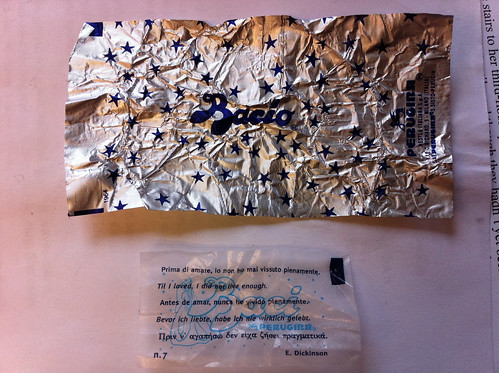
Til I loved

Over at CARGO's site, there's a slew of trios from the writers and friends of the magazine, just like last year, about what mattered in 2010. You have to allow google to translate most of them (if you don't read German), but you can read mine in my version of English (google will still play with it after you hit 'translate' FYI). But, still, I thought it'd be good to cross-post the list here since I'm sure EK et al would enjoy the link-back and because these things do matter to me so. And because I will be writing a bit more for these fine gentlemen as we move through the year.

1. Pressing pause

Slowing my intake of cinema and output of criticism has proven a boon. Though I wish I'd seen a few films from the rep circuit that I missed on purpose (eg, those two Oliveira films), I am confident that the choices I made those nights lead to more fulfilling engagement with this mad world we're in. Besides, it has lead to different creative writing projects — to say nothing of the new lessons learned about living a better life, which is what we're supposed to do, I'm fairly certain. In the cinephile department, though, it also lead to fully embracing…

2. Blu-Ray discs

I'm certainly lucky to have had access to Blu-Rays for a while yet, but it wasn't until this year, and late within it, that a player entered my home. Perhaps against my better judgment, I already owned some BRs, but the new device gave me a more legitimate opportunity to buy The Red Shoes and that Brakhage set (both put out by Criterion Collection). The BR image can't quite ever be expected to approximate the flicker of celluloid, but these films have their own, new, sometimes-bizarre shimmer. The crisp lines and erupting colors make a new vision of what images are capable of, and what their purpose may be now, which I'd like to believe is closer to affect than representation, given these don't look real or hyper-real (whatever that means) but rather some fancy, new interpretation of light. There is likely an entire book of theory to be written on this new phenomenology, but I won't try any harder (get started) here. I'll just say, try to see something big and bright and colorful. Be sure to have the right HDMI cables. And let it wash your face in luster.

3. Tim & Eric

Back to lo-fi for a second. These weirdos make me laugh more than just about anybody, and they did an especially great job in 2010. Not only did they give us two shows full of goofs and spoofs only film nerd assholes in love with VHS and closed circuit cables could make, they went on tour with their brand of disorienting lunacy. They brought it to our backyards. On certain days in the second half of our late year, in fact, you could hear me tell my friends that I thought their announcement for the Tim and Eric Awesome Tour Great Job 2010 (as well as their inimitable Chrimbus Special) was the single best piece of filmmaking (and comedy) that I saw all year long. You can watch it and judge for yourself right here, below.

Wednesday, December 29, 2010

Viewing Log #66: 2010

by Ryland Walker Knight


There will be more words as we trade up calendars, including a number of other wrap-ups, but I wrote this one a couple weeks ago and it's highly unlikely I'll see much to add to it. And even though some of it may be redundant with the coming lists (and the viewing log series as a whole), I wanted to share this summary of sorts of my year. It's a preferential ordering, but it's certainly open to revision and it's certainly open plain and simple. I know a lack of rules aggravates some readers/friends, but this is my blog and I say to hell with rules. These are the films I saw (for the first time, though I watched some more than once) this year that left something in me worth transcribing (or translating), even if that's just some glib toss-offs as we have below. Besides, it gives you all the more freedom to press and volley or scoff and move on to something more, I don't know, serious. At any rate, here goes nothing.

  • A Brighter Summer Day — I don't doubt an aura built from rarity fed my enjoyment, but I also know, for a fact, that this was the best lit and unlit film I saw all year.
  • Film Socialism — The best argument yet for any and all forms of digital images and non-linear leaps in editing and structure. Also, the best argument I've seen that most of us are illiterate in more languages than words can encompass—presuming, of course, that images are their own language—since JLG makes words into images at all events and overlays.
  • Winter, Sarabande, Compline, Aubade — Hard to choose because they're all so similar, which points to how hard it is to watch more than one at a time, but if I had the skills, I would love to make little things like these.
  • Let Each One Go Where He May — One of those 'perfect' movies that's not quite perfect so it becomes more perfect. Also, it's about a lot of stuff I'd love to make movies about; especially the last scene/shot.
  • 36 vies du Pic St Loup — Because I saw it on film.
  • Wild Grass — I hope I have this much fun when I'm 86.
  • Angel Face — The best ending of any film I saw all year. (Except for maybe that one just above.) And sexy in a complicated way, the way sexy is.
  • The Small Black Room — Since I can't lob more hosannah's at their ballet movie, or any number of favorites by these dudes, I'll reserve this spot for this little number, which plays host to at least four amazing set pieces of paranoia.
  • La Captive — Perception gets grained into people.
  • Close-Up — Perception gets people ingratiated, and not.
  • Landscape Suicide — Perception kills.
  • L'enfence nue — Yes, life is hard. Could easily be paired with the Yang above for obvious reasons but could also be paired with the Akerman.
  • The Last Picture Show — Yes, life is sad and everything ends. But growing up, like sex, can be fun. (That is, after it's stopped being terrifying.)
  • Ruggles of Red Gap — A lesson in decency and in laughter.
  • Father of My Children — A lesson in decency.
  • Irma Vep — Scratchy gem full of footnotes and confusion and jokes about all of it; unending and unended, too.
  • Orlando — Sometimes the right face can sell the same joke 18 times. And videotape matters.
  • La France — This is how a fairy tale works, I'm fairly certain.
  • Bluebeard — Girls have problems with all kinds of narratives.
  • Boarding Gate — Sometimes the right lady can sell the same desperation to a bunch of different men and get herself across the globe. Sometimes that flight's just flight, though.
  • The Women — A mile a minute to nowhere but the start of more calisthenics jokes performed as/during calisthenics.
  • Everyone Else — Raspberries on the belly are never just for fun!
  • I Am Love — Affect porn, brought to you by soft focus and close-ups.
  • Unstoppable — Pure adrenaline poem to the proles!
  • A Letter to Uncle Boonmee — Pure melancholy poem to the peasants!
  • Lourdes — Indeterminacy isn't a reason to hide; nor is prayer a cure for fear. We're all tourists, just like Tati said before.
  • The Holy Girl — Hiding behind a wall and/or a uniform, listening—to the sounds in the thickening air—is just another kind of pretending to live.
  • To Die Like A Man — Always already acting sounds tiring, doesn't it?
  • Alamar — Dudes, listen.
  • Make Way For Tomorrow — Kids, pay better attention.
  • The Headless Woman — Ladies, listen, you better pay better attention!
  • Fin aout, début septembre — Guys, get writing already. Do something already.
  • Utamaro and his five women — Men, stop looking.
  • Bell, Book and Candle — CraaAAaaazy! And funny.
  • Shutter Island — InsaaAAaane! And poignant.
  • Macgruber — Pshh. Insanely funny, more like it.
  • A Perfect Getaway — Wherein the title reflects the experience to a P.
  • Jackass 3D — Wherein the title defines the subjects to a D.
  • Enter The Void — Wherein the title is the title and boys will be boys.
  • Gamer — Wherein the title should mean more amid all that boys noise.
  • The Portuguese Nun — Love's gotta start somewhere.
  • Dodsworth — Love's gotta stop somewhere.
  • The Ghost Writer — Taut and paranoid, just like you'd expect, with a kicker final shot after a shot (that one with all those hands passing the note) that teeters on unintentional hilarity.
  • Cold Weather — Crisp, minor, yet mobile and of a milieu. I've seen siblings talk like that. I also like that, at heart, this A.K. wants to entertain people; this movie's a comedy, not a caper.
  • Greenberg — Old dudes trying to be young dudes.
  • The Social Network — Old dudes trying to understand young dudes.
  • Sauve qui peut (la vie) — An old dude toying with understanding and trying and film and ladies.

Saturday, January 02, 2010

Top teats. Whoops, tweets.

by Claire Twisselman


[Ed's note: Though part of her charm on twitter (already!) is her lack of punctuation and/or grammar rules, I asked Claire to clean up those lists she came up with for our little blog party here.]


I gave in, I joined twitter. And what does Knight do? Asks me to then go back and blog about it? What a goofus. In any event, here's the lists I came up with for the year and for the decade. I'm not going to go back and change them, though, to add Antichrist, like I remembered just a minute ago, but, whatever, you know? These were the movies that taught me some things this year, this decade. I still don't know much! Also, I haven't seen everything, so some things might get pushed around when I see, oh I don't know, Police, Adj. So let me know what you think! Am I cool enough to play in this boys club from time to time? In any event, happy new year. Can't wait to grow up some more in this new decade.


2009

  1. Inglourious Basterds, Quentin Tarantino — Yes, I'm a Jew.
  2. Summer Hours, Olivier Assayas — Remember, readers, vinyl is heavy. And don't listen to anybody who tells you this isn't lovely, and smart; it's subtle in ways, say, Arnaud Desplechin never could be.
  3. Julia, Eric Zonca — Tilda Swinton is my hero.
  4. The Headless Woman, Lucretia Martel — Except for the Coens' movie and Wes Anderson's fox, nothing else is this dedicated. Demanding but rewarding. And terrifying.
  5. Two Lovers, James Gray — Joaquin Phoenix is too, too good at being so, so bad at life.
  6. The Girlfriend Experience + The Informant!, Steven Soderbergh — What Karina Longworth said. Something about the economy.
  7. In the Loop, Armando Iannucci — Lubricated horse cock indeed! Sure, Malcolm's a horse (the movie rides on him, his shoulders), but Gandolfini kills it. I've watched it about five times.
  8. Bad Lieutenant: Port of Call: New Orleans, Werner Herzog — How come nobody talks about how bad an actress, and how boring a sex symbol, Eva Mendes is? Why does she get a pass? Oh, right, Nic Cage. Derr.
  9. A Serious Man, Coens + Fantastic Mr Fox, Wes Anderson — Two polar opposite readings of Nietzsche: one's neutered, the other's fertile. This is what I'd propose for that fantasy double bill thing they've got at The Notebook.
  10. Duplicity, Tony Gilroy — There needs to be more banter in movies, and more split screens. Their confessions of their mutual love was shockingly moving for this lil lady.
  11. The White Ribbon, Michael Haneke — Dreadful, from frame one on. Yes: full of dread.
  12. Broken Embraces, Pedro Almodovar — Penelope Cruz is the sexiest, duh, and Pedro seems to know almost everything about making movies. Great movie for tit lovers.
  13. 35 Rhums, Claire Denis — "Marvin... you were this friend of mine..."
  14. Drag Me To Hell, Sam Raimi — C'mon, man, go back to "real movies" more often!
  15. Tetro, Francis Ford Coppola — All of it's in that scene with the cigarette.


The Decade

  1. There Will Be Blood, Paul Thomas Anderson, '07 — I see the worst in people.
  2. Dogville, Lars Von Trier, '03 — Big time. Really taught me some things: about myself, about being a lady, about James Caan. Caan! He's, big surprise, the secret.
  3. Esther Kahn, Arnaud Desplechin, '00 — Don't get Ry started! Don't get me started either! Any woman who wants to brush her face after her teeth is a-ok with me.
  4. In The Cut, Jane Campion, '03 — Sexy and scary and everything I hate/love about NYC (and being a lady in NYC).
  5. Yi Yi, Edward Yang, '00 — Fucks me up. In a delicate way. Like getting a soul massage, kinda.
  6. Eternal Sunshine of the Spotless Mind, Michel Gondry, '04 — Fucks me up.
  7. The World, Jia Zhang-ke, '04 — Everybody keeps saying Platform is Jia's movie of the decade, but this one is better, or more important, and digital, and it's got a way less happy ending.
  8. Kill Bill + Death Proof + Inglourious Basterds, Quentin Tarantino, '03/'04 + '07 + '09 — The best movie movie movie run of the decade, but, hmn, who cares, huh?
  9. Regular Lovers, Philippe Garrel, '05 — Black and white and red all over. This dude sure does make seem suicide seem painful (eep, not painless).
  10. Flight of the Red Balloon, Hou Hsiao-hsien, '07 — If this is what being a mom is like, I could maybe be game. Except for all that deadbeat dad shit, this is what life should look like, I think.
  11. The New World, Terrence Malick, '05 — Amazing, no doubt, but it's not anything that's not in The Thin Red Line.
  12. Femme Fatale, Brian De Palma, '02 — I kinda dig how sleezy this flick is since, like a lot of this guy's movies, it's big hot air balloon full of prurience. And he's got some idea about movies being a dirty act he's always pushing. But here it's also about Paris and France. Also, De Palma gets Banderas.
  13. Mulholland Dr., David Lynch, '01 — Taught me to see with my ears. Why are so many critics picking this one over INLAND EMPIRE? Because this one has lesbians! Nude! Imagine that!
  14. The Darjeeling Limited, Wes Anderson, '07 — I know Ry's got a hard on for The Life Aquatic, but this one hurts more, is tighter.
  15. Wendy and Lucy, Kelly Reichardt, '08 — Best dog movie I've seen and a great train idea or 8, too.
  16. The Man Who Wasn't There, Coens, '01 — Obviously their best movie. It's got some hope.

Wednesday, December 30, 2009

Keep it light.

by Ryland Walker Knight


Return run light nights 2

After I submitted that essay on Bright Star, Ekkehard asked me to give him three things that marked my year—and they needn't be strictly cinematic. But, as this year was marked by all kinds of junk and dumps (as much as true highlights) and plenty of fear and trembling and loathing to go along with flight and dance and cheer (life felt like a real Søren leveling at times), I chose to not bore this blog world with me. Thus, I kept my miniature missive to maximum light, kept it pithy and kept it to cinema. You can read my list (and so many others!) in German by clicking here. Or you can read the English I sent to EK below:
1. Any time you get to see Playtime in 70mm is a highlight. This time, it was an unofficial introduction to my stint in New York early in 2009. I saw it at the Walter Reade Theatre with Keith Uhlich, Matt Zoller Seitz and Glenn Kenny. Then we ate yummy Italian food in Park Slope.

2. The DREYER at BAM series was an education this spring. Very happy to have met those films in that setting, that is the cinematheque over the home, and to have written something about each screening.

3. Jumping back into the PFA swing of things with an Alain Resnais series was just plain fun, from the Marienbad beginning all the way through—forwards and backwards, of course—to the end, which was a film from that often-cloudy, always-jumpy second phase in the 60s, fittingly calling an end in its title: La guerre est finie.

Shelter

Monday, December 28, 2009

Nothing's better than this, and it never ends.

by Ryland Walker Knight


—We just recycle is all

We all carry a list, some even write lists down, to remember what to watch or to read or to eat or to buy or to accomplish. But, come on, let's face it: lists are easy. And, at this moment, do you really need another list? To answer, sort of, Danny and I decided to chuck the list, mostly, to try to winnow this year's year-end wrap up in The Notebook. Today starts this new cycle in this Part I post. As we wrote over there, we switched styles and asked contributors to pair a new film (theatrical, festival, whatever barometer) with an old film (rep house, disc, you pick) seen this year. I felt mine was pretty obvious, but, nonetheless, it's easily a dream double bill I'd love to sit with in a theatre: 36 vues du Pic Saint Loup (Jacques Rivette, 2009) + The Golden Coach (Jean Renoir, 1953). I say more in the post, which you'll have to read over there, and I even propose a few other pairings. But I wrote that copy a little while ago. And, per the rules, my minimal commentary for my secondary double bills couldn't be used. So I decided not only to propose another, sixth double bill in this dedicated link-thru but also give you my complete list of double bills complete with the themes (jokes) I see emerging from those pairs:

———


Last week I finally saw Paul Verhoeven's 2006 feature, Black Book, and it quickly catapulted up my favorites list. In fact, I watched it twice—and the second time I made my own double bill, pairing it with Inglourious Basterds. This is another slightly obvious double bill, but the films are such different modes, and actually such different postures, that, seen back-to-back with plenty of snacks, the pairing was rather illuminating beyond the World War II "settings" we're given.

Verhoeven's less a formal master than Tarantino (whose stylistic evolution since 1994 is significant, though also almost subtle in that its tied to his editing patterns, which is inextricable from his obsession with talk), but the Dane's film is no less stylistic or dashing or conceptual. Indeed, Black Book is arguably freer, and more dashing, though it is also the more circumscribed, the more "factual" and "representational"—even, I'd say, more narrative—film. The power of Black Book is precisely that it fuses into both a conceptually stimulating and a plain entertaining master work. Verhoeven's film throws up action scenes galore, yes, and a compelling revenge yarn, to say nothing of its bald prurience (yet), and hosts one of the best performances of the decade, easy, from Carice Van Houten. In short, though it's got some bitter pill stuff, it's a fun flick.

The real rub remains that both these films are pulp objects, mash-ups maybe, of infinite sources. Tarantino makes it more obvious, of course, with direct visual quotes and a few more names dropped, but the movies motivate Verhoeven in equal measure. However, Verhoeven's not a metabolic function the way Tarantino is: Verhoeven simply uses the movies, and nods at symbols while making his own; Taratino, on the other hand, shows his hand constantly. For instance, Black Book cat calls Mata Hari in a tossed off line of dialogue, to remind us of another reason both culturally specific at the time and cinephilliacly tickling now why this Jew went blonde, while Basterds punctuates its first major scene with as big a "quote" as possible, lifting Ford's doorway from The Searchers (and others) to plant it in a southern France pastoral of 1941. In fact, nearly everything in Basterds is a quote or in quotes—especially the actors—unlike Black Book, always a cynical horrorshow, which aims to eschew all trickery just as soon as the world allows.

Which is to say that, since Tarantino the American is obsessed with charisma and Verhoeven the Euro is obsessed with sex, one film is built on rep and one film is built on bait (respectively). In fact, everybody in Basterds is obsessed with their rep, forever asking "What have you heard of me?" while all of Black Book is premised on Carice's undeniable appeal, her nudity not a tease so much as a fact of the world—men go dumb and forsake themselves for such a small cost/price.

These postures, too, help define the films' attitudes towards history. Tarantino's out to earn the right to write it as he sees fit, as if by sheer force of talent he gets that honor. Verhoeven's out to simply write a story, to given face to a certain strand, to show you how history is, in fact, written not by the winners but rather by the survivors. Further, Tarantino closes his own film off, burns it to the ground and seals it in its own skin-tomb, while Verhoeven leaves his open to scramble, its final tableau a design of perpetual defense. You get the sense that Black Book, though it's putatively inspired by true events, is a fiction invented to talk about a moment in history rather than a document, of sorts, about how some Jews fought their cultural legacy. It's that fantastic. On the flip side, it's easy to see Basterds as a-political, a complete reverie of light and dark, blood and guts, everything celluloid can capture. The trick to the double bill, if you want to have a really good time, is obvious: you save the fantasy for second. You still won't get out alive, but you might smile more while trying.


———


I should also say, watch the Metro Classics blog for a quick top five comedies of the decade from yours truly. I only played along because I miss those dudes, and I thought that'd be a fun way to participate. Otherwise, I have no time for that kind of thing. Plus, I like to advocate for comedy. A great comedy is rarer these daze, but, believe me, although it might appear different from an "objective" angle on the films I often laud, a great comedy will most often trump a great tragedy in my book.

What might get this list into trouble with some of you, as it has with the friends I've shared it with, is how I define "comedy." For me, it's still a structural classification as much as "did it make me laugh?" If it ends well, with a marriage or something like one, then it's probably a comedy. However, there are black comedies, too, which flip that necessity around past tragedy. The Coens are great at this: their brand of comedy is often of the "what else can we do?" variety. You either laugh or you die. Actually, you'll die either way, but at least you can die laughing. It's nihilism, yes, but not everybody can be Wes Anderson or Arnaud Desplechin. And nobody, I mean it, nobody's Jean Renoir.

Does this look fake to you?

———


—Laugh a little.

Thursday, February 12, 2009

10 Personal Touchstones in American Cinema

by Ryland Walker Knight


[Originally posted at the curator corner, where you can read the full post.]

the end?

Wednesday, January 14, 2009

Two thousand weight? #8: Hella eyes

by Ryland Walker Knight


ever changing!

Ok, I lied. I do have some more things to say about my year with the movies. I said some of those things, rather haphazardly, in a contribution to Brian Darr's second annual I Only Have Two Eyes poll. That link will open the whole series of posts—starting with Brian's introduction and his own list, and continuing through the alphabetically arranged considerations of (former) fellow bay cinephiles I will most definitely miss seeing around town. One glaring, idiotic omission from my list: The San Francisco Silent Film Festival. I don't know how I could forget! (Well, I do: I rushed through composing my notes.) In any case, that weekend was a true highlight not just for the films I got to see but for where I got to see them (in that cathedral of cathedrals, The Castro) and who I got to see them with (including Brian, and our lovely czar Michael, and the cosmopolitan Shahn, and the flown-in Darren & Girish). Another forgotten treasure was the SFIFF screening of En la cuidad de Sylvia, which spawned three thoughtful letters between yours truly and our friends Jen Stewart and Kevin B. Lee. So, please go look around at some of these links. For all my two thousand weight dumpy dirt piles, there were beams of light cutting through the clouds to glint across my horizon.

Saturday, January 03, 2009

VINYL IS PODCAST #10: An unfocused invitation to holler on criteria. [In two parts]

by Dan Callahan, Ryland Walker Knight, Kevin B Lee, and Keith Uhlich


approaching
[PART ONE]


[Podomatic stream]
[Direct audio download]
[iTunes subscription available]
[Simple syndication subscription]


an experiment in language
[PART TWO]


[Podomatic stream]
[Direct audio download]
[iTunes subscription available]
[Simple syndication subscription]

RWK here. For our first East Coast podcast, I was joined by some of my best friends in this (surprisingly little, and ever tight-knit) critical community that I'm jumping into to talk about, as I thought only natural, our criteria for judgment and evaluation. My initial plan was to ask these gentlemen to provide a brief historical account of how their individual criteria developed to our current conversation and how they navigate the distinction between taste and value in their work. This aim was lead astray. This is a good thing. We four wound up talking around this question, or prompt, and, I hope, answered it in another (that is, less explicit) fashion. The curious listener will find how each of our spoken words signals an evaluation as much as these written words forever perform value judgments. It's all about language, always, it appears—and how we develop different vocabularies for different registers of conversation. These are the things I like to think about. So this was fun for me, even though I talk the least among our party (which is a first, I think, for this podcast). I'm continually more interested in how we think about things rather than why, because the former subtends the latter in a subtle way. The problem, then, as ever, is how to account for that, for everything, and how to argue for your favorites as much as revere them (or the opposite). And I think we do a pretty good job here. Please, tell us things. —Thanks for listening!

multiplicity!

Wednesday, December 31, 2008

Two Thousand Weight? #5: Pure Joy

by Mikey

Track One: "Suffering Jukebox" - Silver Jews

Live it's a tie: 650 torchbearers Millbrae Bros bringing Seattle to its knees with the help of a whiskey-soaked devil VS. Earth melting the brains of a hundred-plus yuppies at the Bad Seeds concert.

Track Two: "Strange Overtones" - David Byrne and Brian Eno


After requesting "Baby on Board", Lindy being picked to harmonize and become an honorary member of the Dapper Dans.

Track Three: "Old Fools" - the Magnetic Fields


Seeing WALL*E at Pixar (yeah, that's me). It ain't no Ratatouille but that first half hour is the greatest of the year. Strike that, any year. Fuck the haters (see below). WALL*E is optimistic about the future in spite of the evils of mankind taunting it in the face. After seeing this work of art constructed on robots but conceived and shaped entirely by humans, this jaded little misanthropic atheist saw a glimmer of hope too.


Track Four: "A Few Words in Defense of Our Country" - Randy Newman

Speaking of hope, remember this?


Track Five: "Nude With Boots" - Melvins


The greatest band in the history of music soldiers on.

Track Six: "The Rip" - Portishead

Overhearing Nellie McKay say she's never heard of Cat Power from the booth next to me at California Vegan in L.A.


Track Seven: "Borrowed Your Gun" - Spiritualized

Charlie Kaufman's directorial debut is a movie about life and death and love and lust and art and commerce and children and parents and one's purpose or lack thereof on this planet and it made me laugh and cry and gasp and sigh and I couldn't get it out of my head for days. I woke up after dreaming about it with new revelations having come to light and I still don't know if I know what I know because it was all so fast and fleeting and full of wit and vigor and pith and vinegar. It's the most beautiful film about ugliness I have ever seen.


Track Eight: "I'm A Tide" - Broken Strings

Buried treasures: Pennies from Heaven, Zola, A Tree With Roots, The Blue Angel, Bela Bartok, The War of the World by Niall Fergusson, Rio Bravo.

Track Nine: "More News From Nowhere" - Nick Cave and the Bad Seeds


Goodbye.