Showing posts with label Tarantino. Show all posts

Sunday, November 28, 2010

Viewing Log #61: Nothing's arrears [11/22/10 - 11/28/10]

by Ryland Walker Knight
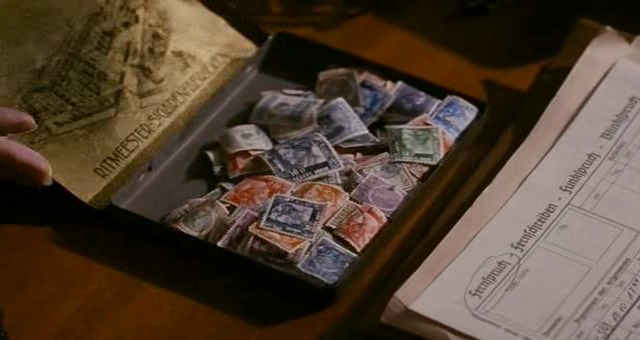
Joan's dissolve

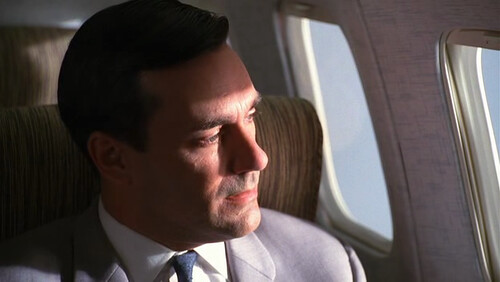
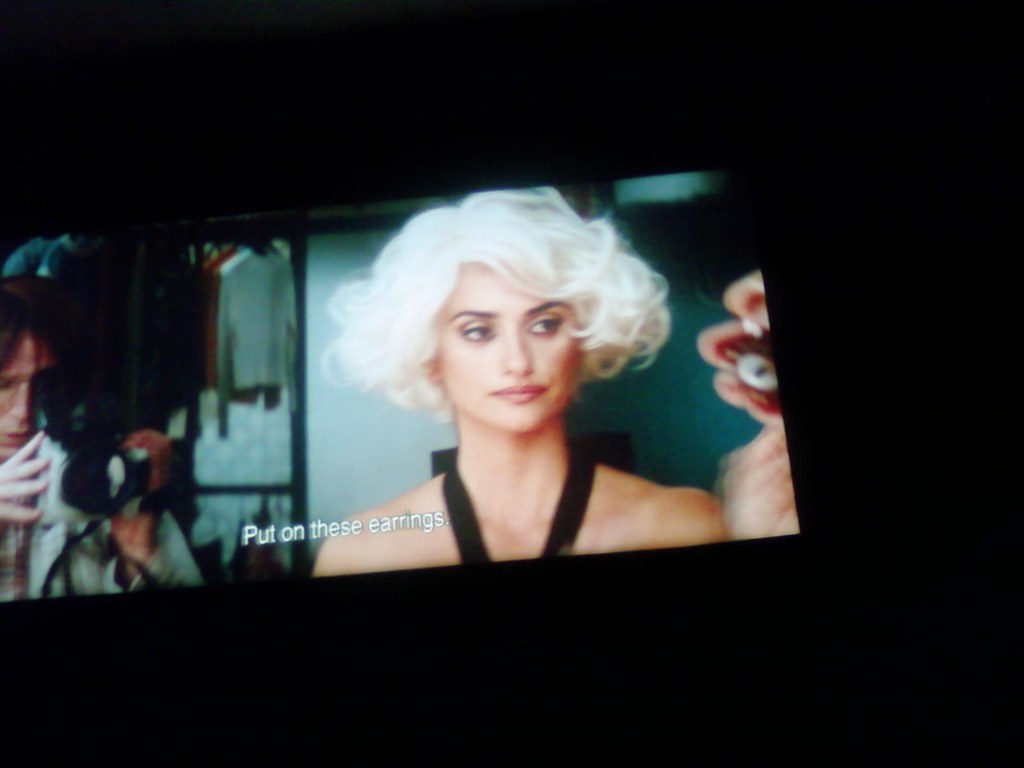
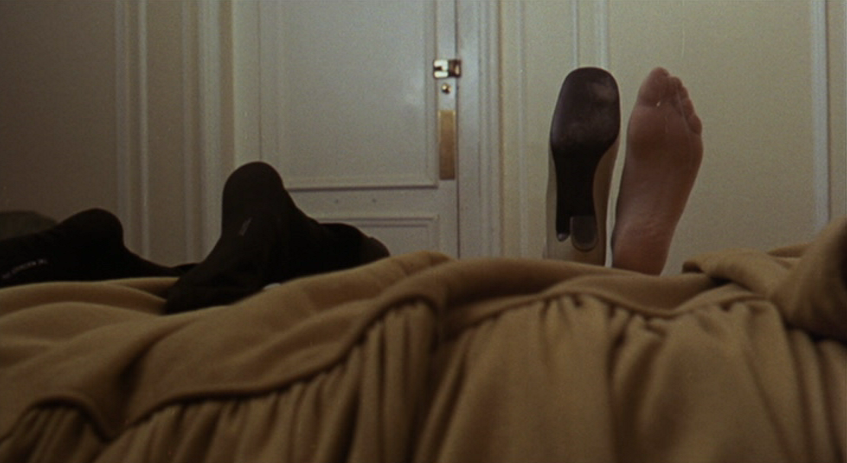
  • The second season of Mad Men [2008]. Compromise is the name of the game in this season. Life's full of it, or so it would appear in Matthew Weiner's world of tropes, and the joy to be had here isn't flight; it's here, if anywhere. The schematism of the writing in this show is really something. It often works, really. But it's also so tidy in the structure that characters, however well drawn, are reduced to ideas. I think it has to do with the period setting as much as the actual writing. Something about signifiers that I'm too lazy to read closer here beyond a favorite damning word of many so-called intellectuals like myself: over-determination. The allure of the show may be its sheen and its ludicrously gorgeous cast (television's a medium of faces at its best and at its worst), but I keep watching because of those moments when things fudge and because there's way less exposition in this season than last. For instance, the low-light of the season, which I lead with above: Joan's rape. It's a terrifying scene in part because it's about competing perceptions, and because of its final dissolve, which is easily the most striking image so far in the show. Joan's looking at her future in that shot: an idle man waiting for his mess to be cleaned. And I don't think my sympathies for Joan and her continued belittlement over the course of these thirteen episodes stems from Christina Hendricks' beauty but her talent at quivering, and my amazement at what these writers want to put her character through in order to counterpoint Peggy's ascension. It's no secret that Peggy's the biggest success (so far) because she's self reliant. What's doubly amazing is that she is, in fact, our model for America in the show, which may be its home run trot in the end. She loves popsicles, she asks for what she wants, she believes in a loving God, she's great at her job, she continues to out-do herself, and she's open to life for all her tight-lipped interactions with the world. Don's fascinating and Hamm's beautiful, too, but his "arc" is the hanger the suit drapes from, as that line in San Pedro attests; no, this show belongs to its ladies, including both Mrs. Drapers. Can't wait to see how Betty—that dingbat—fords the future.

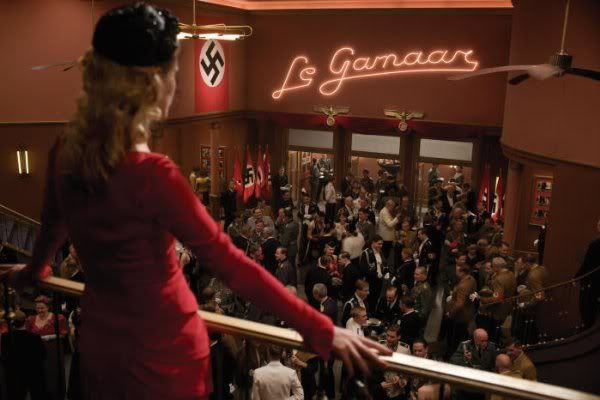
  • Inglourious Basterds [QT, 2009] # I do love this movie, lumpy though it may be, and the BluRay looks pretty incredible. The colors aren't quite celluloid rich but they still impress the eye at interesting wavelengths. Plus, the editing in this movie tickles synapses so well. (And not just bc RIP S.M.) Awful close to a masterpiece.

  • Shadow of a Doubt [Alfred Hitchcock, 1943] # Well, the first half hour. Then we went to dinner, to give thanks. (Chloe wasn't impressed, by the way, though she did find Cotten's drawl creepy.)

  • The second half of the first season of Mad Men [2007]. Seems like an unavoidable set-up season, with plenty to play out, but there were some moments I really dug: Betty shouldering the BB gun without a shred of affect save the smoke from her cigarette, that way John Slattery can be a total asshole but still charming, Joan's/C.Hendrick's eye brimming, Peggy's rise, Harry Crane, and the first glimpses of Duck Phillips' brand of creep. Not to mention Don's ability to, well, be a man despite also being another brand of louse prone to self-delusion and good old fashioned alcoholism.

Window seat
—Come on back from way out west

Monday, December 28, 2009

Nothing's better than this, and it never ends.

by Ryland Walker Knight


—We just recycle is all

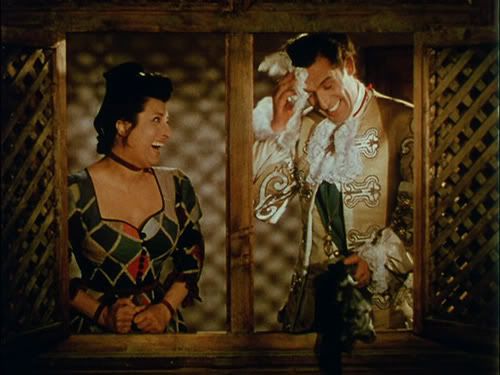
We all carry a list, some even write lists down, to remember what to watch or to read or to eat or to buy or to accomplish. But, come on, let's face it: lists are easy. And, at this moment, do you really need another list? To answer, sort of, Danny and I decided to chuck the list, mostly, to try to winnow this year's year-end wrap up in The Notebook. Today starts this new cycle in this Part I post. As we wrote over there, we switched styles and asked contributors to pair a new film (theatrical, festival, whatever barometer) with an old film (rep house, disc, you pick) seen this year. I felt mine was pretty obvious, but, nonetheless, it's easily a dream double bill I'd love to sit with in a theatre: 36 vues du Pic Saint Loup (Jacques Rivette, 2009) + The Golden Coach (Jean Renoir, 1953). I say more in the post, which you'll have to read over there, and I even propose a few other pairings. But I wrote that copy a little while ago. And, per the rules, my minimal commentary for my secondary double bills couldn't be used. So I decided not only to propose another, sixth double bill in this dedicated link-thru but also give you my complete list of double bills complete with the themes (jokes) I see emerging from those pairs:

———


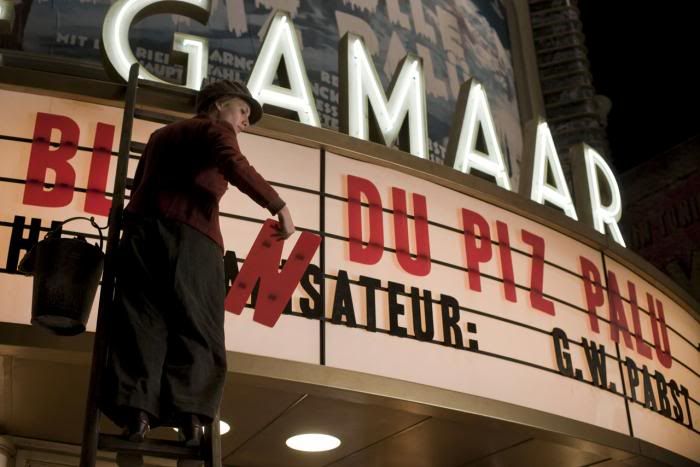
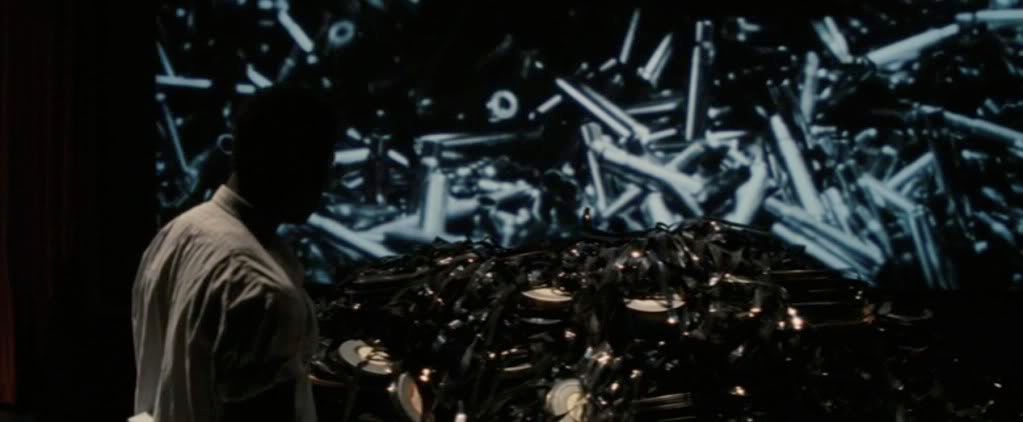
Last week I finally saw Paul Verhoeven's 2006 feature, Black Book, and it quickly catapulted up my favorites list. In fact, I watched it twice—and the second time I made my own double bill, pairing it with Inglourious Basterds. This is another slightly obvious double bill, but the films are such different modes, and actually such different postures, that, seen back-to-back with plenty of snacks, the pairing was rather illuminating beyond the World War II "settings" we're given.

Verhoeven's less a formal master than Tarantino (whose stylistic evolution since 1994 is significant, though also almost subtle in that its tied to his editing patterns, which is inextricable from his obsession with talk), but the Dane's film is no less stylistic or dashing or conceptual. Indeed, Black Book is arguably freer, and more dashing, though it is also the more circumscribed, the more "factual" and "representational"—even, I'd say, more narrative—film. The power of Black Book is precisely that it fuses into both a conceptually stimulating and a plain entertaining master work. Verhoeven's film throws up action scenes galore, yes, and a compelling revenge yarn, to say nothing of its bald prurience (yet), and hosts one of the best performances of the decade, easy, from Carice Van Houten. In short, though it's got some bitter pill stuff, it's a fun flick.

The real rub remains that both these films are pulp objects, mash-ups maybe, of infinite sources. Tarantino makes it more obvious, of course, with direct visual quotes and a few more names dropped, but the movies motivate Verhoeven in equal measure. However, Verhoeven's not a metabolic function the way Tarantino is: Verhoeven simply uses the movies, and nods at symbols while making his own; Taratino, on the other hand, shows his hand constantly. For instance, Black Book cat calls Mata Hari in a tossed off line of dialogue, to remind us of another reason both culturally specific at the time and cinephilliacly tickling now why this Jew went blonde, while Basterds punctuates its first major scene with as big a "quote" as possible, lifting Ford's doorway from The Searchers (and others) to plant it in a southern France pastoral of 1941. In fact, nearly everything in Basterds is a quote or in quotes—especially the actors—unlike Black Book, always a cynical horrorshow, which aims to eschew all trickery just as soon as the world allows.

Which is to say that, since Tarantino the American is obsessed with charisma and Verhoeven the Euro is obsessed with sex, one film is built on rep and one film is built on bait (respectively). In fact, everybody in Basterds is obsessed with their rep, forever asking "What have you heard of me?" while all of Black Book is premised on Carice's undeniable appeal, her nudity not a tease so much as a fact of the world—men go dumb and forsake themselves for such a small cost/price.

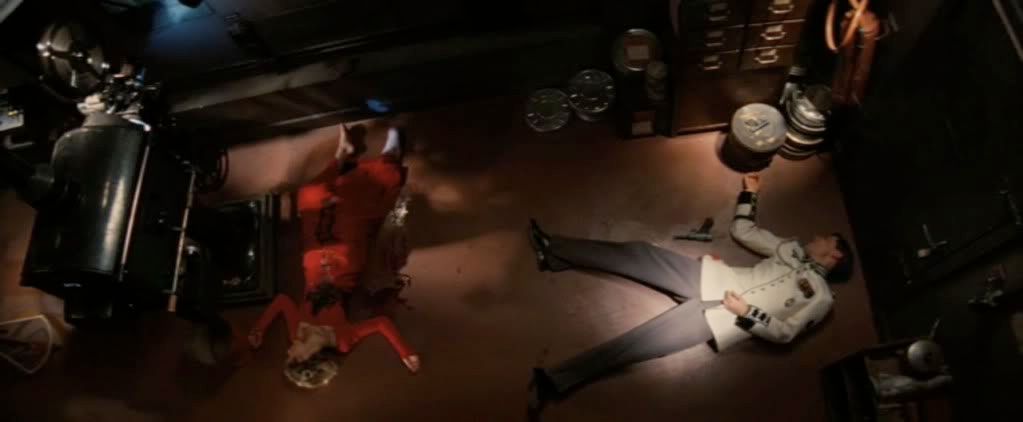
These postures, too, help define the films' attitudes towards history. Tarantino's out to earn the right to write it as he sees fit, as if by sheer force of talent he gets that honor. Verhoeven's out to simply write a story, to given face to a certain strand, to show you how history is, in fact, written not by the winners but rather by the survivors. Further, Tarantino closes his own film off, burns it to the ground and seals it in its own skin-tomb, while Verhoeven leaves his open to scramble, its final tableau a design of perpetual defense. You get the sense that Black Book, though it's putatively inspired by true events, is a fiction invented to talk about a moment in history rather than a document, of sorts, about how some Jews fought their cultural legacy. It's that fantastic. On the flip side, it's easy to see Basterds as a-political, a complete reverie of light and dark, blood and guts, everything celluloid can capture. The trick to the double bill, if you want to have a really good time, is obvious: you save the fantasy for second. You still won't get out alive, but you might smile more while trying.


———


I should also say, watch the Metro Classics blog for a quick top five comedies of the decade from yours truly. I only played along because I miss those dudes, and I thought that'd be a fun way to participate. Otherwise, I have no time for that kind of thing. Plus, I like to advocate for comedy. A great comedy is rarer these daze, but, believe me, although it might appear different from an "objective" angle on the films I often laud, a great comedy will most often trump a great tragedy in my book.

What might get this list into trouble with some of you, as it has with the friends I've shared it with, is how I define "comedy." For me, it's still a structural classification as much as "did it make me laugh?" If it ends well, with a marriage or something like one, then it's probably a comedy. However, there are black comedies, too, which flip that necessity around past tragedy. The Coens are great at this: their brand of comedy is often of the "what else can we do?" variety. You either laugh or you die. Actually, you'll die either way, but at least you can die laughing. It's nihilism, yes, but not everybody can be Wes Anderson or Arnaud Desplechin. And nobody, I mean it, nobody's Jean Renoir.
Does this look fake to you?

———


—Laugh a little.
Sunday, December 27, 2009

Viewing Log #26: No, not caprice: it takes idle time. [12/21/09 - 12/27/09]

by Ryland Walker Knight


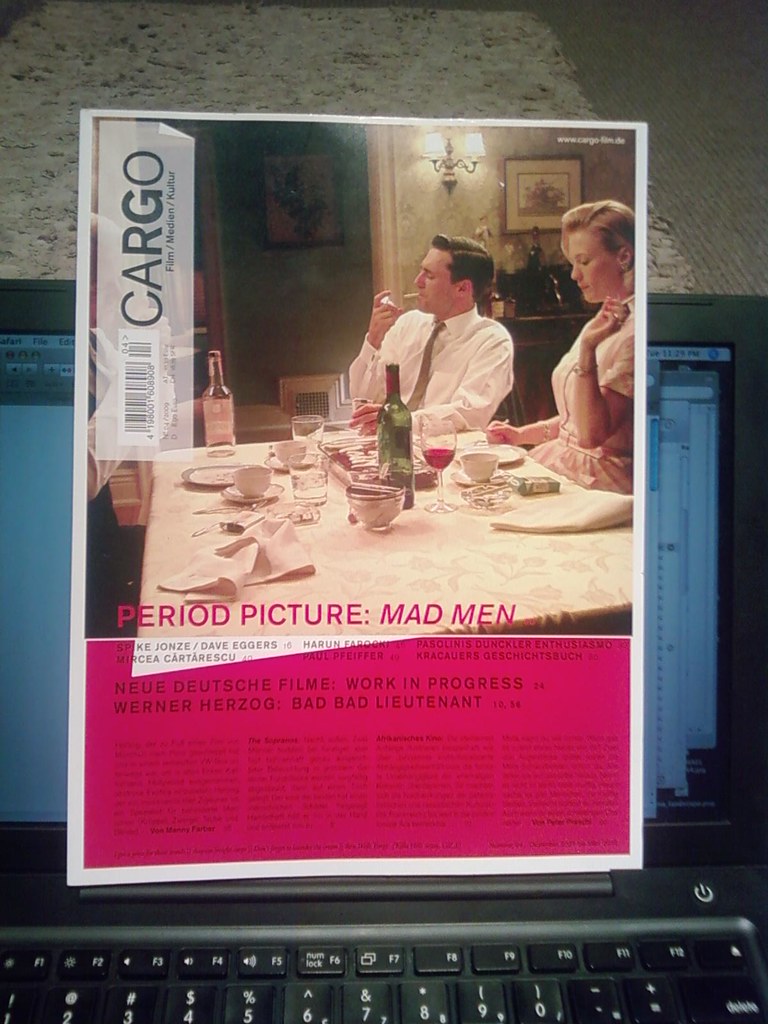
Cargo No.4, 1
—Pride: pp.14-15

  • A Serious Man [Coens, 2009] I just tweeted: "A SERIOUS MAN is so scary it hurts. Just about the most nihilistic film I've ever seen. Like NO COUNTRY times BURN AFTER READING to the nth." And I think it's kind of good? Don't quite know yet, but I do know that to toss it off as simply just nasty is to not reckon the nasty. In fact, I'd say that's exactly what they're predicting you'll do; what they might say is a "problem" at large. I don't think they're advocating a blind eye. The scary thing is that they might be advocating a bullet brunch. Or, that some lives aren't just quiet desperation: some lives are, in fact, pointless. Whether you eat the bullet is up to you, of course, but it's a debate you have to have every day. Luckily, or so it would appear, each of these guys has "somebody to love" and that makes them choose this world every morning. I walked out desperate for life. I should probably write some more about this one. Or, at the least, have a few good talks over a few good beers with a few good men I trust and love.

  • Inglourious Basterds [Quentin Tarantino, 2009] # Wound up watching the digital copy in full. Looked good, but it was too easy to minimize while snacking.
  • Black Book [Paul Verhoeven, 2006] # On a rainy and ugly day, I thought I'd see some real struggle and some real womanhood. [click here.]

  • Inglourious Basterds [Quentin Tarantino, 2009] # Started it on my computer, then later in the day looked at the Blu Ray. Looked great, of course, but, as I tweeted, this movie demands celluloid's texture. Motes don't quite mote, and smoke won't quite curl, the same in digital's clarity.
  • 2001 [Stanley Kubrick, 1968] # Works really well on Blu Ray; so alien, such a painting. I skipped around a lot and saw some beautiful things. "Jupiter And Beyond" is something wholly new, something Avatar can't touch (in any medium).
  • North by Northwest [Alfred Hitchcock, 1959] # I dozed, but the Blu Ray's colors were out of control beautiful: all those greens popped so loud against all that grey.
  • Le chant de styrène [Alain Resnais, 1958] # Off the Marienbad Blu Ray, watched without the soundtrack, which made it that much less representational and more just a bunch of color and movement plays.

  • Black Book [Paul Verhoeven, 2006] Carice van Houten isn't only a pretty face, a total babe, but she's also a damn good (and game) actress. It's kind of crazy how good this movie is—and that I never heeded suggestions that I go see it in theatres—crazy in that way where you shock yourself at how much you love something. (The movie's pretty shocking, too, of course.) The holiday week forced me to break up the movie, which is a bummer, but it's so strong scene-to-scene—with almost every single interaction a bit of two-face; almost everything's about performance and/or artifice in some fashion or another—that it doesn't hurt the film too much to see it in pieces. It also helps that Verhoeven is such a pulpy goof who makes straight up entertaining movies. (Since I'm in a hierarchical mindset these daze as the decade winds down, I also want to say that 2006 was an especially strong year for this decade; and this movie's right up there on my list.)

  • Taken [Pierre Morel, 2008] Plenty stupid. But the right kind of calories for dinner. Kinda makes me excited for this piece of junk. Funny that Zach threw up some notes the same day.
  • The Girlfriend Experience [Steven Soderbergh, 2009] Tight little package. Sometimes funny, sometimes not, mostly a mirror for its often affectless actress and that wild time of October '08. Good lunchtime flick. My man GK kills his scene. Maybe better than I'm allowing it, honestly, in that it's got a mission and it nails it. (Cough.) I mean, it hammers her home (or not) in more ways than one, though it's also a tad one-note and defeatist.

Styrène'd
—Get lit up already

Tuesday, December 22, 2009

Convergence for your papa bear (12/22/09)

by Ryland Walker Knight


—With gasoline!

Sunday, December 13, 2009

Viewing Log #24: Exact xylophone xerox extract [12/7/09 - 12/13/09]

by Ryland Walker Knight


—Multiply. Make it happen.

  • Baby Mama [Michael McCullers, 2008] Sure, that was fine. I laughed enough. [Cough.]
  • The Hurt Locker [Kathryn Bigelow, 2008] Puts other Iraq movies to shame, no doubt, and makes Jarhead in particular, despite its strong cast and factual basis, feel all the more counterfeit. For one, it's an actual action film: its subject is action and action, here, dictates character. Pathologies dominate, but it's not a psychological film—we only see surfaces, and our visibility is poor. Still not sure if the film deserves all of its accolades since its tertiary characters and subplots are rather broad and the final "act" (so to speak) is expected, but it makes sense why it's such a favorite: terse, spatially aware, and, in one way, a very "safe" narrative structure built on camaraderie that plays to our vicarious thrill—way more than horror—at seeing these set-pieces go boom or whisk away from the safety of our hometown haunts.
  • False Aging [Lewis Klahr, 2008] A lovely little ode to relics remaining relevant, and alive, through art. Viewable here, with thanks to Matt for the tip.

  • The San Francisco Silent Film Festival's Winter Event, 2009. More to come in a dedicated post. But here's a few words on each of the films, each one a pleasure to take in, even with some beyond-brazen yakkers behind me for the Keaton segment.
  • West of Zanzibar [Tod Browning, 1928] Depraved, as ever with these guys. A hell of an ending.
  • Sherlock Jr. [Buster Keaton, 1924] # Movies inspire life, duh, on top of recording it or creating havens from it; also, "objective reality" can, without a doubt, be a lie.
  • The Goat [Buster Keaton and Malcolm St. Clair, 1921] That shot of Buster riding the train up to the camera is something special: hilarious, daring, a tad ludicrous, seemingly unreal and yet wholly real.
  • J'accuse [Abel Gance, 1919] Unbelievably gorgeous print; insane, great fantastical final third.
  • Chang: A Drama of the Wilderness [Merian C. Cooper and Ernest B. Schoedsack, 1927] Talking animals, and lots of them, made this a blast.

  • All of these Resnais shorts listed below are recounted and read, maybe even narrativized, over here.
  • Statues Also Die [Alain Resnais and Chris Marker, 1953] 27min, 35mm, a blemish.
  • Guernica [Alain Resnais and Robert Hessens, 1950] 12min, in English, 35mm, crisp.
  • Toute la mémoire du monde [Alain Resnais, 1956] 20min, English version, 16mm, kinda grubby.
  • Le chant de styrène [Alain Resnais, 1958] 19min, projected digitally, looked great.

  • Whatever Works [Woody Allen, 2009] Pretty damned bilious, though it tries its hand at sweet. Still, its fantasyland made me laugh and Evan Rachel Wood in white pants is a vision. Also, it's simple, and that helps. Maybe the best movie Woody's made since, um, Sweet and Lowdown? It's still such a mystery to me how little he trusts his comedy in these later years. Don't get me wrong, a lot of his 00s comedies aren't exactly hilarious, but they're always more interesting/enjoyable than those dunderheaded "tragedies" he dreams up.

  • Mélo [Alain Resnais, 1986] # For the recherche; it was just as painful.
  • Broken Embraces [Pedro Almodovar, 2009] What else? A fiction about fictions, an onion that wants you to cry so bad it chops itself, a film about a woman (or her trace) as not just fatal but fated. Almodovar's got style on tap and colors that pop and perhaps the sexiest, most beautiful lead actress in pictures—who is most game with her maestro mate—but the picture's almost rote. Nothing surprised me, though Pene always excites me, except the site of Chus Lampreve still kicking jokes like a champ. You know the tropes, and you know the wistful feelings—you even know Pene's body—by now, so the biggest pleasure to be had with the film is watching it construct itself and peel off its trappings.
  • You Can Count On Me [Kenneth Lonergan, 2000] # I've been needing this. Up there with A Man Escaped and Kings and Queen for those "it's gonna be okay" moments.

  • Beowulf [Robert Zemeckis, 2007] Zemeckis calls his motion capture company Image Movers, which is pretty perfect, since all he wants to do, it seems, is fly his images all over the map from wherever he sees fit. A truly bizarre, prurient, silly spectacle. Maybe I'm just tired, but beyond the obvious myth riffing (self-mythologizing, historicity, etc) I have zero idea why the man would make the film other than some kind of nerd macho impetus. That is, a nerd's idea of macho seems to motivate this balloon of a "cartoon" the way a bro's idea of cool seems to motivate Bay's movies. That and what I'm guessing some trumpet as cinematic freedom. Probably should have seen it in a theatre, with 3-D goggles. Phelps is a big fan, and you can read why over here.
  • Kill Bill: Volumes 1 + 2 [Quentin Tarantino, 2003 + 2004] # A few bits and pieces, in HD on Spike, while on commercial breaks from a few basketball games. Boy did it look good (Uma, too), and boy does QT know how to light a scene. But, boy, this sure is a one-note kind of movie. Also, I continually ask myself: Who did what to wrong this dude? And when? How early on?

Abrazos 2

Thursday, October 08, 2009

Saturday, September 19, 2009

INGLOURIOUS SNATCH

by Steven Boone


summer drek

2009 is the year I quit film criticism for the fourth or fifth time. It was sort of like the local crazy homeless guy quitting his post as honorary mayor of the corner. Big whoop. I keep coming back to the block, hoping somebody heard my cry of doom and responded accordingly. The cry goes something like this: Cinema as a popular art form has lost the fundamentals that make its expensive products worth our time. Critics, content that a stubborn minority of classically trained filmmakers still endure at the arthouse and on the festival circuit, happily chalk up the disaster at the multiplex as Other People’s Problem. In other words, caviar for us, scraps for the rabble. It's the blithe attitude of Whole Foods shoppers toward the Food Stamp set, and it's disgusting.

[To read the full article, full of polemic and full of fire, click here to get your snatch on at Boone's baby, BIG MEDIA VANDALISM. ]

Monday, August 31, 2009

Viewing Log #9: Shoe Thief [8/25/09 - 8/30/09]

by Ryland Walker Knight


kristen stewart thinks well, hard
pittsburgh is yellow
—Pale, blue

  • Husbands [John Cassavetes, 1970] # Carousing and breaking, laughing through the take: seems the most documentary of his movies, of course, yet somehow it's crisp. Maybe not as "good" as other Cassavetes pictures, but mostly a treat to watch the roundelay of macho jaunting. I want to fly to London and run in rain. I want to laugh at everything. No homo, no phony. Dig blurs at The Art of Memory. Also, I'm reminded by Simington of the Cavett interview, which I put up a couple years ago, which is kind of better than the movie and the best piece of criticism on the movie you could ever expect or hope or dream of.
  • Only Angels Have Wings [Howard Hawks, 1939] # Maybe a perfect movie, or the perfect Hawks movie? In any case, it's always a pleasure. Recently, Dan Sallitt wrote this bit of lovely.

  • The Lady From Shanghai [Orson Welles, 1947] # Loopy and obvious, and hampered no doubt by that awful "brogue" from Welles, this thing is saved by the unreal sexiness of Rita Hayworth. She's top shelf "material" here. And that's the point.

  • Metropolitan [Whit Stillman, 1990] Smart, yes, but hard for me, at this moment, to get worked up about its world and its concerns. That said, I do like Chris Eigeman and the black outs. Seems to be a theme of the week.
  • Isle of the Dead [Mark Robson, 1945] Awfully similar to The Ghost Ship in some ways, though not as good; Karloff's face is amazing.

  • Adventureland [Greg Mottola, 2009] Had me at The Replacements. One of the best soundtracks in a while. Not exactly an earth-shattering movie, but it hits the right notes to charm a sucker like me.
  • Tropical Malady [Apichatpong Weerasethakul, 2004] # Now here's a movie that understands the significance, and the fun, of black outs. Joe knows a lot about punctuation, and trees. For all the myths and spirits, his cinema is decidedly grounded: we're always looking up at the world.
  • Smiley Face [Greg Araki, 2007] Anna Faris makes faces and falls over things for about 90 minutes and it's a good time, vaguely intelligent, often amusing, but slight. I'm sure if I partook in its inspiration a little more (ever?) I'd feel differently about the thing.

  • Blitz Wolf [Tex Avery, 1942] Thanks to Phelps. You can watch it, too, by clicking here. DP says, "at least the Avery's a critique of war." I say, yes, it is, and smarter than the QT, but, still, that's largely avoiding what Basterds is after.
  • Inglourious Basterds [Quentin Tarantino, 2009] # Different reasons, different focal points. Still a kick in the pants. Left a ramble in the comments back here post screening.

I'll steal your shoes

Monday, August 24, 2009

Veiled in movie-blood red.

by Ryland Walker Knight


My new wife, Mélanie Laurent

Despite a plethora of scintillating and smart pre-release reviews from a number of friends, I wrote a little something about Inglourious Basterds for Danny over at The Auteurs Notebook after I saw it Friday night. Today, you can click here to read it. It's a pretty damned insane movie, ballsy and self-immolating and, it seems to me, very personal. I didn't touch on this in the review, but somehow this stretched canvass feels even more personal than Kill Bill, though it springs from similar source: QT loves his women. More specifically, he gives Mélanie Laurent one of the most romantic moments of his career, kissing her black lover (Jacky Ido) goodbye; likewise, Ido's cigarette flick farewell is surprisingly tender. Also worth noting here is that I'm as tired as anybody of the "everything is cinema" refrain, but, if you start there (not end there), you can see that there's a bigger argument at play. It just helps that cinema is a perfect venue to talk about the things Tarantino is obsessed with: women, identity, action, the illusion of agency, the cost violence can rack up on a soul (or not), feet, performance, language and color. I really wanted to see the picture again before writing about it (I may go tomorrow), but it was fun to jam on it and bust out some quick reactions. I hope you like it, too.

change clothes, and go

Some reviews I dig: After Hoberman's mini gauntlet in the Voice, Karina Longworth's reappraisal at Spout, Koresky's enthused Reverse Shot piece, Eileen Jones' halfway there golf clap at Exiled Online, Manohla Dargis' three-quarter counter case in The Times, Walter Chaw's rapture at Film Freak Central, and a couple by Glenn: first and second. Also, in case you loved that Bowie interlude, too, give it a listen over here.

Sunday, August 23, 2009

Viewing Log #8: Eyes so green [8/17/09 - 8/23/09]

by Ryland Walker Knight


jennie
—I can stare for a thousand years.

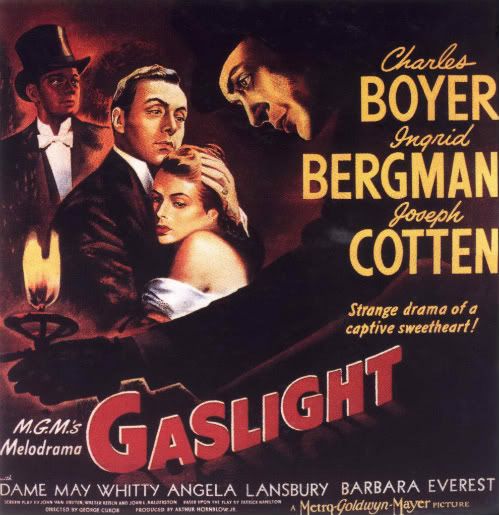
  • Gaslight [George Cukor, 1944] # So much more painful this time, though I can't imagine it not being painful. I really need to re-read Contesting Tears.

  • A Little Death [Gina Telaroli, 2009] Gina tells me this is a work in progress but it certainly looked cohesive and complete to my eyes.
  • Johnny Guitar [Nicholas Ray, 1954] # Color like you wouldn't believe, and all kinds of ideas of hierarchies. The stunt falls in the finale set piece really look like they hurt.

  • Inglourious Basterds [Quentin Tarantino, 2009] A blast, no doubt, despite prattle calls of ideological failure. More in The Notebook tomorrow (plus some extra notes at home). Gonna try to go again this week.

  • Design for Living [Ernst Lubitsch, 1933] Despite the class stuff, this could be made now. (Class is a no-no, it seems, in modern American comedy.) In fact, it's got a much more progressive idea of love and friendship than something like, say, Funny People. A real treat. And scandalous, too.
  • Trouble in Paradise [Ernst Lubitsch, 1932] # You can't change! Society is rigged! Hilarious!

  • The Thick Of It [Armando Iannucci, 2005/2007] Watched the whole show, including specials, all too quickly because I couldn't quit laughing at all that bile. Man, I am happy I don't know any Malcolm Tuckers.

  • In The Loop [Armando Iannucci, 2009] Yup: hilarious, biting, wonderful casting. I, too, take points off for the "aesthetic" but that's small potatoes in the bigger, faster, nastier, funnier scheme of things. Coogan cameo is brilliant.

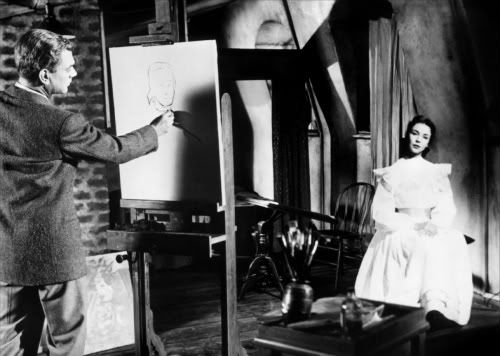
  • Portrait of Jennie [William Dieterle, 1948] Kind of devastating idea of inspiration: that what haunts us propels us—and we're lucky if we ever find an error in time to grasp that feeling in our hands. Jennifer Jones' aloof attitude is perfect; Joseph Cotton has the worst hat in cinema.
  • Night of the Demon [Jacques Tourneur, 1957] The power of writing to change the world, more often for ill, makes this windy tale spin. Lots to unpack. Was fun to revisit Kevin's work with Chris Fujiwara, maybe my favorite of the Shooting Down Pictures video essays.

down low

Tuesday, April 10, 2007

Late Night e-mail/s for the Day: Pan's Labyrinth and the uselessness of empty, cruel violence onscreen.

Pale Idiot
[This is the Pale Man, he's so stupid he can't fuck you up.]


[It's been said before but goddamn if I can't help but contribute this, however hateful, to the discussion of why
Pan's Labyrinth blows. When Travis Mackenzie Hoover called it "thoroughly mediocre" his generosity may have been more on point but I feel like this movie epitomizes what I don't like in movies, along with Sin City. There's no joy and there's no real "honesty" or "truth" illuminated, as people seem to think. So, without any editing, here's my diatribe, followed by a reply from my friend and brilliant colleague, Steve Boone, with his permission. If you think either of us is full of shit, let us know -- but be smart about it and prepared to stake your claim with some sure footing. Rag on me all you want about falling asleep but shit, this movie is not only horrific -- it's bullshit boring and, worst, banal when shooting for profound.]

______________________________________


From: Ryland Walker Knight
To: more than a few people
Subject: pan's labyrinth

shitty. so much shitty shit -- and pointless gore. a fucking lazy bore to boot. how can a movie with that much 'action' be so stultifying? i fell asleep and woke up at one point and i totally didn't miss a beat. seriously. i'm starting to think violence isn't cool in general -- but especially not like that, when it's all cruelty, kinda like with 'sin city'. the reason the violence works in tarantino movies (and 'death proof' especially) is cuz there's a weight to it and it's motivated by SOMETHING from a brain (well, a lot of things, and the way he makes movies helps load the images a lot).

this movie thinks it's got a brain for profundity when all it's got is an eye for comic book compositions and annoying editing. i get it already. i'd watch 'planet terror' five times before seeing this POS again. all those pretty ladies and the cute little girl (and even sergi lopez) are wasted cuz the movie just doesn't have any kind of wit or gravity. when it's got that voice over saying you learn about life through its cruelties or some bullshit i was way beyond checked out but jesus christ, give me a break. i can learn about life when i'm fucking laughing, too. i wish i'd brought 'life aquatic' with me, or '8 1/2'. maybe i'll go grab 'inside man' or something to make me smile.

gimme 'spirited away' any day. there was another movie i thought of, another alice in wonderland type, that did this whole mess a lot better, but i can't remember right now. whatever.

Grade: D minus

______________________________________


From: Steven Boone
To: Ryland Walker Knight
Suject: Re: pan's labyrinth

sight unseen, I have to say Amen. I've been formulating my own theories about screen violence, and they run counter to Tarantino's ethic. But I think QT's actual filmmaking runs counter to his theory that gratuitous violence is cinematic. He's the guy that dollied away from the ear-slicing in Reservoir Dogs and made us feel the victim's misery.

Audiences don't know why they love QT either. All my thug homeboys who worshipped Pulp Fiction (and Goodfellas) when I was coming out of film school thought they adored it for the flippant brutality, but it's really beloved for its vitality. In Kill Bill, when Vivica Fox has Uma Thurman in a choke hold in vibrant, hot-lit anamorphic widescreen, its an ecstatically alive moment. They could have been doing anything at that moment-- baking cookies or fucking (even BETTER)-- so long as there's intense motivation, which as you said, is what QT tends to provide in spades.

Meanwhile, you've got elaborately production designed-to-death arthouse "grownup fables" like Pan's Labyrinth that, yep, use grisly imagery to convey some bullshit sense of unblinking "honesty."

Don't get me started. Long and short of it, there are filmmakers and there are image makers. A lot of the eye candy movies in recent years were made by directors who really need to be commercial photographers. Or crime scene photogs.

Can you tell I just saw 300? ugh

Saturday, April 07, 2007

Grindhouse: Did you just hit a boat?!

Death Proof

by Ryland Walker Knight

It’s a shame Quentin Tarantino is so tight with Robert Rodriguez. Grindhouse, their new joint opus of nonsense, doesn’t have to be coherent by design but it’s so backloaded by Tarantino’s brilliant Death Proof that one wishes one could just skip over Rodriguez’s inane Planet Terror to get to the good stuff right away. Much how Kill Bill was mostly spoiled by its marketing split (it deserves to be three hours, unlike this mess), Death Proof is tainted by an apparent geek-out greed fest. As we’ve been given it, as the backend segment of Grindhouse’s carnival of idiocy, Death Proof’s glee almost erases Planet Terror’s numbing parade of bad choices; had it stood alone, Death Proof would be one of the best American movies of the year.

The problem with Planet Terror (and all of Rodriguez’s movies, really) is he’s not quite as smart as he thinks, nor does he try to be as smart as he thinks he’s attempting to be. His idea of playing with the audience is to spoon-feed it clichés with a smile and pat them on the back for recognizing said clichés. It’s not really post-modern as much as post-thought. He does do casting right, however, and to see Jeff Fahey and Michael Biehn play brothers is something of a treat, even if it tastes kind of shitty and looks like gruel. Really, though, I doubt I’ll spoil it by saying, yes, Rodriguez goes there and name drops not only the US involvement in Afghanistan but Osama Bin Laden — and, as expected, it is hardly a novel surprise to make the government the ultimate evil or kill off key characters late in the third act. And Rodriguez is fully aware of this since each turn is wholly schematic — and banal. So, watching Planet Terror is kind of like saying “D’uh!” for 90 minutes.

There’s a little light ahead when three fake trailers are shoehorned in between the features (there’s also one that opens the, uh, experience) that are almost worth something. At the least, the one made by Edgar Wright (of Shaun of the Dead fame), called Don’t, shares a similar wit and skill with Death Proof that, briefly, shows you all the possibilities of this trash genre Tarantino has so expertly perfected: a hyper-awareness of the medium manifest through puns (visual and auditory) and the silly joy of watching movies.

marleyproof poster

Death Proof’s first great move shows the delicious Vanessa Ferlito racing up a flight of stairs holding her crotch saying, “I have to take the biggest fucking piss of all time.” We’ve just watched a movie and this implicates the audience — of course! we need to pee, too! — so, whether or not those in attendance do, in fact, need to urinate they’ve already begun to think about it. Later, closer to the end but before the quite literal climax (more later), Rosario Dawson is told to stay in the backseat of a car and has a door slammed on her dialogue as she pleads, “But I really have to piss!” Tarantino knows people are watching this and those people are people with bodies and fears and needs and, being whip-smart like his most obvious influence Godard, he plays with his ever captive audience and its bodies and fears and needs. I really had to piss too.

For all his fanboy inanity and no matter his actual intentions, Tarantino, unlike his buddy Rodriguez, makes smart films that are fully aware of the film medium — and how it works onscreen, and on an audience. His films demonstrate his realization that film is not necessarily or primarily a narrative vehicle. The narrative is always subsumed by the spectacle in an unexpected, peculiar fashion. Despite this insistence on visuals, however, there’s a greater insistence on words, as in Godard. Both these filmmakers toy with narrative progression to the point where it’s hardly important but each knows how to make it resound with the audience, somehow, dramatically or not. Again similar to Godard, Tarantino’s films appear narrative but are really outright incidental captures: things just happen. And a lot of those things are awful.

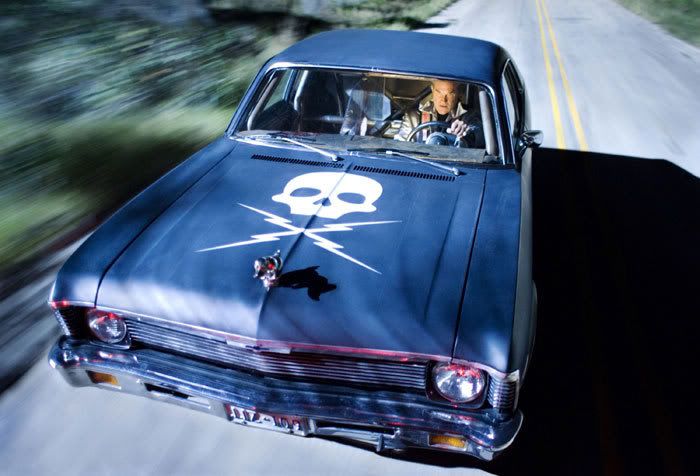
Death Proof stars Kurt Russell as Stuntman Mike, owner of a black 1971 Chevy Nova, who may or may not really have been a stuntman and says he was on a lot of television shows from the 1970s. But the young girls he’s telling his story to have no idea what he’s talking about. His story isn’t validated, he’s not trustworthy. He’s just some creepy dude with sideburns, a frightening scar along the left side of his face, a goofy pompadour, a satin rainbow driving jacket and a badass muscle car. The Hostel director Eli Roth cameos long enough to say Stuntman Mike must have cut his face falling out of his time machine. Our knowledge that this is an homage (and campy send-up) is winked at once again.

Yet, try as he may, Tarantino’s attempts at camp always play earnest. His best film, 1997’s Jackie Brown, is a similar homage/send-up of a similar exploitation genre but it plays it straight at all times, even with the deadpan jokes (even Chris Tucker). The few times Jackie Brown gets a wicked grin and winks at the audience it’s not for any camp value, it’s for love, as in its deadly final sing-a-long scene. Death Proof’s signature camp moment is pure joy but also one of menacing hollowness: Kurt Russell stands at the door to his so-called “Death proof” vehicle (which, from the inside, appears empty and made chiefly of metal roll bars), watches his target car drive away and then turns his head to look straight into the camera for that wicked grin that erupts into a laugh. Of course he’s going to kill. But this glee is the scary thing. It’s important to note, though, Stuntman Mike’s glee is not Tarantino’s glee. Mike’s first kill is horrific, not orgasmic. That comes later.

killer

In what may be the biggest formal stroke of brilliance in Death Proof, the movie is split in two like its host, Grindhouse. And, as the film only gets better, the second half of the second half — while name-dropping and visually quoting Vanishing Point by way of a very specific car — is unlike anything else, yet the same as everything else in movies: it is the joy of movies. It’s what Kill Bill should and could have been. Simply, it’s a movie about chasing tail that chases tails all over the map and yet, oddly, while chaotic, it's more unrelenting and rigorous than Cronenberg’s Crash. It’s fucking absurd. It adores the absurdity. And it’s absurd how much fun it is to see so much terror and wreckage and, most shocking, the glee of it all its bloody fallout. We forget we have to pee and we surrender to the hell ride. We almost want to be Zoe Bell (Uma Thurman’s stand-in for a lot of Kill Bill’s stunts) out there on the hood, defying death, proving she’s the one who’s death proof, clinging taut and lithe to centimeters of iron. (Tarantino’s nimble camera adores her limbs, too.) And like Rosario Dawson’s ever-widening smile, we get giddy, we are overcome, we tap that ass and we shoot our hands to the sky!

When Tracie Thoms’ Kim smashes the 1970 Dodge Challenger 440 (with a white paint job) through an out-of-water, abandoned boat stranded aside the road and Dawson screams, “Did you just hit a boat?!” the absurdity is eruptive. Seconds later Thoms yells “I’m the horniest motherfucker on the road!” That Death Proof ends in a devastating orgy of blood can’t come as a surprise but it certainly is a welcome release. Tarantino’s film ends abruptly, like the jarring absence of the missing reels (another possibility Rodriguez plain ruins and Tarantino nails), but, being sudden, we aren’t allowed to question the spectacle — it’s its right to do that, just as it’s the women’s right to do what they do, however terrifying. Still, it’s too bad I had to sit through Planet Terror beforehand.

Give it to me
[This is Quentin Tarantino, he will fuck you up.]

02007: 191 minutes: written and directed by Quentin Tarantino & Robert Rodriguez and Edgar Wright, Rob Zombie & Eli Roth.

[This is Jungle Julie, she will fuck you up.]
foot fetish