Showing posts with label Howard Hawks. Show all posts

Thursday, September 08, 2011

Viewing Log #83: Moving daze [9/1/11 - 9/8/11]

by Ryland Walker Knight
Hide your eyes! No peeking!

My summer travels are long gone, crowding the rearview like a bus. I'm back in San Francisco, working, writing, slowly piecing together some more moving images. Not as much fun as galavanting around Europe. But not awful. Truth is, I have a good life. In fact, I missed it quite a bit while I was gone. I did not miss writing the viewing log, but I know of at least one friend (and a certain mom) who did miss reading them/me. So I think I'll start it up again. That said, I've been reading more than watching movies. But I still watch movies. In fact, there's a number I should watch sooner than later. But there's also a ton I won't fret pushing down the line. Especially during a stretch like this when the US Open's going (starting and stopping and starting as it has) and there's all kinds of drama right there along those baselines (not to mention the weather report). But I'll stop boring you with this intro that's only yet another stalling tactic. The important thing is that I cannot recall all I watched since Cannes so I'm starting over since the beginning of this month. So, working backwards as ever, let's count from ten down to zero.

  • The Mechanic [Simon West, 2011] West is a pretty lousy action director, forever chopping up things in useless/pointless ways that are obnoxious in their advertising gleam more than any spatial misrepresentation. He gets space fine, as some killings make perfect sense in living room geometry, but he's bad with bodies. Too often we see a body as one limb or another and only for a second. It's not surprising that the big stunt (the fall off the building) is the only time you see Jason Statham and Ben Foster's whole bodies moving through a space; it's annoying that the shots are so fisheyed and seesawing between their perspectives, but props for shooting the fall as their POVs; it's a good stunt, sure, but it's so clearly staged that any verve you get from seeing these dudes do their own stunt is lost in a fit of sped-up frame rates shot on super fast film stock. And yet, these guys are, as the saying goes, "compulsively watchable." I like seeing Statham clench his jaw and shoot guns. I'm looking forward to another Expendables installment. And I like Ben Foster's ability to project hurt in his angry way through roles. I'll always watch him play a psycho.
  • How Do You Know [James L. Brooks, 2010] # Flipped over during the rain delay in the Fed-Tsonga match. The scene with the newborn and the proposal is unbeatable. Lenny Venito is the man.

  • Bridesmaids [Paul Feig, 2011] # Went to the Castro, which was packed with single ladies and gay boys in pairs and quartets all over the auditorium, and had a blast. It definitely tapers, but it is so fun with an audience. More on Wiig and McCarthy soon.

  • War of the Worlds [Steve, 2005] # This is how you make action scenes. The first 70 minutes of this movie are maybe flawless. Or, those contain some truly/typical visionary stuff from good old Steve. Why does nobody talk about how great his master shots are? Because even simple one-take shots/scenes are awesome, like after the lightning when Tom goes through the living room, flipping the light switch and trying the cell phone and tapping his stopped-dead watch, all handheld without shakes and without a cut. Every camera movement is justified in a Spielberg set piece. It's crazy how rigorous and off-handed he can be. Too bad so much of this one stinks.

  • Louie "Niece" [Louis CK, 2011] # Hard to follow the Afghanistan episode, so it kind of makes sense to go all serious in this one. Yet another stranger teaching Louie-Louis how he's gotta go with the world, and be in it, instead of only approaching it from outside. But this one was a deep cut since it revolves around a young girl getting abandoned. Still, loving this season. Duh.

  • Monkey Business [Howard Hawks, 1952] # Rivette said it better but this movie's interest in where we place intelligence is basically a punchline to the entire search for the bone that is the movie we saw just before...
  • Bringing Up Baby [Howard Hawks, 1938] # ...which is just about as good as it gets in terms of zany, fast-as-a-nail-gun screwball ping ponging of plot and characters. Plus all that Cavell stuff. I've said it before. Look it up.

  • Curb Your Enthusiasm "Car Periscope" [David Mandel, 2011] Not quite as laugh out loud funny for me as the prior week's "Bi Sexual" but still pretty great. This season definitely seems more bound up in the clever concepts Larry's dreamt up rather than an arc as the last two seasons showed. Basically I want as much Leon as I can get and I'm barely getting any.

  • The Awful Truth [Leo McCarey, 1937] # The best. Without a doubt. Okay maybe a little doubt. In any case, there are few movies as fun and smart at the same time. Never hurts to see it with an appreciative crowd and two great friends, either.

Sunday, October 31, 2010

Viewing Log #57: The rest of October

by Ryland Walker Knight


BluRio 1
—Words to live by, baby

  • Eastbound & Down [S2E6, David Gordon Green, 2010] An attempt to sweep away some of the mean spiritedness of the previous episodes that gets by on the hilarity of certain foibles and the sheer audacity of the racism. This can't end well.
  • Boardwalk Empire "Home" [Allen Coulter, 2010] Boring, poorly written, bathetic to no end.
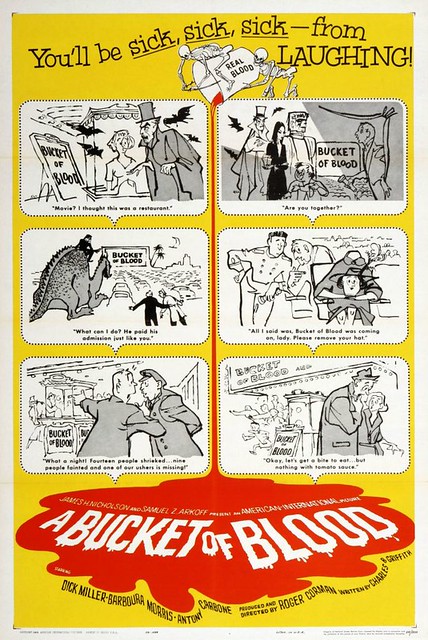
  • Bucket of Blood [Roger Corman, 1959] The way a B picture should be made: with laughs, with a twisted idea for horror that makes bodies a source of revulsion, and art.

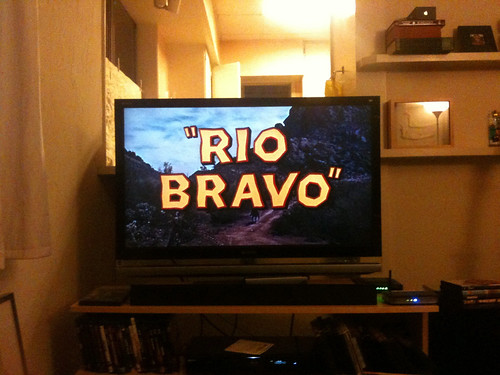
  • Rio Bravo [Howard Hawks, 1959] # Sometimes I think it's the best movie ever. And, I'm easily a part of the camp that loves Hawks because most of the movies are about the guys, hanging in a hang zone, helping define friendship. But all the films have women who can hold their own, as does Angie Dickinson here, and there's such respect for all the minorities on the sidelines; people are just people in Hawks. Oh, and this song is pretty great.

  • Spread [David Mackenzie, 2009] I like what I.V. wrote here. Weird, though, to make a career of deflating what "love" can mean to dumb people yet without any kind of high-and-mighty Creator judgments. The project is admirable, in a way, but equally suspect given all that attention to explicit sex. The best thing about those scenes, though, isn't the fact that there's flesh galore but that each piece (of ass?) is about how these characters are relating to each other. But, when your protagonists are mostly idiots, the "lessons" such as they are can be rather simple and predictable. In any case, Kutcher is perfect. Never thought I'd say that. But it definitely comes with the caveat that he's perfect at being despicable for most of the movie, and then perfect as a punchline at its end.

  • The second half of season three of The Sopranos [David Chase?, 2002] # is no less brutal and often yet more hilarious, with Ralphie as one of the greatest villains ever, and with Tony acting ever more the pent up jerk. Watching the series now, with some distance, it's so much clearer to me just how bad Tony is, how great at being a sociopath he is even this close to the beginning.

Bucket of Blood
—Please remove your hat

Monday, June 21, 2010

Viewing Log #47: Eliminate the laminate [6/14/10 - 6/20/10]

by Ryland Walker Knight


Old Hollywood indeed
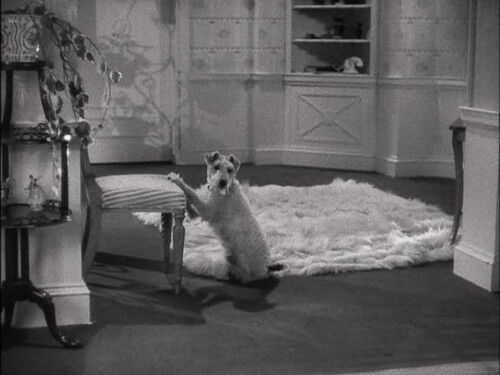
—Must love dogs

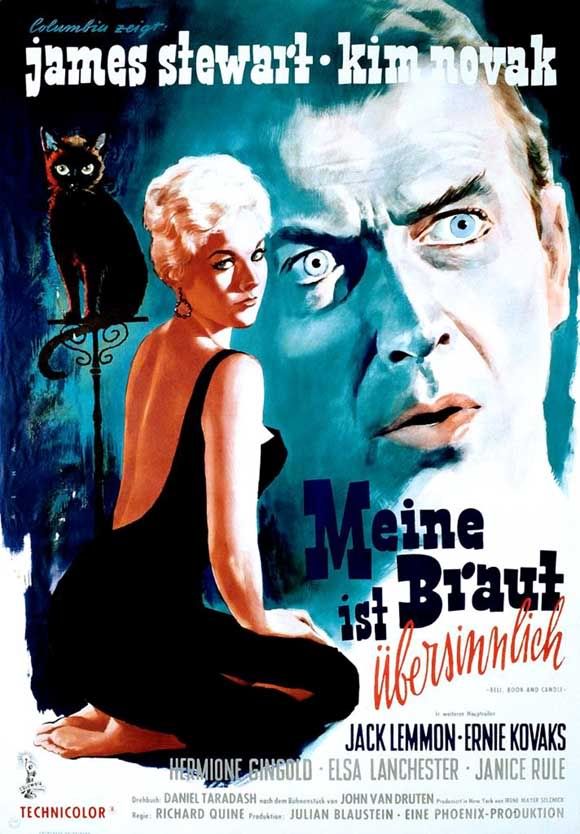
  • Bell Book and Candle [Richard Quine, 1958] Fun to think of how Hitchcock must have seen this, after his perfect picture with this pair, and how he might've dug it if only for how much sexier Novak is in this flick. Novak's got more to go on, here, and gets to play a person instead of an idea, but it's more than just an "arc" that makes her radiate (and she radiates green a few times); there's a sense of true wounds getting fingered like buttons; and who doesn't like "ironic" reversals when it comes to romance? Worth noting, too, that this is a film for any lover of New York—Old New York, New York as haunted, New York as a nest or as pregnant—as a place for lovers. I'm not so sure I still hold that same esteem of that great city, but I cannot deny my affection for it and its odd promise of aches and pains to go sidelong with dreams.
  • Caddyshack [Harold Ramis, 1980] # Basically: I want to, at some point, tell a big crowd of people gathered on a deck, "Hey, everybody! We're all gonna get laid!" Failing that, I'd like to adopt some of Chevy Chase's glib tactics with the ladies. Weird that Bill Murray's something of a weak link.

  • To Have and To Have Not [Howard Hawks, 1944] # I've never taken a film production course at a university level before so I'm curious: do any smart profs teach Hawks? Because his model of economy is instructive for anybody with meager means hoping to make movies. There's about six sets, maybe seven, used in this movie. And all Hawks pictures move forward without asides or flashbacks—true continuity—so there's plenty to learn on a storytelling level. Then you get to the idea of acting that's all over this film and covers nearly his entire filmography: get the characters to actually perform things for other characters as a way to indicate their own character; then comment on it, slightly, in the dialog to show these are thoughtful/aware people with plenty of intention behind every play; with a decent distraction story, you've got a tight little structure to build dramatic significance. And, maybe, you can get some friends to charm the pants of the camera. Bacall's little dance out of the saloon always kills me. Bogey's masculinity is sometimes a bore but his physical posture's so bad, the whole bit gladdens me.

  • L'enfance nue [Maurice Pialat, 1968] Funny that Truffaut presents this film, as the credits read, but it's just about the opposite kind of sensibility as that of that calling card about a boy he made first (which I still enjoy, but cannot love save a few choice moments). This one, though, only gets things right. Things like anger. But it's not a psychological film; it's all actions. What you do. What you do doesn't define you but it sure does indicate a lot. Great to see Pialat had the same impulse to shear away plot this early. I'd love to know how he wrote: did he film forever, or write forever, and then delete/edit? Or was his brain so strong that he simply trusted his storytelling enough to jump so often and sometimes so far?

Monday, May 10, 2010

Viewing Log #44, SFIFF53 #5: The chairman dances in nets and tiles [5/3/10 - 5/9/10]

by Ryland Walker Knight


  • Les plages d'Agnes [Agnès Varda, 2008] Collage, mosaic, whatever: a full life that spawns new life sans cesse in any form imaginable. Only an old person could make it and only Agnes Varda could make it and only a old person like Agnès Varda could make it so full of joy, which isn't only (or simply) happy but a complex affirmation that this life is and was and will continue to be worth living. The pacing's wrong. But then so is the word "wrong." Waves change sans cesse aussi.
  • L'opera mouffe [Agnès Varda, 1958] The affective weight of all those "quelqe uns" is surprising, given how goofy the music is, or how random-fire the short feels.
  • Du côté de la côte [Agnès Varda, 1958] Not quite a documentary, not quite a catalog, not even a travelogue, but always a rush through things on its coastal tour; the Riviera is a joke of fashionable colors and body fat. Though it calls tourism exoticism flat out, it still made me want to go there, get a tan, and run around my own brand of Eden like anybody else. Summer's near, ain't it?

  • Iron Man 2 [Jon Favreau, 2010] Doesn't mean much and isn't exactly "entertaining." Mickey Rourke's from another planet. A tad more at Thought Catalog.

  • Twentieth Century [Howard Hawks, 1934] Hawks is Hawks and film is film but I fell asleep on purpose I was so tired and it got so silly.
  • Ruggles of Red Gap [Leo McCarey, 1935] True charity. Made the claim in the car that, of all the classical Ho'wood dudes, McCarey is the closest to Renoir. I stand by it.

  • Lourdes [Jessica Hausner, 2009] As Danny wrote, the tone's the biggest curio, not whether miracles occur. Faith is an afterthought, or not entirely revered here, and some jokes come at its expense (or at the expense of dogma kool aid, made literal in the sanctioned spring's bottled water), which troubles me as much as makes me laugh. The real joy, though, is Sylvie Testud's performance, which seems to start and end at her face but, despite Testud's silent smiles and the oft-alarmed or oft-angered eyes (both subtle, both withdrawn), Hausner's not interested in the face as much as bodies and the MS'd vice we find our little lady within to begin determines a lot more. And it's not just Testud's body that matters, but also how Bruno Todeschini is rigid, near encased in his role by his uniform; or how Elina Löwensohn's gestures are the worst mask for fright this side of adolescence, which colors every bit of Léa Seydoux's unfit-for-this-outfit brand of brat huff-and-puffs. This particular interest in bodily humor, and listening to the body, is all too rare (or, I need to see different movies) so when I see a party of wounded shuttling about "destinations" I immediately think of Tati, though Hausner uses a "real place" unlike so many Tativille pictures. In that, it's more akin to Jour de fête, with all those rituals and all those recurring faces and places redetermining interactions (or actions) and expectations (or sensations). However, it's not all comedy. There's plenty of nerves and anxiety and Hitchcock toying. Danny said Haneke, but that points at an overdetermination from my eyes and there's a lot of room for possibilities in this film that feel more like Suspicion before the reveal (Fontaine's all eyebrows the way Testud's all dimples) than any blunt-brow-beating by the Austrian.
  • Hadewijch [Bruno Dumont, 2009] There's skill, to be certain, and an interest in the lead's face, but it seems like boring storytelling to push that grace note so late, and so strongly so late, so that it doesn't hold any of the weight it'd like to or like you to think it does. As with another Euro "thinker" I don't like, Haneke, the "reserve" comes off as lazy thinking.

  • Lost "The Candidate" [S6E12, , 2010] A thoroughly satisfying hour of television.

  • Le Bonheur [Agnès Varda, 1965] # One of the beautiful things. Makes me miss other beautiful things. But not so much that I seek a river to jump into.
  • The Portuguese Nun [Eugene Green, 2009] An axial cinema that makes order a source of interaction, which is nearly synonymous with interpretation as every conversation seems to negotiate terms as much as exchange information. Great cameo by the director, too, playing a director and dancing poorly. More elsewhere in a few.


—Yipee

Sunday, October 18, 2009

Viewing Log #16: Flight, he says, from a box [10/12/09 - 10/18/09]

by Ryland Walker Knight


—We all find the flux different, we bloom

As I noted before, things will be changing around VINYL IS HEAVY while we close out the calendar. I'll still try to keep these viewing log posts popping up on the regular along with the Vitti posts, and there will be a few link-thru posts to stuff written for other places (read: Danny), but otherwise I'll be focusing my energy outside the internet and this site in particular. I'm hoping it won't slow down all that much, and that I'll simply be able to integrate it into my life a little better, but I also have the desire—as I rejoin a certain fray—to shuck the whole thing for a while; to unplug as much as possible. We'll see. So, without further ado, here's what I watched as I packed bags and wrote many an e-mail and made phone calls galore this week.


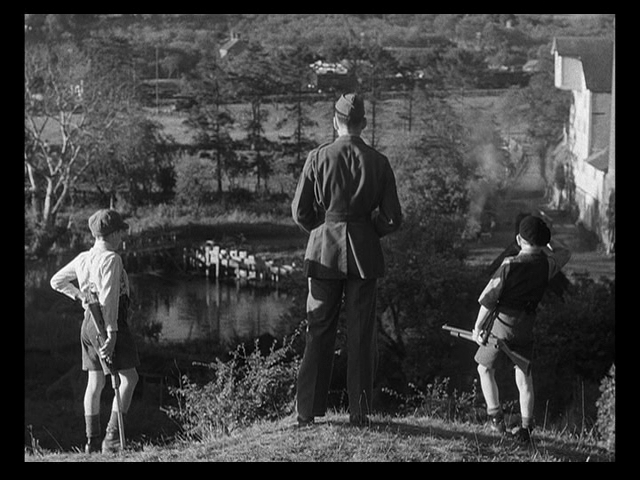
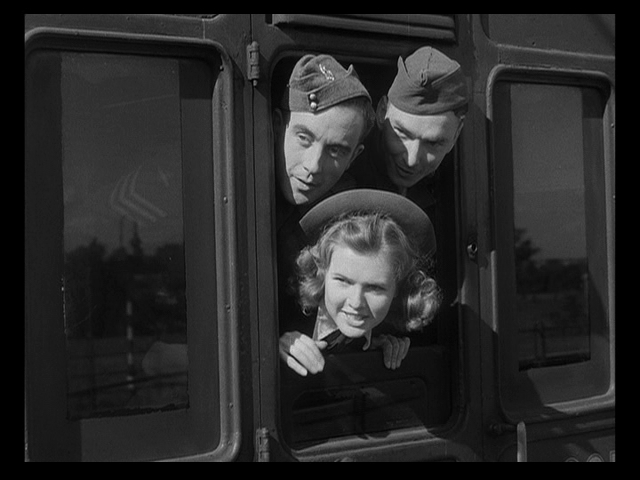
  • A Canterbury Tale [Powell & Pressburger, 1944] Talk about a cathedral. Built around a gee-whiz G.I., there's a host of ideas—about patriotism, about duty, about beauty, about childhood, about faith, about the movies (and their worth in all that)—all working together in cheeky harmony. It's buoyant; it's a fantasy; it's Real Cinema. But I haven't sussed everything: that will require more thought and more viewings and, preferably, I'll meet this rich picture again on a huge silver screen.

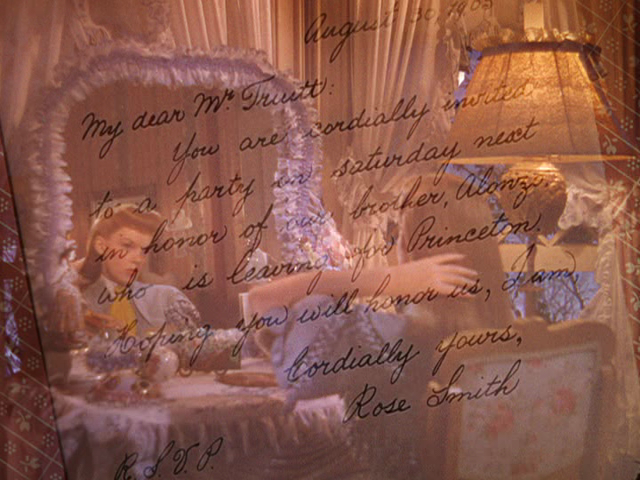
  • Meet Me In St. Louis [Vincente Minnelli, 1944] This DVD looks fabulous, like new. What's great is that, in a musical, it plays with that expansion form, and the power of "the voice" and "voicing," so much: it's all about society's will to keep things tacit, that is quiet, until eruption—often into song, as if plain language can't cut or contain it. Also, it's about valuing the home, which is nice. One of those rare pictures that makes me hope I have more than one kid when the time is right.

  • The Diving Bell and the Butterfly [Julian Schnabel, 2007] I liked the first reel from inside his head. Then I started to fall asleep again and again, thinking, Why are they speaking English? Why does he spell one word in English, one word in French? Make up your mind, Schnabel. Sicinski nails it. [Insert quip about the babes.]

  • His Girl Friday [Howard Hawks, 1940] # Sometimes you just gotta watch the best movie ever when you settle in for the night and don't want to "think" too hard.
  • The River [Jean Renoir, 1951] # Don't know what kept me from fully embracing this the first time I watched it, but, boy, this sure is a loveably lazy movie; that is, it's patient and seemingly aleatory; that is, it flows irregardless of forces; that is, it goes, onward, always, like life.


—Off I go!

Monday, August 31, 2009

Viewing Log #9: Shoe Thief [8/25/09 - 8/30/09]

by Ryland Walker Knight


kristen stewart thinks well, hard
pittsburgh is yellow
—Pale, blue

  • Husbands [John Cassavetes, 1970] # Carousing and breaking, laughing through the take: seems the most documentary of his movies, of course, yet somehow it's crisp. Maybe not as "good" as other Cassavetes pictures, but mostly a treat to watch the roundelay of macho jaunting. I want to fly to London and run in rain. I want to laugh at everything. No homo, no phony. Dig blurs at The Art of Memory. Also, I'm reminded by Simington of the Cavett interview, which I put up a couple years ago, which is kind of better than the movie and the best piece of criticism on the movie you could ever expect or hope or dream of.
  • Only Angels Have Wings [Howard Hawks, 1939] # Maybe a perfect movie, or the perfect Hawks movie? In any case, it's always a pleasure. Recently, Dan Sallitt wrote this bit of lovely.

  • The Lady From Shanghai [Orson Welles, 1947] # Loopy and obvious, and hampered no doubt by that awful "brogue" from Welles, this thing is saved by the unreal sexiness of Rita Hayworth. She's top shelf "material" here. And that's the point.

  • Metropolitan [Whit Stillman, 1990] Smart, yes, but hard for me, at this moment, to get worked up about its world and its concerns. That said, I do like Chris Eigeman and the black outs. Seems to be a theme of the week.
  • Isle of the Dead [Mark Robson, 1945] Awfully similar to The Ghost Ship in some ways, though not as good; Karloff's face is amazing.

  • Adventureland [Greg Mottola, 2009] Had me at The Replacements. One of the best soundtracks in a while. Not exactly an earth-shattering movie, but it hits the right notes to charm a sucker like me.
  • Tropical Malady [Apichatpong Weerasethakul, 2004] # Now here's a movie that understands the significance, and the fun, of black outs. Joe knows a lot about punctuation, and trees. For all the myths and spirits, his cinema is decidedly grounded: we're always looking up at the world.
  • Smiley Face [Greg Araki, 2007] Anna Faris makes faces and falls over things for about 90 minutes and it's a good time, vaguely intelligent, often amusing, but slight. I'm sure if I partook in its inspiration a little more (ever?) I'd feel differently about the thing.

  • Blitz Wolf [Tex Avery, 1942] Thanks to Phelps. You can watch it, too, by clicking here. DP says, "at least the Avery's a critique of war." I say, yes, it is, and smarter than the QT, but, still, that's largely avoiding what Basterds is after.
  • Inglourious Basterds [Quentin Tarantino, 2009] # Different reasons, different focal points. Still a kick in the pants. Left a ramble in the comments back here post screening.

I'll steal your shoes

Sunday, July 19, 2009

Viewing Log #3: Celebrity tenants [7/13/09 - 7/19/09]

by Ryland Walker Knight


size
up
—Scale me, mount of shale; here, that's how

  • In A Lonely Place [Nick Ray, 1950] # More vicarious stuff, as I'm missing something grand again. I like how Steve described Bogie: "Mean X-rated expressions." Read Glenn and Hoberman, too, if you have yet to.
  • Celine and Julie go boating [Jacques Rivette, 1974] # Because I can. Because those girls are good to dream about. Because it's FUN.
  • Kings and Queen [Arnaud Desplechin, 2005] # Cuz a got a lovely note about it, I watched the last half hour. Then I skipped back to Amalric's dance before bed to wash the loneliness from my head-mouth. Listen: Marly Marl.
  • Harry Potter and the Half-Blood Prince [David Yates, 2009] Oh, my. What a waste, as usual, of all that talent (surrounding and guiding our boy in the middle); alternately, of all that money; further, of space (re: the kids). More here.
  • US Go Home [Claire Denis, 1994] # Trying to decipher the opening monologue sans soustitres.
  • Esther Kahn [Arnaud Desplechin, 2000] # For an ongoing project.
  • The Man Who Shot Liberty Valance [John Ford, 1962] # Looking for law talk, in skim mode.
  • Cadillac Records [Darnell Jackson, 2008] # Watched with the grandma, on her behalf, though I never thought I would sit through it again. It's still hack cinema, through and through, from screenplay to execution, but Jeffrey Wright is a pleasure and so are all of those songs.
  • Scarface [Howard Hawks, 1932] # Grimey, angry, ugly. A real treat. Muni is sick, gross. She's all elbows, perfect in her lust.
  • US Go Home [Claire Denis, 1994] # Greg's dance, and some other points of interest.
  • The Man Who Shot Liberty Valance [John Ford, 1962] # Still one of my favorites, and it keeps getting richer as I keep getting older.

celebrity tenants

Sunday, July 12, 2009

Viewing Log #2: Beyond The Pail [7/5/09 to 7/12/09]

by Ryland Walker Knight


the pail
—It's been too hot to go outside.

  • The Big Sleep [Howard Hawks, 1946] # A classy picture, a funny picture. The shamus protagonist makes perfect sense for Hawks. Something to chew on: Bacall's a dime, no doubt, but Vickers (the lil sister) has sass for days, and that kills me.
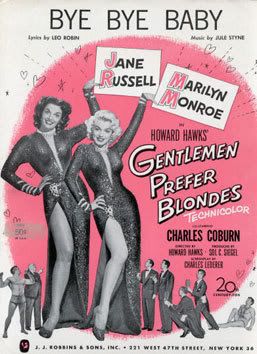
  • Gentlemen Prefer Blondes [Howard Hawks, 1953] # Finished on my computer, and thoroughly enjoyed. As deep as Marilyn's eyebrows are active—and lively, too. Again, about the forms of intelligence we are keen to, which, here, is made clear by way of talking about "keen on"...
  • Beyond A Reasonable Doubt [Fritz Lang, 1956] Pitiless and spare, drained of sentiment but full of life, despite Lang's will to the conceptual (as Rivette argues), this one can be read in the flames of the car wreck: we're pawns, owned by the world and at its mercy; we're elements among many bustling and bursting. Weird way to start a day.
  • Gentlemen Prefer Blondes [Howard Hawks, 1953] Just twenty minutes, then the disc messed up. Gave up, wrote other things.
  • Monkey Business [Howard Hawks, 1952] The old married couple version (inversion?) of Bringing Up Baby, and maybe even smarter. Proof Ginger Rogers still had it, and that Grant can do almost anything when it comes to physical humor. Also, Hawks is, like, the best.
  • L'intrus [Claire Denis, 2005] # For Cuy; watch freeNIKES! soon.
  • La Frontiere de l'aube [Philippe Garrel, 2007] Not quite as frightening as the Robson, but just as down. I never want to fall (away from the world) like that. But, of course, Lubtchansky makes nightmares look like dreams. So serious.
  • The Seventh Victim [Mark Robson, 1943] Death looms, provides an out. Bizarre that this got made, and just plain bizarre. Don't know how much I "agree" with it, but I sure did enjoy its wacky frights of darkness.
  • US Go Home [Claire Denis, 1994] # (a few minutes here and there) Youth is a dance. Or it should be.
  • Nenette et Boni [Claire Denis, 1996] Finally, yes. (My apologies, MK.) As I noted, this picture "makes me miss smells. Stinks, even. Also, my sister." Love the way Greg dances in the pizza van.
  • My Favorite Wife [Garson Kanin, 1940] # Irene Dunne sure is something, as is Grant, as ever, and I sure did laugh a lot, but it's pretty damned goofy. Way goofier and slapdash than The Awful Truth. Watched this on youtube, FYI.
  • Stalker [Andrei Tarkovsky, 1979] # Another greatest movie ever made. Vicarious applies to me, sure, but it applies to these three dudes, too, don't you think?

the can

Sunday, March 01, 2009

Seattle Specific: Metro Classics Adapts.

by Michael Strenski and Ryland Walker Knight


winter09 classics calendar
[click to enlarge]

Our friend Sean already announced the line-up at his blog but we thought we might as well put up a notice here as well. The idea for this series began to gestate during Ry's last whirl through Seattle when we three worked together there at Landmark's Metro Cinemas but it was really the adventurousness and curiosity (the tenacity!) of those two guys who stayed that got it going after RWK left. So, here's the lead copy on the flier:

This spring, Metro Classics returns. Each quarter we pick a theme and bring you a variety of movies on that theme. This season: Adaptations, nine weeks of films based on other media — with the added twist that we’re grouping the adaptations not only by their original source material (three weeks each of books, plays and moving pictures) but also by three different genres (three weeks each of adventure, science fiction and musicals.) Does that make sense? We didn’t think so. Think of this flyer as a BINGO card.

And here's a run-down of the films on the schedule. Come on, Seattle! Go see some good stuff! Go have some fun! Prove that silly article correct!

PAGE


marilyn!


STAGE


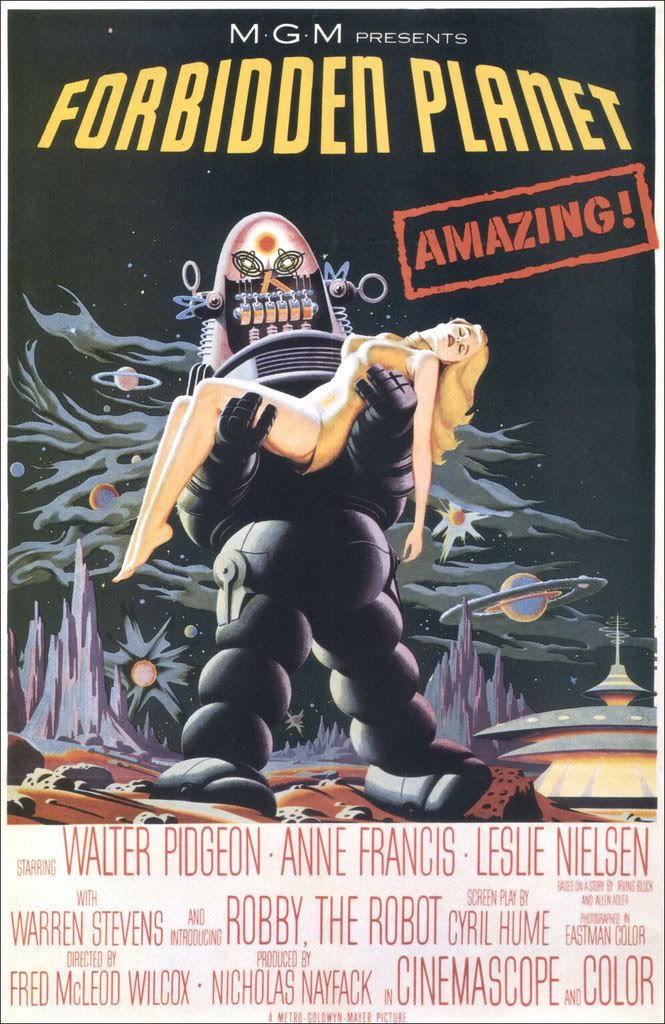
forbidden


IMAGE


goldblum