Showing posts with label Mark Robson. Show all posts

Sunday, January 31, 2010

Viewing Log #31: Foam forts make islands, traps [1/25/10 - 1/31/10]

by Ryland Walker Knight

Parade 2
Parade 1

  • Casa de Lava [Pedro Costa, 1994] # I'm about to start it. Seems fitting, given the Tourneur I watched and the box set coming out soon, about which I hope to say more when the time comes. Until then, I'll enjoy this masterful other mode he worked with first. And Inês de Medeiros. What a babe.
  • Band of Brothers "Crossroards" Episode 5 [Tom Hanks, 2001] The most theoretical episode so far with Winters literally writing history and bullets becoming letters at one match sound cut. But, as ever, the pathetic appeal is always thick, even in this quieter and calmer and altogether well constructed cliffhanger. Biggest surprise of this episode was easily Jimmy Fallon showing up for about five seconds of screen time.

  • Youth Runs Wild [Mark Robson, 1944] After a fabulous collage opener, all kinds of headlines and newsreels jumbled and layered, it got kinda boring. And I fell asleep. Shucks.
  • I Walked With A Zombie [Jacques Tourneur, 1943] # Stunning on such a screen despite the scratchy print. Despite all the murk moving, it's a crisp picture. More Monday.

  • Scarface [Brian De Palma, 1983] # Watched the first half. It starts so well, actually funny and wild and silly, but it quickly takes on Tony's worst qualities and does its own tailspin. Or so it seemed as I gave up and went over to watch the Warriors lose to the Bobcats.

  • The Informant! [Steven Soderbergh, 2009] # Still my favorite American film of last year. Precisely because it's so American, and funny. Lots there I'm not going into here. Maybe later, but probably not; probably, if you're really curious, you should just ask me about it. UPDATE: Actually, I'll probably publish some thoughts on it at the newly-launched website Thought Catalog, where I will join fellow VINYL-head Daniel Coffeen to contribute pieces on somewhat of the regular.

  • Band of Brothers "Replacements" Episode 4 [David Nutter, 2001] Nicely coiled episode that keeps things contained to one "Bull" character getting left behind, or having to stay behind, enemy lines after an ambush. That said, the same manipulative stuff irks me, and I'm mostly intrigued by Winters' calm ascent more than anything. I'll keep watching, of course, to see more visceral action scenes (but why the wash out standard, Steve and Tom?) and to see who all the old guys from the preludes are in this grand-scale re-enactment.
  • Casino [Martin Scorsese, 1995] # Finished it, as I tweeted, and boy does it drive itself down. A lot of scenes are hilarious, and others would be if they weren't so brutal. It shows life as perpetually preposterous, spectacle of death to the end one bloody baseball bat at a time. And, to reiterate my tweets, the cinema-as-a-gamble thing is crazy despairing, however beautiful, and I don't want it to make as much sense as it does.

Monday, January 25, 2010

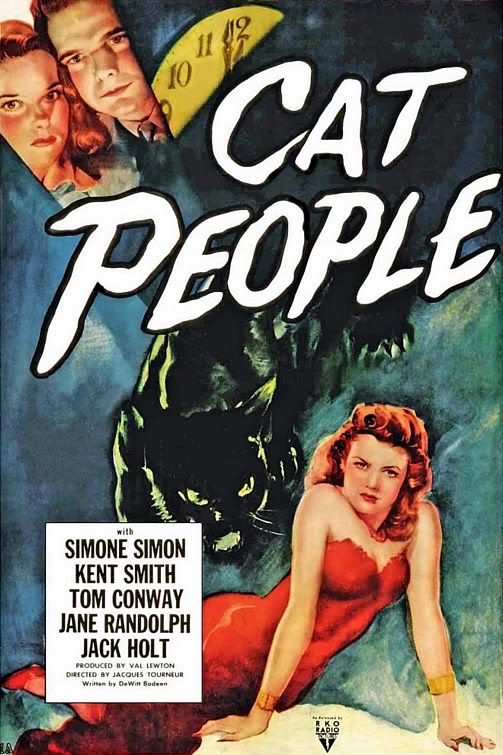
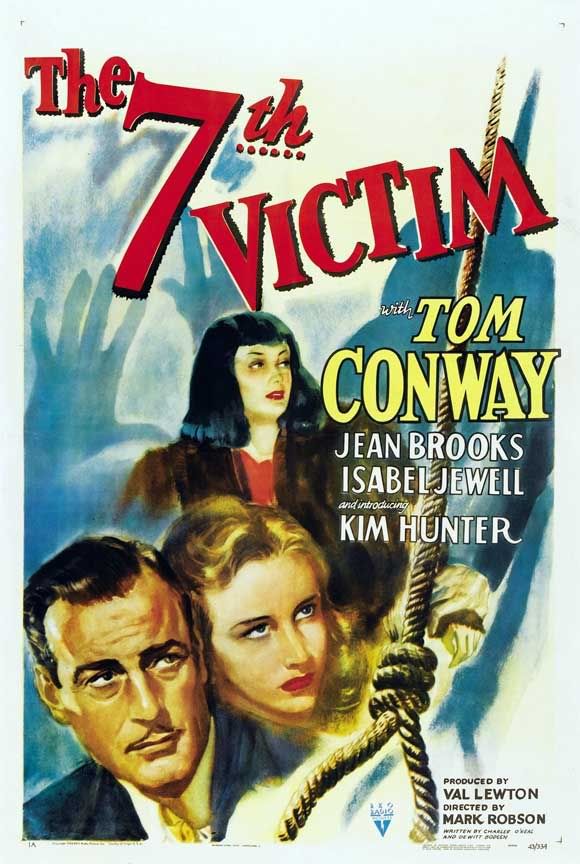
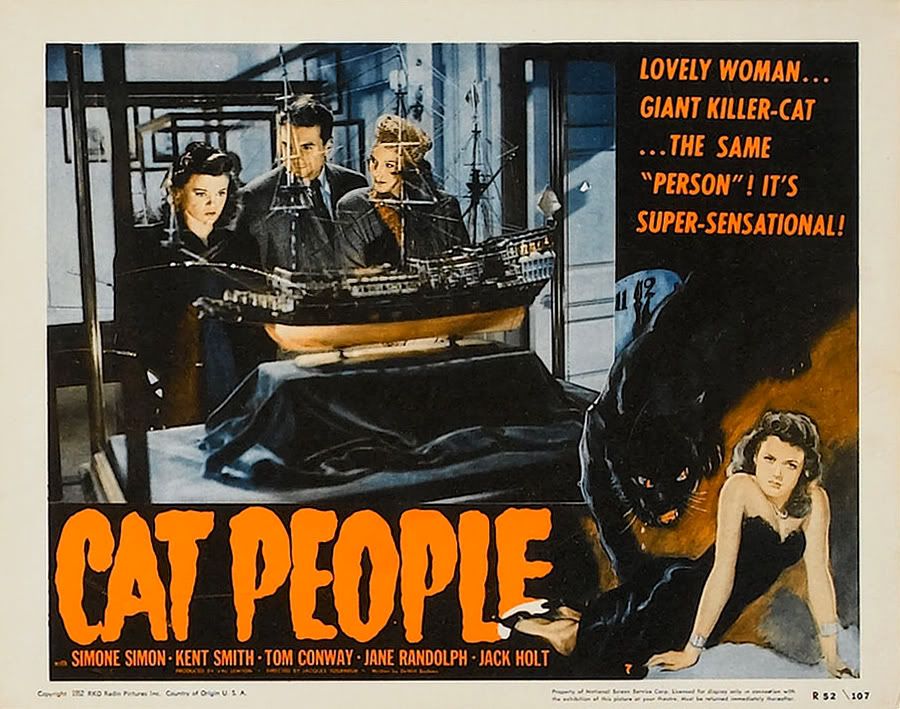
Lost Light Lewton: Cat People + The Seventh Victim

by Ryland Walker Knight


[PFA's got five double bills of Val Lewton pictures over the next few weeks. See the line-up here. I've never seen any of them on a silver screen until now, so here's a little catalog/tour of this new angle on things. If you want to play along at home, the films are all on Netflix thanks to this handy box set.]

7th 3

Cat People proved more popular, as ever, but The Seventh Victim's got audacity and depravity and terror in spades and in shadows all its own, all the deeper and deleterious. In more surprising turns than the Tourneur, this later, odder picture may also be the best argument for suicide ever put on film: the act is never not selfish, but the film seems to say that death's end can be a welcome and necessary release for some souls. Alternately, the sidelines of this Victim (most of which masquerade as the "a-plot" though the most poignant claims its right to speak near the close, as an aside) chant a hymn to living—in the world, with its vicissitudes and with its frights, without fear for the diurnal. But there is a pressure in this world, a cloud clamping its spirit, and it begins with the film's opening epigram, attributed as "Holy Sonnet VII" to Jonne Dunne (natch & sic): "I runne to death, and death meets me as fast, and all my pleasures are like yesterday."

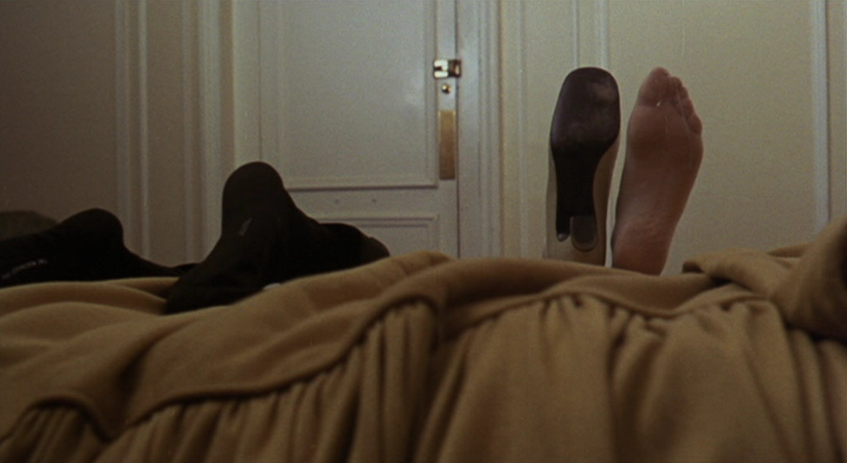
The film begins in this plot, following little sister Mary (Kim Hunter's all eyes) as she searches for her missing sibling, Jacqueline. Robson and Lewton (and DeWitt Bodeen and Charles O'Neal) keep Jacqueline off screen for as long as narratively possible, and her first sighting is the briefest tease possible, which fits and throws fools for fits. She's more an idea than a person that way, kept intangible even when cloistered, impervious to the whole ball of wax rolled about her, including love. Every angle on her in the world is some kind of leeching, a pedestal or a clamp or a knife. That is, through its increasing ellipses, all things fly by like in life and demands pile up, the picture puts us in her paranoia, inside her depression, and all we understand is all that pressure from without. Mary's plight is motivated by saving her own skin, not her sister's, and once it's locked secure with that perverse reversal of fortune that is the love of Gregory Ward (Jacqueline's husband), the film drops her significance. She's played "naive" and kept a doll, at the world and Ward's surprisingly tender mercies. But it's the banal prejudices of these "betters" that keep Jacqueline tethered to life; we slowly see that their concern is just as selfish as her need to escape. It's about control, not debt. It's devastating precisely because it makes sense why this beauty might want to thud dead alone in an empty room. (So sad that Jean Brooks, too, was similarly unfit and unhappy.)


—not quite bottled, or adrift

Control is of course the theme in Cat People, too, as its Simon Simone fails herself, but that's more or less unavoidable. We are beasts of lust, the film says, bent to prey on each other. It's a fantastic metaphor, and the film's so gorgeous you can easily forget how wonky it unfurls. You cannot forget, however, how Simone's Irena does herself in because she can't handle her truth, her history, her instincts. Things get fudged all the time and every image moves eight ways; as with Victim, each scene is laden with significance to pull interpretations in as many directions as possible. See, it's not just about sex, which is where Schrader failed. Of course, sex is a huge part, and the only problem I'd pose with these two films is their rather typical structures (though each climax is muted) date the film's view on women, and sex, in obvious ways—but that's like complaining that Chandler used sentences not stanzas. Besides, any time you can turn dread productive, as with The Seventh Victim's interrogation of the death drive, you've got a curious object. If I owned the DVD, I would like to look at just how blocky the film is, how its connect-four space links up lines of thought, and how that searchlight does cleave the picture to signal the descent. After all, even the girl looking for one last night on the town has to go down (some stairs) to find it, to find some last laughs.

Sunday, January 24, 2010

Viewing Log #30: Color cannot clean a canting [1/18/10 - 1/24/10]

by Ryland Walker Knight


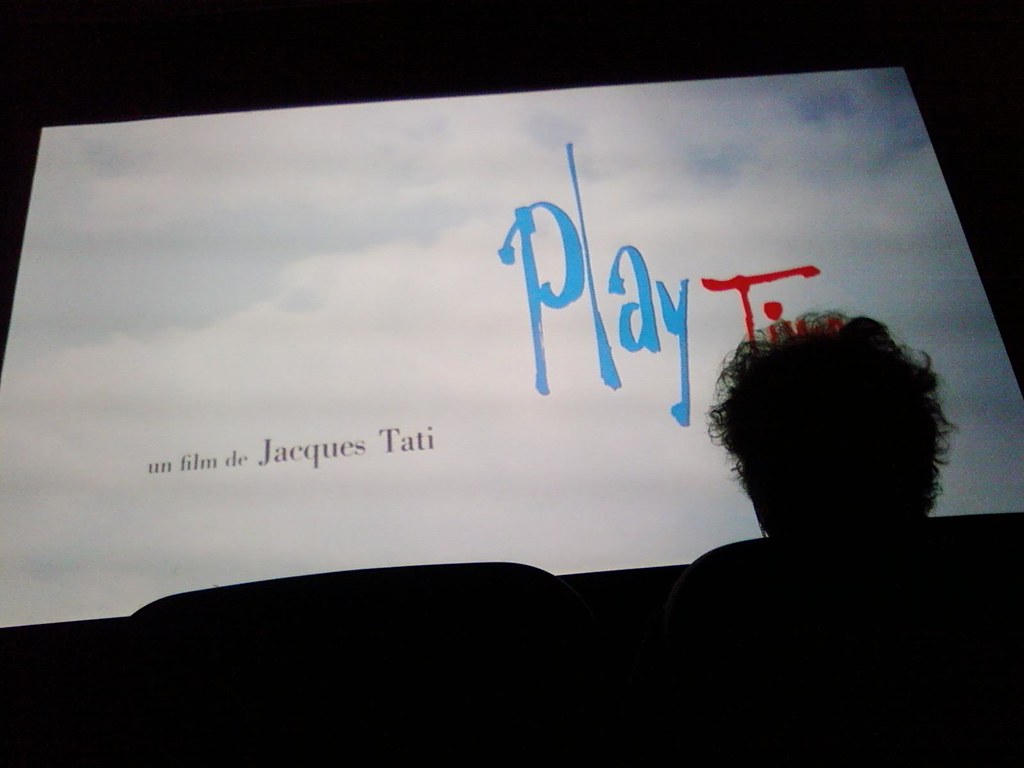
Playtimes 1
—Sat behind Godard.

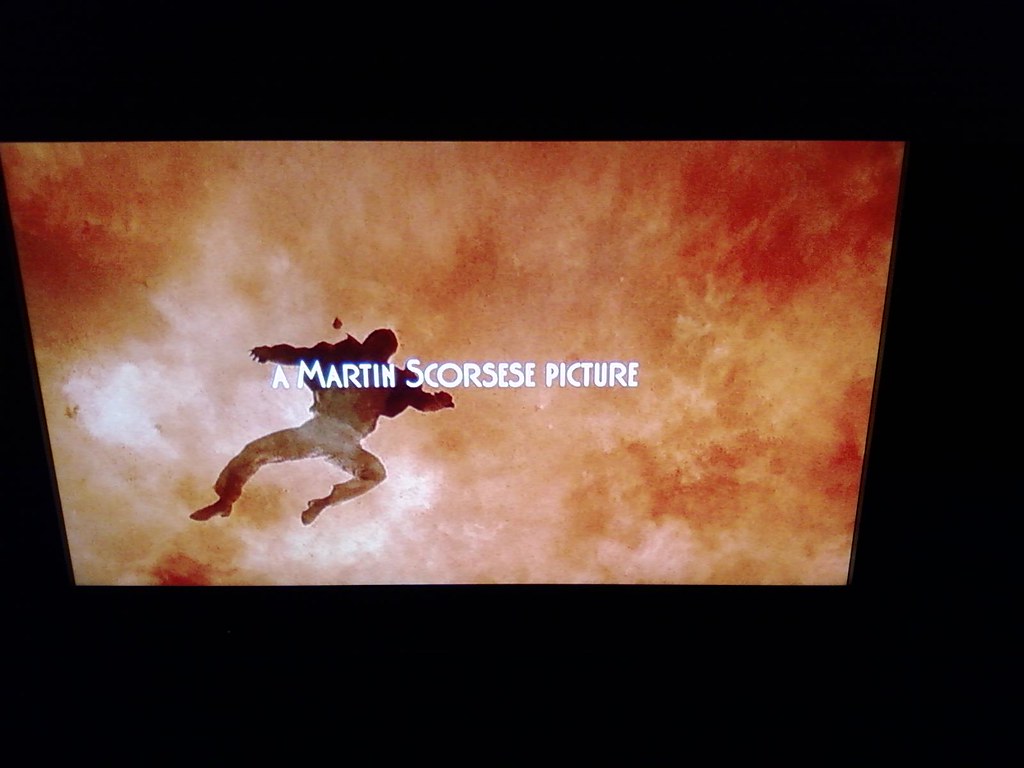
  • Casino [Martin Scorsese, 1995] # Like for the first time. I'm blown away. This is the ur-Scorsese picture. Everything's dialed up delirium, all the colors and lights and camera movements. For such a sad and scary movie, it's damned fucking giddy. I'm publishing this as I'm watching it, so my giddiness is sure to wane as these fools keep fucking up their silver lined lot.
  • Californication [Most of the third season] It was way too easy to do errands and little writing projects and just plow through this in one day. Rain played a part, but, also the sex.

  • Playtime [Jacques Tati, 1967] # Yes, the best. Really: the best.

  • The Seventh Victim [Mark Robson, 1943] # I tweeted a hash tag (#bestmovieever?) that gets at how powerful this thing is for me, especially at this stage in the game, with its weight and frisson of social anxieties. More Monday.
  • Cat People [Jacques Tourneur, 1942] # Simon Simone's nose, let me tell you, can do things to a boy. Also, Tourneur's pace is all wonky: a real jam of angles keeps this from slipping down easy. More Monday.

  • A Letter to Uncle Bonmee [Apichatpong Weerasethakul, 2009] Watched on The Auteurs for free (click here) and then wrote this little nugget about it.
  • "Parisian Goldfish" by Flying Lotus [Eric Wareheim, 2009] Watched at the behest of Danny while talking Coachella. It's really something. Watch it here. It's very NSFW. It's weird: how much is celebratory? How much is a joke? Can it be both? I'm continually flabbergasted by the audacity of T+E.

  • Band of Brothers, "Currahee" Episode 1 [Phil Alden Robinson, 2001] Halfway decent, but a lot of it is what I hate about war movies and World War II movies in particular. I appreciate that generation, of course, since it gave us its youth in ways I can't imagine, but I'm pretty sick of it getting called "the greatest" all the time. Weird to see so many British actors playing Americans, including Simon Pegg of all people.
  • The Sopranos "Live Free or Die" (S6,E6) [Tim Van Patten, 2006] # The world opens for one man, for a bit, in the form of a vase and a bed & breakfast. Too bad you know this natural can't escape that hateful haunting in his history. There's more Paulie's than Tony's in this world. Even with Bacala's dunderheaded "Well we can't have him in our social club no more; that I do know."
  • The Sopranos "Mr. & Mrs. John Sacramoni Request..." (S6,E5) [Steve Buscemi, 2006] # A devastating episode of perceptions: misinterpretation abounds, even from the people fearing it the most (ie, Tony). Then again, the biggest perceptive revelation—Vito's true identity, as a gay man, um, coming out into view—is deferred an episode by Tony's misguided attempt to reassert his power. Oh, man, men make bad choices.

Casino credits 1

Monday, August 31, 2009

Viewing Log #9: Shoe Thief [8/25/09 - 8/30/09]

by Ryland Walker Knight


kristen stewart thinks well, hard
pittsburgh is yellow
—Pale, blue

  • Husbands [John Cassavetes, 1970] # Carousing and breaking, laughing through the take: seems the most documentary of his movies, of course, yet somehow it's crisp. Maybe not as "good" as other Cassavetes pictures, but mostly a treat to watch the roundelay of macho jaunting. I want to fly to London and run in rain. I want to laugh at everything. No homo, no phony. Dig blurs at The Art of Memory. Also, I'm reminded by Simington of the Cavett interview, which I put up a couple years ago, which is kind of better than the movie and the best piece of criticism on the movie you could ever expect or hope or dream of.
  • Only Angels Have Wings [Howard Hawks, 1939] # Maybe a perfect movie, or the perfect Hawks movie? In any case, it's always a pleasure. Recently, Dan Sallitt wrote this bit of lovely.

  • The Lady From Shanghai [Orson Welles, 1947] # Loopy and obvious, and hampered no doubt by that awful "brogue" from Welles, this thing is saved by the unreal sexiness of Rita Hayworth. She's top shelf "material" here. And that's the point.

  • Metropolitan [Whit Stillman, 1990] Smart, yes, but hard for me, at this moment, to get worked up about its world and its concerns. That said, I do like Chris Eigeman and the black outs. Seems to be a theme of the week.
  • Isle of the Dead [Mark Robson, 1945] Awfully similar to The Ghost Ship in some ways, though not as good; Karloff's face is amazing.

  • Adventureland [Greg Mottola, 2009] Had me at The Replacements. One of the best soundtracks in a while. Not exactly an earth-shattering movie, but it hits the right notes to charm a sucker like me.
  • Tropical Malady [Apichatpong Weerasethakul, 2004] # Now here's a movie that understands the significance, and the fun, of black outs. Joe knows a lot about punctuation, and trees. For all the myths and spirits, his cinema is decidedly grounded: we're always looking up at the world.
  • Smiley Face [Greg Araki, 2007] Anna Faris makes faces and falls over things for about 90 minutes and it's a good time, vaguely intelligent, often amusing, but slight. I'm sure if I partook in its inspiration a little more (ever?) I'd feel differently about the thing.

  • Blitz Wolf [Tex Avery, 1942] Thanks to Phelps. You can watch it, too, by clicking here. DP says, "at least the Avery's a critique of war." I say, yes, it is, and smarter than the QT, but, still, that's largely avoiding what Basterds is after.
  • Inglourious Basterds [Quentin Tarantino, 2009] # Different reasons, different focal points. Still a kick in the pants. Left a ramble in the comments back here post screening.

I'll steal your shoes

Monday, August 17, 2009

Viewing Log #7: Our pig's world [8/10/09 - 8/16/09]

by Ryland Walker Knight


d'orsée
la seine

  • The Life and Death of Colonel Blimp [Powell & Pressburger, 1943] # Despite the propaganda, there is a critical eye towards tradition. Love the conceit about Kerr playing three ladies, and Wolbrook's tenderness is perfect; Livesey's got stuffy down pat to the point where I don't know how much he's acting.
  • The Flight of the Red Balloon [Hou Hsiao-hsien, 2007] # A year later, at home by myself (with myself a little more), and I love it even more. About as lovely as can be. One of those movies you don't need to say anything about; just watch it. Cheers. Chin-chin.

  • Terrace of Unintelligibility [Phill Niblock, 1985] Damned lovely. More back here.
  • The Dirty Dozen [Robert Aldrich, 1967] Somehow, I'd never seen this beast. It was worth the wait. As ever, Cass is my hero: so hip, so cool, so fearless (so to speak). Also, he's a ham. (Love Bronson, too, for what it's worth.)

  • The Big Heat [Fritz Lang, 1953] So brutal, full of real pain. All those doublings and violent reversals make you dizzy, almost. Fitting the opening credits show over a fuzzy spiral background. I should watch it again; I want to.
  • Macao [Josef von Sternberg, 1952] Gloria Grahame is sexier than Jane Russell (I've never been into her) and Robert Mitchum acts tough real well. Obvious. The real crazy ideas here are about documentary. A real treat, if all over.
  • Sylvia Scarlett [George Cukor, 1935] The first Kate and Cary pairing, and the first time I've really heard him use his Cockney heritage. Though it's a little sweet, the film is a fun look at her, chiefly, and gender as a costume. Too bad our now-famous pair (Cary was still starting to pick up steam in the machine) weren't allowed more chemistry, but, you know, it's a fun first step towards the rest, like Holiday.

  • The GoodTimesKid [Azazel Jacobs, 2007] Andrew Grant sent me a copy of this and I enjoyed its limber go-nowhere antics. Love that the ship stays moored—a terrible haven, however impenetrable, from the kicks and screams of love outside.

  • The Ghost Ship [Mark Robson, 1943] Questions of dominion and grace, and communication, plague these men. There's a fear of tyranny apt to the time, but it's also cool to think about the power of the director over against the power of the producer, especially in these Lewton pictures, as part of and partial to the cinema's constitutional power over the viewer, and our desire to escape that relationship.

hunt
tuning
—Finding a tune

Sunday, July 12, 2009

Viewing Log #2: Beyond The Pail [7/5/09 to 7/12/09]

by Ryland Walker Knight


the pail
—It's been too hot to go outside.

  • The Big Sleep [Howard Hawks, 1946] # A classy picture, a funny picture. The shamus protagonist makes perfect sense for Hawks. Something to chew on: Bacall's a dime, no doubt, but Vickers (the lil sister) has sass for days, and that kills me.
  • Gentlemen Prefer Blondes [Howard Hawks, 1953] # Finished on my computer, and thoroughly enjoyed. As deep as Marilyn's eyebrows are active—and lively, too. Again, about the forms of intelligence we are keen to, which, here, is made clear by way of talking about "keen on"...
  • Beyond A Reasonable Doubt [Fritz Lang, 1956] Pitiless and spare, drained of sentiment but full of life, despite Lang's will to the conceptual (as Rivette argues), this one can be read in the flames of the car wreck: we're pawns, owned by the world and at its mercy; we're elements among many bustling and bursting. Weird way to start a day.
  • Gentlemen Prefer Blondes [Howard Hawks, 1953] Just twenty minutes, then the disc messed up. Gave up, wrote other things.
  • Monkey Business [Howard Hawks, 1952] The old married couple version (inversion?) of Bringing Up Baby, and maybe even smarter. Proof Ginger Rogers still had it, and that Grant can do almost anything when it comes to physical humor. Also, Hawks is, like, the best.
  • L'intrus [Claire Denis, 2005] # For Cuy; watch freeNIKES! soon.
  • La Frontiere de l'aube [Philippe Garrel, 2007] Not quite as frightening as the Robson, but just as down. I never want to fall (away from the world) like that. But, of course, Lubtchansky makes nightmares look like dreams. So serious.
  • The Seventh Victim [Mark Robson, 1943] Death looms, provides an out. Bizarre that this got made, and just plain bizarre. Don't know how much I "agree" with it, but I sure did enjoy its wacky frights of darkness.
  • US Go Home [Claire Denis, 1994] # (a few minutes here and there) Youth is a dance. Or it should be.
  • Nenette et Boni [Claire Denis, 1996] Finally, yes. (My apologies, MK.) As I noted, this picture "makes me miss smells. Stinks, even. Also, my sister." Love the way Greg dances in the pizza van.
  • My Favorite Wife [Garson Kanin, 1940] # Irene Dunne sure is something, as is Grant, as ever, and I sure did laugh a lot, but it's pretty damned goofy. Way goofier and slapdash than The Awful Truth. Watched this on youtube, FYI.
  • Stalker [Andrei Tarkovsky, 1979] # Another greatest movie ever made. Vicarious applies to me, sure, but it applies to these three dudes, too, don't you think?

the can